Essential Steps to Do Your Self Car Wash
Many car owners want to keep their vehicles looking shiny and new but often feel overwhelmed by the process of a self car wash. You’re not alone—knowing where to start and doing it right can be tricky.
To do a self car wash, start by gathering supplies like a bucket, microfiber cloths, and eco-friendly soap.
Then, prep your vehicle in a shaded, level area free of obstacles.
Rinse thoroughly, wash from top to bottom using a two-bucket method, and dry with microfiber towels to prevent water spots.
Be mindful of common mistakes like using harsh cleaners and skipping the rinse.
Want to perfect your technique? Keep going for expert tips and troubleshooting advice.
Key Takeaways
- Gather all your supplies, including eco-friendly options, before you start. This helps make the washing process smooth and hassle-free.
- Rinse your vehicle thoroughly from top to bottom. This loosens dirt and helps prevent scratches while you clean.
- Use a two-bucket method—apply soap evenly from top to bottom, then rinse completely to avoid dirt transfer.
- Dry your car with microfiber towels. This prevents water spots and streaks for a nice, clean finish.
- Keep up with regular interior and exterior cleaning, and avoid using harsh chemicals that can damage your vehicle.
Gather Supplies for Your Car Wash
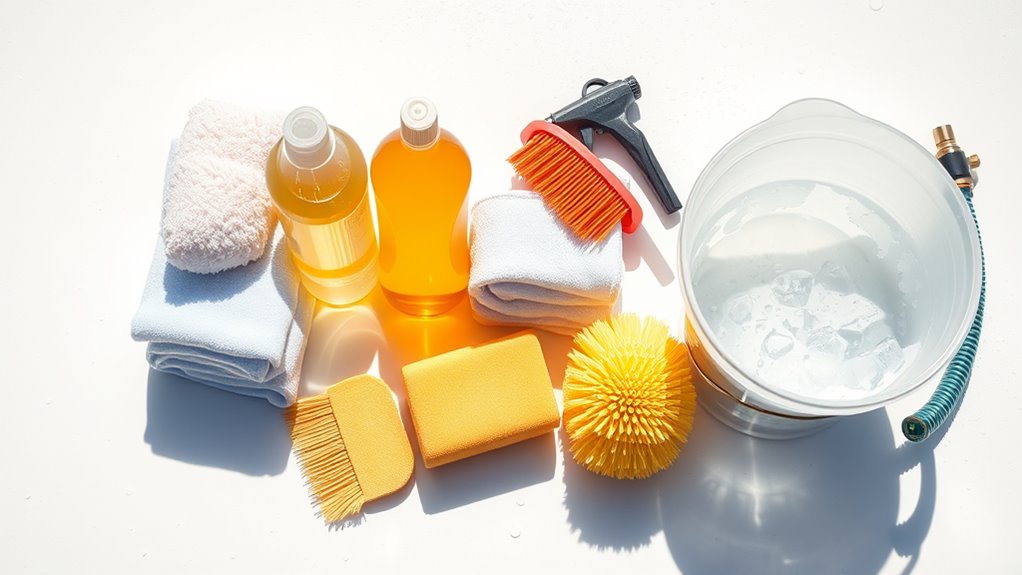
Before you start washing your car, gather all the supplies you’ll need. Begin with essential tools like a bucket, microfiber cloths, a soft brush, and a hose or water-saving device.
To keep it eco-friendly, look for options such as biodegradable soap and water-saving techniques that reduce water use. Budget-friendly supplies can include multi-purpose cleaners and reusable sponges, saving money without sacrificing quality.
Opt for biodegradable soap and water-saving methods to clean your car eco-consciously and affordably.
Think about seasonal needs—if it’s cold outside, you might need de-icing spray or warmer clothing. Storage solutions are also important; use a portable caddy or plastic bin to keep everything organized and easy to access.
For eco-conscious cleaning, include eco-friendly options that minimize environmental impact. Choosing efficient, reusable, and water-saving supplies helps you stay budget-friendly while protecting the environment.
Gathering the right supplies beforehand sets the stage for a smooth, effective, and eco-conscious car wash.
Prep Your Vehicle and Location Before Washing
Once you’ve gathered your supplies, it’s time to prepare your vehicle and choose the best spot for washing. Start with a quick inspection to spot any existing damage or dirt buildup. This way, you can focus on areas that need extra attention and avoid surprises later.
When picking your location, look for a shaded area or somewhere with minimal direct sunlight. This helps prevent soap and water from drying too fast, which can cause streaks and spots. Make sure the ground is level and free of debris so your supplies stay stable and your vehicle stays steady.
Clear the surrounding area of obstacles like trash or loose objects that could get in the way of your wash. It’s also a good idea to find a spot with good drainage to prevent water from pooling around your car. Proper prep and choosing the right spot make the whole process easier and help you get a spotless, streak-free clean.
Step-by-Step DIY Car Wash Process
To start your DIY car wash, gather all the necessary supplies like soap, buckets, sponges, and a hose. Choose eco-friendly options, such as biodegradable soap and reusable sponges, to help the environment.
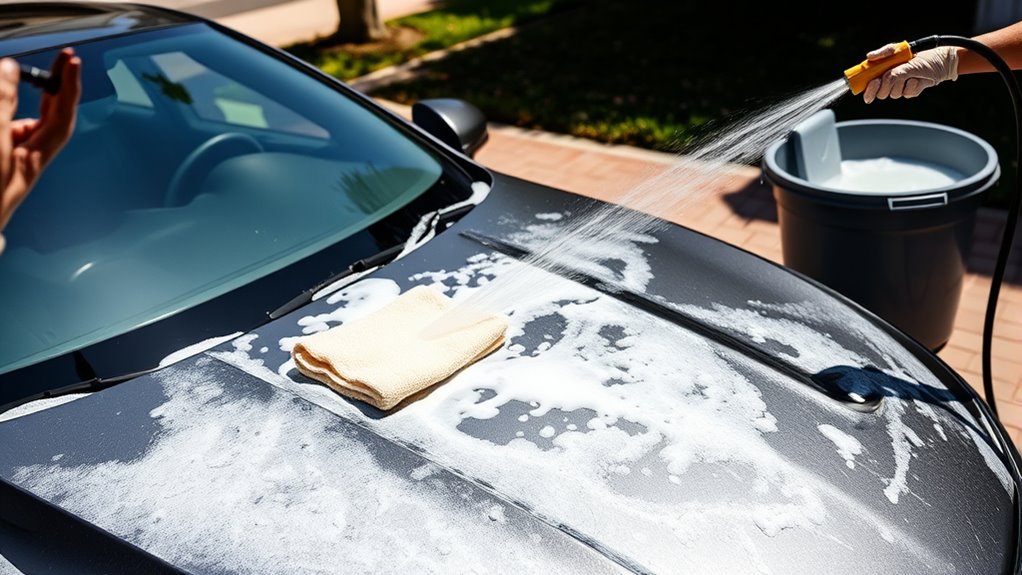
Begin by rinsing your vehicle thoroughly with water to loosen dirt and debris. Use a two-bucket method—one with soapy water and one with clean water—to prevent dirt from getting back onto your car.
Rinse your vehicle thoroughly and use a two-bucket method to keep dirt away from your clean car.
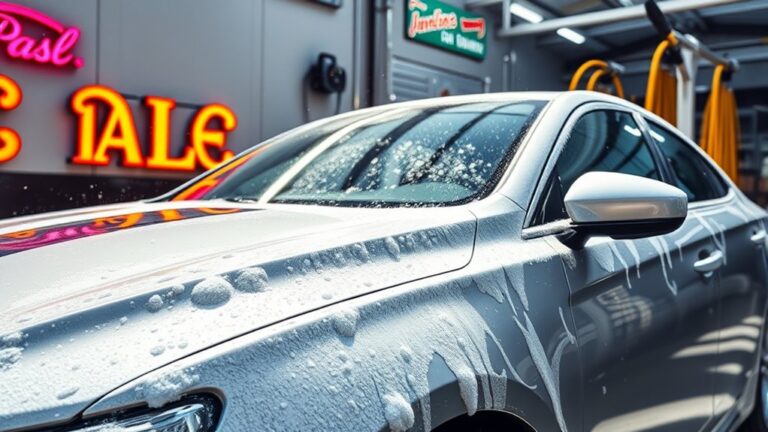
Apply soap evenly with a sponge or wash mitt, working from the top down to avoid streaks. For quicker results, focus on high-traffic areas last or use a foam cannon if you have one.
Rinse the soap off completely with a hose, making sure no residue stays behind. Dry your vehicle with a microfiber towel to prevent water spots.
Following these steps helps you keep your car clean efficiently while using eco-friendly choices and quick techniques.
Use Proper Techniques to Avoid Damage and Shine
After rinsing and soap-ing your car, applying proper techniques guarantees you avoid scratches, swirl marks, and water spots while achieving a high shine. Use gentle, straight strokes with a microfiber mitt or sponge, working from top to bottom. Avoid circular motions that can cause swirl marks and damage the paint.
Keep your wash mitt clean by rinsing it frequently in a bucket of clean water to prevent dirt from scratching the surface. When rinsing, verify thorough removal of soap to prevent residue that dulls the shine.
Regular washings, aligned with your car’s wash frequency, help maintain paint protection and prevent buildup of contaminants. Use quality products designed for your vehicle’s paint type, as cheap cleaners can strip paint protection.
Proper techniques preserve your car’s finish and extend the life of its shine. Making every wash a simple step toward a flawless, protected exterior.
Rinse and Dry Your Car Like a Pro
Start by thoroughly rinsing your car with a gentle stream of water to remove loose dirt and debris. Using proper rinsing techniques helps prevent scratching the paint and guarantees dirt doesn’t settle during drying. Work from the top down, covering every surface evenly.
Once rinsed, switch to effective drying methods. Avoid air drying, which can cause water spots, especially in sunny weather. Instead, use soft, clean microfiber towels to gently pat and wipe the car dry.
Change towels frequently to prevent smearing dirt back onto the surface. For hard-to-reach areas like mirrors and door jambs, use smaller towels or drying mitts. Be patient and thorough, making sure no water spots remain.
Proper rinsing and drying techniques preserve your car’s shine and paintwork, giving it a professional finish. Taking these steps reduces streaks and guarantees your car stays spotless longer.
Apply Wax or Sealant for Long-Lasting Protection
Applying wax or sealant creates a protective barrier that shields your car’s paint from environmental damage and boosts its shine. During wax application, use a soft cloth or applicator pad to spread the product evenly in small, circular motions.
Once applied, let it haze over before buffing off with a clean microfiber cloth. Sealant benefits include longer-lasting protection and a deeper gloss compared to traditional waxes.
Sealants typically cure faster, so you can enjoy your car’s improved appearance sooner. Both products help repel water, dirt, and UV rays, keeping your paint looking new longer.
Choose a high-quality wax or sealant suited for your car’s paint type for the best results. Regular application of wax or sealant not only maintains your vehicle’s shine but also preserves its value by preventing scratches and fading.
Keep this step in your routine to ensure your car stays protected and gleaming over time.
Common Mistakes to Avoid When Washing Your Car
One mistake many people make is using harsh cleaning agents, which can actually damage your car’s paint. It’s better to choose gentle, car-specific cleaners to keep everything looking shiny and new.
Another thing to watch out for is skipping the pre-wash rinse. If you don’t rinse off loose dirt first, it can scratch the surface when you start washing. Taking a few extra moments to rinse thoroughly helps protect your car’s finish and keeps it looking its best.
Using Harsh Cleaning Agents
Always read product labels to confirm compatibility with your car’s finish. Check for effective dilution instructions to avoid overuse. Poor application techniques or frequent cleaning with strong cleaners can leave behind residue and compromise your car’s surface.
Consider the environmental impact as well. Choose eco-friendly products whenever possible. For user safety, wear gloves and work in well-ventilated areas.
Proper use of gentle cleaners helps preserve your car’s appearance and reduces the need for costly repairs.
Skipping Pre-Wash Rinse
Skipping the pre-wash rinse is a common mistake that can lead to scratches and swirl marks on your car’s paint. The pre-wash is important because it helps loosen dirt, dust, and grime before you start scrubbing, which reduces the risk of damaging the paint.
Rinsing helps remove loose debris that could scratch the surface when you wash. This makes the cleaning process safer and more effective. Without this step, you’re more likely to drag abrasive particles across the paint, causing tiny scratches.
Always start with a thorough rinse to break down particles and soften dirt. Skipping this step might save time, but it can hurt your car’s finish and its longevity.
Proper rinsing is key for a smooth, scratch-free wash. It helps you get a cleaner, better-looking vehicle in the end.
Tips to Keep Your Car Clean Between Washes
Maintaining a clean car between washes is easier when you adopt simple, consistent habits. Regular interior maintenance, like vacuuming seats and wiping down surfaces, helps prevent dust and grime buildup. Keep a microfiber cloth and interior cleaner nearby to spot-clean spills and smudges right away. This quick action stops dirt from settling and makes your next full wash easier.
Seasonal cleaning is also important. During spring and fall, pay extra attention to removing leaves, mud, and road salt that can cause damage over time. Use a brush or compressed air to clear vents and tight spaces, preventing debris from piling up. Regularly wiping down windows and mirrors keeps your view clear and reduces streaks.
Best Tools and Products for Your DIY Car Wash
Choosing the right tools and products can really make your DIY car wash a lot easier and more effective. It’s all about picking the best cleaning supplies and car wash products that match your vehicle’s needs. Let’s take a look at some of the top options to help you achieve that spotless, streak-free shine.
Top Cleaning Supplies
For a successful DIY car wash, having the right cleaning supplies is essential. You want tools and products that clean your vehicle effectively without damaging its finish.
Start with eco-friendly options that are gentle on the environment and your car. Consider homemade cleaners made from simple ingredients like vinegar and baking soda for a natural, budget-friendly approach.
High-quality microfiber cloths and wash mitts will lift dirt without scratching. A good wheel brush helps remove grime from rims, while a foam cannon or spray bottle makes applying soap easier.
Don’t forget a pH-balanced car shampoo to keep your paint protected. Using the right supplies guarantees a thorough clean while minimizing environmental impact.
These top cleaning supplies make your DIY car wash both effective and eco-conscious.
Recommended Car Wash Products
Having the right tools and products can make or break your DIY car wash experience. Start with eco-friendly products like biodegradable soaps and rinses to protect the environment while cleaning effectively.
A quality microfiber mitt or sponge helps lift dirt without scratching your car’s paint. For drying, use a soft, absorbent microfiber towel to prevent water spots.
When selecting products, consider budget-friendly options that still deliver good results—many affordable brands offer eco-conscious formulas. A foam gun or spray bottle can help evenly distribute soap, making the process more efficient.
Avoid harsh chemicals and opt for natural or plant-based cleaners whenever possible. Using the right combination of eco-friendly, budget-conscious products guarantees your car looks great without compromising sustainability or your wallet.
Troubleshooting Common Car Washing Issues
Even with careful attention, car washing can sometimes lead to stubborn spots or streaks. Water spots often appear if your car isn’t dried properly or if hard water is used.
Soap residue can leave streaks and reduce shine, especially if you don’t rinse thoroughly. Stubborn stains on paint or glass may need targeted detailing tips or specific eco-friendly products.
Grime that isn’t fully removed can cause tire cleaning issues, impacting the overall look. Improper drying techniques can lead to water spots or streaks, so it’s best to use a microfiber cloth for drying.
The frequency of washing also matters. Washing too often or too rarely can affect how well wax and paint protection work. To troubleshoot, try these tips:
- Use distilled water for rinsing
- Rinse thoroughly to remove soap residue
- Focus on proper drying techniques to prevent water spots
- Choose eco-friendly products for safe cleaning
- Regularly check and adjust your washing routine
Frequently Asked Questions
How Often Should I Wash My Car for Optimal Maintenance?
You should wash your car every two weeks to follow the recommended frequency for good maintenance. Regular washing helps prevent dirt, grime, and brake dust from building up, which can damage your paint.
Make sure to use proper wash techniques, like rinsing thoroughly before applying soap and avoiding harsh scrubbing. This helps prevent scratching or other damage to your car’s surface.
If you live in an area with harsh weather or near the coast, you might want to wash your car more often. Keeping your car clean in these conditions is key to maintaining its top condition.
Can I Wash My Car in Direct Sunlight Without Damaging the Paint?
Washing your car in direct sunlight might seem tempting, but sunlight can cause soap to dry too quickly, leaving streaks or spots.
While it’s possible to wash in the sun, it’s better to do it when the sun isn’t blazing. That way, your paint protection stays intact.
Imagine water gently washing away dirt instead of the harsh glare that can damage your finish.
For a shiny, flawless look, try to wash in shaded areas or during cooler parts of the day.
What Are Eco-Friendly Options for Car Wash Supplies?
You can choose eco-friendly options like biodegradable soaps that clean effectively without harming the environment.
To save water, opt for a bucket and sponge instead of running hoses constantly, practicing water conservation.
Look for products labeled as eco-friendly or biodegradable, which break down naturally and reduce pollution.
These supplies help protect the planet while keeping your car clean, making your car wash both effective and environmentally responsible.
Is It Necessary to Use a Clay Bar During a DIY Wash?
Using a clay bar isn’t always necessary, but it can really make a difference by removing embedded contaminants that regular washing can’t handle.
The clay bar technique involves gently gliding the clay over your car’s surface, which helps reveal a smoother finish and improves paint clarity.
If your car feels rough or has stubborn dirt, adding a clay bar to your DIY wash can boost your results, leaving your vehicle cleaner and more polished.
How Do I Remove Stubborn Stains or Bird Droppings Safely?
To remove stubborn stains or bird droppings safely, start by soaking a soft cloth in warm, soapy water and gently applying it to loosen the debris.
For bird droppings, act quickly to prevent paint damage. Use a dedicated stain removal product or a mixture of water and vinegar, then gently wipe the area without scrubbing harshly.
Rinse thoroughly and dry to avoid water spots or residue.
Conclusion
Think of your car as a cherished garden. With the right tools, gentle care, and regular tending, it blooms with shine and health. Your DIY wash is like a watering can that keeps your vehicle vibrant and protected from the elements.
Keep practicing these steps, avoid common mistakes, and treat your car with consistent love. Doing so will help your vehicle stay in top shape and looking great.
Soon, your car will be a shining garden on wheels, turning heads wherever you go. All thanks to your hands-on care and the essential steps you follow for a thorough self car wash.