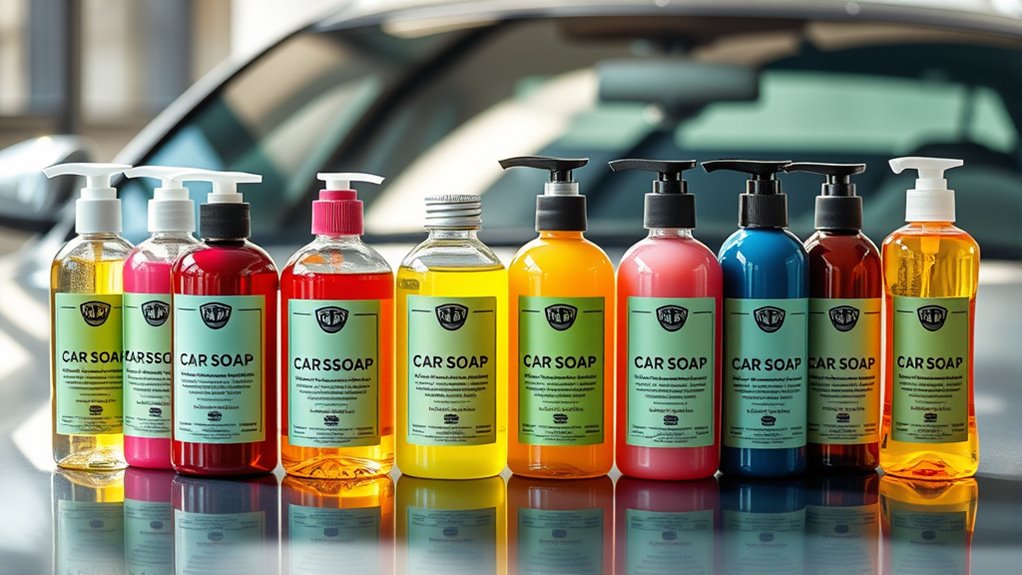
10 Types of Soaps for Washing Your Car
Are you tired of struggling to find the right soap for washing your car? Many people feel overwhelmed by all the options and worry about damaging their paint or wasting money. You’re not alone—choosing the best soap can be confusing, but it doesn’t have to be.
When choosing soaps for washing your car, you have several options. Foam and snow foam soaps provide thick, protective layers, while gel and soap bars offer quick application and lasting lather.
pH-balanced and eco-friendly soaps help protect your paint and the environment. Concentrated formulas save money, and specialized soaps like clay-enhanced ones lift embedded dirt.
Knowing when and how to use each type guarantees a thorough, safe clean—stick around to uncover more tips and tricks.
Key Takeaways
Different soap types include foam, gel, bar, pH-balanced, eco-friendly, concentrated, and specialized options for various cleaning needs.
Foam thickness and water compatibility affect how well the soap cleans and how visible it is during the wash. Thicker foam can help you see where you’ve already cleaned.
Soap bars last longer and produce richer lather, making them a popular choice. Gels tend to apply evenly and rinse off faster, saving you time.
pH-balanced and biodegradable soaps are gentle on your vehicle’s paint and better for the environment. They help protect your car while cleaning effectively.
Specialized soaps like clay-enhanced formulas are great for removing embedded dirt and contaminants that regular soaps might miss.
Understanding the Types of Car Wash Soaps You Can Use
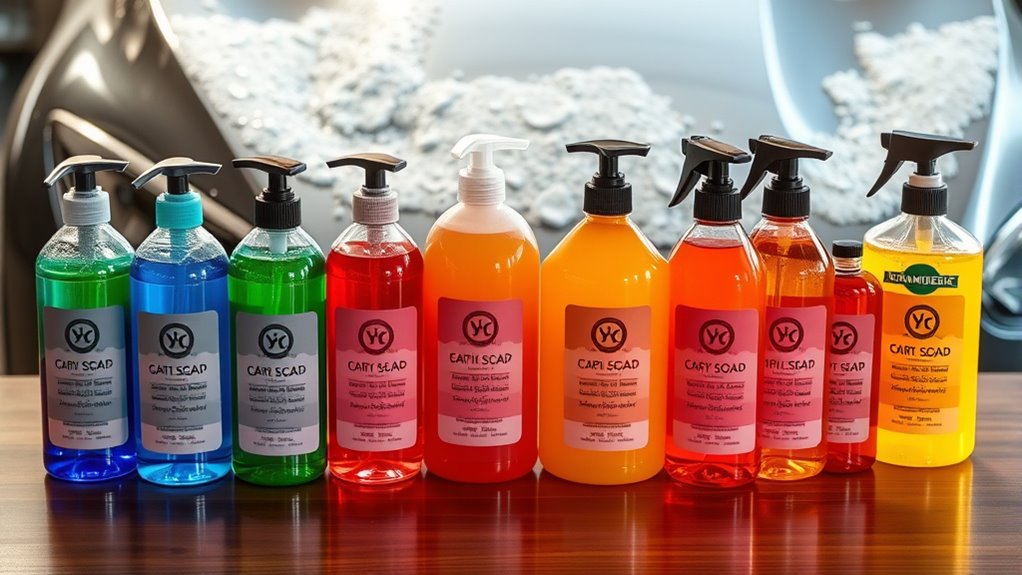
When choosing a car wash soap, it’s important to understand the different types available so you can pick the right one for your vehicle. Foam thickness is a key factor; thicker foam clings better to your car’s surface, lifting dirt and debris effectively.
Choosing the right car wash soap depends on foam thickness and water type for an effective clean.
If your water is hard, containing minerals like calcium and magnesium, you’ll want a soap formulated to work well in such conditions. This helps prevent mineral deposits that can cause spots.
Some soaps create dense, rich foam, making it easier to see where you’ve cleaned, while others produce lighter foam suited for quick rinses.
Consider your water’s hardness and how much foam you prefer, as these influence cleaning efficiency and finish.
A good soap balances foam thickness and water compatibility, ensuring your car gets a thorough clean without damaging the paint or leaving residue.
Knowing these factors helps you select the best soap for your specific car washing needs.
Comparing Traditional Soap Bars and Gels for Car Cleaning
Choosing the right cleaning product is just one part of maintaining your car’s shine; understanding the differences between traditional soap bars and gels can make a noticeable difference in your cleaning routine.
Soap bars tend to have better longevity, meaning they last longer with repeated use, offering good value. They are also easy to handle and generate a thick lather that can cut through dirt.
Gels, on the other hand, have a higher gel viscosity, making them easier to apply evenly across your car’s surface. They often rinse off faster and leave less residue, which helps avoid streaks.
However, gels may not last as long as soap bars, especially if you use them frequently. Your choice depends on your cleaning preferences: if you want durability and a classic feel, a soap bar might be best.
If you prefer quick application and less mess, a gel could be more suitable for your car cleaning routine.
Why pH-Balanced Car Wash Soaps Are Better for Your Car
Using a pH-balanced car wash soap is key because it helps protect your vehicle’s paint and clear coat. The pH benefits ensure the soap cleans well without stripping away protective layers, keeping your car looking great.
These soaps are designed to be gentle yet effective. They offer real detailing benefits that improve your car’s appearance over time. Their balanced pH reduces the risk of corrosion, scratches, or dullness, which can shorten your car’s finish.
| pH Benefits | Surface Protection |
|---|---|
| Gentle cleaning | Preserves clear coat |
| Prevents corrosion | Maintains shine |
| Reduces scratches | Extends paint life |
Choosing pH-balanced soaps helps your vehicle stay in top shape longer. It’s a smart choice for regular washing because it keeps your car looking new while protecting its paint’s integrity.
Are Foam and Snow Foam Soaps Gentle Enough for Regular Use?
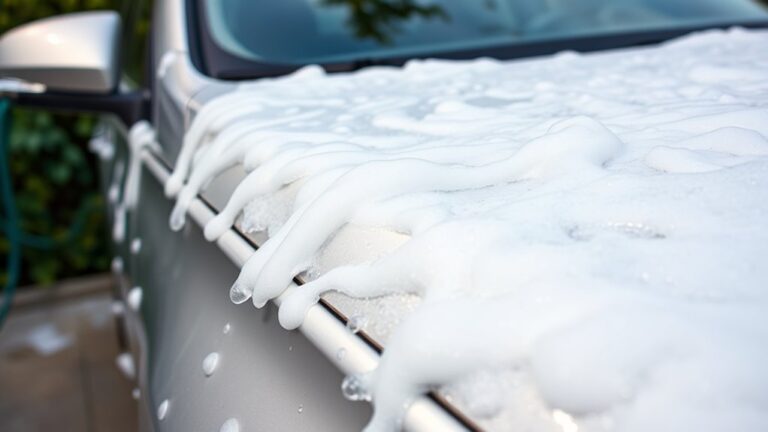
Foam and snow foam soaps have become popular choices for washing cars because they create thick, cushioning layers that lift dirt and grime effectively. Their foam helps loosen dirt gently without harsh scrubbing, making cleaning easier and safer for your car’s paint.
When used properly, snow foam is safe for regular use. It’s designed to cling and break down contaminants without damaging the surface, as long as you follow the manufacturer’s instructions and avoid letting the foam dry on the paint.
Regular use of foam soaps can also be gentle if you dilute them correctly and rinse thoroughly. This prevents any buildup or potential damage over time.
Eco-Friendly Car Wash Soaps: What Are Your Options?
Eco-friendly car wash soaps are a great choice if you’re looking to be kinder to the planet. They’re made with biodegradable ingredients, which means they break down naturally without causing harm to the environment. Pretty cool, right?
Plus, many of these soaps are free from harsh chemicals, so they’re gentler on your skin and better for the planet. You’ll often find plant-based surfactants in these formulas, which do a great job cleaning your car while staying sustainable and gentle. It’s a win-win!
Biodegradable Ingredients
Because biodegradable ingredients break down naturally without harming the environment, they’re a popular choice for eco-friendly car wash soaps. These ingredients help keep your cleaning routine gentle on the planet.
Many biodegradable options are sourced sustainably, which reduces the strain on natural resources. When choosing a soap, look for plant-based surfactants from renewable sources and natural oils and extracts that break down easily.
Try to pick products with minimal synthetic additives—they promote faster biodegradation. Certifications like USDA Organic or EcoLogo can also help you find verified sustainable options.
Chemical-Free Formulas
Choosing a car wash soap that is free from synthetic chemicals can help reduce your environmental impact. Chemical-free formulas often rely on natural ingredients, making them safer for the environment and your car’s paint.
These soaps usually have gentle formulas that clean effectively without harsh additives or artificial fragrances. By choosing such products, you help prevent pollution of waterways and protect wildlife.
Many eco-friendly car wash soaps are made with plant-based or mineral ingredients, which means they’re biodegradable and safe for all surfaces. Using these formulas lets you wash your car thoroughly while staying eco-conscious.
It’s a simple way to protect the planet without sacrificing cleaning power or convenience.
Plant-Based Surfactants
These surfactants offer several benefits, like better cleaning power and a smaller environmental footprint. They come from renewable sources, helping support plant sustainability and cut down on synthetic chemicals.
Different formulations among plant-based options can influence what people prefer—some are gentler, while others deliver stronger cleaning results.
Market trends show more people want eco-friendly products, making plant-based surfactants a smart choice for conscious consumers.
Consider these options to match your needs:
- Coconut-derived surfactants
- Sugar-based foaming agents
- Olive oil-based cleaners
- Corn-derived surfactants
Concentrated and Dilutable Soaps: Save Money While Cleaning
Using concentrated and dilutable soaps can save you a lot of money when cleaning your car. These soaps come in concentrated formulas, so you only mix what you need with water, which helps your supply last longer.
You can adjust the dilution ratios to control the soap’s strength—using less for light dirt and more for stubborn grime—saving you money in the process. Proper application methods, like using a sponge or foam gun, ensure even coverage and effective cleaning without wasting product.
Dilutable soaps are versatile and cost-effective, making them a great choice for regular washes. Since you only mix what you need, you’ll buy fewer supplies over time.
This not only cuts costs but also reduces packaging waste, helping the environment. Overall, concentrated and dilutable soaps are an efficient, budget-friendly way to keep your car shiny without losing cleaning power.
Synthetic vs. Natural Car Wash Soaps: Which Is Right for You?
When choosing between synthetic and natural car wash soaps, think about what matters most to you—your cleaning goals and values. Synthetic soaps are great for powerful grease removal and long-lasting suds, making the job faster and easier. They often have added conditioners to protect your paint and boost shine.
Natural soaps are eco-friendly and free from harsh chemicals, which makes them popular with environmentally conscious car owners. They’re gentle on your car’s surface and biodegradable, so they’re a good choice if you want a more natural approach.
Consider these points: Synthetic benefits include durability and superior grease removal. Natural advantages focus on being eco-friendly and gentle. Synthetic soaps tend to produce more foam and last longer. Natural options are usually biodegradable and less abrasive.
At the end of the day, your choice depends on what’s more important—powerful cleaning or an environmentally friendly solution.
When Should You Use Clay Bar or Clay-Enhanced Soaps?
Wondering if your car needs extra attention to remove stubborn contaminants? That’s when clay bar or clay-enhanced soaps come into play.
Clay bar benefits include effectively lifting embedded dirt, industrial fallout, and overspray that regular washing can’t remove. Use a clay bar when your paint feels rough or looks dull despite regular washing, or if you notice embedded contaminants that aren’t coming off with soap and water.
Clay soap usage simplifies the process by combining cleansing and claying in one step, saving time and effort. You should opt for clay-enhanced soaps if your car’s surface has light to moderate contamination or you want a smoother finish before polishing or waxing.
How to Pick the Best Car Wash Soap for Your Car’s Finish
Picking the right car wash soap is all about making sure it’s gentle on your car’s finish. You want something that cleans well without stripping away your paint or causing any damage. So, it’s a good idea to check the pH level — you’re aiming for a soap that’s balanced, not too acidic or alkaline, to keep your car’s surface safe.
And don’t forget about how easily the soap rinses off. A good car wash soap should wash away smoothly without leaving streaks or spots behind. That way, you save time and get a shiny, spotless finish every time you wash your car.
Compatibility With Vehicle Finish
Selecting a car wash soap that’s compatible with your vehicle’s finish is key to keeping its shine and avoiding damage. The right soap protects your paint, boosts surface shine, and helps preserve the paint and finish over time.
When choosing a soap, consider wax compatibility. Use gentle formulas that won’t strip away wax or detailing products. It’s also important to pick a soap that effectively removes water spots and dirt without leaving streaks.
Make sure the soap is safe for your clear coat to prevent dulling the finish. Additionally, look for formulas that help prevent water spots, keeping your car looking pristine longer.
A good soap will help preserve your vehicle’s finish, support paint protection, and keep your car looking its best every time you wash it.
pH Balance Importance
The pH balance of your car wash soap is crucial for keeping your vehicle’s finish in top shape. It directly impacts how gentle or harsh the cleaning process feels.
The pH scale measures whether a soap is acidic or alkaline, which affects its chemistry and cleaning power. A balanced pH level, usually around 7, ensures the soap isn’t too harsh or too mild.
If the soap is too alkaline, it can strip away protective wax layers and even cause paint damage. On the other hand, overly acidic soaps might leave residues or harm rubber and plastics.
Choosing a soap with a neutral or slightly alkaline pH helps protect your car’s paintwork and clear coat. It ensures a thorough clean without compromising the finish.
Ease of Rinsing
Regarding washing your car, ease of rinsing is a key factor because it directly affects how quickly and thoroughly you can clean the vehicle without leaving streaks or residue. A soap that rinses off easily saves time and prevents soap residue from drying on your finish.
To improve rinsing techniques, consider these tips:
- Use a soap designed for easy rinsing, formulated to break down quickly.
- Rinse from top to bottom to avoid streaks and soap residue settling.
- Avoid using high-pressure water, which can force soap into crevices.
- Rinse thoroughly, making sure no soap remains before drying.
Choosing a soap with good rinsing properties helps achieve a spotless, streak-free finish while reducing the effort needed to remove soap residue.
Tips for Applying and Rinsing Different Types of Car Wash Soaps
When applying and rinsing different types of car wash soaps, paying attention to the instructions on the label can really help your vehicle get cleaner.
Proper applying techniques involve starting from the top and working downward, using a soft sponge or mitt to prevent scratching.
Begin at the top and work downward with a soft sponge or mitt to avoid scratches.
For foaming soaps, let the foam sit for a moment to loosen dirt before gently scrubbing.
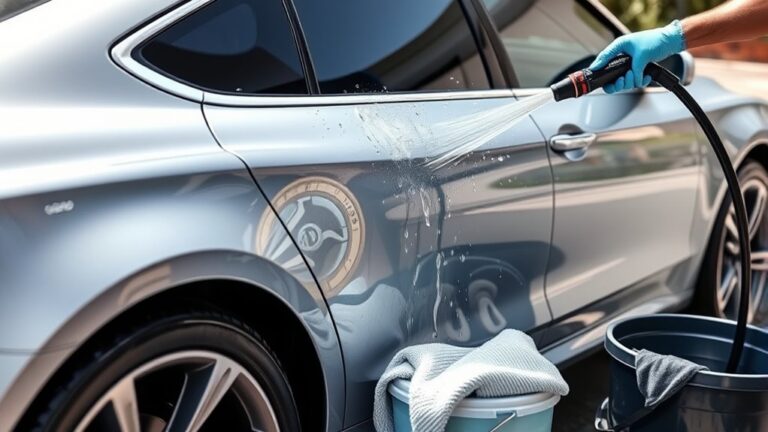
Rinsing methods vary depending on the soap type; for most, use a strong stream of water to thoroughly remove the soap and avoid missed spots.
For soap concentrates, dilute them according to the instructions before applying to ensure even coverage.
When rinsing, make sure to remove all soap residue, as leftover film can cause streaks or spots.
Always rinse from the top down and double-check those hard-to-reach areas to make sure nothing is missed.
Using the right techniques for applying and rinsing guarantees a spotless, streak-free finish and helps protect your car’s paint.
Frequently Asked Questions
Can I Use Household Dish Soap on My Car Safely?
You can use household dish soap on your car, but it’s not the best choice for regular use. Dish soap is great at cutting through grease, but it has harsh cleaning agents that can strip away wax and hurt your car’s paint over time.
Using it often can make your car look dull or even cause scratches. To keep your car’s finish looking its best, it’s better to use a soap designed specifically for vehicles. That way, you protect the paint’s shine and integrity.
Do Different Car Paints Require Specific Types of Soap?
Different car paints do require specific types of soap to guarantee proper care. You should choose a soap formulation that’s compatible with your paint’s finish—some paints need gentle, pH-balanced soaps, while others can handle stronger formulas.
Always check the soap’s label for paint compatibility, and avoid harsh chemicals that could damage or dull your car’s paint. Using the right soap helps protect your vehicle’s shine and prolongs its paint’s lifespan.
How Often Should I Wash My Car With Specialized Soap?
Well, if you want your car to stay looking sharp without turning it into a soap opera, stick to the recommended washing schedule.
Usually, washing your car with specialized soap every two weeks keeps it shiny and protected.
Remember, different soaps serve different purposes—some gently clean, others are more heavy-duty.
Too much washing can strip away the protective wax, so it’s best to use your soap wisely.
Your car will thank you with a glossy, envy-inducing finish!
Are There Any Risks Using DIY or Homemade Car Wash Soaps?
Using DIY or homemade car wash soaps can pose risks because homemade ingredients might not be as effective or safe for your car’s paint. Some ingredients, like dish soap or certain detergents, can strip wax or damage the clear coat.
This can reduce the soap’s effectiveness and even scratch your car’s finish. Always make sure your homemade soap is gentle, pH-balanced, and specifically formulated for cars to avoid any damage.
What Are the Environmental Impacts of Various Car Wash Soaps?
You should consider the environmental impacts of your car wash soaps by choosing biodegradable options, which break down more easily and reduce pollution.
Be mindful of chemical compositions; some soaps contain phosphates and surfactants that harm aquatic life and ecosystems.
Opting for eco-friendly soaps helps protect water quality and minimizes your carbon footprint, making your car washing routine more sustainable and environmentally responsible.
Conclusion
Choosing the right soap can make all the difference in keeping your car looking its best. For instance, using a pH-balanced, eco-friendly foam soap regularly can prevent paint damage and extend your car’s shine.
Imagine a driver who switched from harsh detergents to a natural, foam-based soap. Their car’s finish improved noticeably after just a few washes. It’s amazing what the right soap can do.
So, pick wisely, follow proper application tips, and enjoy a spotless, well-maintained vehicle every time. Using the best car wash soap ensures your car stays protected and looks great.