Are Car Washes Bad for Your Vehicle?
Are you tired of worrying whether washing your car might do more harm than good? You’re not alone—many car owners struggle with keeping their vehicle spotless without risking damage.
Car washes aren’t necessarily bad for your vehicle if you use the right techniques and equipment. Automated washes can cause scratches or dull spots if they use harsh brushes or high-pressure jets improperly, but gentle, touchless options are safer.
Hand washing with proper care can better protect your paint, especially when using quality products.
To learn how to keep your car looking its best and avoid damage, keep exploring these important tips.
Key Takeaways
- Properly maintained automatic washes with gentle brushes help reduce damage risks compared to older or poorly maintained equipment.
- Hand washing with the right techniques can better preserve your paint and lower the chances of scratches and swirl marks.
- Using harsh chemicals, high-pressure jets, or worn brushes can damage your paint and cause surface deterioration.
- Regular inspections and proper drying after washing help prevent water spots and minor scratches.
- How often and how you wash your car affects the paint’s health; a balanced approach keeps your vehicle looking good and prevents damage or rust.
Are Car Washes Safe for Your Vehicle’s Paint?
Regular washes help remove dirt, grime, and contaminants that can damage your paint over time. To keep your finish protected, consider using a car wash that offers paint protection features like gentle brushes or foam that minimize scratches.
The key is managing how often you wash your car. Washing too often with harsh methods can wear down the clear coat, while washing infrequently lets dirt build up and harm the paint.
Automated, touchless washes tend to be gentler, reducing the risk of scratches. Hand washing with proper techniques and quality products can also keep your paint in great shape.
In the end, knowing how often to wash your car and choosing a gentle, protective method helps preserve its look and extend the life of the paint.
How Do High-Pressure Jets and Brushes Affect Your Car?
High-pressure jets are great for blasting away dirt quickly, but you’ve got to be careful because they can also damage your car’s paint or even loosen up some parts if you’re too aggressive. It’s all about using the right pressure and distance to avoid causing harm.
As for cleaning brushes, they’re handy for scrubbing off grime, but over time, they can scratch or wear down your car’s surface if you’re not careful. So, it’s important to choose the right brush and use gentle strokes to keep your car looking good without causing damage.
Getting the hang of how these tools interact with your vehicle can help you decide whether they’re actually helping or hurting your car in the long run.
Impact of High-Pressure Jets
While high-pressure jets are great for removing dirt and grime from your vehicle, they can cause damage if not used properly. Too much force can strip paint or harm delicate parts like window seals.
If you aim the jet directly at vulnerable areas, it might cause tiny scratches or chips, especially on older or weaker paint. The trick is to keep a safe distance and avoid prolonged exposure to the high-pressure stream.
Using the jet correctly helps you get a thorough clean without risking damage. Pay attention to how the impact interacts with your vehicle’s surface, and always follow the manufacturer’s guidelines. This way, you prevent unnecessary harm from excessive pressure.
Effects of Cleaning Brushes
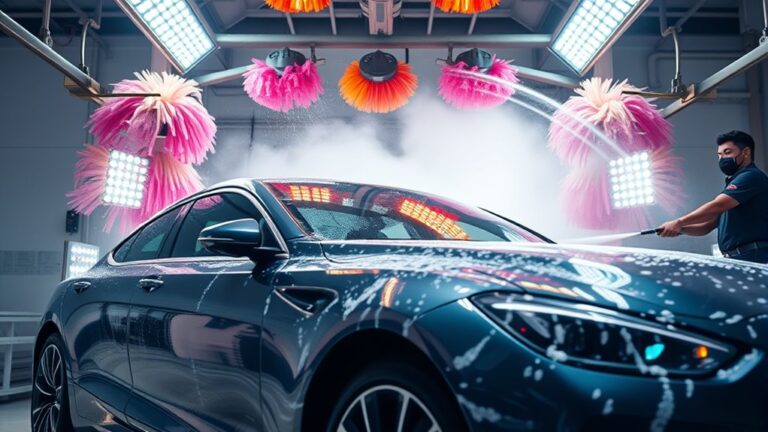
Although cleaning brushes can effectively remove dirt from your vehicle, they can also cause scratches or swirl marks if used improperly or with rough bristles. Brush wear gradually deteriorates the bristles, increasing the scratch risk over time. When brushes are worn out, they become rougher, making your car’s surface more vulnerable to damage.
| Brush Condition | Effect on Vehicle |
|---|---|
| New, firm bristles | Efficient cleaning, low scratch risk |
| Worn, frayed bristles | Higher scratch risk, more swirl marks |
| Proper maintenance | Prevents brush wear, reduces damage |
| Rigid, rough brushes | Increased scratch risk |
To avoid damage, check your brushes regularly and replace them when they show signs of wear.
What Are the Risks of Automatic Versus Hand Washing?
Automatic car washes are convenient, but they come with potential risks you should think about. These include scratches, paint swirls, and possible damage from abrasive brushes or high-pressure jets. Over time, these can harm your vehicle’s clear coat.
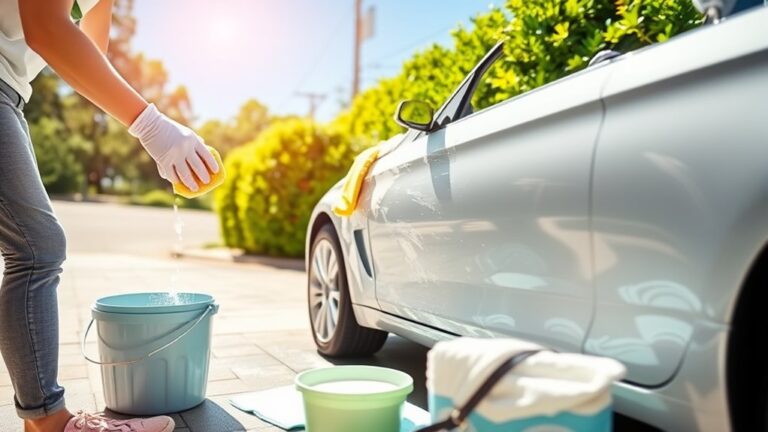
Hand washing offers a gentler way to clean your car and allows you to check for damage or loose parts. It also gives you control over the cleaning process and helps avoid harsh chemicals or brushes that might cause scratches.
When comparing the two, consider these factors: automatic risks from harsh brushes or jets, hand washing’s gentle approach and detailed cleaning, potential human error during hand washing, missed spots or dirt buildup with automatic washes, and the long-term benefits of hand washing for paint preservation.
Deciding between automatic and hand washing depends on your vehicle’s needs and how much attention to detail you want to give.
Which Types of Car Wash Are Best for Protecting Your Car?
Choosing the right type of car wash can really make a difference in protecting your vehicle’s paint and overall condition.
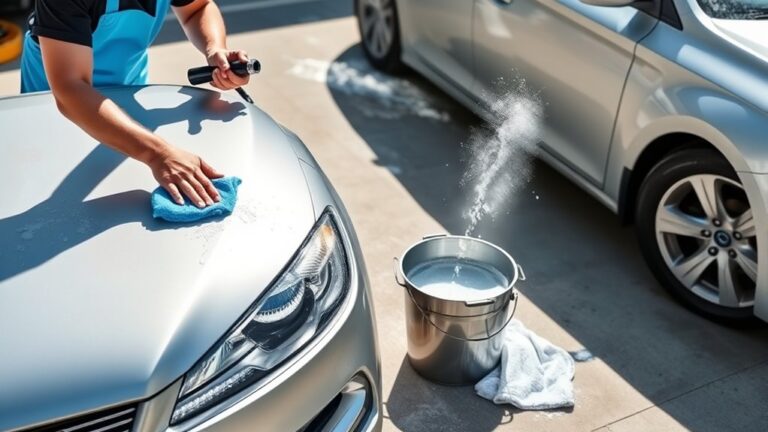
Hand washes are great because they let you clean gently, reducing the risk of scratches and swirls caused by automated brushes. They give you more control and let you focus on stubborn dirt spots carefully.
Hand washes gently clean your car, reducing scratches and giving you control over stubborn dirt.
Foam washes are also beneficial; foam lifts dirt and grime from your car’s surface without being abrasive, which helps prevent paint damage. They cover the car evenly and loosen debris before rinsing, making them safer and more effective.
Automated washes might be quick, but they often use harsh brushes and chemicals that can harm your vehicle’s finish. For the best protection, a gentle hand wash combined with a foam wash is ideal.
This combo offers a thorough clean while safeguarding your paintwork. Choosing these options helps keep your car looking great and lasting longer.
Signs Your Car Might Be Damaged During a Wash
Have you ever noticed new scratches or dull spots on your car after a wash? These could be signs your vehicle was damaged during the process. Look closely for:
- Fine paint scratches that weren’t there before
- Persistent water spots that don’t wipe away easily
- Swirling marks on your car’s surface
- Areas with uneven gloss or dullness
- Small chips or peeling paint around edges
Paint scratches often come from rough brushes or improper cleaning techniques, while water spots are caused by mineral deposits left behind if the rinse isn’t thorough. Swirling marks and dull spots suggest abrasive contact or improper drying.
If you notice these signs, it’s likely your car was exposed to damaging elements during the wash. Addressing these issues early helps prevent further damage and keeps your vehicle looking its best. Always inspect your car after a wash, especially if you see any of these signs.
How to Choose a Car Wash That Keeps Your Car Safe
When you’re picking out a car wash, it’s a good idea to make sure they use the right equipment. You want to avoid places that might scratch or damage your paint—that’s the last thing you need.
Also, take a quick look at the cleaning products they use. Are they gentle and safe for your car’s finish? If you’re not sure, don’t hesitate to ask.
Focusing on these things can really help keep your car safe and looking great, all while getting it nice and clean.
Check for Proper Equipment
To guarantee your vehicle stays protected during a wash, it’s vital to pay attention to the equipment used by the facility. Proper equipment types, like soft cloth brushes and gentle touchless systems, help reduce the risk of scratches and damage.
Well-maintained equipment also ensures effective cleaning without rough parts that could harm your car’s paint. Look for signs that the facility regularly inspects and maintains their equipment, such as updated, modern machinery.
Make sure there are no visible signs of wear or damage, and that brushes and nozzles are consistently cleaned. Proper calibration of touchless systems is also important for a safe, thorough wash.
Staff knowledgeable about equipment maintenance is a good indicator that your vehicle will be in good hands. Choosing a car wash that prioritizes equipment types and upkeep means your car gets a safe, thorough clean without unnecessary risks.
Always observe the cleanliness and condition of their equipment before proceeding to ensure your vehicle’s safety.
Inspect Cleaning Products Used
Choosing a car wash that keeps your vehicle safe starts with inspecting the cleaning products they use. Look into the chemical makeup of their soaps and detergents—preferably, they should use environmentally friendly, pH-balanced solutions that won’t harm your car’s paint or finish.
Check if the products are designed for automotive use and have proven effectiveness. They should clean thoroughly without requiring harsh scrubbing or strong chemicals. Avoid washes that rely on aggressive or corrosive ingredients like strong acids or alkalis, which can damage your paint or clear coat over time.
Reputable car washes often share information about their cleaning products or use brands known for safety and effectiveness. Being vigilant about the products used helps ensure your vehicle stays protected while getting a thorough clean.
Are DIY Car Washes Safer Than Professional Services?
Are DIY car washes truly safer for your vehicle than professional services? It really depends on your techniques and how well you understand safety.
DIY washes usually cost less, making them appealing if you wash your car often. But choosing the right equipment is key to avoiding scratches or damage. Convenience is another factor—DIY lets you wash whenever it suits you, but you might miss out on the professional attention to detail.
Your personal preferences, like using eco-friendly products, can also impact safety and environmental friendliness. Consider these points:
- Proper equipment selection helps prevent damage
- Regular maintenance clears dirt effectively
- Professionals often have trained staff for safe washing
- DIY is cheaper if you’re on a budget
- Washing too often can cause wear, so frequency matters
In the end, if you’re careful and knowledgeable, DIY car washes can be safe. Otherwise, professional services might better protect your vehicle.
How to Maintain Your Car After a Wash to Prevent Damage
After washing your car, taking a few simple steps can greatly reduce the risk of damage and keep your vehicle looking its best. Post-wash maintenance is essential for preserving your car’s finish.
Start by drying your vehicle thoroughly with a microfiber towel to prevent water spots and mineral deposits. Applying a protective coating like wax or sealant creates a barrier against dirt, contaminants, and UV rays, which helps prolong your car’s shine and paint health.
Regularly inspecting and cleaning your car’s exterior helps you spot issues early, such as scratches or chips, so you can address them before they worsen. Avoid parking under trees or in harsh sunlight right after washing, as residual moisture can cause streaking or damage.
Choose gentle cleaning products that won’t strip away existing protective coatings. Consistent post-wash maintenance keeps your vehicle protected, looking great, and retaining its value over time.
Common Myths About Car Washes and Vehicle Damage
A lot of folks think that getting their car washed might actually do more harm than good, but that’s not really the case most of the time. In reality, the scratches and dents you hear about usually come from other stuff—like debris hitting your car or not taking proper care of it. Knowing what actually causes damage can help you keep your vehicle looking great and avoid unnecessary worries.
Debunking Car Wash Myths
Despite common beliefs, many myths about car washes leading to vehicle damage are just misconceptions. Clarifying these myths is important to understand how proper vehicle care actually works.
Many people think automatic washes damage paint or delicate parts, but modern equipment is designed to prevent this. Others believe brushes cause scratches, yet high-quality brushes are gentle and regularly maintained.
Some assume pressure washers strip wax or paint, but when used correctly, they are safe. There’s also a myth that hand washing is always safer, which isn’t true if done improperly.
Many also think car washes are unnecessary for vehicle upkeep. In reality, a well-maintained car wash can improve your vehicle’s appearance without risking damage when you choose reputable stations and understand proper vehicle care practices.
Actual Causes of Damage
While modern car wash technology minimizes damage risk, knowing what actually causes harm helps you protect your vehicle. The main culprits are surface abrasion and paint degradation from harsh chemicals or abrasive materials.
These can cause tiny scratches or dull your paint over time. Common myths say brushes or high-pressure water damage your car, but proper maintenance prevents this. Damage often happens from dirt trapped in brushes or misuse of abrasive cleaners.
To help you see the risks clearly, here’s a quick comparison:
| Cause | Effect |
|---|---|
| Surface abrasion | Scratches, dull paint |
| Harsh chemicals | Paint degradation, fading |
| Dirty brushes | Surface abrasion |
| Excessive pressure | Paint chipping or surface damage |
Should You Use Car Washes Regularly?
Using car washes regularly can be convenient and effective for keeping your vehicle clean, but it’s important to think about how often you really need to do it. Your ideal wash schedule depends on things like the weather, driving conditions, and how much dirt or salt your car encounters.
Frequent washes can help prevent paint damage and rust, especially during winter when salt on the roads is common. But washing too often might also wear down your paint over time, so balance is key.
Washing often prevents rust and paint damage, but too frequent cleaning can wear down your vehicle’s finish—balance is essential.
Don’t forget to consider the cost, which varies between automatic and hand washes. Weigh that against your car’s needs and how much maintenance you’re comfortable with.
To decide what’s best, think about how dirty or salty your car gets, the type of wash you prefer, your climate, and the age and condition of your vehicle’s paint.
Your budget matters too, so factor in the cost of washes and ongoing care to find the right routine for you.
Frequently Asked Questions
Can Certain Weather Conditions Make Car Washes More Damaging?
Yes, certain weather conditions can make car washes more damaging. When temperatures hit extremes like freezing or scorching heat, your vehicle’s paint and seals can suffer.
High humidity levels can also cause moisture to get trapped, which promotes rust and corrosion.
It’s best to avoid washing your car during these conditions or when the weather is unpredictable, as the stress from temperature fluctuations and humidity can speed up damage over time.
Do Specific Car Wash Chemicals Harm Your Vehicle’s Paint?
Think of your car’s paint as a delicate masterpiece, vulnerable to harmful chemicals. Some car wash chemicals can damage your paint by causing unwanted chemical reactions, stripping away protection and leaving your vehicle exposed.
Always choose gentle, pH-balanced soaps designed to preserve your paint’s shine. Being mindful of these reactions helps keep your car vibrant and protected.
Think of it like a jewel in a safe setting—taking care of your car’s paint ensures it stays beautiful for years to come.
How Often Should You Wash Your Car to Avoid Damage?
You should wash your car every two weeks to follow proper frequency guidelines, preventing dirt buildup that can damage your paint.
Use gentle wash techniques, like rinsing thoroughly and avoiding harsh scrubbing, to protect your vehicle’s finish.
If your car is exposed to harsh elements or road salt, consider washing more often.
Consistent, careful washing helps maintain your car’s appearance and prevents long-term damage.
Are Touchless Car Washes Safer Than Brush-Based Ones?
Touchless car washes are generally safer than brush-based ones. Imagine a vehicle with delicate paint that could get scratched by abrasive brush materials; a touchless wash uses high-pressure water and cleaning solutions, which reduces that risk.
While touchless technology might sometimes struggle more with stubborn grime, it offers better protection for your vehicle. Overall, if you want to preserve your paint, touchless car washes are a smarter, gentler option for your car.
Can Improper Drying After a Wash Cause Scratches or Spots?
Improper drying after a wash can cause scratches or spots if you don’t use the right techniques.
Avoid air drying or rough towels that can scratch your paint.
Instead, use clean microfiber towels and gentle blotting or patting motions to remove water.
This helps prevent streaks and scratches, keeping your vehicle’s finish smooth and spotless.
Using proper drying methods makes sure your car looks great and stays protected.
Conclusion
In the end, it’s clear that car washes aren’t inherently bad for your vehicle if you choose the right type and take proper precautions. Regular washes keep your car looking sharp, but don’t overlook signs of damage or opt for harsh methods.
Remember, a little prevention goes a long way. Don’t let your car become a ticking time bomb. With proper care, you can keep your ride in tip-top shape without pulling your hair out.
When it comes to car washes, choosing the right one and knowing what to watch for is key. Proper maintenance can actually extend your vehicle’s life and keep it looking great.