What Happens When You Wash Your Car With Dish Soap?
Many car owners struggle with keeping their vehicle looking shiny and new. You want to wash away dirt and grime, but worry about damaging your paint in the process. You’re not alone—finding the right cleaning method can be confusing.
When you wash your car with dish soap, it quickly removes dirt and grime, but it can also strip away your car’s wax and protective coatings. Over time, this damages the paint, making it dull, faded, and more vulnerable to scratches and corrosion.
Dish soap isn’t designed for cars, so continuous use can lead to long-term harm.
Stay tuned to find safer alternatives and proper techniques to protect your vehicle’s finish.
Key Takeaways
- Dish soap strips away protective wax and coatings, exposing the paint to damage.
- It contains harsh chemicals that can dull and fade the car’s finish over time.
- Regular use can weaken the paint and clear coat, making scratches and oxidation more likely.
- Dish soap isn’t biodegradable and can pollute water sources when washed into the environment.
- Eco-friendly, car-specific shampoos are safer and better for keeping your vehicle’s paint in good shape.
What Happens When You Use Dish Soap on Your Car?
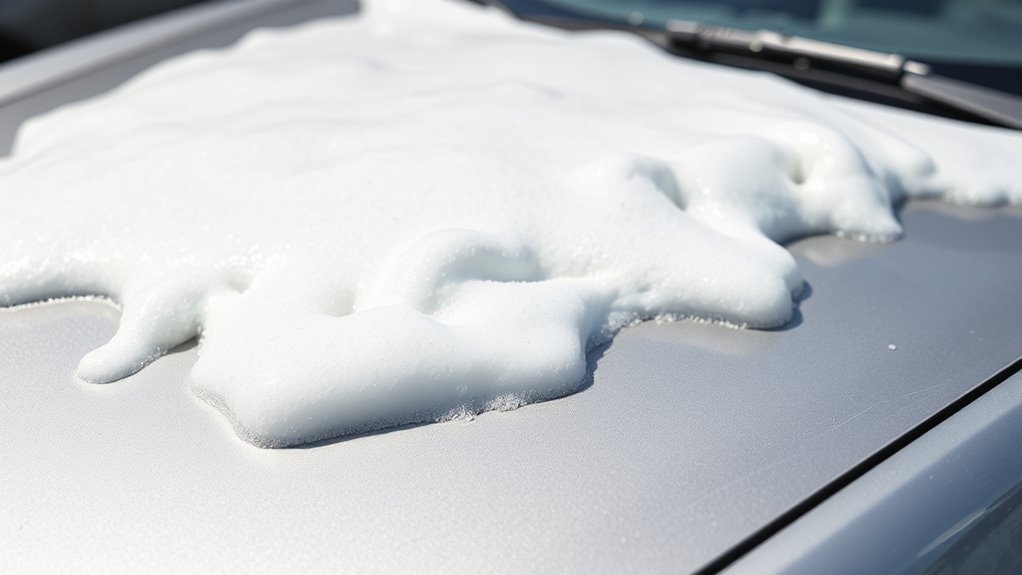
While dish soap might seem like a convenient option for cleaning your car, it can actually do more harm than good. Using it regularly impacts the environment because many dish soaps contain chemicals that can pollute water sources when washed away. These substances can harm aquatic life and disrupt ecosystems.
Furthermore, dish soap isn’t designed for automotive surfaces, so it may strip away wax and protective coatings. This leaves your car vulnerable to damage over time. From a cost perspective, it might seem cheaper at first, but you could end up spending more on repairs or re-waxing later.
Dish soap’s strong cleaning agents can degrade paint and clear coat, which could lead to costly repairs. So, although it’s tempting to use what’s available, understanding the environmental impact and the true cost makes it clear that dish soap isn’t the best choice for your vehicle’s maintenance.
How Dish Soap Removes Dirt and Grime From Your Vehicle
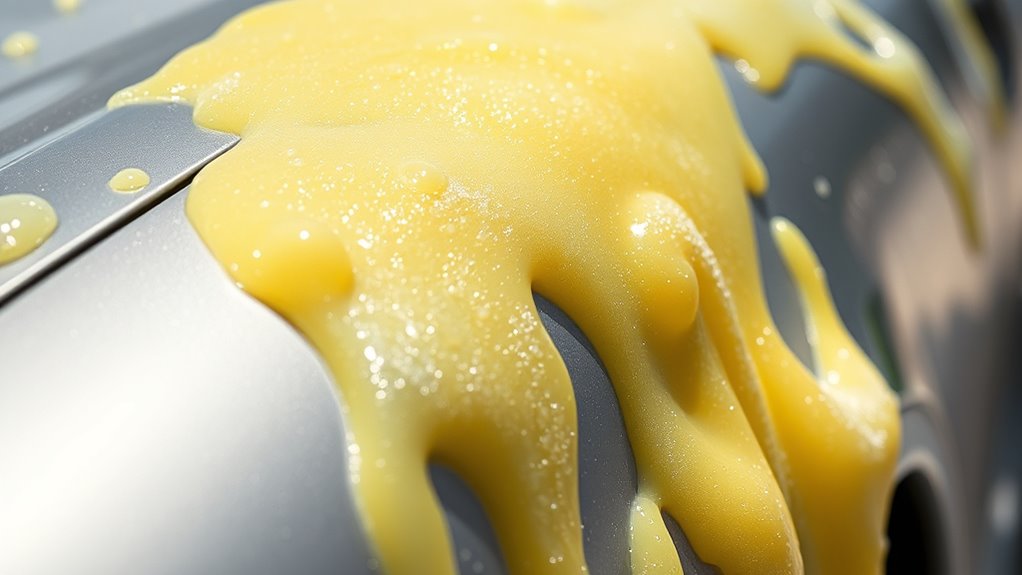
Dish soap works by breaking down the oils and grease that trap dirt and grime on your vehicle’s surface. Its surfactants lower the surface tension between water and oils, making dirt removal easier. When you wash, the soap binds with grease and grime, lifting them off the paint. This grime breakdown allows water to carry away stubborn dirt particles effectively.
Dish soap breaks down oils and grime, helping water lift away stubborn dirt from your vehicle’s surface.
Here’s how dish soap helps clean your car:
- Disrupts grease bonds, loosening embedded dirt
- Binds with oils and grime for easier removal
- Creates a foaming action that lifts dirt from surfaces
- Lowers surface tension, allowing water to penetrate grime layers
- Facilitates rinsing away dirt with minimal streaks
This process makes your car look cleaner, but keep in mind that dish soap’s strong degreasing power isn’t suitable for prolonged use on vehicle paint.
Why Dish Soap Isn’t Safe for Your Car’s Paint or Finish
Although dish soap effectively breaks down grease and grime, using it regularly on your car’s paint can cause damage. Dish soap is made to cut through kitchen messes, not to protect your vehicle’s surface.
It strips away the natural oils and wax that guard your car’s paint, which can lead to faster wear and fading over time. Repeated use makes it harder to keep your paint looking fresh and vibrant.
Without proper protection, your car’s finish becomes more vulnerable to scratches, oxidation, and discoloration. Dish soap doesn’t support long-term paint health — it actually harms it.
Instead, use car-specific shampoos that are gentle but effective. They help preserve your paint and keep your car looking its best for longer.
Does Dish Soap Damage Your Car’s Protective Coating?
Using dish soap repeatedly to wash your car can damage its protective coating. This coating acts as a barrier, shielding your car’s paint and underlying layers from dirt, UV rays, and corrosion. Dish soap is designed to cut grease in kitchens, not to preserve automotive finishes.
Over time, frequent use strips away these protective layers, making your car more vulnerable to damage and wear. Dish soap can remove wax and sealants that are meant for car maintenance. It also strips away the clear coat, exposing paint to UV damage.
This weakens the protective layer, increasing the risk of corrosion. Plus, dish soap can cause micro-scratches, which reduce your car’s shine. It also accelerates the breakdown of paint and clear coats.
To keep your car’s finish looking its best, stick with car-specific soaps. They help maintain the protective layers and support long-term care.
Risks of Using Dish Soap on Your Car Over Time
Over time, washing your car with dish soap regularly can cause serious damage. It strips away your vehicle’s protective wax and speeds up paint deterioration.
The harsh detergents weaken the clear coat, making your paint more prone to scratches and fading. Relying on dish soap often exposes your car’s surface to long-term issues like dullness and discoloration.
Harsh detergents damage the clear coat, leading to scratches, fading, dullness, and discoloration over time.
To avoid these problems, consider using pH-balanced car shampoos made specifically for automotive finishes. These products help protect your paint and maintain your car’s layers over time.
Using the right cleaners reduces damage and keeps your vehicle looking newer longer. Remember, dish soap is meant for dishes, not cars, and frequent use can harm your paint’s integrity.
Choosing proper car wash products now can save you money and effort on costly repairs down the road.
Signs Your Car’s Paint Has Been Harmed by Dish Soap
If you’ve been using dish soap to wash your car, you might start to notice that the paint doesn’t look as shiny as it used to. Sometimes, it can look dull or faded, almost like the color has lost its vibrancy.
You might also see uneven patches or areas where the paint seems worn or chipped, which can be a sign that the dish soap is damaging the surface. If any of these things happen, it’s a good idea to think about whether the dish soap is causing harm to your car’s paint.
Faded Paint Color
When dish soap is repeatedly used on your car’s surface, it can strip away the protective clear coat, leading to a dull, faded appearance. This loss of gloss makes the paint look washed out and less vibrant. Over time, the fading becomes more noticeable, especially on areas exposed to direct sunlight.
You might notice uneven color tones or a lack of shine, which indicates damage to your car’s original finish. To restore color, you’ll need professional color restoration services, as dish soap doesn’t provide the necessary paint protection.
Without proper care, the paint’s integrity weakens, which accelerates fading. Recognizing these signs early helps prevent further damage and keeps your vehicle looking its best.
Common signs include a loss of gloss and shine, uneven color patches, and a dull, washed-out look. You might also see increased surface scratches and a reduction in overall paint vibrancy.
Uneven Surface Finish
Dish soap can cause your car’s surface to develop an uneven finish. You might notice areas where the paint feels rough or dull compared to smoother sections.
This uneven surface finish shows that the soap has stripped away the protective layer. It harms the paint’s integrity and can reduce its lifespan.
To help illustrate, here’s a quick comparison:
| Smooth Surface | Rough Surface |
|---|---|
| Uniform texture | Bumpy, inconsistent texture |
| Glossy appearance | Dull, patchy look |
| Protects paint | Exposes paint to damage |
| Lasts longer | Shortened paint lifespan |
If your car shows these signs, dish soap has likely compromised your paint’s surface and durability.
Visible Paint Wear
Visible signs of paint wear often show up after using dish soap on your car. Dish soap is harsh and can strip away wax and sealants, leaving your paint unprotected.
Over time, this can cause the surface to look dull, faded, or uneven. You might notice areas where the paint feels rough or looks duller than the rest. Cracks, chips, or peeling can also develop if the surface isn’t properly taken care of.
Regular paint maintenance is key to avoiding more damage. Keep an eye out for signs like loss of gloss and shine, faded patches, fine cracks, or peeling areas. Increased vulnerability to rust and corrosion is also a warning sign.
Safer Alternatives to Dish Soap for Washing Your Car
While dish soap might seem like a convenient choice, there are safer alternatives made specifically for washing your car that protect the paint and the environment. Using specialized cleaners helps you avoid stripping away protective layers or damaging the surface.
Eco-friendly options are gentle on your car and reduce environmental impact, making them a smart choice for regular cleaning. These cleaners are designed to remove dirt effectively without harsh chemicals.
| Eco-Friendly Options | Specialized Cleaners |
|---|---|
| Plant-based soaps | pH-balanced formulas |
| Biodegradable products | Designed for cars |
| Free from phosphates | Safe for paint |
| Non-toxic | No harsh abrasives |
| Recyclable packaging | Professional-grade |
Switching to these alternatives helps preserve your car’s finish and supports sustainability. They’re easy to find and give you a thorough clean without risking damage.
Tips for Properly Washing Your Car at Home
To wash your car effectively at home, start by gathering all necessary supplies, including a bucket, a soft sponge or microfiber cloth, and a gentle, eco-friendly soap. Proper home washing requires attention to detail to avoid damage and guarantee a thorough clean.
Use two buckets—one for soapy water and one for rinsing—to prevent dirt from scratching your paint. Wash in sections, starting from the top and working down, to avoid recontaminating cleaned areas.
Always rinse your sponge frequently. Avoid abrasive scrubbing and harsh chemicals that can harm your vehicle’s finish.
Here are essential tools for effective home washing:
- Two buckets for soap and rinse water
- Soft microfiber cloths or sponges
- A gentle, eco-friendly car wash soap
- A hose with a spray nozzle
- A drying chamois or microfiber towel
Following these tips helps maintain your car’s appearance and keeps your paint protected during home washing.
How to Repair Paint Damage Caused by Dish Soap
First off, take a good look at your car’s paint to see how much damage there is. Is it just a bit dull, or are there noticeable scratches? Once you figure out how deep the damage goes, you’ll be better equipped to choose the right fix—whether that’s polishing, using touch-up paint, or another method.
It’s a good idea to handle this quickly because the sooner you address the damage, the better your chances of restoring that shiny finish and preventing it from getting worse.
Assessing Paint Damage Extent
When you notice signs of paint damage after using dish soap on your car, the first step is to carefully assess the extent of the harm. Conduct a thorough paint assessment by inspecting the surface under good lighting.
Look for areas where the paint appears dull, faded, or shows signs of peeling. Gently run your fingers over the surface to feel for roughness or peeling spots.
Check for any discoloration or cracks. Use a flashlight at different angles to reveal subtle damage. This assessment helps determine whether the damage is superficial or needs more intensive repair.
Applying Corrective Techniques
Once you’ve identified the areas of paint damage, the next step is to apply the right corrective techniques to restore your car’s finish. Start with a mild clay bar to remove surface contaminants and smooth out minor scratches.
For deeper scratches or clear coat damage, use a fine-cut polish or compound designed for paint restoration. Always work in small sections, applying the product with a microfiber cloth and buffing gently.
If damage persists, consider applying touch-up paint or clear coat to fill in imperfections. After correcting the damage, seal the area with a high-quality wax or sealant to protect the finish.
These corrective measures help repair dish soap-induced damage and keep your car looking its best over time. Proper paint restoration ensures your vehicle stays in great shape and looks fantastic.
When to Seek Professional Help for Car Paint Problems
Knowing the signs that indicate you need professional help can save your car’s paint from further damage. If you notice persistent discoloration, deep scratches, or peeling paint, it’s time to get a professional assessment. These issues can get worse if you ignore them, making repairs more costly and complicated.
If your car’s clear coat looks dull or if you see bubbling or blistering, it’s essential to seek help from a professional. Fading or chalky paint shows damage beyond simple polishing. When you’re unsure about how serious the problem is, it’s best to consult an expert for an accurate diagnosis.
They can determine whether your vehicle needs advanced paint restoration or just some quick touch-ups. Addressing problems early with a professional helps keep your car looking its best and maintains its value. Remember, catching issues early prevents minor problems from turning into major, expensive repairs.
Frequently Asked Questions
Can Dish Soap Remove Wax or Protective Coatings From My Car?
Yes, dish soap can remove wax or protective coatings from your car. Its strong cleaning agents strip away wax, leaving your paint vulnerable to damage.
Regular use for washing can lead to paint damage over time, as dish soap isn’t designed for automotive finishes. To keep your car protected, use a proper car wash soap that preserves your wax and paint.
This way, you can prevent costly repairs down the line and keep your car looking its best.
How Often Should I Wash My Car With Dish Soap?
You should wash your car with dish soap no more than once a month. Studies show that washing too often can strip away protective coatings, which can lead to more paint damage over time.
For regular cleaning, consider using car-specific shampoos that help preserve wax and coatings. Following the right frequency and using gentle products can keep your car looking shiny and protected.
Sticking to monthly washes and choosing specialized products will give you the best results without causing unnecessary wear.
Does Dish Soap Leave Any Residue on Car Surfaces?
Dish soap can leave behind residue buildup on your car’s surface if you don’t rinse thoroughly. This residue can attract dirt and cause streaks, making your car look dull.
Over time, the buildup may even cause surface damage, especially if you’re using harsh soaps often. To avoid this, be sure to rinse your car well after washing.
It’s also a good idea to use products made specifically for automotive care. These are designed to protect your paint and keep your car looking clean and shiny.
Are There Specific Dish Soaps Safer for Car Washing?
Ironically, not all dish soaps are created equal for car washing. Some contain harsh ingredients that strip wax and damage paint, making them unsafe.
Look for gentle, biodegradable options or specially formulated car wash alternatives. Safer dish soaps have fewer aggressive chemicals, so your car’s finish stays protected.
Always check the ingredients to avoid those with strong surfactants or dyes. It’s best to choose products designed specifically for vehicle care.
What Are the Long-Term Effects of Regular Dish Soap Use on Car Paint?
Using dish soap regularly can cause your car’s paint to deteriorate over time, weakening the clear coat. It strips away protective layers, making the paint more vulnerable to UV rays and environmental damage.
You might also notice surface scratches because dish soap’s harsh detergents can roughen up the paint’s surface. To avoid these issues, it’s better to use a car-specific soap that’s gentle and designed to protect your vehicle’s finish.
Conclusion
Think of your car’s paint as a delicate piece of art, and dish soap as a rough brush that can scratch its beauty. While it might seem like a quick fix for dirt, it’s actually stripping away the protective layers, leaving your vehicle vulnerable.
To keep your ride gleaming like a jewel, choose gentle, car-specific cleaners. These are designed to protect your paint while getting rid of dirt and grime.
Treat your car like a cherished masterpiece, and it will reward you with a lasting, flawless finish. Using dish soap regularly can damage your car’s paint over time, so stick to products made for vehicles.