How to Wash Cloth Seats in Your Car Effectively
Many car owners know the struggle of keeping cloth seats clean and looking fresh. It’s easy for dirt, stains, and grime to build up, making your car feel less inviting. You’re not alone—many people find it challenging to maintain spotless cloth seats without the right tips.
To wash cloth seats effectively, start by removing all items and vacuuming thoroughly to lift dirt. Treat stains with a gentle fabric cleaner or stain remover, then gently scrub with a soft brush.
Use a clean microfiber towel to blot and dry your seats, ensuring you don’t soak the fabric. For best results, dry in a well-ventilated space.
Want to keep your cloth seats spotless longer? Keep exploring for more helpful tips and tricks.
Key Takeaways
- Vacuum seats thoroughly to pick up loose dirt and debris before you start cleaning.
- Treat any stains with a mild fabric cleaner or stain remover for more targeted results.
- Use a soft brush or microfiber cloth to gently scrub the fabric without damaging it.
- Blot away excess moisture with a clean microfiber towel and let the seats air dry in a well-ventilated space.
- Clean your seats regularly, ideally every 1-2 weeks, to keep stains and dirt from building up.
Why Washing Cloth Seats Matters for Your Car’s Interior
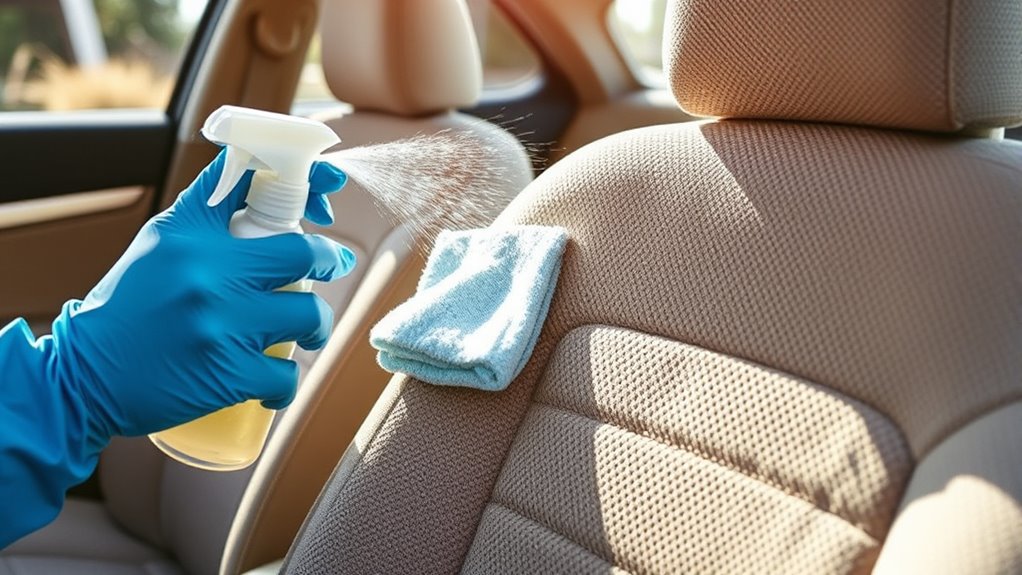
A clean interior is essential for both comfort and safety, and your cloth seats play a big role in that. Regularly washing your seats helps preserve fabric and prevents dirt and stains from causing long-term damage.
Clean seats also make the inside of your car look newer and more inviting. When you keep your seats free of dust and grime, you also reduce allergens and create a healthier environment inside your vehicle.
Neglecting cleanliness can cause fabric fibers to break down faster, which could lead to costly repairs or replacements. Plus, a tidy interior makes your driving experience more comfortable and visually appealing.
You’ll notice how much better your car looks and feels when you regularly wash the cloth seats. Ultimately, keeping things clean isn’t just about looks—it’s about protecting your investment and making every drive safer and more pleasant.
Getting Your Car Ready for a Deep Clean
Before you start cleaning, remove all personal items, trash, and loose debris from your car’s interior. This clears the way for a thorough deep clean and keeps things from getting in your way.
Next, vacuum the seats, floor mats, and carpets to lift dirt and dust. Organizing your tools is essential—gather your cleaning cloths, brushes, sprays, and any other supplies you plan to use. Having everything within reach saves time and helps you stay focused.
Check the condition of your cloth seats; if they’re heavily soiled, consider pre-treating stains or spots. Confirm your tools are clean and ready to go to avoid spreading dirt.
What Supplies You Need to Clean Cloth Seats
To effectively clean your cloth seats, gather a few essential supplies that can tackle dirt, stains, and grime. Start with a vacuum cleaner to remove loose dirt and debris, which helps prevent further staining during cleaning.
A stain removal spray or a mild fabric cleaner is vital for tackling spots that need targeted treatment. Keep a soft-bristled brush or microfiber cloth handy to work the cleaner into the fabric without damaging it.
You’ll also want a clean microfiber towel or sponge for blotting and drying. For regular cleaning, understanding the cleaning frequency helps prevent buildup and stubborn stains.
If stains persist, having a stain remover on hand guarantees you can treat problem areas promptly. Remember, the right supplies make stain removal easier and more effective, helping you maintain the fabric’s appearance and prolonging the time between deep cleans.
Choosing the Best Cleaning Solution for Fabric Seats
- Use eco-friendly options to help lower chemical exposure.
- Avoid harsh chemicals that might damage delicate fabrics.
- Choose stain-specific solutions for tough spots.
- Check labels to make sure the product is safe for your fabric.
- Always test on a small hidden area before applying it everywhere.
Vacuum and Spot-Treat Stains Effectively
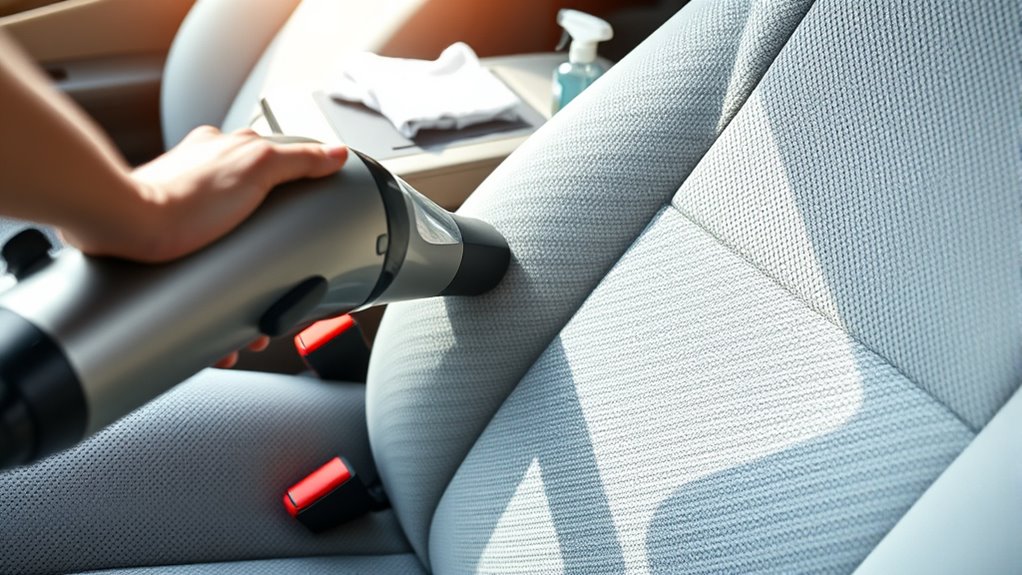
Start by thoroughly vacuuming your car seats to remove loose dirt, dust, and debris that can interfere with stain removal. Use slow, overlapping passes to lift dirt from the fabric fibers effectively. Pay special attention to seams and crevices where dirt tends to accumulate.
Once you’ve vacuumed, identify any fresh or stubborn stains. For spot-treating, apply a small amount of an appropriate fabric cleaner or a mixture of mild soap and water directly onto the stain. Gently blot the area with a clean, damp cloth, working from the outside of the stain inward to prevent spreading.
Identify stubborn stains and gently blot with a damp cloth to prevent spreading and damage.
Avoid rubbing too hard, as this can embed the stain further or damage the fabric. Repeat the process if necessary until the stain lightens. Proper vacuuming combined with targeted spot treatment helps loosen dirt and makes your overall cleaning more effective.
This sets the stage for a thorough, damage-free cleaning, leaving your car seats fresh and clean.
Gentle Techniques to Scrub Cloth Seats Without Damage
Want to clean your cloth seats without damaging them? Start by grabbing a soft bristle brush. Gently sweep over the fabric to lift dirt and loosen any stains. It’s a simple step that makes a big difference!
Next, instead of going for harsh chemicals, opt for a mild, gentle cleaning solution. Using something gentle helps protect the fabric and keeps it looking fresh. When you scrub, do it carefully and lightly—no need to be rough. With these easy tips, your seats will come out clean and well-maintained, without risking any damage.
Use Soft Bristle Brushes
Gently scrubbing your cloth seats with a soft bristle brush can lift dirt effectively without damaging the fabric. The soft bristle benefits include gentle cleaning that keeps your seats’ texture and color intact. When choosing a brush, go for natural or synthetic soft bristles—they’re gentle but still get the job done.
Using the right brush helps prevent fraying or tearing of the fabric. Keep in mind to use light, circular motions to avoid any damage. Focus on seams and crevices where dirt tends to hide, and avoid stiff brushes that can scratch or tear the fabric.
Work in small sections for thorough cleaning and rinse the brush often to remove debris. A soft bristle brush is your best tool for a safe, effective clean that maintains your cloth seats’ integrity.
Apply Gentle Cleaning Solutions
After selecting a soft bristle brush, applying the right cleaning solution is key to cleaning your cloth seats without causing damage. Use gentle, natural alternatives like diluted vinegar, baking soda paste, or mild dish soap to avoid harming delicate fabric types.
These solutions are effective and safe, especially for sensitive or synthetic fabrics. Here’s a quick guide to help you choose:
| Fabric Type | Natural Alternative | Tips |
|---|---|---|
| Cotton | Diluted vinegar | Test on hidden area first |
| Synthetic | Mild dish soap + water | Avoid harsh chemicals |
| Microfiber | Baking soda paste | Use sparingly |
| Leather-like | Mild soap + water | Gentle agitation |
| Velour | Water + a few drops of vinegar | Pat, don’t rub |
Using gentle solutions helps preserve fabric integrity and guarantees a thorough clean.
How to Rinse and Dry Your Cloth Seats Properly
Once you’ve thoroughly rinsed your cloth seats, it’s important to dry them properly to prevent mold and water spots. Using the right water temperature during rinsing helps avoid residue, but drying is just as important. Choosing effective drying methods can speed things up and keep moisture from lingering.
Here are some drying tips to consider:
- Use a clean microfiber towel to absorb excess water
- Let the seats air dry in a well-ventilated space
- Use a portable fan or blower for faster drying
- Open windows or doors to boost airflow
- Avoid direct sunlight to prevent fading or damage
Picking the right drying method depends on how much time you have and your environment. Always make sure the seats are completely dry before you drive again. Proper drying not only keeps your seats clean but also helps them last longer.
Tips to Keep Your Cloth Seats Clean Over Time
Want to keep your cloth seats looking fresh and clean? Just make a habit of vacuuming them regularly—that way, you can easily remove dirt and debris before they settle in. If something spills, don’t wait too long—clean it up right away to prevent stains from setting in.
Also, you might want to think about using some protective seat covers. They can really help reduce wear and keep your seats looking new longer. Just a few simple steps, and your seats will stay cleaner and nicer over time!
Regular Vacuuming Practices
Regular vacuuming is essential for keeping your cloth seats clean and preventing dirt buildup. Using the right techniques and tools helps your seats stay fresh and last longer.
Start by choosing a vacuum with a brush attachment or upholstery tool. Use slow, overlapping strokes to loosen and lift dirt from the fabric fibers.
Pay extra attention to seams and crevices where dirt tends to hide. Make sure to empty the vacuum’s canister or replace the bag regularly to keep suction strong.
Try to vacuum once a week. Staying consistent prevents dirt from settling in and keeps your seats looking great.
Immediate Spill Management
Spills happen unexpectedly, but quick action can stop stains from setting into your cloth seats. Your immediate response is key to preventing stains and keeping your seats looking fresh over time.
When a spill occurs, grab a clean cloth or paper towels and gently blot the area—don’t rub, so you don’t spread the stain. Keep a spill kit nearby with essentials like water, a mild cleaner, and a brush to react quickly.
Here’s a visual guide:
| Spill Type | Response Action | Time Needed |
|---|---|---|
| Liquid soda | Blot immediately | Under 1 minute |
| Coffee or tea | Blot, then clean | 2-3 minutes |
| Food residue | Remove then clean | 3-5 minutes |
| Muddy footprints | Brush off, clean | 5-10 minutes |
Quick, targeted responses are your best defense against lasting stains.
Protective Seat Covers
Using protective seat covers is one of the most effective ways to keep your cloth seats looking fresh and clean over time. Choosing the right seat cover materials, like waterproof polyester or breathable cotton blends, can prevent stains and wear.
When installing, follow these tips: guarantee a snug fit, secure all straps tightly, and remove wrinkles for a smooth look. Proper installation prevents slipping and prolongs the cover’s lifespan.
Regularly check for signs of wear or dirt buildup, and wash or replace covers as needed. Consider covers with easy-to-clean fabrics for quick maintenance.
Keep in mind, well-fitted covers protect your seats from spills, pet hair, and dirt, saving you time and effort on deep cleaning.
Common Mistakes to Avoid When Cleaning Fabric Seats
One common mistake to avoid when cleaning fabric seats is using too much water or cleaning solution. This can lead to mold and mildew growth or cause the fabric to become overly saturated.
Excess moisture can damage the fabric care process, making it harder to dry and increasing the risk of odors. Overusing cleaning products can also leave residues that attract dirt faster, reducing the effectiveness of your cleaning.
Too much moisture or product can hinder drying, cause odors, and attract dirt, reducing cleaning effectiveness.
Always apply cleaning solutions sparingly and use a damp cloth or sponge for the best results. It’s also important not to scrub too hard, which can damage delicate fibers.
Many people overlook the importance of regular cleaning. Assuming infrequent care is fine can lead to deep stains and buildup.
Maintaining a consistent cleaning routine helps keep your fabric seats fresh and in good condition. Proper management prevents damage from over-wetting or harsh chemicals.
How Often Should You Clean Your Cloth Seats?
Regular cleaning of your cloth seats helps prevent stains and buildup, making deep cleaning less necessary. How often you should clean depends on your driving habits and exposure to dirt or spills.
Generally, a weekly maintenance tip is ideal for keeping your seats fresh and clean. If you often have passengers or eat in your car, consider cleaning every 1-2 weeks. For less frequent use, a monthly cleaning may be enough.
Pay attention to high-traffic areas and spills, and address them promptly to avoid staining. To keep your cloth seats in great shape, remember these tips:
- Clean minor spots immediately to prevent stains
- Vacuum once a week to remove loose debris
- Use a gentle fabric cleaner regularly
- Avoid harsh chemicals that can damage fabric
- Deep clean every 1-3 months for best results
Sticking to a consistent cleaning routine helps extend the life of your seats and keeps your interior feeling fresh.
Frequently Asked Questions
Can I Use a Steam Cleaner on My Cloth Seats?
Yes, you can use a steam cleaner on your cloth seats. The benefits include deep cleaning and sanitizing without harsh chemicals.
When you’re cleaning the upholstery, make sure the steam isn’t too hot or too close to the fabric. This helps prevent any damage.
Use light pressure and move steadily for even results. This method effectively lifts dirt, stains, and germs, leaving your seats fresh and clean without risking fabric damage.
Is It Safe to Use Bleach on Fabric Car Seats?
Using bleach on fabric car seats isn’t safe, as it can damage the material and cause discoloration. Instead, choose bleach alternatives or fabric care products made specifically for upholstery. These options clean well without harming your seats.
Always test any cleaner on a small, hidden area first to make sure it won’t cause damage or discoloration. By picking gentle, effective solutions, you help protect your fabric and keep your car’s interior looking fresh and inviting.
How Do I Remove Strong Odors From Cloth Seats?
To remove strong odors from your cloth seats, start by vacuuming thoroughly to pick up debris and loose particles.
Then, spray odor neutralizers designed for fabric, focusing on problem areas. Let it sit for a few minutes, then wipe with a clean cloth.
For ongoing freshness, use fabric fresheners regularly. This approach helps eliminate stubborn smells and keeps your car smelling clean and fresh.
Are There Eco-Friendly Cleaning Options for Car Seats?
Yes, you can choose eco-friendly cleaning options for your car seats. Look for biodegradable cleaners that break down naturally without harming the environment.
Natural alternatives like vinegar and baking soda are also effective for cleaning and deodorizing cloth seats. These options are safer for your health and the planet.
They work well to remove dirt and odors, leaving your car fresh without relying on harsh chemicals.
Can I Clean My Seats Without Removing the Car Seats?
Think of your car seats as a canvas that needs a gentle touch, not a full repaint.
You can clean your seats without removing them by using a handheld vacuum and a fabric-safe cleaner.
Focus on seat cleaning and fabric care. Lightly spray the cleaner, scrub softly with a brush, then wipe with a damp cloth.
This method preserves your seats’ integrity while keeping them fresh and spotless.
Conclusion
Keeping your cloth seats clean is key to having a fresh, inviting car interior. Regular vacuuming, quick stain treatment, and thorough rinsing help keep your seats looking new.
Avoid harsh chemicals, over-wetting, and rushing through the cleaning process to prevent damage. Taking your time makes a big difference.
Consistency is everything—clean your seats often, treat stains early, and stay on top of their condition.
By following these simple steps, you’ll enjoy a spotless, comfortable car interior that looks great and lasts longer. Properly washing cloth seats in your car helps maintain their appearance and keeps your driving experience enjoyable.