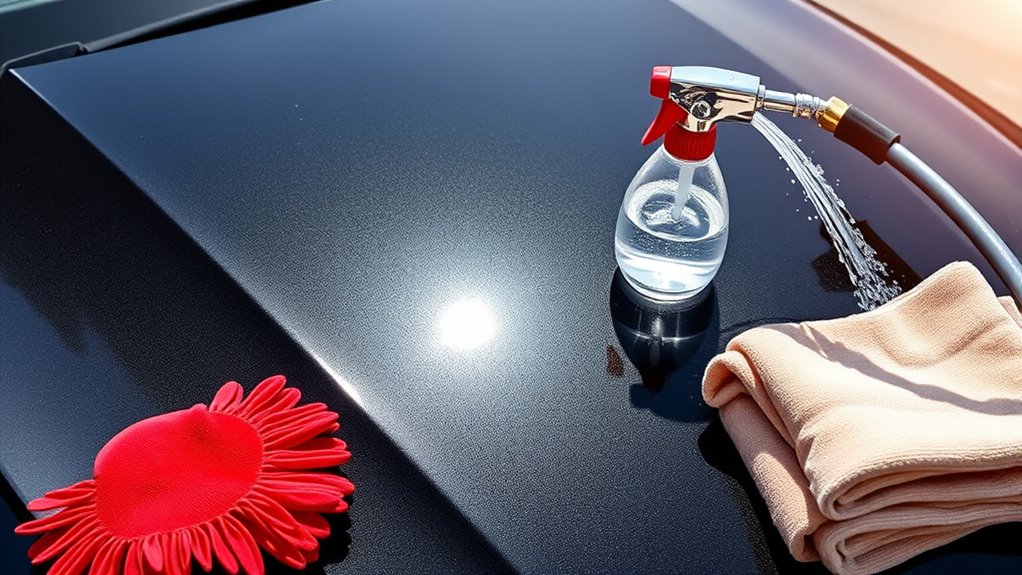
Essential Tools and Soaps You Should Use to Wash My Car
Cleaning your car can sometimes feel like a daunting task, especially when you’re unsure about the right tools and soaps to use. Many people struggle with finding effective and safe options that won’t damage their paint or leave streaks.
But don’t worry—you’re not alone, and with the right gear, washing your car can become a simple, enjoyable routine.
To wash your car properly, you need quality tools like a microfiber wash mitt or sponge, a two-bucket system with a grit guard, and a soft-bristled wheel brush. Choose pH-balanced, biodegradable soaps designed for vehicles to protect your paint.
Use microfiber towels or waffle-weave cloths for drying and avoid household cleaners.
Learning about foam cannons, detailing brushes, and eco-friendly options will help you avoid common mistakes and guarantee a spotless, scratch-free finish—keep going for more details.
Key Takeaways
- Use a high-quality microfiber wash mitt and microfiber towels to prevent scratches and make cleaning gentle and effective.
- Implement a two-bucket system—one for soap and one for rinsing—to avoid putting dirt back on your car.
- Choose pH-balanced, biodegradable car wash soaps designed specifically for vehicles. They protect your paint and are better for the environment.
- Use a foam cannon with proper soap dilution and controlled pressure for a thick, residue-free foam that covers your car evenly.
- Rinse thoroughly before washing and dry with microfiber towels or waffle-weave cloths to prevent water spots and streaks.
Essential Tools You Need for Washing Your Car Properly
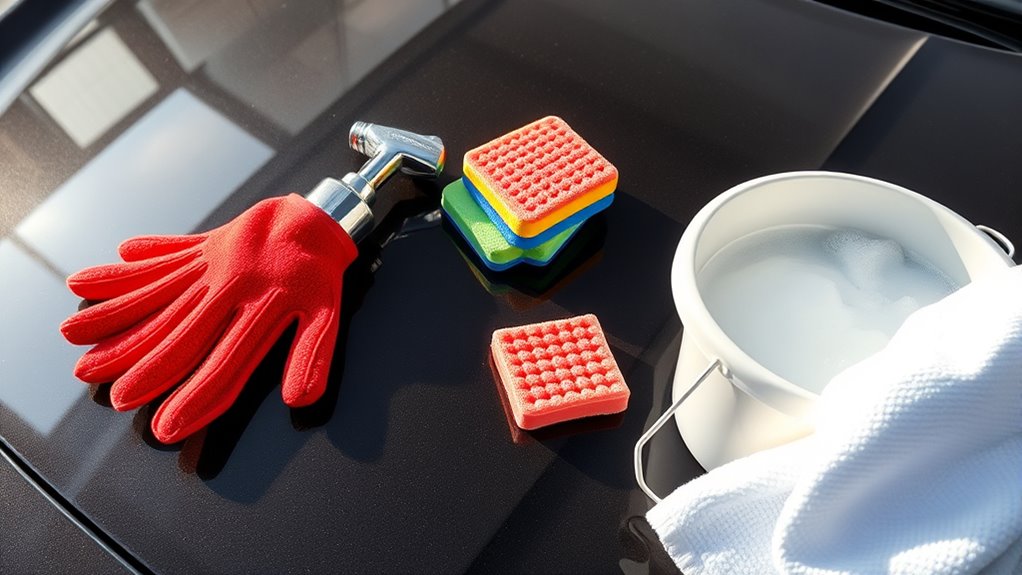
To wash your car effectively, you need a few essential tools that make the process easier and more thorough. Using proper car wash techniques starts with having the right tools in hand.
First, get a high-quality sponge or microfiber wash mitt; these help lift dirt without scratching your paint. Next, a two-bucket system is crucial—one for soapy water and another for rinsing—to prevent dirt from reapplying to your car.
You’ll also need a gentle yet effective car wash soap, which is part of your essential cleaning supplies. A soft-bristled wheel brush and a microfiber towel are great for detailed areas and drying.
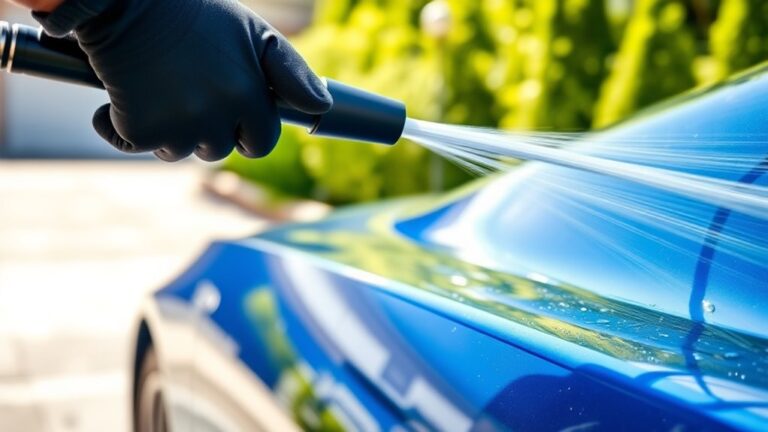
Don’t forget a hose with a spray nozzle for controlled rinsing. These tools guarantee you follow proper techniques and avoid damage. With the right equipment, your car washing routine becomes easier, more efficient, and results in a clean, shiny finish.
How to Choose the Best Car Wash Soaps for a Safe Shine
Choosing the right car wash soap can make a big difference in getting a safe, streak-free shine without damaging your paint. Start by checking the soap’s pH balance—ideally, it should be neutral or slightly alkaline. This way, it cleans well without stripping away protective coatings.
Too acidic or alkaline cleaners can harm your vehicle’s finish over time. Look for formulas made specifically for cars, which are usually gentler on your paint. Stay away from harsh detergents or household cleaning products with aggressive ingredients—they can cause dullness or scratches.
A good car wash soap should produce plenty of suds. That helps lift dirt without needing lots of scrubbing. The best soaps clean thoroughly while keeping your car’s clear coat safe.
Microfiber Towels vs. Sponges: Which Is Better for Your Car?
When you’re trying to decide between microfiber towels and sponges for washing your car, think about how well each one handles water and dirt. Microfiber towels are usually better at preventing scratches and are pretty easy to clean and reuse. They’re soft, gentle, and great at picking up dirt without damaging your paint.
On the other hand, sponges can trap dirt more easily, which means if you’re not careful, they might scratch your car’s surface. But some people prefer sponges because they can feel like they’re scrubbing more thoroughly, especially on stubborn spots.
Absorbency and Dirt Removal
Microfiber towels and sponges each have their own strengths when it comes to absorbency and dirt removal. Microfiber towels are great at absorbing water and dirt without scratching your car’s surface.
Sponges tend to hold more water initially but can push dirt around if you’re not careful. When it comes to dirt removal, microfiber towels gently lift debris, lowering the chance of scratches.
Sponges, on the other hand, need more rinsing and wringing to avoid redepositing dirt. They can be more abrasive if they’re dirty or rough.
Here’s a quick comparison:
| Feature | Microfiber Towels | Sponges |
|---|---|---|
| Absorbency | High | Moderate to high |
| Dirt removal ease | Gentle, effective | Can be abrasive if used improperly |
| Scratch risk | Low | Higher if dirty or rough |
| Reusability | Reusable with proper care | Reusable but prone to bacteria |
| Best for | Delicate surfaces | Heavy dirt or grime |
Scratch Prevention Benefits
Although both microfiber towels and sponges can be effective cleaning tools, microfiber towels are generally better at preventing scratches on your car’s surface. Microfiber towels use finer fibers to gently lift dirt and debris without dragging particles across the paint.
This reduces the risk of micro-scratches that can mar your car’s finish over time. Sponges, on the other hand, can trap dirt within their pores, increasing the chance of scratching with every wipe.
Using microfiber towels also works well with protective coatings because they won’t damage these layers while cleaning. Applying scratch prevention techniques like choosing the right tools and avoiding harsh scrubbing helps keep your car’s shine and paint in top shape.
This ensures a smoother, scratch-free finish after every wash.
Durability and Maintenance
While both microfiber towels and sponges are essential tools for washing your car, their durability and maintenance needs differ greatly. Microfiber towels are highly durable, often lasting dozens of washes when properly cared for, making them perfect for maintaining your car’s paint protection.
Sponges tend to wear out faster and can trap dirt, which risks scratching your paint if not replaced regularly. To extend your tools’ lifespan, wash microfiber towels separately and avoid fabric softeners.
Rinse sponges thoroughly after each use to prevent dirt buildup. Following recommended wash frequency, microfiber towels can be reused often without affecting your car’s finish. Sponges, however, should be replaced more frequently to keep your paint safe.
Proper maintenance ensures both tools serve you well and help protect your car’s finish over time.
How to Use a Foam Cannon for a Gentle, Thorough Clean
To get the best results, you want to set up your foam cannon just right, making sure you mix the soap and water properly. It’s all about getting that perfect foam consistency so it clings nicely to the surface without being too runny or too thick.
When you’re spraying, hold the cannon at a comfortable distance from your car’s surface—usually a few inches away—and move it in steady, even strokes. This way, you’ll cover every inch without missing spots or applying too much pressure. Mastering these little techniques will help you give your car a gentle yet thorough clean every time, leaving it spotless and looking great.
Proper Foam Cannon Setup
Setting up your foam cannon correctly is key for a gentle yet effective car wash. To get the right foam thickness, start by adjusting the foam cannon pressure. Too high can cause damage, while too low might not produce enough foam.
Use the recommended pressure settings for your specific model, usually around 100–150 psi. Next, choose the right dilution ratio of soap to water. This balances foam consistency and cleaning power.
Thicker foam helps lift dirt without scratching your paint. Make sure the nozzle is securely attached and the nozzle tip is clean for an even spray. Test the foam on a small area first.
Then, fine-tune the pressure and soap mixture for the perfect foam thickness. Proper setup guarantees a gentle, thorough clean without wasting product or risking damage.
Technique for Effective Use
Once your foam cannon is properly set up, it’s time to start applying the foam effectively. Begin by adjusting the water pressure and making sure your water isn’t too hot, as cold or lukewarm water works best for a gentle, thorough clean.
Hold the cannon about 2–3 feet from your car’s surface and spray evenly, covering all areas with a thick foam layer. Let the foam sit for a few minutes to loosen dirt, but avoid letting it dry.
Use your washing frequency wisely; washing your car regularly prevents buildup and makes each wash easier. After applying the foam, rinse thoroughly with water, making sure no residue remains.
Proper technique guarantees a safe, effective clean without risking paint damage.
Selecting the Right Car Wash Bucket and Grit Guard
Choosing the right car wash bucket and grit guard is key for a thorough, scratch-free clean. When picking a bucket, look for durable materials like high-quality plastic or rubber. These resist cracking and handle harsh cleaning agents well, so they last longer.
The size should be big enough to hold plenty of water and soap, but still easy to carry around. A grit guard is a game-changer because it traps dirt and debris at the bottom of the bucket. This keeps those particles from scratching your paint when you dip your wash mitt back in.
Using a good bucket and sturdy grit guard makes a big difference in getting a spotless finish without scratches. Focus on quality and practicality to make your car washing safer and more effective every time.
Why a Good Wash Mitt Matters and How to Use It Effectively
A quality wash mitt can make a big difference in how well you clean your car’s surface. It helps you clean gently, reduces the chance of scratches, and holds more soap and water for a more efficient wash.
To get the most out of it, rinse the mitt often in your bucket to remove dirt and avoid spreading grime. Use light, overlapping strokes to lift dirt away instead of rubbing it in.
Keep the mitt damp and clean throughout the wash to stay effective. When you switch to different sections of your car, rinse the mitt thoroughly to prevent transferring dirt.
Using a good wash mitt correctly makes cleaning easier and protects your car’s finish. It leaves your car spotless and scratch-free.
Best Drying Tools to Prevent Water Spots and Scratches
Even though water spots and scratches are common concerns after washing your car, using the right drying tools can make a big difference in preventing them. To stop water spots, avoid air drying, which leaves droplets that can etch into the paint.
Instead, choose a microfiber drying towel or a waffle-weave cloth. These absorb water quickly and gently, helping reduce the risk of scratches. A high-quality, plush microfiber towel lets you dry properly by lifting water without dragging dirt or debris.
For larger areas, consider using a blower or leaf blower to remove excess water before towel drying. Always work in straight, overlapping strokes, and don’t let water droplets dry on the surface. These tools and techniques help keep your paint protected and your car looking flawless, free of water spots and scratches.
Top Detailing Brushes for Hard-to-Reach Areas
Reaching into tight or intricate areas of your vehicle can be challenging without the right tools. That’s where quality detailing brushes come in. These brushes are designed specifically to clean hard-to-reach spots like vents, grilles, door jambs, and around emblems.
Look for brushes with fine, dense bristles that won’t scratch your paint or trim. Flexible handles and angled heads help you access tight corners comfortably. A set of different sizes allows you to target specific spots efficiently.
Use soft-bristled detailing brushes for sensitive surfaces, and stiffer ones for tougher grime. Their slim profiles make maneuvering around complex contours easier without damaging surrounding areas.
Investing in a few high-quality detailing brushes guarantees thorough cleaning of every nook and cranny. They help you leave your vehicle spotless and well-maintained.
These tools are essential for achieving a professional-level clean in those tricky, hard-to-reach areas.
Eco-Friendly Soaps That Protect Your Car’s Finish
As environmental concerns grow, choosing eco-friendly soaps is essential for protecting your car’s finish and reducing your ecological footprint. These soaps help minimize harmful runoff and use biodegradable ingredients that break down naturally.
They keep your car’s paint looking great without sacrificing cleaning power. Plus, eco-friendly soaps are safe for your skin and the environment, making your washing routine more sustainable.
Many biodegradable options are free from harsh chemicals like phosphates and synthetic fragrances, so they’re gentle yet effective. When choosing a soap, look for labels that indicate biodegradability and eco-friendliness.
| Feature | Benefit | Examples |
|---|---|---|
| Eco-friendly benefits | Protects the environment and your car | Plant-based formulas |
| Biodegradable options | Breaks down naturally | Natural surfactants |
| Chemical-free | Safer for your skin and surroundings | No synthetic ingredients |
Common Car Washing Mistakes to Avoid at Home
Many common car washing mistakes can unintentionally damage your vehicle’s finish or reduce the effectiveness of your cleaning routine. To avoid these, follow proper car wash tips and steer clear of common errors.
For example, never wash your car in direct sunlight. This causes soap and water to dry too quickly, leaving streaks and spots. Using dirty or rough sponges can scratch the paint; instead, opt for a soft microfiber cloth or wash mitt.
Avoid using household cleaning agents like dish soap, which can strip protective wax. Also, don’t forget to rinse thoroughly before applying soap, as dirt and debris can cause scratches when scrubbed.
Another common error is neglecting the wheels and undercarriage, which build up grime. To keep your car’s finish pristine, wash from top to bottom and dry with a clean, soft towel.
These car wash tips help prevent damage while making sure your vehicle stays clean and shiny.
Frequently Asked Questions
How Often Should I Wash My Car to Maintain Its Appearance?
You should wash your car about once every one to two weeks for the best car wash routine, depending on where you live.
Seasonal washing is important too. Wash more often in winter to get rid of salt and grime, and less in dry, mild seasons.
Regular cleaning keeps your car looking great and helps protect its paint.
Pay attention to your environment and adjust your washing schedule so your car stays in top shape.
Can I Use Household Cleaning Products on My Car?
Like a knight shielding their armor, you shouldn’t use household cleaning products on your car. These products are often harsh and can damage your paint.
Instead, opt for car shampoo alternatives and safe cleaning methods designed specifically for vehicles. This helps preserve your car’s finish and keeps it shining like new.
Always choose gentle, purpose-made products to maintain your vehicle’s beauty and longevity.
What’s the Best Way to Remove Stubborn Dirt Without Scratching?
To remove stubborn dirt without scratching, start by rinsing your car with a pressure washer to loosen debris. Then, gently use a clay bar on the surface, applying a clay lubricant to prevent scratches.
The clay bar lifts embedded dirt safely, leaving your car smooth. Always work in small sections and avoid pressing too hard, so you protect your paint while effectively cleaning off tough dirt.
Are There Specific Tools for Washing Different Car Finishes?
You should use specific tools for different car finishes to avoid damage. Foam cannons are great for creating thick foam that lifts dirt gently, especially on delicate clear coats.
Microfiber mitts are perfect for safely washing painted surfaces, helping prevent scratches. For matte or satin finishes, choose softer, plush microfiber mitts and steer clear of harsh brushes.
Using the right tools for your car’s finish ensures a thorough clean without risking any damage. Tailoring your approach makes a big difference, no matter what type of finish your car has.
How Do I Store Car Wash Tools to Prolong Their Lifespan?
You should store your car wash tools in a clean, dry space to help them last longer. Using proper storage solutions like labeled bins or wall-mounted racks keeps everything organized and prevents damage.
After each wash, rinse and fully dry your tools before putting them away. Regularly check for signs of wear—replace any worn items to keep your tools in good shape.
Keep your tools away from harsh sunlight or extreme temperatures. This helps maintain their effectiveness and extends their lifespan.
Conclusion
In your car-cleaning quest, choose quality tools and soaps to guarantee a spotless shine. From microfiber marvels to eco-friendly formulas, your car’s care starts with the right resources.
Remember, gentle gestures guard gloss, and proper products prevent paint problems. Using the right car wash soap and soft applicators helps keep your paint looking fresh and flawless.
With mindful methods and meticulous materials, you’ll master the art of a magnificent, mirror-like finish. Make your maintenance methods memorable with essential tools and soaps for a perfect clean.
Enjoy the gleam of your gorgeous, gleaming ride—proper tools and soaps make all the difference!