Are Automatic Car Washes Bad for Your Car?
Many car owners worry about whether automatic car washes might be hurting their vehicle’s finish. If you’re concerned about potential damage but want a quick, convenient way to keep your car clean, you’re not alone.
The good news is, choosing the right type of car wash can make all the difference.
Automatic car washes are generally safe if you choose modern, well-maintained facilities and avoid harsh chemicals. Touchless washes reduce the risk of scratches, while soft cloth options are gentle on your paint.
However, older or poorly maintained washes with abrasive brushes can cause swirl marks, dulling, or paint damage over time.
Knowing which type to pick and understanding potential risks helps you protect your vehicle’s finish.
Discover more tips to keep your car safe and looking its best.
Key Takeaways
- Modern automatic car washes with gentle brushes and touchless systems are generally safe for most vehicles.
- Older or poorly maintained washes might cause scratches, swirl marks, or paint damage.
- Harsh chemicals and abrasive brushes can wear down protective coatings and dull your car’s finish over time.
- Touchless systems reduce the risk of scratches but might not be as effective on heavy grime.
- Hand washing remains the safest way to protect your paint and avoid potential damage from automatic washes.
Are Automatic Car Washes Safe for Your Car?
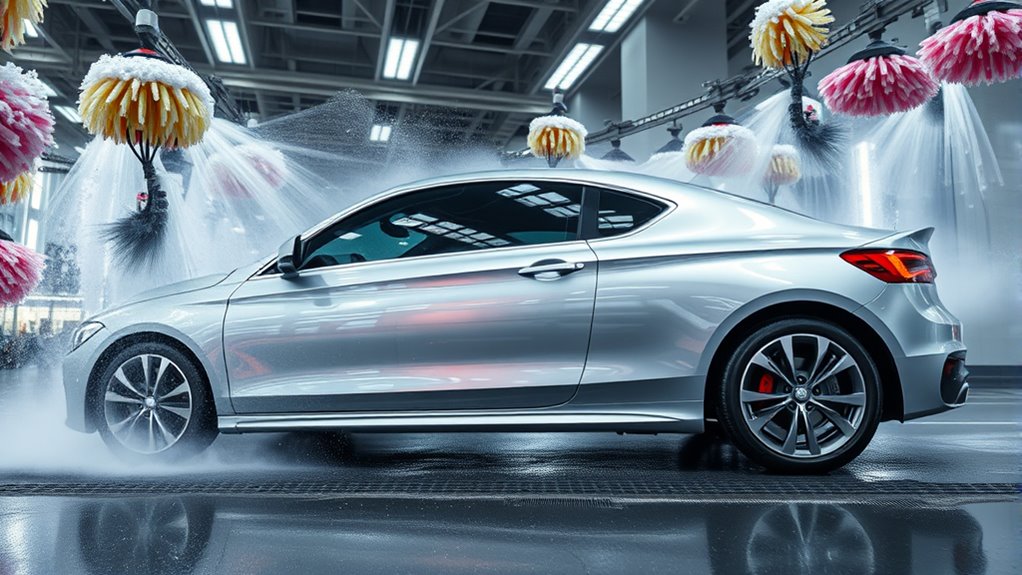
Automatic car washes are generally safe for most vehicles, but it’s good to consider some factors that could cause damage. Modern innovations have made them safer, with gentle brushes and touchless systems that help prevent scratches and dents.
That said, older or poorly maintained washes might still pose risks, especially if the brushes are rough or misaligned. Environmental concerns also matter; many automatic washes are designed to save water and reduce chemical runoff, making them eco-friendly choices.
However, some washes use harsh chemicals or create waste that can harm the environment if not managed properly. To stay safe, choose reputable facilities with modern equipment and eco-friendly practices. Regularly inspecting your vehicle after a wash can help catch any damage early.
How Do Automatic Car Washes Work and Their Types
To clean your car efficiently, automatic car washes use a mix of specialized equipment and cleaning solutions that work together to remove dirt and grime quickly.
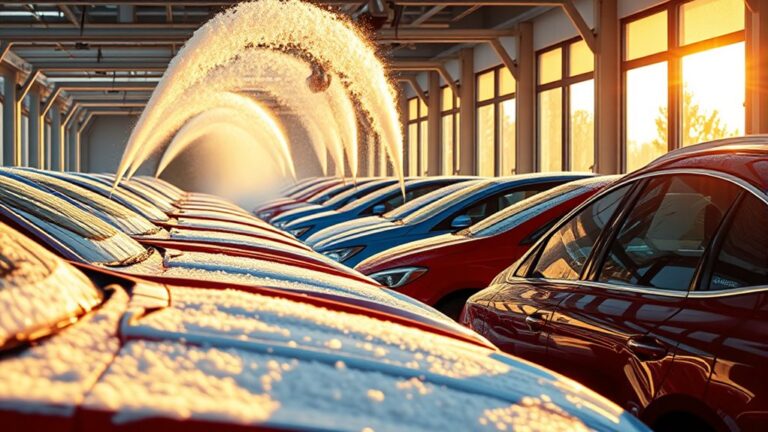
Car wash technology has improved to include conveyor systems, high-pressure sprayers, soft cloth brushes, and foam applicators that adapt to different vehicle sizes and shapes.
Modern car wash systems feature conveyors, high-pressure sprayers, and adaptable brushes for efficient cleaning.
There are several types of automatic washes: touchless, which use high-pressure water and detergents without brushes, and soft cloth or brushless options, which rely on gentle fabric or foam to scrub the surface.
The type you choose can influence how often you wash your car; softer, brushless options are gentler on paint and may allow more frequent washes.
Automatic car washes are designed for speed and convenience, making it easy to keep your car clean regularly.
Understanding how these systems work can help you pick the right type for your vehicle and keep its appearance looking good.
How Safe Are Different Types of Automatic Car Washes for Your Paint?
You might be curious about how safe different automatic car washes really are for your paint. Usually, soft cloth washes are gentler and tend to cause less damage compared to those with brushes. But keep in mind, both can still scratch your paint if they’re not well-maintained or if something gets caught in the cloth.
On the other hand, touchless washes don’t use brushes at all, which sounds safer, right? Well, they do avoid some issues, but their cleaning power can vary a lot. Sometimes they might not get your car as thoroughly clean, and that can leave you wondering if they’re really gentle on your paint or if they might still cause some damage over time.
Soft Cloth vs. Brushes
Are soft cloth and brush car washes likewise gentle on your vehicle’s paint? Not necessarily. Soft cloth benefits include being gentle and reducing scratches, especially when made from microfiber or plush materials. In contrast, brush materials like nylon or foam can vary in softness; harsher brushes may cause micro-scratches over time. Consider these points:
- Soft cloths are typically more gentle and less abrasive.
- Brush materials differ in softness, with some causing more paint wear.
- Proper maintenance of brushes prevents buildup that could scratch your car.
While soft cloths are designed to be safe, some brushes might harm your paint if made from rough or dirty materials. Understanding these differences helps you choose a wash that preserves your car’s finish.
Touchless Wash Effectiveness
Soft cloth and brush wash systems can vary a lot in how gentle they are on your car’s paint, but touchless washes eliminate physical contact altogether. Using advanced touchless technology, these systems spray high-pressure water and detergents to remove dirt without brushes or cloths that can cause micro-scratches.
They’re especially good if you wash your car often, as they help reduce the risk of abrasive damage over time. But their effectiveness depends on the wash quality and how dirty your car is. For example:
| Factor | Impact on Effectiveness |
|---|---|
| Wash frequency | More frequent washes keep your car cleaner |
| Dirt level | Heavily soiled cars might need some manual prep |
| Water pressure | Higher pressure helps clean better |
| Detergent quality | Better detergents boost cleaning power |
Touchless systems are generally safer for your paint, especially with regular washes.
Paint Damage Risks
Different types of automatic car washes pose varying risks to your paint’s safety. The main concern is potential damage to your vehicle’s finish, especially if you have ceramic coatings or wax protection. Here are three common risks:
- Abrasive brushes can scratch or dull your paint, especially if dirt is trapped between the brush and your car.
- Harsh chemicals may degrade protective layers like wax or ceramic coatings, reducing their effectiveness.
- Improperly maintained equipment can cause inconsistent cleaning, leading to swirl marks or paint etching.
While touchless washes minimize physical contact, they may still use chemicals that harm coatings over time. To keep your paint safe, choose washes that are gentle and compatible with your car’s protective layers.
What Damage Can Automatic Car Washes Cause to Your Vehicle?
Automatic car washes can sometimes cause damage to your vehicle if the equipment isn’t properly maintained or if your car has certain features that make it vulnerable. Many myths suggest they’re always safe, but skipping regular maintenance can lead to scratches, paint chipping, or even dents.
For example, if brushes aren’t cleaned regularly, dirt and debris can scratch your paint. Worn-out or misaligned rollers can also scratch or damage your car’s surface. Vehicles with delicate finishes, loose trim, or aftermarket accessories are more at risk.
To protect your car, stay informed about proper maintenance routines for the car wash facility. Avoid believing that automatic washes are completely risk-free. By understanding potential vulnerabilities and ensuring the equipment is well-maintained, you can reduce the chance of damage and keep your vehicle looking its best.
How Do Brush Types Affect Your Car’s Safety?
The type of brushes used in a car wash can greatly impact your vehicle’s safety. Different brush materials and how they’re maintained determine whether your car stays scratch-free.
For example, soft foam or microfiber brushes are gentle and reduce the risk of paint damage. In contrast, rough nylon or wire brushes can cause scratches.
Brush maintenance is also important. Well-maintained brushes prevent dirt buildup that could scratch your car’s surface. Regular cleaning and replacement keep brushes soft and safe.
Some brushes have flexible bristles that adapt to your car’s shape. This minimizes contact pressure and potential damage.
Choosing a wash with quality brush materials and proper maintenance helps keep your vehicle safe. Poorly maintained or harsh brushes can leave scratches or swirl marks, damaging your car’s finish.
Always opt for washes that prioritize gentle, well-kept brushes to protect your investment.
Do Detergents and Cleaning Agents Harm Your Car’s Finish?
Many detergents and cleaning agents have harsh chemicals that can actually harm your car’s paint if you’re not careful. If you use the wrong products or don’t rinse thoroughly, residue can build up over time. That buildup can make your car look dull and might even cause long-term damage to the finish.
It’s really a good idea to pick gentle, car-specific cleaning products. They’re designed to clean effectively without harming your paint. Taking a little extra care with the products you choose can help keep your car looking shiny and new for years to come.
Effect of Harsh Chemicals
Although cleaning agents are meant to remove dirt and grime, harsh chemicals can actually damage your car’s finish over time. Some detergents have chemical compositions that can strip away protective wax layers, weakening your paint protection.
This can cause your car to look dull, develop scratches, or even cause the paint to peel. To understand how this happens, consider these points:
- Strong detergents often contain solvents that break down the clear coat on your paint.
- Certain chemicals can corrode or degrade the surface of your car’s paint.
- Repeated exposure speeds up this deterioration, making your vehicle more vulnerable to environmental damage.
Using gentle, pH-balanced cleaners helps your car keep its shine and protection. Avoiding harsh chemicals is key to preserving the integrity of your vehicle’s finish, so it stays looking newer longer.
Residue Build-Up Risks
Even if detergents are good at removing dirt, they can leave behind residue that builds up over time, risking your car’s finish. Different types like soap scum, mineral deposits, or wax remnants can stick to your vehicle’s surface if not rinsed properly.
This buildup can dull your car’s shine and cause long-term damage if you ignore it. To avoid this, regular buildup prevention is key. Choose car washes that use high-quality, well-rinsed detergents and guarantee thorough rinsing.
Stay away from harsh chemicals that might leave stubborn residues. Keeping your vehicle free of residue not only looks better but also helps protect the paint and clear coat. Over time, this reduces potential damage caused by harmful leftover substances.
Impact on Paint Finish
Detergents and cleaning agents can affect your car’s paint finish if they’re too harsh or used improperly. Strong chemicals can strip away protective layers like ceramic coating or lessen waxing benefits, leaving your car more vulnerable to damage.
To protect your finish, be aware of a few key things:
- Chemical Composition: Pick pH-balanced soaps made for cars to avoid stripping away protective layers.
- Frequency of Use: Washing your car often with harsh agents can gradually wear down the paint.
- Application Method: Using abrasive scrubbers or rough brushes in automatic washes can scratch the surface and damage the finish.
Choosing the right detergents, along with regular waxing and ceramic coatings, helps keep your car looking sleek and glossy while extending the life of your paint.
Are Touchless Car Washes Safer for Your Car?
Are touchless car washes truly safer for your vehicle? These washes use advanced touchless technology, relying on high-pressure water and detergents instead of brushes. This means there’s less chance of scratches or paint damage, which makes them a popular choice for car care.
However, while they excel at cleaning without physical contact, they might not always remove stubborn dirt or grime as effectively as brush-based systems.
Here’s a quick comparison of touchless versus traditional washes:
| Aspect | Touchless Car Wash | Traditional Car Wash |
|---|---|---|
| Risk of scratches | Very low | Slightly higher |
| Cleaning effectiveness | Moderate for light dirt | Better for heavy grime |
| Use of touchless tech | Yes | No |
Signs Your Car Is Being Damaged by an Automatic Car Wash?
Automatic car washes can seem convenient, but if your vehicle shows signs of damage after a wash, it’s important to pay attention. Common signs include:
- Paint scratches that appear suddenly, especially on the hood or doors. These scratches often come from abrasive brushes or debris caught in the wash.
- Faded or dull spots on the paint, which might be caused by harsh chemicals or improper washing techniques.
- Repeated damage patterns around the edges or near sensitive areas. This can happen if the wash is too frequent or if the brushes are rough.
If you notice these signs, it could mean your car’s finish is being compromised. Washing your car often can increase the risk of scratches and damage, especially if the equipment isn’t well-maintained.
Pay attention to how often you go through the wash and check for any new damage afterward. Catching issues early can help prevent more serious harm to your vehicle.
How to Minimize Risks When Using Automatic Car Washes
To reduce the risk of damage when using automatic car washes, it’s important to choose the right facility and stay attentive during the process. Pick a wash that uses gentle water pressure, especially if your car has sensitive paint or delicate parts. High water pressure can cause scratches or strip protective coatings, so look for washes that use softer jets.
Make sure to monitor the wash cycle closely to ensure your car is aligned correctly and that no brushes or equipment touch vulnerable areas. Limiting how often you wash your car can also help protect it; washing too frequently can wear down paint and protective layers. Consider a schedule of once every few weeks unless your car gets especially dirty.
When Is Hand Washing a Better Option for Your Car?
Hand washing is a great option when you want to be gentle on your car’s paint, especially if it has a delicate or special finish. It gives you more control, so you can avoid scratching or damaging the surface.
Plus, hand washing lets you do better detailing and spot cleaning. You can focus on every inch, making sure no dirt or grime is left behind. And over time, hand washing can help prevent surface damage that automatic washes might cause.
Gentle on Paint
While automatic car washes are super convenient, they’re not always the gentle option for your vehicle’s paint. If you want to keep your car’s finish looking great, consider hand washing, especially in these situations:
- Your car has a lot of dirt, mud, or debris that a quick wash can’t fully remove.
- You’ve noticed scratches or swirl marks after recent washes, which could mean abrasive materials are damaging your paint.
- You wash your car often, and too much washing can wear down protective coatings. Hand washing becomes a smarter choice here.
Hand washing lets you control the process and avoid harsh brushes or chemicals. It’s especially helpful when washing more frequently, helping to keep your car’s finish looking fresh and shiny.
Better for Detailing
Regarding detailing your car’s interior and exterior, hand washing often offers advantages that automated systems can’t match. When you want a thorough clean, hand washing lets you control the process and ensure every nook and cranny gets attention.
It’s especially beneficial if you detail your car often or use specialized detailing products. Hand washing helps preserve delicate surfaces and provides a gentler approach. Use quality microfiber cloths and gentle cleaners for the best results.
Here’s a quick comparison:
| Aspect | Automated Car Wash | Hand Washing |
|---|---|---|
| Detailing Frequency | Good for regular maintenance | Perfect for deep, frequent cleaning |
| Detailing Products | Limited control over products | Customizable for specific needs |
| Surface Care | Less precise, risk of damage | More precise, reduces surface wear |
Hand washing is your best choice for detailed, careful car care.
Prevents Surface Damage
Although automated car washes are convenient, they can sometimes cause surface damage, especially to delicate paint or clear coats. Hand washing offers better surface protection by allowing you to control every contact point, reducing the risk of scratches or swirl marks.
Consider these benefits:
- Gentle cleaning with soft cloths or mitts minimizes abrasive contact.
- You can better inspect your paint for chips, scratches, or contaminants.
- Using proper cleaning agents helps preserve your paint’s longevity and prevents deterioration.
Choosing to hand wash your car helps maintain a smooth, blemish-free surface and extends the lifespan of your vehicle’s finish. When you prioritize careful, thorough cleaning, you’re actively protecting your car’s surface and ensuring it stays looking newer longer.
Frequently Asked Questions
Are There Specific Car Models More Vulnerable to Automatic Wash Damage?
Some car models with delicate or unique designs are more vulnerable to automatic wash damage. Vehicles with low ground clearance, custom paint jobs, or sensitive trim may struggle with certain wash technology like brushes or high-pressure jets.
It’s a good idea to check your car’s design and talk to your manufacturer’s recommendations. This way, you can avoid scratches or damage, especially if your car has specialized features or finishes that might not handle aggressive wash methods well.
How Often Should I Use Automatic Car Washes to Prevent Damage?
You should limit your automatic car washes to about once every two weeks to protect your vehicle’s finish. Imagine gentle soap and soft brushes as a spa treatment, but too frequent visits can wear down paint or cause scratches.
Follow the recommended frequency and choose gentle wash techniques to keep your car shiny and safe from damage. This balance helps maintain your car’s appearance without risking unnecessary harm.
Can Automatic Car Washes Affect My Car’s Resale Value?
Automatic car washes can influence your car’s resale perception, especially if used excessively or improperly. Frequent washings with harsh brushes might cause minor paint damage, which can impact resale value.
However, if you wash your car regularly but choose gentle options and avoid aggressive settings, it usually won’t harm your vehicle’s appearance. Proper care and moderation are key to maintaining your car’s condition.
Keeping your car looking good when you’re ready to sell is all about balancing wash frequency and using the right methods.
Do Automatic Car Washes Use Environmentally Friendly Cleaning Agents?
Did you know that over 60% of automatic car washes now offer eco-friendly options? They use environmentally friendly cleaning agents that help reduce chemical runoff and water waste.
Many facilities focus on chemical safety, avoiding harsh chemicals that could damage your car’s paint or harm the environment. Choosing an eco-friendly automatic wash is a smarter, greener choice.
It benefits both your vehicle and the planet, making it a win-win situation.
Are There Any Long-Term Effects of Frequent Automatic Washing on Car Paint?
Frequent automatic washes can impact your car’s paint over time, especially if the wash uses harsh brushes or abrasive materials. These can lead to micro-scratches and fading of the paint.
To keep your finish looking good, opt for automatic washes with gentle, soft cloths or touchless technology. These are much easier on your car’s paint.
Regularly applying a wax or sealant helps protect the paint and keeps your car shiny. It’s a simple way to maintain your car’s appearance despite frequent cleaning.
Conclusion
While automatic car washes offer convenience like clockwork, they can sometimes be rough on your paint and delicate surfaces. Think of them as a double-edged sword—quick and easy, but not always gentle.
To keep your car shining like a mirror, weigh the risks and choose safer options, like touchless washes or hand washing.
After all, your vehicle deserves a gentle touch, not a rough ride through a mechanical storm. Regularly using automatic car washes can sometimes cause more harm than good to your car’s finish.