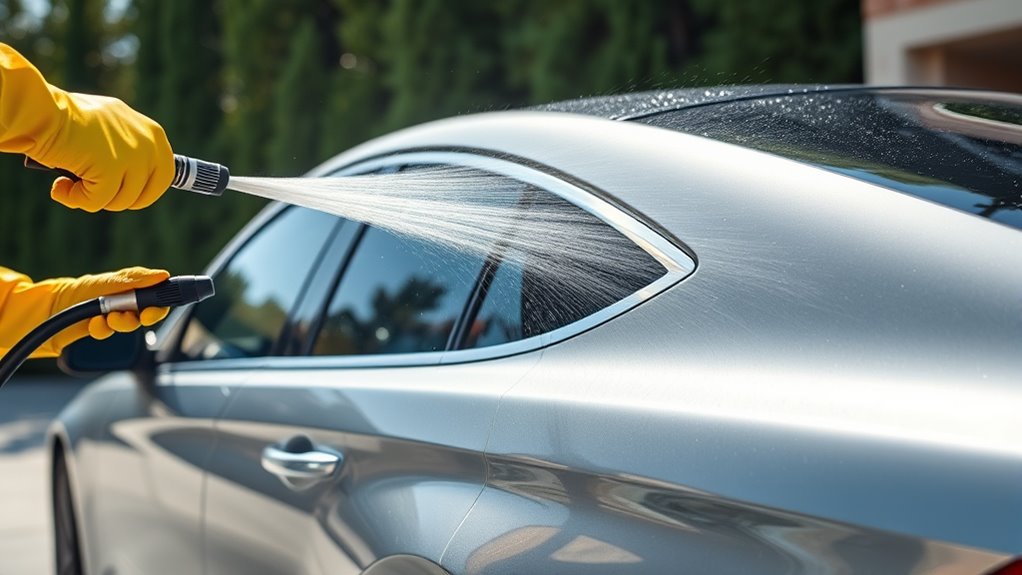
Safely Use a Pressure Washer on Your Car
Many car owners want that perfect, spotless finish but often feel overwhelmed by the thought of damaging their vehicle with harsh cleaning tools.
Using a pressure washer on your car can be a game-changer, but it’s important to do it safely. You’re not alone—many people struggle with finding the right technique to clean effectively without risking scratches or dents.
To safely use a pressure washer on your car, start by inspecting your vehicle and work area to prevent damage. Use a wide-angle nozzle with 1200-1900 PSI, maintaining a distance of 3-4 feet while spraying, and test on a small area first.
Rinse thoroughly to loosen dirt, apply eco-friendly detergent, then rinse again with smooth, overlapping strokes. Dry carefully with microfiber towels to avoid spots.
Keep these tips in mind to protect your car’s finish and get the best results. If you continue exploring, you’ll uncover more essential techniques for safe, effective washing.
Key Takeaways
- Use a 25 or 40-degree spray nozzle and keep the nozzle about 3-4 feet away from the car to avoid damaging the paint.
- Rinse the vehicle from top to bottom with low pressure, making sure not to spray directly on delicate areas with high pressure.
- When applying detergent, do so at a safe distance and let the foam sit for 5-10 minutes before rinsing it off.
- Keep the nozzle moving smoothly in sweeping motions to prevent concentrated pressure spots that could harm your car’s paint.
- Dry the car with microfiber towels or a blower, and use soft brushes or cloths for hard-to-reach spots to avoid scratches.
How to Prepare Your Car and Work Area for Pressure Washing
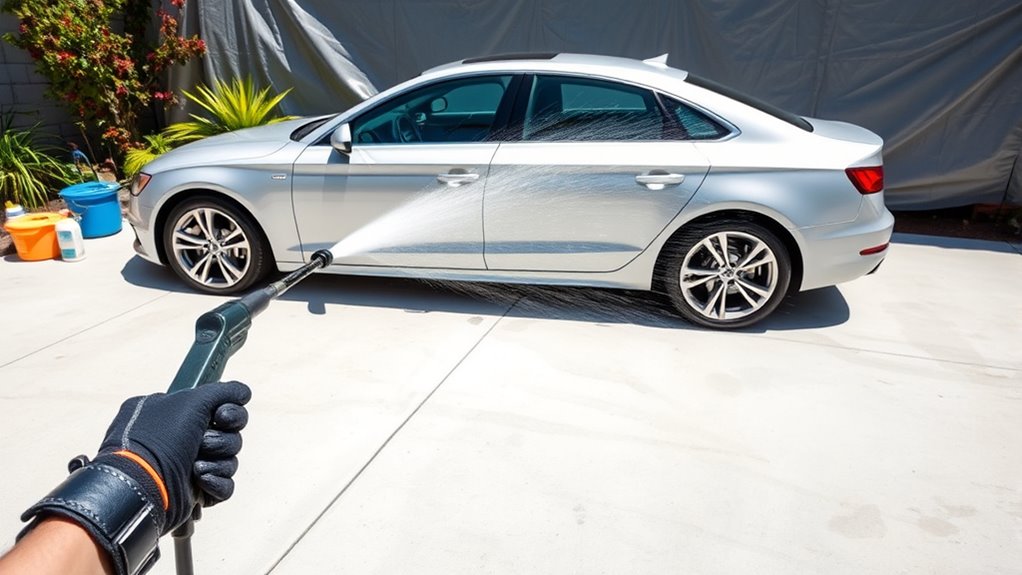
Before you start pressure washing your car, it’s important to prepare both your vehicle and your work area. Begin with a car inspection to confirm there are no loose parts or damage that could be worsened by high pressure.
Check for cracks, chips, or loose trim, and secure or repair anything that might come loose during cleaning. Next, clear the area around your car. Remove all obstacles like tools, outdoor furniture, or trash cans to prevent accidents and allow easy access.
Make sure the ground is level and stable to avoid slips. If you’re in a driveway or garage, confirm there’s enough space to maneuver the pressure washer comfortably. Protect nearby plants, electrical outlets, and surfaces from water spray.
A well-prepared work area helps you work efficiently and minimizes the risk of damage or injury during the pressure washing process.
How to Choose the Right Pressure Washer and Nozzle Settings
Choosing the right pressure washer and nozzle settings is key to cleaning your car effectively without causing damage. First, understand the different types: electric models are lightweight and great for light cleaning, while gas-powered units deliver higher pressure for tougher dirt.
For washing your car, a pressure range of 1200 to 1900 PSI usually works best. When it comes to nozzles, a 25-degree or 40-degree spray provides a gentle wash that won’t harm the paint.
Avoid using narrow, high-pressure nozzles meant for heavy-duty cleaning. They can strip paint or cause dents. Always start with the widest spray pattern and adjust if needed.
How to Rinse Your Car Before Applying Detergent
First off, turn your pressure washer to a low, gentle setting. You want to be careful not to damage the paint. Now, give your car a good rinse from top to bottom, making sure to include those tricky spots like the wheels and undercarriage. This step helps loosen all the dirt and grime so it’s easier to clean off later. Once that’s done, you’re all set to move on to applying your detergent for a thorough clean.
Use Gentle Water Pressure
Using gentle water pressure is key for rinsing your car without causing damage. Adjust your pressure settings to a lower level to keep it gentle.
High pressure can strip paint or harm delicate surfaces. Keep the nozzle about 3 to 4 feet from the car for a safe distance.
Move the spray evenly and avoid concentrated blasts on one area. This helps loosen dirt without risking harm to your vehicle’s finish.
Always test your pressure on a small, hidden spot first to make sure it’s not too strong. The goal is to rinse thoroughly without scratches or paint stripping.
Prioritize gentle techniques and proper pressure settings to protect your car while cleaning.
Cover All Vehicle Areas
Before applying detergent, make sure to rinse all areas of your vehicle thoroughly. Covering all surfaces helps you remove loose dirt and debris, which is essential for a good clean.
Use your pressure washer to target every part, including the roof, hood, doors, and undercarriage. Don’t forget to pay attention to crevices and seams where grime can hide.
Proper rinsing prevents dirt from scratching the paint when you apply detergent later. Keep the spray at a safe distance and angle, avoiding high pressure directly on delicate areas like vents or trim.
This step ensures a uniform clean and prepares your vehicle for better detergent absorption. It results in a thorough and safe wash process.
How to Apply Detergent and Foam Safely
Choosing the right detergent and knowing how to apply foam properly can really help keep your car’s finish in great shape. It’s all about using the right products and techniques to get a thorough clean without causing any damage.
When you’re using a pressure washer, make sure to keep it at a safe distance from your car. Holding it too close can cause scratches or even paint damage. And don’t forget to stick to the recommended timing for the foam—it’s usually best to let it sit for a few minutes to loosen dirt, but not so long that it dries out or causes streaks.
If you follow these simple steps, you’ll be able to clean your vehicle effectively while keeping its finish looking shiny and new. Just take your time and be gentle—that’s the key!
Proper Detergent Selection
Selecting the right detergent is key to safely cleaning your car with a pressure washer. You want to pick detergents made specifically for automotive use to ensure effective cleaning without damaging your paint.
Look for eco-friendly options that help reduce environmental impact, especially if runoff might affect nearby plants or water sources. Avoid harsh chemicals like degreasers or industrial cleaners that aren’t labeled for cars, as they can harm your paint and the environment.
Always read labels carefully to make sure the detergent is compatible with pressure washing equipment. Using the right detergent protects your vehicle’s paint and trim, and it also helps you do your part for the environment.
Choosing the correct detergent makes your car wash safer and more effective.
Correct Foam Application Technique
Applying foam correctly is key for a safe and effective car wash. Focus on getting the right foam consistency—thick and clingy without running. Use a foam gun or a pressure washer with a foam nozzle for even coverage.
Here’s a quick visual:
| Foam State | Characteristics |
|---|---|
| Thick & Clinging | Adheres well, lifts dirt efficiently |
| Thin & Runny | Drips off, less effective |
| Proper Foam | Dense, foam-rich, stays in place |
| Excess Foam | Overly bubbly, less sticky |
This table shows how foam consistency affects cleaning. Proper foam application ensures maximum detergent contact, better cleaning, and a safer wash for your car.
Safe Distance and Timing
To guarantee safe and effective use of a pressure washer on your car, maintaining the proper distance and timing when applying detergent and foam is essential. Keep the nozzle at a safe distance, typically 12 to 18 inches from the surface, to prevent damage.
This safe distance helps ensure you don’t strip paint or cause scratches. Apply detergent evenly and let it sit for about 5 to 10 minutes before rinsing. Don’t rush the process, as improper timing can reduce cleaning effectiveness or harm your vehicle’s finish.
Always follow the manufacturer’s instructions for the detergent and adjust the distance based on your pressure washer’s power. Correct timing and distance help you clean thoroughly without risking damage.
Best Techniques for Washing Your Car With a Pressure Washer
Using a pressure washer effectively means paying attention to your technique to avoid damage and get a thorough clean. Start by choosing the right accessories, like a wide-angle nozzle, to protect your paint.
Keep the spray about 2 feet from your car and move it constantly. This helps prevent concentrated pressure spots that can cause damage. Use smooth, sweeping strokes and work from the top down to remove dirt efficiently.
Adjust how often you wash your car based on how dirty it gets. Regular cleaning prevents buildup and keeps your vehicle looking fresh.
Here’s a quick visual guide:
| Step | Technique | Tips |
|---|---|---|
| Equipment setup | Use proper accessories | Wide-angle nozzles reduce damage |
| Distance | Maintain 2 feet from your car | Prevents paint stripping |
| Motion | Use smooth, sweeping strokes | Covers surface evenly |
| Spray pattern | Keep spray moving constantly | Avoid streaks or spots |
| Cleaning frequency | Wash regularly to prevent buildup | Keeps your car looking new |
Common Mistakes That Can Damage Your Car’s Paint
Using too much pressure when cleaning your car can actually strip away the paint, so it’s best to start with the lowest setting on your pressure washer. You don’t want to go straight to high pressure and accidentally cause damage. Also, keep the nozzle at a safe distance—holding it too close can leave streaks or even chip the paint.
And if you notice any paint chipping or fading, don’t just ignore it. It’s better to address these issues early on before they get worse. Taking care of these little signs can save you from more costly repairs down the road.
Using Incorrect Pressure Settings
One of the biggest mistakes you can make when pressure washing your car is setting the pressure too high. Using incorrect pressure settings can damage your pressure washer and harm your vehicle’s paint.
Too much pressure can strip away the clear coat, cause scratches, or create tiny chips that get worse over time. Always start with the lowest pressure setting and increase it gradually if needed.
Many pressure washers have adjustable nozzles, so use them wisely. Remember, a high-pressure stream isn’t necessary to clean your car effectively. Gentle, consistent pressure works best.
Avoid the temptation to blast stubborn dirt with maximum force, as this can damage your car’s finish. Proper pressure settings protect your vehicle and ensure a safe, effective wash.
Holding Nozzle Too Close
Holding the nozzle too close to your car’s surface is a common mistake that can cause serious damage. When you get too close, the nozzle distance decreases, which increases the pressure on your car’s paint.
This high-pressure spray can strip away clear coat or even leave scratches, especially if the surface is dirty or has chips. To avoid damage, keep the nozzle at least a foot away from your car’s surface.
Adjust the distance based on the pressure setting. Maintaining the proper nozzle distance makes sure the spray is effective for cleaning without harming the paint.
Ignoring Paint Damage Signs
Ignoring the signs of paint damage while pressure washing can lead to costly repairs. You might miss small chips or fading that show the paint protection is compromised, which can cause more damage down the line.
Always do a surface inspection before and during washing to catch issues early. If you ignore these signs, you risk stripping the paint or creating tiny scratches that weaken your car’s finish.
To avoid this, pay close attention to the surface condition throughout the process. Look out for chips or cracks that expose the metal or primer underneath.
Notice if the paint looks dull or cloudy—that’s often a sign of damage. Also, keep an eye out for peeling or flaking, which indicates the paint protection is compromised.
Being vigilant helps you maintain your car’s paint integrity and saves you from expensive repairs later on.
How to Clean Hard-to-Reach Areas and Delicate Parts
Reaching into tight corners and delicate parts of your car needs a gentle touch and the right tools. Use a soft brush or microfiber cloth to access hard-to-reach spots like door jambs, around side mirrors, and wheel wells.
For delicate parts like sensors or trim, keep the pressure low and use a nozzle with a narrow spray pattern.
Here’s a quick guide:
| Area | Tool/Method | Tips |
|---|---|---|
| Door jambs | Soft brush | Light scrubbing to loosen dirt |
| Side mirrors | Microfiber cloth | Gentle wiping |
| Wheel wells | Foam cleaner plus brush | Avoid high pressure near delicate parts |
| Exterior badges | Cotton swabs | Carefully clean around emblems |
| Grilles | Soft-bristled brush | Clean without damaging fragile parts |
Be patient and gentle to keep delicate components safe while cleaning those hard-to-reach spots.
How to Rinse Off Detergent and Debris Properly
To effectively remove detergent residue and loosen debris, start by thoroughly rinsing your car with clean water from a pressure washer or hose. Proper rinsing makes sure all soap and dirt are washed away, preventing streaks and water spots.
Thorough rinsing with clean water is key to removing detergent residue and dirt for a streak-free finish.
Use smooth, overlapping strokes to cover the entire surface, keeping a consistent distance from the vehicle to avoid damage. Focus on one section at a time and rinse from top to bottom to ensure complete cleaning.
Here are some tips: keep the pressure washer at a safe distance to prevent stripping paint or causing damage. Use a wide spray nozzle to cover more area and reduce concentrated pressure.
Rinse slowly and methodically so water can lift and carry away detergent residue and debris efficiently. Following these rinsing techniques helps you get a clean, streak-free finish without risking harm to your car’s paint.
How to Dry Your Car to Prevent Water Spots
Drying your car properly is crucial to prevent water spots from forming. Using effective drying techniques ensures all water evaporates evenly, leaving your vehicle spotless.
Start with a clean microfiber towel or chamois to gently blot and wipe the surface. Avoid dragging the towel across the paint, as this can cause scratches. Pay attention to crevices, door jambs, and mirrors where water tends to linger.
To make things easier and prevent spots, consider using a blower or compressed air to blow off excess water before drying with a towel. Just make sure your drying cloth is clean and free of debris to avoid scratching.
Dry your car in a shaded area or when the surface is cool. Direct sunlight can cause quick evaporation and increase the chance of water spots. Following these proper drying steps will keep your car shiny and free from stubborn spots.
Tips for Maintaining Your Pressure Washer and Extending Its Lifespan
Regularly maintaining your pressure washer is key to keeping it running smoothly and lasting for years. Proper upkeep helps prevent common problems and extends its life.
Start by inspecting hoses and connections for leaks or damage, and replace parts if needed. Make sure to clean or replace the filter regularly to avoid clogs and keep the pressure steady.
After each use, flush the system with clean water to wash away dirt and debris that could cause rust or corrosion.
Here are some simple tips to help your pressure washer last longer:
- Check and tighten all connections often.
- Store it in a dry, protected spot.
- Use fresh water and the right detergents for best results.
Frequently Asked Questions
Can I Use a Pressure Washer on a Freshly Painted Car?
You shouldn’t use a pressure washer on a freshly painted car. The high pressure can damage the new paint, causing it to peel or chip.
Wait at least two weeks for the paint to cure properly before you try washing it with a pressure washer. When you do, keep the nozzle at a safe distance and use a gentle spray setting to avoid harming the fresh paint.
Is It Safe to Pressure Wash Around Car Windows and Seals?
You can pressure wash around your car windows and seals, but you need to be careful. Imagine a friend who ignored the proper distance and ended up damaging their window seals, which led to expensive repairs.
Keep the pressure washer at a safe distance, about 2-3 feet away. Avoid aiming directly at the window seals to prevent water from seeping in and causing leaks.
Doing this helps keep your car protected and clean without risking damage. Just a little caution goes a long way in maintaining your vehicle’s seals and overall condition.
What Pressure Setting Is Too High for Car Washing?
You should avoid pressure settings above 1,200 psi when washing your car, as higher pressures can damage the car paint and clear coat. Using too high a pressure risks stripping away protective layers, leading to scratches and paint deterioration.
To keep your car safe, stay within the recommended pressure range and always use a wide-angle nozzle to distribute the water evenly. This helps prevent damage and keeps your car looking new.
Can I Use Hot Water With My Pressure Washer for Car Cleaning?
Yes, you can use hot water with your pressure washer for cleaning your car. Hot water helps break down grease and grime more effectively, leaving your car looking shiny and clean.
Just make sure your pressure washer is rated for hot water use before you start. Follow some basic tips to avoid damaging your vehicle. Keep the pressure at a safe level, use the right nozzle, and stay at the proper distance from your car to protect the paint.
How Often Should I Pressure Wash My Car to Avoid Damage?
You should pressure wash your car about once every two weeks to keep it clean without risking damage. Over-washing can strip protective coatings or cause scratches, so stick to this frequency.
For ideal car washing frequency and detailing tips, consider your local environment. More frequent washes might be needed if you’re in salty or muddy conditions.
Balancing thorough cleaning with gentle care helps maintain your car’s appearance and longevity.
Conclusion
Think of pressure washing your car like giving it a revitalizing shower — gentle yet thorough. When done safely, you’ll protect your paint and keep your vehicle looking new longer.
Just like a careful gardener tending delicate blooms, taking your time and using the right techniques guarantees you don’t damage your car. Rushing can cause scratches or paint chips, so patience is key.
With these tips, you’ll turn a challenging task into a simple routine. Keep your ride shiny and spotless without risking any harm by following proper pressure washing methods.