How to Safely Use a Power Washer on Your Car
Many car owners want to keep their vehicles looking shiny and new, but they’re often worried about damaging the paint or causing other issues. You’re not alone—using a power washer can be tricky if you’re unsure about the best technique. Thankfully, with a few simple tips, you can safely clean your car without worry.
To safely use a power washer on your car, start by choosing a model with adjustable pressure and attach a wide spray nozzle. Keep the nozzle at least 12 inches from your car and spray in a steady, sweeping motion from top to bottom.
Protect sensitive areas like the engine and electrical parts with covers. Use low to medium pressure and eco-friendly detergent. If you want detailed tips on protecting your paint and avoiding damage, continue exploring the best techniques.
Key Takeaways
- Use a wide-angle nozzle (25-40 degrees) and set the pressure to low or medium (1200-1900 PSI) for safe cleaning.
- Keep at least 12 inches away from the car and spray in steady, sweeping motions. This helps avoid damage and gets the job done effectively.
- Cover sensitive areas like the engine and electrical parts with waterproof covers before washing to protect them.
- Don’t hold the nozzle too close or use hot water, as that can cause paint damage or etching on the surface.
- After washing, dry your car promptly with microfiber towels. Applying a protective wax or sealant afterward will help keep your vehicle’s finish looking great.
Quick Start: How to Power Wash Your Car Safely
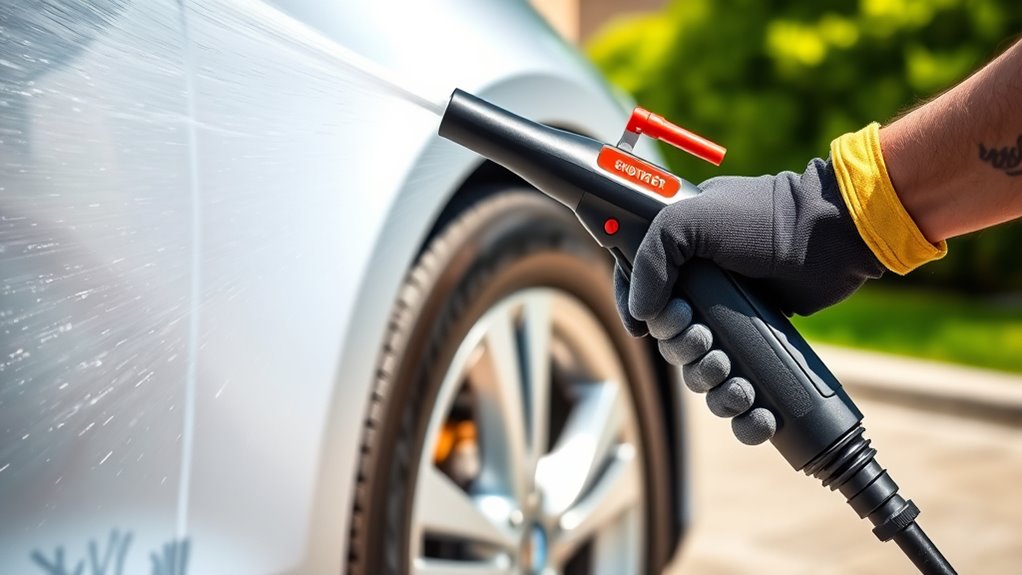
Before you start power washing your car, it’s important to prepare properly to guarantee safety and avoid damage. First, review power washer safety guidelines, like wearing protective gear and keeping the nozzle at a safe distance.
Use the correct car washing techniques to prevent damaging the paint or delicate surfaces. Always set your pressure washer to a low or medium setting to avoid stripping paint or causing chips.
Use gentle pressure and proper techniques to protect your car’s paint and delicate surfaces.
Keep the nozzle at least 2 feet away from the car’s surface and move it smoothly to prevent streaks or uneven cleaning. Avoid directing the spray at sensitive areas like the engine or tires, which need different care.
Be cautious around windows, mirrors, and decals to prevent damage. Following these basic safety tips and proper car washing techniques ensures you clean effectively without harming your vehicle or risking injury.
Safety always comes first when power washing your car.
Preparing Your Car and Workspace for Power Washing
To get the best results and protect your vehicle, start by thoroughly preparing both your car and workspace. Begin with a car inspection to identify any damage, loose parts, or areas needing special attention. This helps prevent further harm during power washing.
Next, organize your workspace to ensure safety and efficiency. Clear the area of obstacles and set up your equipment on a flat, stable surface. Cover sensitive areas like the engine, vents, and electrical components with plastic or waterproof covers to shield them from water.
Remove all loose items from the car’s exterior and check for loose or broken parts that could be damaged or cause damage during cleaning. Proper workspace organization reduces hazards and makes the process smoother.
A thorough car inspection ensures you’re aware of any pre-existing issues. Preparing diligently helps you achieve a clean car and avoid unnecessary repairs.
Choosing the Right Power Washer and Nozzle
Selecting the right power washer and nozzle is crucial for effective and safe car cleaning. First, think about the type of power washer, like electric or gas-powered models.
Electric washers are usually lighter and easier to handle, making them perfect for washing your car. Gas models provide higher pressure, which is better for tougher cleaning jobs.
Next, pay attention to nozzle sizes. They control the spray pattern and pressure. A wider spray angle, like 25 or 40 degrees, offers a gentler water flow that’s safe for your car’s paint.
Wider spray angles, like 25 or 40 degrees, provide gentle water flow safe for your car’s paint.
A narrower nozzle, such as a 15-degree, delivers a more concentrated stream. That can be too harsh for your vehicle’s surface.
Always opt for a nozzle with adjustable pressure or multiple spray tips. This helps you clean thoroughly without risking scratches or damage.
Matching your power washer and nozzle size to your car’s needs creates a safe, efficient cleaning experience.
Setting Up Your Power Washer: Pressure and Detergents
First, turn the pressure down to a level that’s strong enough to get rid of dirt, but not so high that it could hurt your car’s paint. You want to be gentle, so take your time to find that sweet spot.
Next, pick a detergent that’s made specifically for cars. It’s important to use the right kind to avoid any damage and to get your car really clean. Make sure the detergent you choose works well with your power washer too.
Getting the pressure just right and choosing the right soap will help you wash your car safely and make sure it comes out looking great!
Adjusting Pressure Settings
Adjusting the pressure settings on your power washer is key to cleaning your car effectively without causing damage. Start with a pressure setting that’s appropriate for automotive surfaces—usually lower pressure.
Next, focus on nozzle selection. A wider spray angle, like 25 or 40 degrees, helps distribute the pressure evenly and reduces the risk of stripping paint or damaging the finish. Always test your pressure and nozzle on a small, inconspicuous area first.
If you notice any paint chipping or scratches, turn the pressure down further. Remember, the goal is to loosen dirt without harming your car’s paint or surface.
Proper pressure adjustment and nozzle choice will make your cleaning safer and more effective.
Choosing Appropriate Detergents
Choosing the right detergent is essential for effectively cleaning your car without causing damage. You want to pick detergents that are safe for your vehicle’s paint and finish.
Eco-friendly options are a smart choice. They clean well while reducing environmental impact. Look for biodegradable formulas that are free of harsh chemicals like bleach or acids.
These detergents help prevent paint damage and are safer for your skin and the environment. Always follow the manufacturer’s instructions for dilution and application.
Using the right detergent guarantees your car gets a thorough clean without risking scratches or paint dullness. Remember, a good quality, eco-friendly detergent is key to a safe and effective power washing routine.
How to Safely Power Wash Your Car?
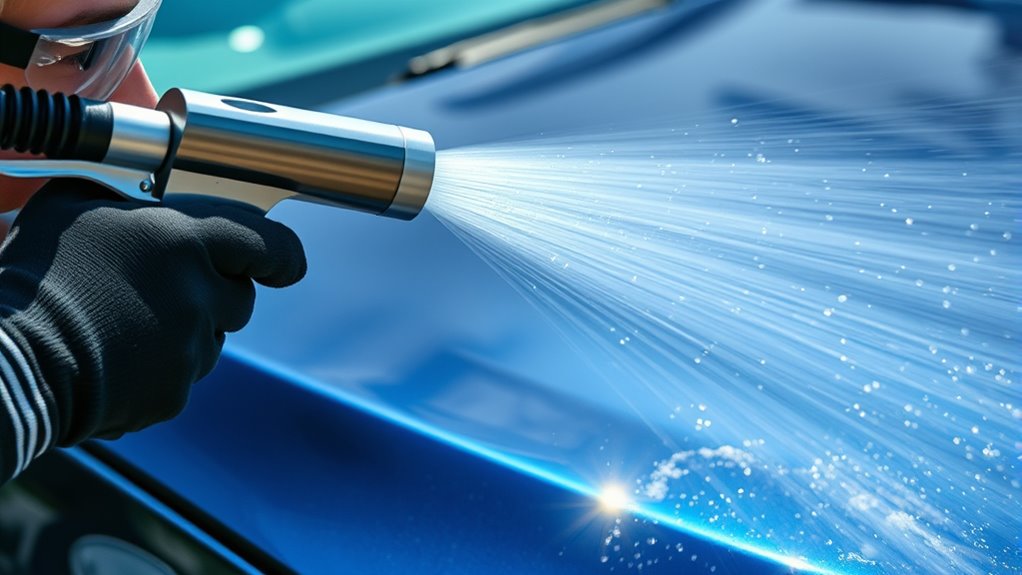
To safely power wash your car, it’s important to use the right technique and equipment to avoid damage. Start by setting your pressure washer to a low or medium water pressure, usually between 1200 and 1900 PSI. High pressure can chip paint or harm the car’s finish.
Keep the nozzle at least 12 inches away from the surface to prevent concentrated jets that could cause scratches. Always spray in a steady, sweeping motion instead of holding the nozzle still. Avoid directing water at sensitive areas like vents, seams, and locks.
Use a wide spray pattern to spread the water evenly, which helps protect your car’s finish. Work from the top down so dirt and grime flow downward naturally. Never use hot water, as it can damage the paint and clear coat.
Following these tips will keep your car clean without risking any harm to its paint or overall finish.
Protect Sensitive Areas and Detail With Care
When you’re power washing, it’s a good idea to protect the sensitive parts of your vehicle. Things like the engine bay and electrical components can be pretty fragile, so it’s best to shield them first. That way, you can prevent any damage while still getting your car nice and clean.
Also, make sure to use the gentle spray setting. High pressure can sometimes dislodge or harm delicate parts, so taking it easy helps keep everything intact. When you’re focusing on detailing specific areas, aim the spray carefully and avoid blasting high pressure directly on sensitive zones. It’s all about being gentle and cautious to preserve your car’s condition.
Shield Vulnerable Components
While using a power washer on your car, it’s important to shield vulnerable components like the engine bay, sensors, and electrical connections. High-pressure water can cause damage or short circuits if these areas aren’t protected.
To keep these sensitive parts safe, cover them with plastic bags or waterproof covers. Be especially careful around the engine bay, wiring, and connectors. Always double-check that everything is well protected before rinsing.
Use Gentle Spray Settings
Using gentle spray settings is essential when cleaning your car with a power washer, especially around sensitive areas. Applying gentle pressure helps prevent damage to paint, trim, and seals while still providing effective cleaning.
A lower pressure setting guarantees you don’t force dirt or grime into small crevices or cause paint chips. Keep the nozzle at a safe distance, about 2-3 feet from the surface, and avoid holding it too close.
This approach allows you to clean thoroughly without risking harm to delicate parts. Remember, effective cleaning isn’t about blasting aggressively; it’s about using the right amount of pressure to remove dirt gently.
Taking these precautions helps you maintain your car’s appearance while protecting its vulnerable surfaces.
Focus on Detailing Areas
When focusing on detailing areas of your car, it’s important to protect sensitive parts like electrical connections, vents, and rubber seals. Use gentle techniques that avoid spraying high pressure directly on these areas to prevent damage.
Keep the nozzle at a safe distance and use smooth, sweeping motions to clean tight or delicate spots. Always switch to lower pressure settings when working near sensitive zones for added safety.
Be careful around rubber seals and vents, as too much force can cause tears or blockages. Take your time and pay close attention to detail to ensure thorough cleaning without risking harm.
Properly protecting these areas helps keep your car’s functionality and appearance intact. It makes your detailing both effective and safe, so you get the best results without any damage.
Common Mistakes to Avoid When Power Washing Your Car
Power washing your car can be effective, but skipping safety and technique tips can cause damage. One common mistake is using too much pressure; if it’s too high, it can strip paint or harm delicate trim. Always set the pressure to a safe, moderate level to protect your car.
Choosing the wrong nozzle type can also be an issue. Aggressive nozzles might scratch or etch the surface. Make sure to pick the right one for car washing to avoid damage.
Be careful not to hold the nozzle too close to the car. Getting too close can peel paint or cause surface damage. Keep a safe distance to prevent any harm.
Don’t focus on one spot for too long. Staying in one area can lead to surface etching or swirl marks. Keep the wand moving smoothly over the entire surface.
Finally, skipping pre-wash prep can cause scratches. Dirt and debris can get trapped during washing, scratching the paint. Always rinse and remove loose dirt first for a safer, cleaner wash.
Stay mindful of pressure settings and nozzle choices. Keep the wand moving constantly to protect your car’s finish.
Dry and Protect Your Car After Washing
After you’ve thoroughly rinsed your car, drying it promptly helps prevent water spots and streaks from forming. Use a microfiber towel or a chamois to gently blot and wipe away the remaining water.
Avoid air drying, since it can leave spots—especially if your water contains minerals. Once your car is dry, consider applying a protective coating like wax or sealant.
Avoid air drying to prevent spots, especially with mineral-rich water; always dry your car thoroughly after washing.
These coatings create a barrier that shields your paint from dirt, UV rays, and moisture, helping your car look new longer. Just be sure to follow the product instructions for the best results.
Regularly drying and protecting your car not only makes it look better but also helps preserve the paintwork and prevent rust. Taking these steps after washing keeps your vehicle in top shape, maintains its shine, and reduces the need for more intensive detailing later on.
Proper drying and protection are key for maintaining your car’s overall health.
Troubleshooting Your Power Washer and Maintenance Tips
Even with proper drying and protection, your power washer can encounter issues that affect its performance. Power washer troubleshooting is essential to keep it running smoothly. If you notice a loss of pressure, check for clogs in the nozzle or hose.
A clogged filter can also reduce effectiveness, so inspect and clean it regularly. If your washer won’t start, verify the power supply is secure and the trigger is engaged properly. For leaks, examine hoses and fittings for cracks or loose connections, tightening or replacing parts as needed.
Keeping a maintenance checklist helps prevent bigger problems. Regularly inspect the spray wand, nozzles, and pump, and clean or replace worn parts. Also, lubricate moving parts per the manufacturer’s instructions.
Proper maintenance extends your power washer’s lifespan and guarantees consistent results. Troubleshooting small issues early saves you time and money, keeping your equipment in top shape for every use.
Final Tips for Keeping Your Car Spotless and Protected
To keep your car spotless and protected, sticking to a regular cleaning routine and choosing the right products is key. Regular washes help remove dirt and grime that can damage your paint and dull your finish.
Use a gentle, car-specific soap to get that shiny, spotless look without stripping away protective coatings. After washing, try applying a high-quality wax or sealant to boost shine and add a barrier against environmental pollutants.
This creates a protective layer that keeps your car looking sleek longer and makes future cleaning easier. Avoid harsh brushes or abrasive cleaners, as they can scratch your vehicle’s surface.
When drying, use a microfiber cloth to prevent water spots and keep that fresh, spotless appearance. Regular maintenance with the right products helps preserve your car’s beauty and protects its paint over time.
Following these simple tips will help your vehicle stay looking great and keep its value longer.
Frequently Asked Questions
Can I Use a Power Washer on All Car Paint Types Safely?
You can generally use a power washer on most paint types, but you should be careful. Adjust your pressure settings to avoid damaging delicate finishes, especially on softer paints like matte or custom coatings.
For standard automotive paint, a lower pressure with a wide spray nozzle works best. Always test a small, hidden area first and keep the nozzle at a safe distance to prevent chipping or stripping the paint.
How Often Should I Power Wash My Car to Prevent Damage?
You should power wash your car every 2 to 4 weeks, depending on your local environment and driving conditions.
Following these cleaning intervals helps prevent dirt buildup and potential damage to your paint.
Avoid using excessive pressure or spraying one spot for too long, as it can harm your vehicle’s finish.
Regular washing keeps your car looking great and helps protect the paint over time.
Is It Safe to Power Wash Around Car Windows and Mirrors?
Yes, it’s safe to power wash around your car’s windows and mirrors if you keep the pressure low and stay a safe distance away.
Be careful around the window seals so you don’t cause any damage. Avoid spraying directly on the mirror adjustments to prevent them from loosening or breaking.
Use a gentle, wide spray pattern, and keep the nozzle moving. That way, you protect the delicate parts while still cleaning the glass and nearby areas effectively.
What Are the Signs of Damage Caused by Power Washing?
You’ll notice signs of damage from power washing if you see paint chipping or peeling, especially around edges or thin surfaces.
Excessive pressure settings can cause dents or cracks in your car’s body.
You might also observe water getting into seals or around windows, indicating damage.
Always use a moderate pressure setting and keep the nozzle at a safe distance to prevent these issues and protect your vehicle’s finish.
Can I Use Hot Water in My Power Washer for Car Cleaning?
Using hot water in your power washer can offer some subtle advantages, like better grime removal and quicker drying.
You should consider hot water benefits, but always be cautious with pressure settings to prevent damage. Keep the pressure moderate, especially around delicate areas, and guarantee your washer is rated for hot water use.
This way, you’ll enjoy a thorough clean without risking harm to your car’s finish.
Conclusion
Now that you know how to safely power wash your car, you’re all set to keep it spotless without causing damage. Just remember, a little caution goes a long way—don’t bite off more than you can chew.
Regularly maintaining your equipment and following proper techniques will help your car shine and stay protected. Using a power washer on your car can be quick and effective when done right.
With these tips, you’ll be able to get the job done right without breaking a sweat. Keep safety in mind, and your car will thank you for it.