How You Safely Use a Pressure Washer on Your Car
Many car owners want to keep their vehicles looking shiny and new, but the thought of damaging your car with a pressure washer can be pretty intimidating.
You’re not alone—many people struggle with figuring out how to clean their cars safely without causing harm.
To safely use a pressure washer on your car, choose a model with a wide spray nozzle and set it to low or medium pressure, around 1200-1500 PSI.
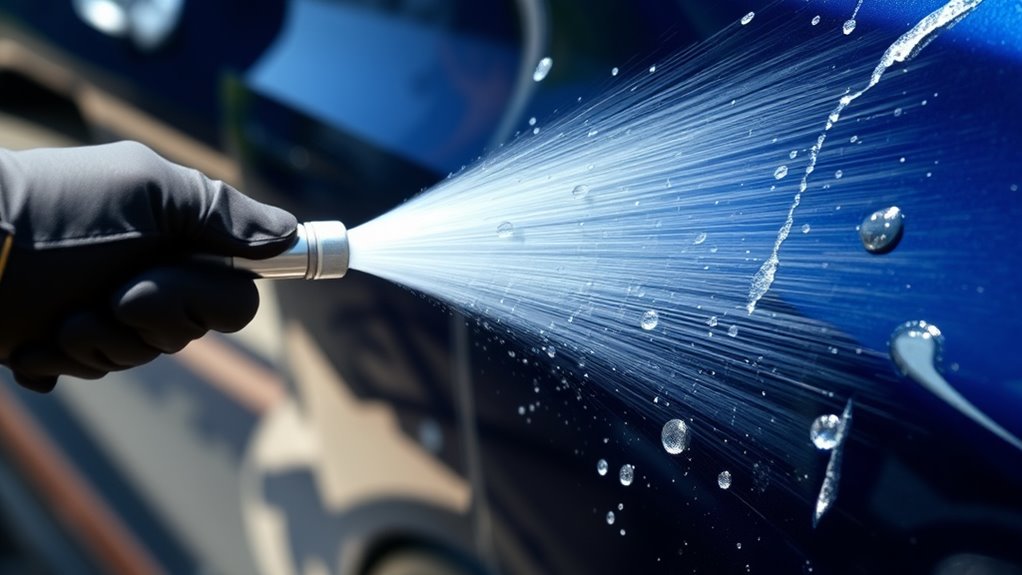
Keep the nozzle about 2 feet away and use smooth, sweeping motions.
Protect sensitive areas like trim and windows by lowering pressure or widening the spray.
Carefully rinse and dry your car afterward.
For detailed steps and tips, you’ll find everything you need to know to avoid damage.
Key Takeaways
- Use a wide spray nozzle (25-40 degrees) and keep about 2 feet away from the car surface.
- Set the pressure to low or medium, around 1200-1500 PSI, to avoid damaging the paint.
- Keep the nozzle moving in smooth, sweeping motions so you don’t create streaks or concentrate pressure in one spot.
- Protect sensitive areas like trim, mirrors, and window seals by adjusting the pressure and spray angle as needed.
- Rinse gently and dry with a microfiber towel to prevent water spots and get a thorough clean.
Why Using a Pressure Washer on Your Car Can Be Risky
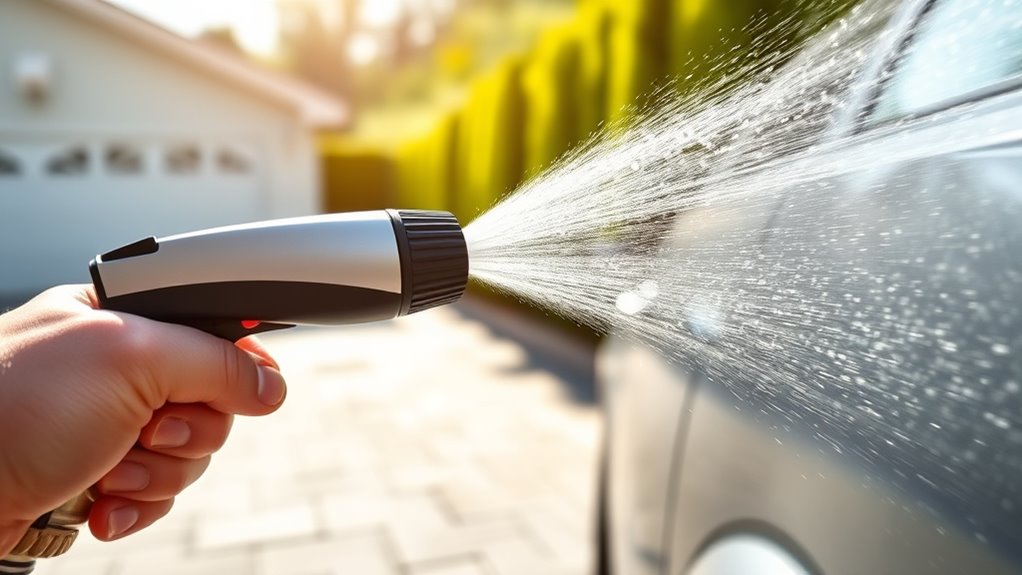
While pressure washers can make cleaning your car easier, they also pose several risks if you’re not careful. One major concern is pressure washer risks, which include damaging your vehicle’s delicate paint. If you hold the wand too close or use too high a pressure setting, you can strip away thin layers of paint or cause chips and scratches.
This damage isn’t always visible immediately, but it weakens the car’s surface and can lead to rust over time. High-pressure streams can also force water into areas like door seals, window gaps, or vents, potentially causing internal issues. Using the wrong nozzle or neglecting proper distance can make these risks worse.
Even small mistakes can lead to costly repairs and diminish your car’s appearance. That’s why understanding these pressure washer risks and knowing how to minimize them is essential for safe, effective cleaning.
How to Choose the Right Pressure Washer and Nozzle for Car Cleaning
Choosing the right pressure washer and nozzle is key for safe and effective car cleaning. Start by thinking about the type of pressure washer: electric models are lightweight and easy to handle, while gas-powered ones deliver higher pressure for tougher dirt.
Next, pick a nozzle suited for car surfaces. A 25-40 degree nozzle gives a gentle, wide spray, perfect for washing your vehicle without causing damage.
| Pressure Washer Types | Best for Car Cleaning |
|---|---|
| Electric | Lightweight, easy to control |
| Gas-powered | More powerful, handles stubborn dirt |
| Nozzle Materials | Benefits |
| Plastic | Cost-effective, less durable |
| Metal | More durable, withstands high pressure |
Choose a nozzle made from durable materials to prevent damage. Pair it with a pressure washer that offers adjustable pressure settings for the safest, most effective clean.
Preparing Your Vehicle Before Pressure Washing
Before you start pressure washing, it’s a good idea to first clear away any loose debris like leaves and dirt. Doing this helps prevent scratching the surface when you begin washing.
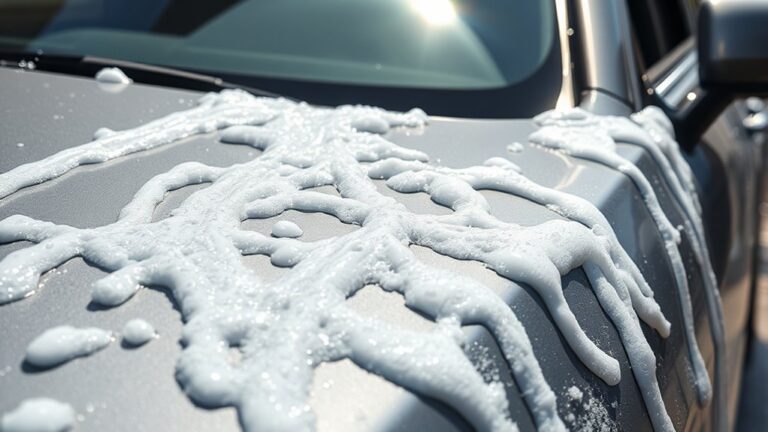
Then, you can go ahead and apply a pre-wash surface treatment. This step is great because it helps loosen up any stubborn grime or dirt, making the actual cleaning process much easier.
Getting these prep steps done will really help ensure your car gets a thorough and safe wash.
Remove Loose Debris
Start by inspecting your vehicle and removing any loose debris like leaves, dirt, or twigs by hand or with a soft brush. Clearing away debris helps prevent scratches and keeps your pressure washer safe for your vehicle’s surfaces.
Use a soft brush or cloth to gently sweep away dirt. Check around tires and wheel arches for stubborn debris, and remove leaves from the hood and trunk areas.
Don’t forget to clear debris from window seals and door frames. Be careful not to press debris into the paint or trim areas.
Keeping your vehicle free of loose debris before pressure washing reduces the risk of damage and helps you achieve a thorough, safe clean.
Pre-Wash Surface Treatment
Once you’ve cleared away loose debris, it’s time to prepare your vehicle’s surface for pressure washing. Start with a quick inspection to spot stubborn dirt or spots that need extra attention.
Next, use pre-wash products to loosen grime and help protect your paint. Apply the pre-wash solution evenly, focusing on heavily soiled areas, and let it sit for a few minutes.
This step makes pressure washing more effective and reduces the risk of damaging your paint. Here’s a visual guide to help you through the process:
| Step | Action |
|---|---|
| 1 | Surface inspection |
| 2 | Apply pre-wash products |
| 3 | Let sit for a few minutes |
| 4 | Focus on dirty spots |
| 5 | Prepare for pressure wash |
Setting the Correct Pressure and Distance for Safe Car Washing
To guarantee you clean your car effectively without causing damage, it’s crucial to set the right pressure and distance on your pressure washer. Proper pressure settings prevent paint damage, while keeping a safe distance avoids concentrated sprays that could harm your vehicle’s surface.
Start with a low to medium pressure setting, around 1200-1500 PSI, and adjust as needed. Follow distance guidelines, keeping the nozzle about 2 feet from the car to avoid stripping paint or damaging trim.
Begin with 1200-1500 PSI and maintain a 2-foot distance to clean your car safely and effectively.
Move the spray wand smoothly to prevent streaks or uneven cleaning. Remember, higher pressure isn’t always better—use the minimum effective pressure for thorough cleaning.
Always test on a small area before tackling the entire vehicle. Using the correct pressure settings and maintaining the right distance will help you wash your car safely and efficiently.
Use the lowest pressure needed for cleaning. Keep the nozzle at least 2 feet from the surface. Adjust pressure based on surface fragility.
Maintain a steady, sweeping motion and avoid holding the spray too close or in one spot. This approach ensures a safe and effective car wash every time.
Best Techniques for Pressure Washing Your Car Safely
To wash your car safely, it’s a good idea to start with the pressure set to a gentle level. Keep the nozzle at a safe distance—usually a few feet away from the car—to prevent any damage. It’s best to choose a nozzle that offers a wide spray pattern. This helps you clean evenly without putting too much pressure on any one spot and risking scratches or paint damage.
As you go along, make sure to stay in control and keep the spray moving. Holding the nozzle still on one area can create concentrated spots that might scratch the paint. Moving steadily helps ensure a gentle, thorough clean without harming your vehicle’s finish.
Proper Pressure Settings
Using the right pressure setting is key to cleaning your car effectively without causing damage. Start with a lower pressure and gradually increase if needed to stay safe and avoid stripping paint or damaging trim.
Typically, a pressure of 1200 to 1900 PSI works well for cars. Always check your pressure washer’s settings before you begin to make sure you’re using the right level.
Use a pressure setting suitable for automotive cleaning and avoid high-pressure tips that concentrate power. Test on a small area first to see how your car reacts.
Keep the nozzle moving to prevent focused damage to any one spot. Adjust the pressure based on how dirty your car is and how sensitive the surface might be.
Safe Distance Maintenance
Maintaining the correct distance between the pressure washer nozzle and your car is key for safe and effective cleaning. Keeping this distance helps prevent damage to your vehicle’s paint and trim while making sure dirt gets removed thoroughly.
Typically, you should keep the nozzle about 12 to 18 inches away from the surface. But this can vary depending on the spray angle. Narrower spray angles deliver more concentrated pressure, so staying a bit further back helps avoid stripping paint.
Wider spray angles give a gentler coverage, so you can get closer without risking damage. Always test on a small area first to find the right distance for your specific setup.
Staying consistent with this distance helps you control the pressure, avoid damage, and get a clean, streak-free finish efficiently.
Suitable Nozzle Selection
Choosing the right nozzle is key to cleaning your car safely and effectively. The type of nozzle determines the spray pattern, which affects how gentle or powerful the water flow is.
For car washing, a wide spray pattern like a 25 or 40-degree nozzle works best because it reduces the chance of damage. Stay away from narrow nozzles that deliver concentrated force.
Here are some tips for picking the right nozzle:
- Use a wide spray pattern for general cleaning.
- Switch to a more focused spray for stubborn dirt.
- Avoid high-pressure nozzles near sensitive areas.
- Check your pressure washer’s manufacturer recommendations.
- Keep the nozzle at the right distance for safe, effective cleaning.
Choosing the proper nozzle helps you clean efficiently without risking any damage.
How to Protect Sensitive Areas Like Trim, Mirrors, and Windows
Protecting sensitive areas like trim, mirrors, and windows is essential to avoid damage during pressure washing. To keep trim safe, hold the nozzle at a safe distance and avoid direct, high-pressure blasts on delicate surfaces.
Use a wider spray pattern or lower pressure when targeting trim to prevent chipping or peeling. For mirrors, hold the nozzle at an angle and use a gentle spray to avoid cracking or dislodging them.
Be cautious around window seals and rubber gaskets because excessive pressure can cause leaks or damage. It’s best to lower the pressure and keep the nozzle moving smoothly across these areas.
Always test a small, less visible spot first to make sure it’s safe. By paying attention to these areas and adjusting your pressure washer, you’ll protect your car’s trim, mirrors, and windows from unnecessary harm while still getting a thorough clean.
Common Mistakes That Can Damage Your Car’s Paint
One of the most common mistakes that can damage your car’s paint is using an excessively high pressure setting on your pressure washer. This can cause paint damage, especially if the spray is too close or aimed at delicate areas.
Poor washing techniques, like holding the nozzle too long in one spot, can also wear down the paint or create chips. To avoid costly repairs, always use a gentle spray and keep the nozzle at a safe distance from the surface.
Also, avoid these common pitfalls:
- Using a wide-angle nozzle on sensitive areas
- Focusing the spray directly on edges and seams
- Applying too much pressure near decals or stickers
- Ignoring recommended pressure settings for vehicles
- Rushing through the wash without proper technique
Proper Rinsing and Drying Tips After Pressure Washing
After you finish pressure washing your car, it’s a good idea to rinse it gently to avoid any damage to the paint. You don’t want to use harsh or aggressive sprays—just a soft, steady rinse will do the trick. Once it’s rinsed, make sure to dry your vehicle thoroughly with a soft microfiber towel. This helps prevent water spots from forming and keeps your car looking shiny and new.
Also, try to avoid letting water sit or pool on the surface. If water is left standing, it can leave behind spots and streaks that are pretty hard to get rid of. So, take a little extra time to dry it off completely, and your car will look great and stay protected!
Gentle Rinsing Techniques
Since pressure washing can be quite forceful, it’s important to rinse your car gently to prevent damage to the paint and trim. Use gentle spraying to guarantee safe rinsing, avoiding high-pressure jets directly on delicate areas. Keep the nozzle at a safe distance, around 2-3 feet from the surface, and move it smoothly across the car.
To improve your technique, consider these tips:
- Always use a wide spray pattern for gentle rinsing
- Maintain a consistent distance from the vehicle
- Rinse from top to bottom to avoid streaks
- Avoid focusing on one spot for too long
- Use a lower pressure setting when near trim or decals
These tips help you achieve a thorough, damage-free rinse.
Proper Drying Methods
Proper drying is essential to prevent water spots and streaks after pressure washing your car. Use clean, soft microfiber towels to gently dry the surface, avoiding any scratching.
Start from the top and work downward to make sure all areas are thoroughly dried. Pat the surface rather than wiping harshly to prevent streaks.
For hard-to-reach spots or crevices, use a smaller microfiber cloth or a blower to remove residual water. Be sure to dry the car quickly after rinsing to minimize mineral deposits from hard water.
Proper drying not only keeps your car looking shiny but also helps protect the paint and finish. Mastering these techniques guarantees a flawless, spot-free clean after each pressure wash.
Avoiding Water Spots
To prevent water spots from forming, focus on thorough rinsing and prompt drying right after pressure washing. Making sure all soap and dirt are rinsed away helps cut down on spots.
Drying techniques are just as important. Dry the car quickly to avoid mineral deposits that cause water spots. Use a clean microfiber towel or chamois to gently blot and wipe the surface.
You can also use a blow dryer or leaf blower to get water out of hard-to-reach areas. Always start drying from the top and work your way down, making sure no water gets left behind.
These steps help keep your car looking spotless and protect the paint. Proper rinsing and drying are key to avoiding water spots effectively.
Maintaining Your Pressure Washer to Keep It in Top Shape
Regularly maintaining your pressure washer ensures it performs well and lasts a long time. Check hoses, nozzles, and fittings for leaks or damage often.
Clean the filters regularly to prevent clogs, and run fresh water through the system after each use to flush out debris. Keep the spray wand and nozzle free of dirt and build-up by soaking them in vinegar or using a small brush.
Lubricate moving parts as recommended by the manufacturer to prevent rust and keep everything running smoothly. Store your pressure washer in a dry, protected area to avoid corrosion.
Also, inspect the power cord or gas components if applicable. Following these tips and routines helps you avoid costly repairs and keeps your pressure washer ready for your next cleaning task.
When Should You Consider Professional Car Detailing?
While maintaining your pressure washer helps keep it in top shape, there are times when professional car detailing offers benefits that go beyond DIY efforts. If your vehicle has stubborn stains, deep scratches, or extensive dirt buildup, it’s a good idea to seek professional services.
Professional detailers have specialized equipment and expertise to thoroughly clean and restore your car’s appearance. They can also address issues like interior stains, paint corrections, and odor removal that DIY methods might miss.
Consider professional services when you want a lasting shine or are preparing to sell your car, as detailing benefits include increased resale value. Furthermore, if you’re pressed for time or unsure about proper techniques, professionals can save you effort and prevent potential damage.
Ultimately, professional car detailing is worth considering when you want a thorough, high-quality clean that DIY efforts can’t match.
Frequently Asked Questions
Can I Use Hot Water With My Pressure Washer on My Car?
Yes, you can use hot water with your pressure washer on your car. Hot water can actually make cleaning more effective because it helps remove grease and grime better.
Just make sure your pressure washer is designed to handle hot water, as some models only work with cold water. Using hot water can help break down stubborn dirt, but always check your washer’s specs.
Avoid using excessive heat to prevent damage to your vehicle or the equipment. When in doubt, follow the manufacturer’s recommendations for safe and effective use.
How Often Should I Pressure Wash My Vehicle?
Think of your car like a prized gemstone—you want it to shine without damage. You should pressure wash your vehicle every 2-4 weeks to keep it looking its best and protect the paint.
Regular car washes help prevent grime buildup, and pressure washing gives a deep clean and helps prevent rust. Sticking to this schedule keeps your car looking great and extends its lifespan, much like caring for a delicate masterpiece.
Is It Safe to Use Detergent With a Pressure Washer on My Car?
Yes, it’s safe to use detergent with your pressure washer on your car, but make sure to pick the right detergent made for automotive use.
Set your pressure washer to a lower pressure setting to prevent any damage to the paint or decals.
Apply the detergent evenly, let it sit for a short while, then rinse thoroughly with a gentle stream.
This way, you get a safe and effective clean without harming your vehicle’s finish.
Can Pressure Washing Remove Stubborn Dirt and Grime Effectively?
Ever wondered if pressure washing can truly tackle stubborn stains and grime? It definitely can, but you need to be careful.
A powerful spray removes dirt effectively, but if you’re not cautious, it might cause paint damage. To avoid that, keep the nozzle at the right distance and use appropriate pressure settings.
Done right, your car will look spotless without risking harm to its paint.
What Safety Gear Should I Wear While Pressure Washing My Car?
You should wear safety gear like goggles or safety glasses to protect your eyes from flying debris. Protective clothing, such as long sleeves, pants, and waterproof gloves, shields your skin from high-pressure water and chemicals.
Hearing protection is also a good idea if you’re using a loud pressure washer. Always prioritize safety by wearing the proper protective gear to make your cleaning process safe and effective.
Conclusion
So, next time you grab that pressure washer, remember: a gentle touch and proper technique can turn you from a potential paint polisher into a paint remover.
Think of your car as a fragile masterpiece, not a power-washing playground. If you’re feeling overwhelmed, maybe leave the fancy cleaning to the pros, unless you enjoy the thrill of risky DIY disasters.
After all, a shiny car is great, but a scratched, chipped one is not so much. Happy washing!