Wash Your Car Like a Pro in 7 Simple Steps
Many car owners want that perfect, glossy finish but often feel overwhelmed by the process or worry about damaging their vehicle. You’re not alone—getting that professional look at home can seem tricky, but with the right steps, it’s totally doable.
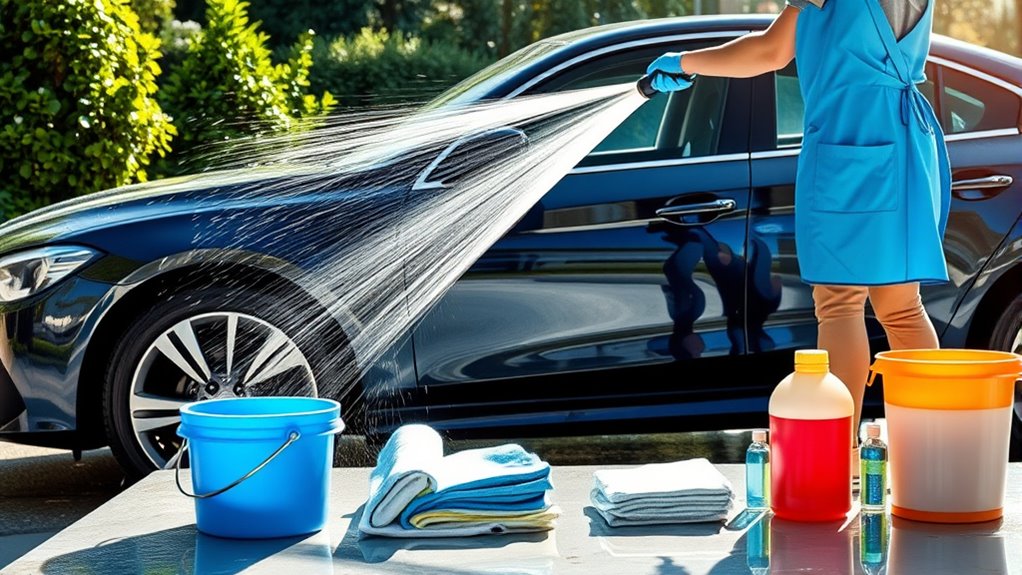
To wash your car like a pro, start by gathering eco-friendly supplies, microfiber towels, and two buckets. Rinse thoroughly to remove loose dirt, then wash in a single direction from top to bottom using the two-bucket method to prevent scratches.
Dry with a soft microfiber cloth, patting gently. Apply wax or sealant for extra shine and protection. Avoid common mistakes like using household soaps or circular motions—keep your tools clean, and you’ll achieve a professional finish every time.
Keep listening to uncover more tips for that perfect glossy look.
Key Takeaways
- Use two buckets: one with soapy water and one for rinsing. This helps prevent dirt from spreading and causing scratches.
- Rinse your vehicle thoroughly first to get rid of loose dirt and debris before washing.
- When washing, go gentle and start from the top. Use microfiber tools to avoid micro-scratches and make sure you’re working in a top-to-bottom motion.
- Dry your car with soft microfiber towels. Pat gently to prevent swirl marks and water spots from forming.
- Regularly apply wax or spray sealant to protect your paint and keep that shiny, glossy finish.
Gather the Right Supplies for a Professional Car Wash
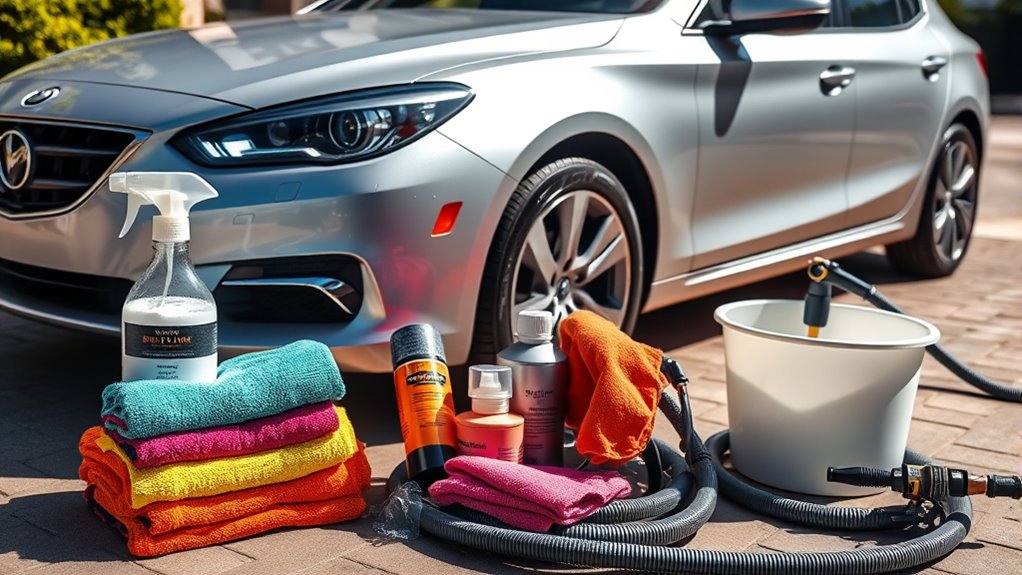
To achieve a professional-looking car wash, start by gathering the essential supplies. A complete supply checklist guarantees you have everything needed for a thorough clean.
First, pick up eco-friendly products like biodegradable soap and natural tire cleaners to protect the environment and your car’s finish. You’ll also need several microfiber towels or wash mitts, which are gentle on your paint and effective at trapping dirt.
Choose eco-friendly soaps and microfiber towels for a gentle, effective, and environmentally conscious car wash.
A soft-bristled brush helps reach tight spots, while a spray nozzle offers controlled water flow. Don’t forget a bucket—ideally two, one for soapy water and another for rinsing—to prevent dirt from redepositing on your car.
Use eco-friendly products to minimize harmful chemicals and reduce waste. With these supplies ready, you’re set to achieve a professional-quality wash while caring for the environment.
Having the right tools on hand makes the entire process smoother, more efficient, and results in a spotless, shiny finish.
Pre-Wash to Remove Dirt and Debris
Before you start washing your car, it’s important to pre-wash to remove loose dirt and debris that can scratch the paint. Using effective pre-wash techniques helps loosen dirt, making the main wash safer and more effective.
Begin by rinsing the entire vehicle with a gentle stream of water to dislodge larger particles. Focus on areas with heavy dirt buildup, like the tires, wheel wells, and lower panels.
You can use a dedicated pre-wash solution or a mixture of water and car-safe degreaser for better dirt removal. Let the solution sit for a few minutes to loosen stubborn grime, then rinse thoroughly.
This step helps minimize the risk of scratching during the actual wash, keeping your paint pristine. Remember, pre-washing isn’t just about dirt removal; it prepares your car for a spotless, scratch-free clean in the next steps.
Proper pre-wash techniques set the foundation for a professional-looking result.
Proper Techniques for Washing Without Scratches
Want to wash your car without scratching the paint? A great trick is to use the two-bucket method. One bucket should be filled with soapy water, and the other just with clean water for rinsing your cloth. It helps keep dirt from spreading back onto your car’s surface.
When you’re washing, use gentle water pressure—no need to scrub hard. Scrubbing too vigorously can actually scratch the paint. And make sure to grab soft microfiber cloths; they’re gentle but effective at lifting dirt without causing damage. Just take your time, and your car will stay shiny and scratch-free!
Use Two-Bucket Method
To maximize this method:
- Use one bucket for soapy water and another for rinsing your mitt.
- Rinse your mitt often in the clean water to keep dirt from building up.
- Don’t reuse dirty suds on your car — it can scratch the paint.
- Change the water whenever it looks visibly dirty.
This way, you’re minimizing dirt transfer and helping keep your car scratch-free.
Gentle Water Pressure
Using gentle water pressure is essential for washing your car without causing scratches. Adjust the pressure settings on your hose or pressure washer to a low or medium level. High pressure can damage the paint or push dirt into tiny scratches.
Keep the water temperature lukewarm. Hot water can strip wax and harm the paint, while cold water may be less effective at loosening grime.
Aim the water at the surface with a consistent, gentle spray, making sure you cover all areas evenly. Avoid concentrated jets that might dislodge dirt or create swirl marks.
Soft Microfiber Cloths
- Microfiber types: Choose ultra-fine, plush cloths made specifically for cars to pick up dirt better.
- Color coding: Use different colors for windows, paint, and wheels to prevent cross-contamination.
- Cleaning effectiveness: High-quality microfiber traps dust and grime more efficiently, so you don’t need to scrub hard.
- Proper care: Wash cloths separately and skip fabric softeners, which can reduce absorbency and cause scratches.
Using the right microfiber cloths ensures a scratch-free, shiny finish every time.
Dry Your Car for a Flawless Finish
Want that perfect, streak-free shine on your car? The secret is using soft microfiber towels—they’re gentle and help prevent any scratches. Just pat the surface dry instead of rubbing, so you avoid any swirl marks or damage.
And don’t forget to watch out for water spots. They can really ruin that glossy look you’re going for. Taking a bit of extra care during drying will make sure your car looks completely flawless and shiny—just like you want it!
Use Soft Microfiber Towels
When it’s time to dry your car, soft microfiber towels are your best tool for a flawless finish. They gently absorb water and help prevent scratches.
To get the most out of them, use high-quality, plush microfiber towels made for car drying. Stay away from worn or rough towels that could harm your paint.
Make sure to wash your microfiber towels properly, ideally separately from other laundry, to keep them soft and effective.
Store your towels in a clean, dry place so they stay in top condition and ready for your next use.
Pat Dry, Avoid Rubbing
Drying your car carefully is essential for a flawless finish, and the key is to pat it dry rather than rubbing. Pat drying allows you to absorb water gently without creating friction that can scratch the paint.
Use soft microfiber towels and gently press them against the surface, lifting water away with each pat. Avoid dragging the towel across the paint, as this can cause micro-scratches.
Take your time and work methodically over all areas, especially around edges and intricate parts. Pat drying helps prevent water spots and keeps your car looking shiny and smooth.
Check for Water Spots
It’s important to inspect your car closely after drying to catch any remaining water spots. These spots can dull your finish and are often stubborn to remove later.
To prevent water spots, check for them immediately after drying and take action if needed. Here are four tips:
- Use a clean microfiber cloth to gently buff any visible water spots.
- Spot treat with a water spot removal product designed for cars.
- Rinse lightly with distilled water if spots persist.
- Dry the area again to prevent water spot formation.
Apply Wax or Sealant for Long-Lasting Shine
Applying wax or sealant is the final step to lock in your clean, shiny finish and protect your car’s paint. Wax types range from natural carnauba to synthetic options, each offering different levels of gloss and durability.
Sealants provide longer-lasting protection with benefits like UV resistance and water beading. To help you visualize the process, here’s a simple table:
| Step | Product Type | Benefits |
|---|---|---|
| Choose your product | Wax or Sealant | Adds protective shine |
| Apply evenly | Natural or synthetic wax | Boosts gloss and depth |
| Allow to haze | Sealant or wax | Ensures proper bonding |
| Buff off | Both | Reveals a smooth, glossy finish |
| Maintain regularly | Wax or Sealant | Keeps your car shining longer |
Common Mistakes to Avoid During Car Washing
After applying wax or sealant to protect your car’s finish, rushing through the washing process can undo your efforts and cause damage. Common mistakes can lead to over-washing issues or using the wrong soap choices that harm your paint. To avoid these pitfalls:
- Skip harsh scrubbing because it can scratch the surface and make over-washing worse.
- Use the right soap—avoid dish soaps or household cleaners. Instead, choose car-specific shampoos.
- Wash in a single direction. Circular motions can trap dirt and cause micro-scratches.
- Rinse thoroughly. Leftover soap or dirt can smudge or stain your finish later.
Being mindful of these mistakes helps protect your car’s shine and prevents damage. Take your time, pick the right products, and wash carefully to keep your car looking pristine without undoing your protective wax or sealant.
Tips to Maintain Your Car’s Shine Between Washes
To keep your car looking shiny and new between washes, regular maintenance is key. Doing simple car care routines can help preserve the gloss and protect the paint.
One easy tip is to use a quick detailer spray after driving or when the car’s seen some dust. It lifts off light dirt and adds a protective layer for that fresh look.
Also, don’t let bird droppings or tree sap sit on your car. Clean them off promptly to avoid damage to the paint.
Here’s a quick guide to maintaining your car’s shine:
| Tip | Why it helps | Best practice |
|---|---|---|
| Use a microfiber cloth | Prevents scratches | Gently wipe in circular motions |
| Apply a clay bar treatment | Removes embedded contaminants | Use periodically for a smooth finish |
| Use a spray wax | Adds shine and protection | Lightly spray and buff |
Following these simple tips and proper routines will keep your vehicle looking fresh between professional washes.
Frequently Asked Questions
How Often Should I Wash My Car for Optimal Maintenance?
You should wash your car at least once every two weeks for ideal maintenance, but feel free to do it more often during winter or rainy seasons. Regular washing helps remove dirt, salt, and grime that can cause rust and damage your paint.
Make sure to follow seasonal tips like waxing your car in warmer months and rinsing off salt in winter. Adjust how often you wash your car based on your environment to keep it looking good and running smoothly.
Can I Wash My Car in Direct Sunlight Without Damaging the Paint?
Sure, go ahead and wash your car in direct sunlight—because who doesn’t love a little extra challenge?
Sun exposure can cause soap to dry too quickly and leave water spots, which might damage the paint.
For the best protection, it’s better to wash your car when the sun isn’t blazing.
Otherwise, you might end up with a streaky, dull finish that looks neglected.
What Are the Best Eco-Friendly Products for Washing My Car?
You should choose eco-friendly products like biodegradable soaps and waterless solutions for washing your car. Biodegradable soaps break down naturally, which helps reduce environmental harm, while waterless solutions cut down on water use.
Both options are safe for your car’s paint and better for the planet. When you use these products, you’re not just keeping your car clean—you’re also helping protect the environment and save water.
Should I Remove the Car’s Wax Before Applying a New Coat?
You should definitely remove the old wax before applying a new coat. Using wax removal techniques like clay bars or automotive degreasers makes sure all residue is gone, leaving a smooth surface.
This way, the new wax bonds perfectly, giving you maximum shine and protection. Skipping wax removal could lead to a dull, uneven finish.
Think of it as prepping your car’s surface for a makeover — clean, fresh, and ready for that stunning new shine!
How Do I Clean Hard-To-Reach Areas Effectively?
To clean hard-to-reach areas effectively, start with interior detailing tools like small brushes or microfiber cloths to access tight spots. Use a tire cleaning brush for wheel crevices and a compressed air canister to blow out dust from vents and seams.
Dampen your cloth with a cleaning solution, then carefully wipe around edges and corners. This approach guarantees thorough cleaning, leaving your car spotless both inside and on tough-to-reach exterior spots.
Conclusion
Now that you know these simple steps, you’re ready to wash your car like a pro. With the right supplies, techniques, and a little patience, you can get a spotless, shiny finish every time.
Remember, avoiding common mistakes makes all the difference. So, why settle for a mediocre wash when you can give your car that professional look?
Keep practicing, and enjoy the satisfaction of a clean, gleaming ride. Washing your car like a pro isn’t just about looks—it’s about protecting your investment and feeling proud of your work.