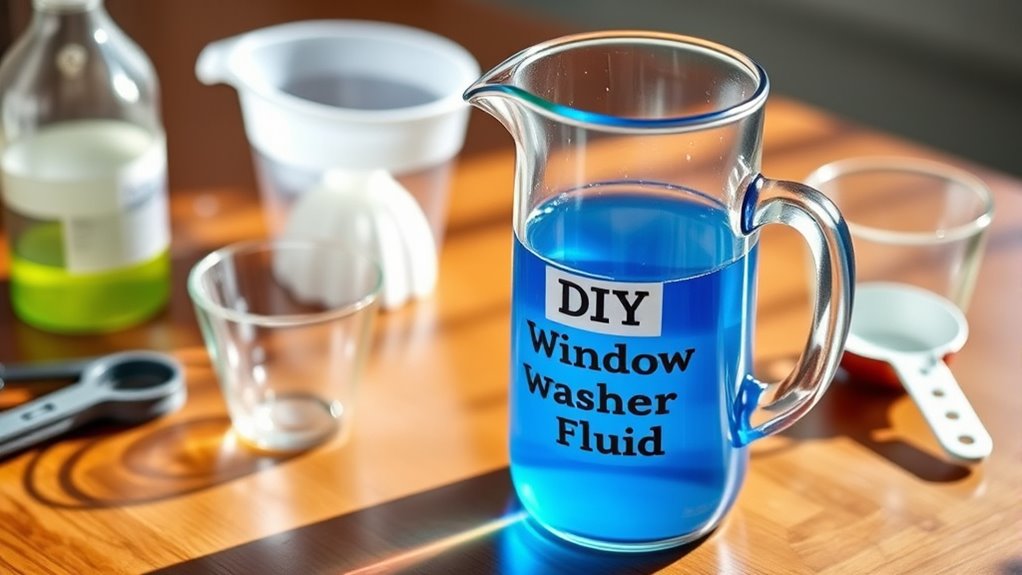
DIY Guide to Make Car Window Washer Fluid
Are you tired of running out of windshield washer fluid at the worst moment? Many people struggle with keeping their car windows clear, especially in harsh weather.
Luckily, making your own car window washer fluid is simple and cost-effective, and you’re not alone in wanting a DIY solution.
To make your own car window washer fluid, combine water with eco-friendly cleaning agents like dish soap or vinegar, using a ratio of about 3 parts water to 1 part cleaner.
Add a small amount of rubbing alcohol or vinegar for cold weather to prevent freezing.
Store your mixture in a sealed container away from sunlight, and clear any clogged nozzles as needed.
Want more tips to customize your formula and guarantee safety? Keep exploring further for detailed guidance.
Key Takeaways
- Gather your basic ingredients: water, dish soap or an eco-friendly cleaner, and optional additives like vinegar or rubbing alcohol.
- Mix water with the cleaning agents in a 3:1 ratio. Add small amounts of vinegar or alcohol if you want better cleaning or freezing protection.
- Store your mixture in a clean, airtight container in a cool, dark place. Make sure to label it for safety and freshness.
- Use a pin or similar tool to clear clogged nozzles, and adjust your formula depending on the weather conditions.
- Handle all ingredients carefully, keep your washer fluid away from pets, and dispose of any unused mixture responsibly.
What Ingredients Do You Need to Make DIY Windshield Washer Fluid?
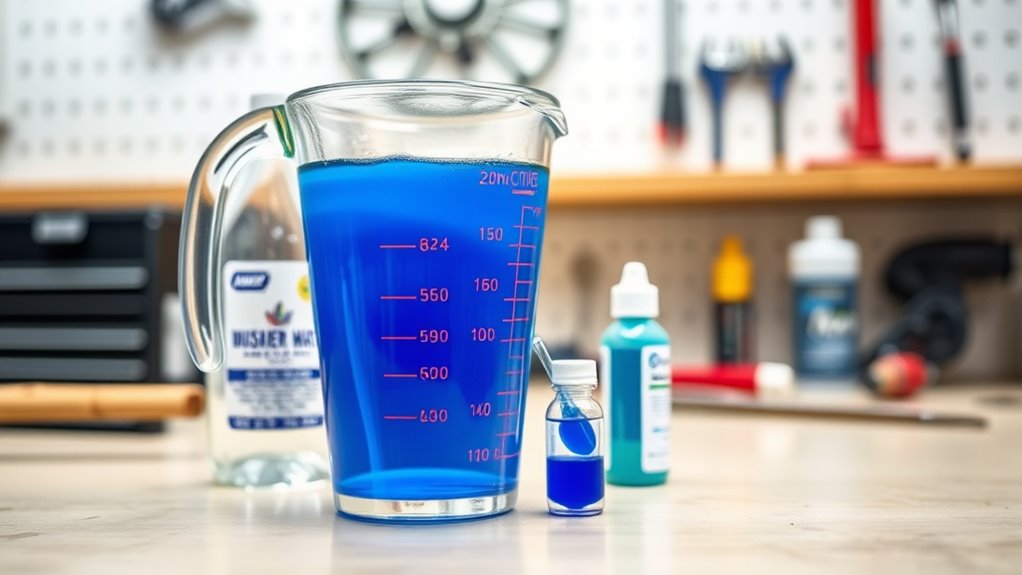
To make your own DIY windshield washer fluid, you’ll need just a few basic ingredients that are easy to find. The main components include water, a cleaning agent, and optional additives for improved performance.
Create your own windshield washer fluid with simple, accessible ingredients for an eco-friendly, cost-effective solution.
For cost-effective alternatives, regular dish soap works well as a cleaning agent, helping you save money while keeping your windshield clear. If you’re looking for eco-friendly options, consider using vinegar or diluted castile soap, which are gentle on the environment and still effective at removing dirt.
Rubbing alcohol can be added to prevent freezing in colder temperatures, but use it sparingly to avoid damage. Always choose ingredients that are safe and readily available to keep costs low.
Combining these ingredients thoughtfully allows you to create a reliable, budget-friendly washer fluid that’s also environmentally conscious. Making your own solution lets you customize it to your needs while avoiding harsh chemicals found in store-bought products.
How to Make Your Own Windshield Washer Fluid Step-by-Step
Making your own windshield washer fluid is pretty simple and only takes a few steps. First, gather your ingredients and a clean container. Mix water with a small amount of dish soap or a commercial cleaner as a base for effective window cleaning.
For extra cleaning power, you can add white vinegar or rubbing alcohol, which help break down grime and frost. Just be careful not to use too much, as it could damage your car’s paint or rubber seals.
Stir the mixture well so everything is combined. Then, pour it into your vehicle’s washer fluid reservoir, making sure not to overfill. Before you drive, give the container a gentle shake to re-mix if needed.
This homemade solution is a budget-friendly, eco-friendly way to keep your windshield clear, especially when store-bought fluids aren’t available. Just remember to test it on a small area first to make sure it works well.
What Are the Best Ratios for an Effective, Eco-Friendly Solution?
Finding the right balance of ingredients is key to creating an effective, eco-friendly windshield washer fluid. Usually, a mix of water, a natural cleaner, and a small amount of vinegar or castile soap works well.
For an eco-friendly alternative, try a ratio like 3 parts water to 1 part cleaning agent. This helps you clean effectively without wasting resources or harming the environment.
Here’s a simple visual guide:
| Ingredient | Ratio |
|---|---|
| Water | 3 parts |
| Natural cleaner | 1 part |
| Vinegar or castile soap | A few tablespoons per gallon |
This balance offers a cost-effective solution that cleans well and minimizes environmental impact. Adjust ratios based on your climate and water hardness, but always keep eco-friendly options in mind for sustainable cleaning.
How to Store Your Homemade Washer Fluid for Long-Term Use
Proper storage is essential to keep your homemade washer fluid effective and safe over time. For long-term storage, choose a clean, airtight container to prevent contamination and evaporation.
Proper storage ensures your homemade washer fluid stays safe and effective longer.
Plastic bottles made of high-density polyethylene (HDPE) are ideal because they resist chemicals and won’t degrade over time. Avoid using containers that previously held incompatible substances, like gasoline or other chemicals.
Label your container clearly with the contents and date so you can track freshness. Store the container in a cool, dark place away from direct sunlight and temperature fluctuations, which can degrade the solution.
Make sure the cap is tightly sealed to prevent leaks and contamination. If you’re storing a large amount, consider dividing it into smaller containers for easier use and to minimize exposure to air each time you pour.
Using the right containers and storing them properly will help keep your homemade washer fluid effective for several months.
Common Problems With DIY Washer Fluid and How to Fix Them
Even with careful preparation, DIY washer fluid can sometimes cause common issues that affect how well it works. You might see uneven or weak spray patterns, or worse, no fluid coming out at all. These problems can be frustrating, but they’re usually fixable.
Some common issues include clogged nozzles that block spray. You can clear these with a pin or needle. Frozen fluid during cold weather is another problem, which can be fixed by using antifreeze or heated lines.
Diluted mixtures that don’t clean well can be corrected by adjusting your recipe. Leaks in hoses or connections cause fluid loss, and tightening or replacing parts often solves this. Poor spray coverage is often caused by low pressure or blockages, so check the pump and lines to fix it.
Addressing these problems quickly helps ensure your DIY washer fluid works effectively whenever you need it.
Safety Tips for Making and Using DIY Windshield Washer Fluid
When you’re making your own windshield washer fluid, it’s really important to handle all the ingredients carefully and follow the right procedures. That means paying close attention to the proper ratios so you don’t end up with a mixture that’s harmful or ineffective.
Also, make sure to store your homemade fluid in a secure place, out of reach of kids and pets. Taking these safety steps can help you avoid accidents and ensure your windshield stays clear without any worries.
Proper Handling Procedures
Always handle the ingredients for DIY windshield washer fluid with care to prevent accidents or injuries. Use proper disposal methods for leftover or contaminated liquids to protect the environment.
Always source ingredients from trusted suppliers to guarantee safety and quality. When mixing, wear gloves and eye protection to avoid skin and eye irritation.
Keep your workspace well-ventilated to prevent inhaling fumes. Store ingredients in clearly labeled, secure containers away from children and pets.
Be mindful of spills and clean them up immediately to prevent slips. Remember, safety isn’t just about making the fluid but also about responsible disposal and ingredient sourcing.
Your careful handling ensures not only your safety but also a cleaner environment for everyone.
Correct Ingredient Ratios
Getting the ingredient ratios right is key to making effective and safe windshield washer fluid. Choosing the right ingredients and mixing them properly ensures the fluid cleans well without damaging your vehicle or blocking your view.
Use the table below to help you get the ratios right:
| Ingredient | Ratio | Purpose |
|---|---|---|
| Water | 2 parts | Dilutes and cleans |
| Rubbing Alcohol | 1 part | Prevents freezing |
| Dish Soap | ½ teaspoon per quart | Boosts cleaning power |
| Vinegar (optional) | ½ cup per gallon | Removes grime and residue |
| Water (final) | Fill to 1 gallon | Completes the mixture |
Follow these ratios for safety and good performance. Always mix carefully to avoid spills or uneven concentration.
Safe Storage Practices
Since DIY windshield washer fluid contains chemicals like rubbing alcohol and vinegar, it’s important to store it safely to prevent accidents or misuse. Use proper storage containers, ideally plastic jugs with secure caps, to avoid spills.
Label your containers clearly with bold, legible labels that specify contents and hazards. Keep the fluid out of reach of children and pets, preferably in a locked cabinet or high shelf.
Store it in a cool, dry area away from heat sources and direct sunlight to prevent chemical breakdown. Remember, proper storage isn’t just about safety; it’s about peace of mind, knowing your homemade fluid won’t pose a danger.
Protect your loved ones and your vehicle by following these safety tips carefully.
What Ingredients Work Best for Different Weather Conditions?
Depending on the weather, you’ll want to pick the right ingredients for your washer fluid. When it’s cold outside, it’s important to include antifreeze components so your fluid doesn’t freeze up. On the other hand, hot weather calls for ingredients that help prevent dirt and grime from sticking to your windshield, making cleaning easier.
For milder climates, simple water-based solutions usually work just fine. They’re easy to put together and do the job without any fuss. So, just keep an eye on the weather, and choose your washer fluid ingredients accordingly!
Cold Weather Antifreeze Components
Choosing the right antifreeze components is essential for ensuring your windshield washer fluid works well in cold weather. You need ingredients with strong antifreeze properties to stop freezing and keep your glass clear.
Look for additives like isopropyl alcohol or methanol, which lower the freezing point effectively. These ingredients help keep your fluid liquid, even in harsh temperatures.
Keep these key points in mind:
- Use high-quality alcohol-based additives for the best antifreeze protection
- Choose concentrated formulas designed specifically for cold weather
- Mix your solution properly to avoid freezing or streaking
- Pick weather-appropriate solutions to ensure clarity and safety
- Steer clear of cheap substitutes that can freeze or harm your windshield
With the right antifreeze components, you’ll stay safe and keep your view clear, no matter how cold it gets.
Hot Weather Dirt Prevention
In hot weather, preventing dirt buildup on your windshield needs different ingredients than in cold conditions. Heat can cause dirt to accumulate faster and make grime stick more stubbornly.
To fight this, use ingredients like vinegar or a small amount of dish soap, which help break down grease and dirt more effectively when it’s hot. A mixture with higher alcohol content, like rubbing alcohol, can also help the fluid evaporate quickly and prevent streaks caused by heat.
Avoid thick or oily solutions that might leave residues or attract more dirt. Regularly cleaning your windshield with the right solution for hot weather will keep your view clear and reduce how often dirt builds up due to heat.
Mild Climate Water Solutions
In mild climates, balancing cleaning power with gentle ingredients helps keep your windshield clear without causing damage or streaks. Using quality water and mild solutions protects your visibility.
To improve your homemade washer fluid, try these ingredients:
- Distilled water for consistent clarity
- A few drops of mild dish soap to cut through grime
- Rubbing alcohol for quick drying and streak prevention
- White vinegar to break down mineral deposits
- A splash of cornstarch for extra cleaning power
These ingredients work together to keep your windshield clean without harming the glass or wipers. Proper water quality and gentle solutions ensure your visibility stays clear, safe, and streak-free during mild weather.
DIY vs. Commercial Washer Fluids: Pros and Cons
Deciding between DIY and commercial washer fluids comes down to balancing convenience with customization. DIY solutions usually cost less upfront, which is great if you’re on a budget.
Choosing between DIY and store-bought washer fluids depends on your budget and preference for customization or convenience.
You can easily control ingredients and adjust the mixture based on your climate, which helps with performance. But homemade fluids might not be as consistent or effective, especially in extreme weather.
Commercial washer fluids are more convenient—they’re ready to use and formulated for top performance in various conditions. They tend to cost more per bottle but offer reliable cleaning and help protect your vehicle’s paint and glass.
Ultimately, your choice depends on what’s more important to you: saving money and customizing your mix, or convenience and guaranteed results.
How Your Homemade Washer Fluid Benefits the Environment
Making your own windshield washer fluid can greatly reduce your environmental impact by cutting down on harmful chemicals and plastic waste. Choosing DIY means you’re practicing sustainability that helps protect the planet.
Instead of commercial products filled with synthetic detergents and preservatives, your homemade mix often uses eco-friendly ingredients like vinegar or biodegradable soaps. This change helps lower chemical runoff into waterways and reduces plastic waste from bottles.
By making eco-conscious choices, you help:
- Reduce plastic pollution from single-use containers
- Limit chemical exposure to aquatic life
- Cut down on energy use from manufacturing
- Promote safer, biodegradable ingredients
- Support a greener, healthier planet
Your small efforts add up, showing that everyday habits can make a big difference for future generations.
Tips for Using DIY Windshield Washer Fluid Safely and Effectively
To guarantee your DIY windshield washer fluid works effectively and safely, it’s important to follow proper usage guidelines. First, make sure you use the right amount of fluid to keep your windshield clear without over-spraying.
Use the correct amount of fluid for clear, safe visibility without over-spraying.
When applying the fluid, clean your windshield thoroughly and avoid using too much, which can cause streaks or reduce visibility. Always check that your windshield wipers are in good condition so they can spread the homemade solution properly.
Avoid mixing different chemicals or using expired ingredients, as this can damage your car’s paint or harm your windshield. Keep the reservoir filled with your prepared fluid and clean the nozzle regularly to prevent clogs.
During cold weather, add antifreeze to stop the fluid from freezing, especially if you live in colder climates. By following these tips, you’ll improve how well the fluid works, keep your visibility clear, and make sure your DIY washer fluid is safe and effective.
Frequently Asked Questions
Can I Use Tap Water Instead of Distilled Water?
You can use tap water instead of distilled water, but be aware of water quality and safety concerns. Tap water contains minerals and impurities that can cause buildup or clog your washer system over time.
Using distilled water helps prevent this, keeping your windshield washer fluid clean and effective. If you decide to use tap water, think about adding a water softener or using filtered water to reduce potential problems and keep your system working smoothly.
How Long Does Homemade Washer Fluid Last?
Your homemade washer fluid usually lasts about six months if you store it correctly. Keep it in a sealed container away from direct sunlight and extreme temperatures because these can shorten its shelf life.
Think of it as a ticking time bomb—its effectiveness fades over time. Check regularly for cloudiness or separation, and give it a gentle shake before using.
Proper storage tips will help keep your homemade solution fresh and ready whenever you need it most.
Are There Any Specific Containers Recommended for Storage?
You should store your homemade washer fluid in glass bottles or sturdy plastic jugs, which prevent leaks and keep the solution safe.
Glass bottles are great because they don’t react with the fluid, while plastic jugs are lightweight and easy to refill.
Just make sure the containers are clean, airtight, and clearly labeled to avoid confusion or accidental ingestion.
Proper storage helps keep the fluid effective for longer.
Will DIY Washer Fluid Damage My Car’s Windshield?
DIY washer fluid won’t damage your windshield if you use the right ingredients, ensuring windshield safety and fluid effectiveness. Stick to proper ratios of water, cleaning agents, and anti-freeze if needed.
Avoid harsh chemicals or mixing unknown substances, as they could harm your windshield or reduce cleaning performance. Regularly check your homemade fluid for clarity and effectiveness.
Replace it if you notice any streaks or residue that could impair visibility. Using common sense and proper ratios will keep your windshield clean and safe without risking damage.
Can I Add Fragrance or Scent to My Homemade Solution?
You can definitely add scent options or fragrance oils to your homemade washer fluid. Imagine your car’s windshield as a blank canvas, ready to be infused with a fresh, clean aroma that lifts your spirits with every spray.
Just add a few drops of your favorite fragrance oils—think lemon zest or calming lavender—carefully mixing them into your solution. This small touch makes your driving experience more invigorating and personalized.
Conclusion
Creating your own windshield washer fluid is like tending a garden—you nurture it with the right ingredients, and it blooms with clarity and safety. With a little effort, you can craft a solution that’s eco-friendly, cost-effective, and perfectly tailored to your needs.
Just remember, like a well-tended garden, your homemade washer fluid needs care and proper storage. Stick to your recipe, stay safe, and enjoy the clear, unobstructed view that keeps your journey smooth and worry-free.
Making your own car window washer fluid is simple and rewarding. It’s a great way to save money while ensuring your windshield stays spotless.
So, gather your ingredients and give it a try. Your DIY windshield washer fluid will keep your view crystal clear no matter the weather.