What Happens When You Wash Your Car With Dish Soap?
Many car owners want that shiny, flawless finish but struggle with keeping their vehicle looking its best. You’re not alone—many people resort to dish soap, thinking it’s a quick fix for cleaning.
However, using dish soap on your car can cause more harm than good. Washing your car with dish soap strips away its protective wax and damages the clear coat, leaving your paint dull, faded, and more vulnerable to scratches and UV rays.
Its harsh ingredients aren’t designed for automotive surfaces, which can lead to long-term damage and costly repairs. If you keep using dish soap, you’ll notice your car’s shine fading and the paint degradation worsening.
Keep going, and you’ll uncover safer ways to keep your vehicle looking its best.
Key Takeaways
- Dish soap strips away the car’s protective wax and sealants, exposing the paint to damage.
- It can cause the clear coat to deteriorate, leading to fading, dullness, and potential rust.
- Repeated use weakens paint durability, increasing the risk of scratches and environmental damage.
- Dish soap’s harsh ingredients may cause paint to look chalky or faded over time.
- Using dish soap instead of specialized car products reduces cleaning effectiveness and long-term car protection.
Why Dish Soap Isn’t Made for Cleaning Cars
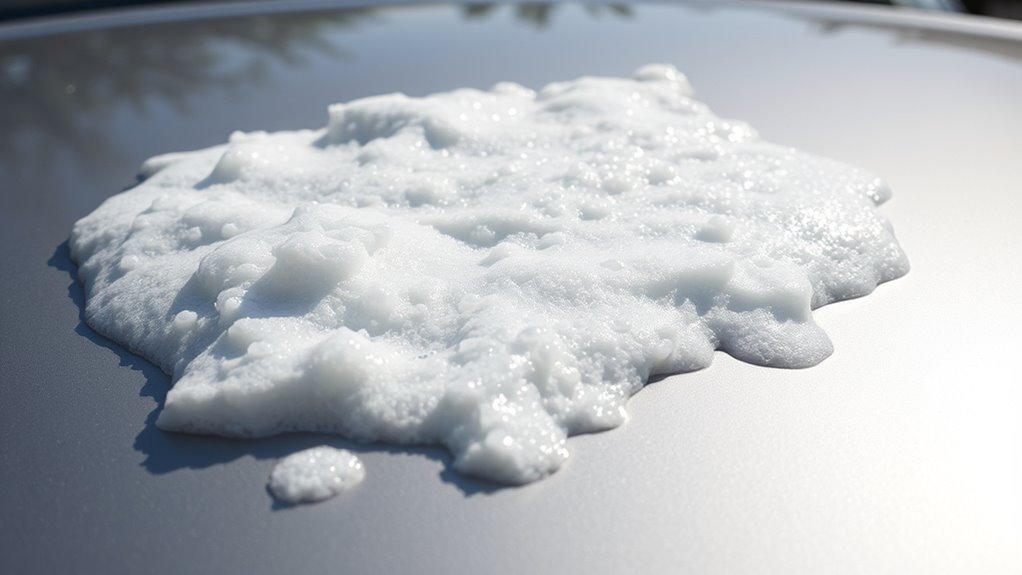
Although dish soap is great for cleaning dishes, it’s not designed for car care. The ingredients, like surfactants and degreasers, remove grease and food residues effectively on plates. But those same ingredients can strip away your car’s protective wax and damage the paint’s clear coat.
Dish soaps are formulated for kitchen use, not automotive surfaces. They lack the gentle, pH-balanced formulas needed for cars. Using dish soap regularly can make your paint look dull and faded over time.
Dish soap is harsh for cars, causing dullness and fading over time. Use automotive-specific products instead.
Instead, it’s better to choose products specifically made for vehicles. These are designed to clean without harming the paint or stripping away protective layers. They help maintain your car’s shine and keep the finish protected.
Relying on dish soap might seem convenient, but it can cause long-term damage that’s costly to fix. Investing in proper car care products is worth it to keep your vehicle looking its best.
What Happens to Your Car’s Paint When You Use Dish Soap
Using dish soap on your car might seem like a quick fix, but it can seriously harm your paint. It strips away the protective wax layer and dulls the surface gloss. Over time, this makes the paint less durable and more prone to scratches, chips, and fading from UV rays.
Unlike car-specific cleaners, dish soap is made to cut grease and food residues, not to protect automotive finishes. Its harsh detergents can break down the clear coat, which is key to keeping your car shiny and safe from damage.
Repeated use can leave your vehicle looking dull and less resistant to environmental harm. While it might seem convenient, dish soap actually weakens your car’s paint, leading to a less glossy look and higher repair costs.
For the best results, stick to products designed for cars. They help protect your paint and keep your vehicle looking its best for longer.
Signs Dish Soap Is Damaging Your Car’s Finish
How can you tell if dish soap is harming your car’s finish? You might notice signs like paint looking dull or faded. Surface scratches could become more visible, especially if the soap strips away protective layers.
Dull paint and visible scratches indicate dish soap may be damaging your car’s protective finish.
You may also see your wax degrade and sealants break down, making your car look less shiny and more vulnerable to damage. Over time, the clear coat can get compromised, leading to visible damage to the finish.
Frequent cleaning with dish soap speeds up these problems because it’s not made for car surfaces. To keep your paint in good shape, try using products designed specifically for cars. These help preserve your finish and protect your car’s surface.
Watch out for these signs and adjust how you clean your car. Using the right products will help keep your car looking great and prevent unnecessary damage.
How Dish Soap Removes Car Wax and Sealants
When you wash your car with dish soap, it actually breaks down the wax layers and strips away those protective sealants. That means your car’s paint isn’t as shielded from dirt and UV rays anymore.
Plus, dish soap can also remove the surface residues that help keep your car looking shiny and fresh. So, while it might seem like a quick fix, using dish soap regularly isn’t the best idea if you want to maintain that sleek, polished look.
Breaks Down Wax Layers
Dish soap is designed to cut through grease and grime, which means it effectively strips away the protective wax and sealants on your car’s surface. When you use dish soap, it breaks down the wax layers that give your car that glossy look and help it stay protected longer.
This removal exposes the paint underneath, making it more vulnerable to dirt, UV rays, and other environmental contaminants. You might notice your car’s shine diminishing and it looking duller over time.
Without the wax barrier, your car is more prone to scratches and surface damage. Plus, any wax you apply afterward won’t last as long because the surface isn’t properly protected.
Understanding this process shows why dish soap isn’t great for regular waxing routines. It’s excellent for cleaning, but using it too often can weaken your car’s protective coatings.
Strips Protective Sealants
Because dish soap is designed to break down oils and grime, it also dissolves the protective wax and sealants on your car’s surface.
Using dish soap regularly can reduce the sealant’s lifespan, leaving your car unprotected.
Sealants are meant to last for months, but dish soap strips them away quickly, exposing your paint to the elements.
If you’re thinking about switching to dish soap for cleaning, keep in mind it can harm the protective layer.
This not only shortens the life of any remaining sealant but also makes your car more vulnerable to dirt, UV rays, and water spots.
To keep your car protected, use products made specifically for that purpose instead of dish soap.
Removes Surface Residues
Using dish soap to clean your car doesn’t just remove dirt and grime; it actively strips away surface residues like wax and sealants. This helps in thorough cleaning by breaking down the buildup that can dull your vehicle’s finish. Dish soap’s powerful degreasing properties target these residues, making sure they don’t stick around and harm the paint’s look.
It disrupts the bond between wax, sealants, and the paint surface. Plus, it gets rid of stubborn residue buildup for a cleaner appearance. This also prepares the surface if you plan to reapply protective coatings later.
While dish soap is great for deep cleaning, using it regularly can damage your car’s shine by removing protective layers. So, it’s best for occasional deep cleans rather than your everyday wash.
The Damage Dish Soap Can Do to Your Car’s Clear Coat
While it might seem harmless, washing your car with dish soap can actually cause significant damage to the clear coat that protects your vehicle’s paint. Dish soaps are designed to cut through grease and food, not to preserve automotive finishes. Repeated use can strip away the clear coat, leading to clear coat deterioration. Over time, this weakens the protective layer, exposing the paint to environmental damage.
Imagine these scenarios:
| Before Dish Soap | After Dish Soap |
|---|---|
| Glossy, smooth surface | Dull, faded finish |
| Bright color shine | Faded, chalky appearance |
| Strong protection | Vulnerable to scratches and UV damage |
The long-term effects include increased risk of rust, peeling, and a costly repaint. Using dish soap regularly speeds up this damage, compromising your car’s appearance and value.
Debunking Myths About Dish Soap and Car Cleaning
A lot of people think that dish soap works just as well as car-specific cleaners, but that’s not really the case. Sure, it can get rid of grease, but it can also strip away your car’s protective coatings if you use it too often. So, don’t just assume that dish soap is safe for your car—knowing what it can do helps you avoid any accidental damage.
Effectiveness of Dish Soap
Despite common beliefs, dish soap isn’t the best choice for cleaning your car. It can remove dirt and grime okay, but it doesn’t match the performance of specialized car cleaning products.
Dish soap is made to cut through grease in kitchens, so it can break down surface dirt on your car. But it doesn’t have the gentle, protective qualities your vehicle’s paint needs.
Keep in mind, using dish soap repeatedly can reduce its effectiveness and may even damage your paint over time. Car-specific shampoos that are pH-balanced help preserve your paint and clear coat.
Regular dish soap can also strip away your car’s wax, leaving the paint more vulnerable to environmental damage. So, while it might seem convenient, sticking to products made for cars gives you better long-term protection and shine.
Potential Car Damage Risks
Although dish soap can effectively remove dirt from your car’s surface, using it repeatedly can pose real risks to your vehicle’s finish. Dish soap strips away the protective wax coating and can accelerate paint deterioration over time.
This impacts your overall car maintenance, making your vehicle more vulnerable to scratches, rust, and fading. Many believe soap alternatives like specialized car wash products are unnecessary, but they’re designed to protect your car’s paint.
Relying on dish soap regularly can lead to long-term damage, requiring costly repairs. To preserve your car’s appearance and value, it’s best to avoid frequent dish soap use and opt for proper car cleaning products. Proper soap alternatives help maintain your vehicle’s finish and guarantee your car stays protected.
Best Safe Alternatives for Washing Your Car
Regarding washing your car safely, choosing the right cleaning products can make a big difference in preserving your vehicle’s paint and finish. Instead of dish soap, try eco-friendly products made specifically for cars, which are gentle yet effective.
Use eco-friendly, car-specific products instead of dish soap to protect your vehicle’s finish and support sustainability.
Waterless washes are another great option, letting you clean your car without wasting water or risking damage from harsh chemicals. These products usually contain biodegradable ingredients that are kind to the environment and your paintwork.
To up your car care game, look for eco-friendly, biodegradable, and non-abrasive products. Waterless washes are quick and water-saving, perfect for busy days. Microfiber cloths help reduce scratches and give your car a nice shine.
Switching to these safe alternatives keeps your car looking great while supporting sustainability. They’re simple, effective, and much safer for your paint than traditional dish soap or harsh chemicals.
How to Properly Wash Your Car Without Causing Damage
Using the right products is just the start; knowing how to wash your car properly is key to avoiding damage. Focus on proper car washing techniques to protect your paint and clear coat.
Begin by rinsing your car thoroughly to remove loose dirt and debris, which can scratch the surface if scrubbed in. Use a high-quality microfiber wash mitt or sponge, and wash in straight, overlapping motions—not circular ones.
Always work from top to bottom to prevent dragging dirt onto cleaner areas. Avoid harsh brushes or abrasive cleaners that can strip paint protection. Rinse frequently to keep the sponge clean and prevent dirt buildup.
Dry your car with a soft, clean microfiber towel to prevent water spots. Following these simple steps helps maintain your car’s paint, preserves its shine, and extends its lifespan, ensuring your vehicle stays protected and looking great for years to come.
Tips to Keep Your Car’s Paint Shining and Protected
Want to keep your car’s paint looking shiny and protected? One of the best things you can do is use proper washing techniques—gentle, soapy water and soft cloths or sponges are key to avoiding scratches. It’s all about being gentle and taking your time.
And don’t forget about applying a good layer of protective wax regularly. It creates a barrier that shields your paint from dirt, UV rays, and other environmental elements. Think of it like giving your car a little sunscreen! Keeping up with routine maintenance like this will help your car look fresh and shiny for years to come.
Proper Washing Techniques
Start by choosing the right tools and techniques to preserve your car’s paint. Use soft, microfiber mitts or sponges to prevent scratches. Incorporate effective spot cleaning techniques to target stubborn dirt without over-washing entire panels, reducing the risk of paint damage.
When drying, opt for gentle methods like microfiber towels or chamois to avoid streaks and scratches. Keep these tips in mind:
- Use two buckets—one for soapy water and one for rinsing your mitt.
- Always rinse carefully before washing to remove loose debris.
- Pat dry instead of dragging towels across the surface to prevent swirl marks.
These practices help maintain your car’s finish, keeping it shiny and protected, even if you need to use dish soap in a pinch.
Use of Protective Waxes
Applying a protective wax creates a barrier that shields your car’s paint from dirt, UV rays, and environmental contaminants. To get the most out of the protective coating, use proper wax application techniques. Apply in small sections, use a soft applicator, and buff until smooth.
This ensures even coverage and a glossy finish. Visualize the benefits with this simple table:
| Step | Benefit | Result |
|---|---|---|
| Clean surface | Removes dirt and oils | Better wax adhesion |
| Apply thin layer | Guarantees even coverage | Long-lasting protection |
| Buff to shine | Reveals gloss and smoothness | Radiant, protected paint |
Regular Maintenance Routines
Maintaining your car’s paint requires consistent routines that keep it looking its best. Regular washing is essential, preventing dirt and grime buildup that can dull the finish. Incorporate tips like using proper cleaning tools and avoiding harsh chemicals to protect your paint.
Establishing a routine helps ensure your car stays pristine and retains its value over time. To step up your maintenance game, consider using a pH-balanced car wash soap for gentle cleaning and applying a quality wax or sealant after washing.
Parking in shaded areas can also help prevent UV damage, keeping your paint looking new longer. Staying consistent with these simple tips will keep your car’s paint in great shape for years to come.
What Happens If You Use Dish Soap Too Often?
While dish soap effectively cuts through grease and grime, using it too often on your car can cause unintended damage. Dish soaps are harsh and can strip away the protective wax and clear coat layers that shield your vehicle’s paint.
Over time, this can lead to dullness, scratches, and a higher risk of rust. Relying on dish soap frequently isn’t sustainable. Instead, consider dish soap alternatives designed specifically for cars.
These products clean well without harming the paint or stripping protective layers. It’s also important to monitor how often you wash your car—washing too often with dish soap speeds up wear and tear.
Using the right car wash products regularly helps keep your vehicle looking good and lasting longer. Limiting dish soap to occasional cleanings and choosing proper car care products will ensure your car stays shiny and protected over time.
Frequently Asked Questions
Can Dish Soap Cause Long-Term Damage to My Car’s Paint?
Using dish soap on your car can cause long-term damage to the paint if you do it often. It strips away the protective wax and coating, making your car more vulnerable to scratches and UV damage.
Dish soap is made for cleaning dishes, not cars. It doesn’t have the right pH balance to keep your paint looking good and protected.
To keep your car looking its best, it’s better to use car-specific washes. These products are designed to protect your paint and give you a proper clean.
Is Dish Soap Effective at Removing Stubborn Dirt and Grime?
Dish soap is pretty good at removing stubborn dirt and grime because it’s a strong cleaner. It’s especially effective at breaking down grease, which makes washing it away easier.
That said, while dish soap can handle tough dirt, it might not be the best choice for regular car cleaning. For the best results and to keep your car’s paint protected, it’s better to use a dedicated car wash soap for routine cleaning.
How Does Dish Soap Compare to Traditional Car Shampoos?
Washing your car with dish soap is like using a sledgehammer on a thumbtack—much more aggressive than traditional car shampoos. Dish soap’s strong soap ingredients cut through dirt quickly but can strip wax and damage your paint over time.
While it’s effective for a quick clean, it doesn’t have the gentle, pH-balanced formula that car-specific shampoos do. These are designed for regular cleaning without harming your vehicle’s finish.
Are There Any Safety Precautions When Using Dish Soap on Cars?
When using dish soap on your car, you should take safety precautions to protect your paint and yourself. Always wear gloves to avoid skin irritation from harsh chemicals.
Rinse thoroughly to prevent soap residue that can damage paint protection over time. Avoid using dish soap frequently, as it can strip wax and clear coat.
Test a small area first, and use a gentle, car-specific cleaner for better long-term protection.
Will Dish Soap Harm the Rubber or Plastic Parts of My Car?
Dish soap can harm your car’s rubber and plastic parts over time. It causes rubber to degrade, making seals and hoses brittle and prone to cracking.
It can also lead to plastic fading, which dulls the exterior trims and panels. While a quick wash with dish soap might not cause immediate damage, using it often speeds up the deterioration.
To keep your car in good shape, stick to cleaning products made specifically for cars. These are designed to be gentle on rubber and plastic parts.
Conclusion
If you keep using dish soap on your car, you’ll turn its beautiful paint into a dull, lifeless shell faster than you can say “car disaster.” It strips away wax, damages the clear coat, and leaves your car more vulnerable to the elements.
Stick to proper car wash products and techniques, or you might end up with a paint job that’s worse than a cracked mirror. Protect your ride like it’s the crown jewel of your garage!
Using dish soap regularly can do more harm than good. It’s not designed for cars and can weaken your paint over time. Your car deserves gentle, specialized cleaning to stay looking shiny and new.
Remember, for the best results, always use the right products. Dish soap might be handy for dishes, but your car’s paint needs proper car wash soap to stay protected and glossy.