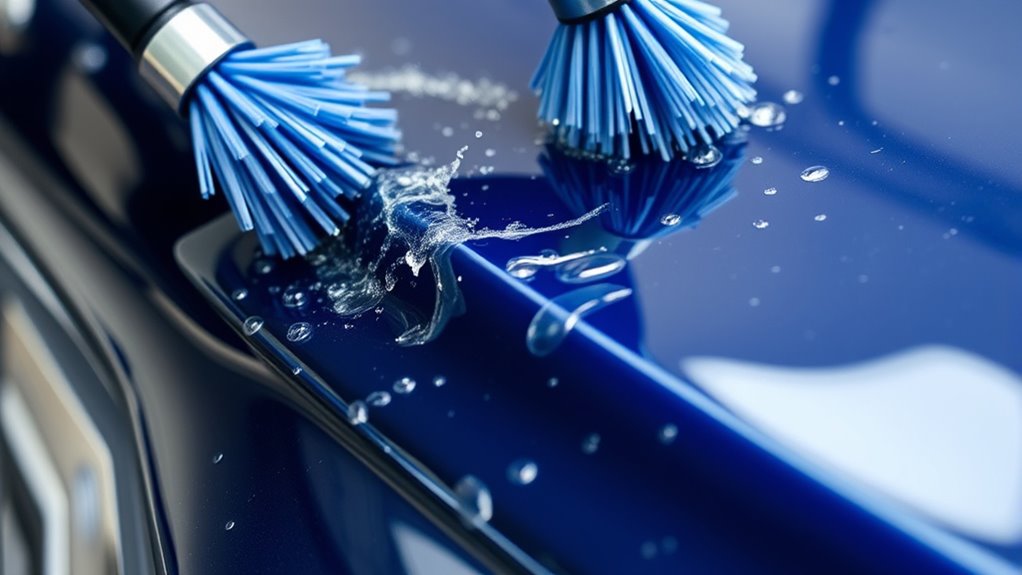
Do Automatic Car Washes Damage Your Paint?
Many car owners worry about the impact of automatic car washes on their vehicle’s paint. You’re not alone—this is a common concern for those wanting a quick clean without damaging their car’s finish.
Automatic car washes can damage your paint, especially if they use abrasive brushes or poorly maintained equipment. Stiff brushes and harsh chemicals can cause scratches, swirl marks, or dull finishes over time.
For better protection, choose washes with soft cloths or touchless systems. Regular maintenance and gentle cleaning practices help keep your car’s finish safe.
Want to learn how to minimize risks and pick the best options? Keep exploring for expert tips.
Key Takeaways
- Stiff brushes in some automatic washes can cause scratches and dull paint over time.
- Poorly maintained brushes and dirty cloths increase the risk of micro-scratches and paint damage.
- Harsh chemicals or residue left from improper rinsing may degrade paint or protective coatings.
- Touchless or foam-based systems are gentler and reduce the likelihood of paint damage.
- Regular maintenance, choosing soft cloth systems, and applying protective coatings help minimize damage risks.
How Do Automatic Car Washes Clean Your Vehicle?
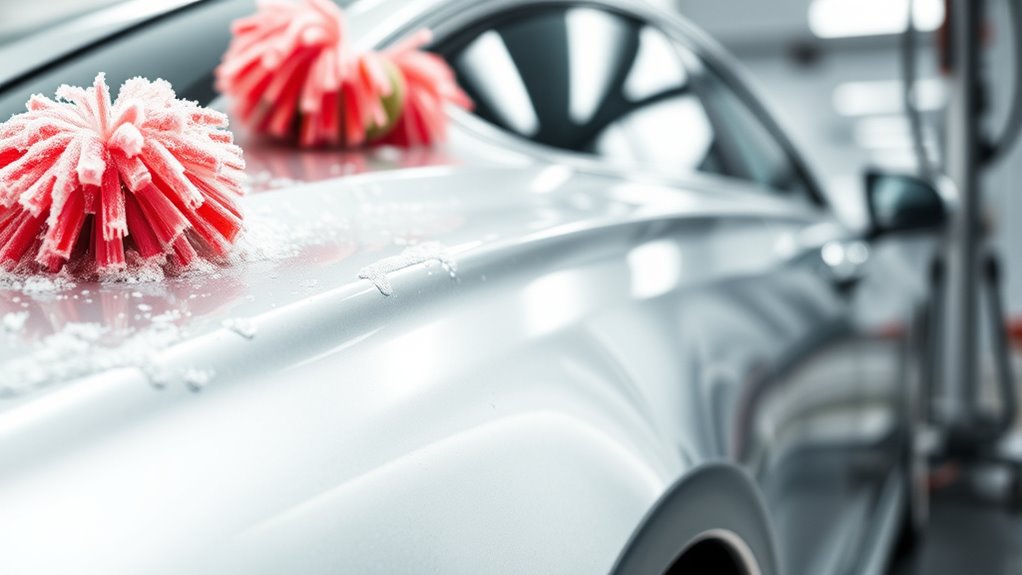
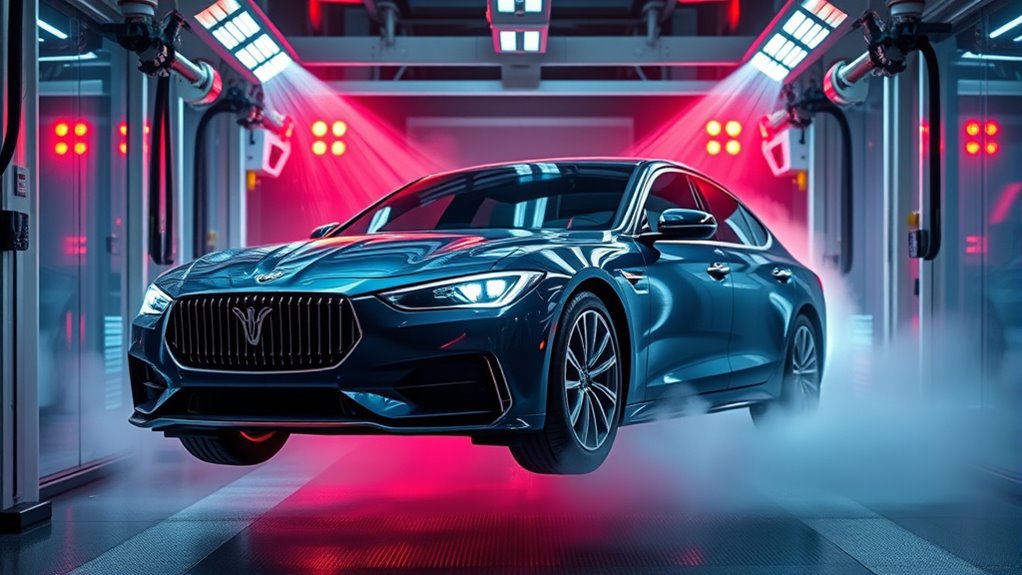
Automatic car washes clean your vehicle by using a mix of brushes, cloth strips, and high-pressure water jets that move along the car’s surface.
The process starts with foam application, where a thick, soapy solution coats your car to loosen dirt and grime.
During wash cycles, rotating brushes and cloth strips gently scrub the surface, removing debris without damaging the paint.
High-pressure water jets then rinse away the foam and loosened dirt, leaving your vehicle clean.
Some systems use soft cloth or foam brushes to minimize abrasion.
The entire process is automated, ensuring a consistent clean every time.
The wash cycle may repeat multiple times with different stages to do a thorough job.
This combination of foam, scrubbing, and rinsing makes automatic car washes quick and efficient for keeping your vehicle looking good.
Well-maintained systems help prevent damage while delivering a spotless clean.
What Types of Automatic Car Washes Are Available?
There are several types of automatic car washes available, each designed to suit different needs and preferences.
Touchless technology uses high-pressure rinsing and soap sprays without brushes, reducing the risk of paint scratches.
Foaming systems apply thick soap layers that loosen dirt gently, making cleaning effective without contact.
Eco-friendly options focus on water conservation and biodegradable cleaning agents, helping you reduce your environmental footprint.
Traditional conveyor washes often combine brushes with soap and high-pressure rinsing for thorough cleaning, but they may pose risks to your paint if not well-maintained.
Some facilities offer hybrid systems, blending touchless methods with softer cloths or brushes for improved cleaning.
Choosing the right type depends on your vehicle’s condition and your priorities, such as paint safety or environmental impact.
Understanding these options helps you make informed decisions to protect your car’s paint while keeping it clean.
Are Brushes or Soft Cloths Safe for Your Car’s Paint?
You might be wondering whether brushes or soft cloths are safe to use on your car’s paint. Well, it really depends on the type of brush. Some brushes can be too abrasive and might scratch or damage your paint if they’re not gentle enough. On the other hand, soft cloths are generally safer, but they still have to be used properly. If they’re not clean or maintained well, they could leave tiny scratches behind.
Brush Types and Damage
Many automatic car washes still use brushes, but these can sometimes do more harm than good for your paint. The type of brush material is really important; stiff or abrasive brushes made from harsh plastics can scratch or dull your finish.
Proper brush maintenance is essential to keep dirt and debris from scratching your car’s surface. But even well-maintained brushes can still pose risks if they’re made from low-quality materials. Soft, gentle brushes are safer, but they aren’t completely risk-free.
Over time, even the best brushes can become worn or contaminated, increasing the chance of damage. If you prefer automatic washing, look for places that use high-quality, soft brushes or alternative methods to protect your paint.
Regular inspections and proper brush maintenance help minimize potential damage.
Soft Cloths and Scratches
Soft cloths are often considered gentler than brushes, but they can still cause scratches if not used properly. The material of the cloth matters; microfiber is usually safest because it’s soft and less abrasive.
However, if the cloth is dirty or contains debris, it can scratch your car’s paint regardless of the material. Regular washing helps prevent dirt buildup that can cause scratches during cleaning.
Using dirty or worn-out cloths increases the risk of damaging your paint, even if the cloth is soft. Always inspect your cloths before use and replace them when they are worn.
Proper maintenance and gentle handling reduce the chances of scratches. When used correctly with clean, appropriate materials, soft cloths are a safer choice for your car’s paint.
What Are the Main Risks to Your Car’s Paint When Using Automatic Washes?
Automatic washes can sometimes be a bit harsh on your car’s paint, especially because of those abrasive brushes they use. These brushes can scratch the surface if they’re not properly maintained or if your car has dirt or debris on it beforehand.
Plus, some of the cleaning chemicals used in these washes can be pretty strong. Over time, they might weaken the paint or even cause discoloration, making your car look dull or faded. Being aware of these potential risks can help you make smarter choices when it comes to keeping your car looking its best.
Abrasive Brush Damage
A common risk of using automatic car washes is abrasive brushes damaging your vehicle’s paint. Over time, dirt and debris trapped in the brushes can cause tiny scratches, dulling your car’s finish.
Poor brush maintenance makes this worse, as neglected brushes become rougher and more damaging. These micro-scratches can add up, harming your paint protection and making your car look older faster.
To reduce this risk, pick washes with soft, well-maintained brushes or go for touchless options. Regularly check and clean the brushes at the wash to make sure they aren’t rough or dirty.
Harsh Chemical Effects
Harsh chemicals in some automatic car wash solutions can pose significant risks to your vehicle’s paint. These chemicals might leave behind residue that can degrade the paint’s protective layer over time.
Repeated exposure to this residue can cause fading, discoloration, or even peeling, which shortens your paint’s lifespan. Some detergents contain strong acids or alkalis that strip away wax and clear coats, making your car more vulnerable to damage.
Improper rinsing can leave chemical traces that continue to eat away at the paint long after the wash. To protect your vehicle, choose automatic washes with gentle, pH-balanced solutions.
You might also consider regular hand washing to minimize chemical exposure and help preserve your car’s finish.
How Do Scratches and Swirl Marks Form During Automatic Washes?
Scratches and swirl marks often appear during automatic car washes because the brushes and cloths can trap dirt and debris. These particles scratch the paint as they move across the surface.
Automatic car washes can cause swirl marks by trapping dirt and debris on brushes and cloths.
When these particles are pressed against your car’s paint, they cause tiny scratches that become visible as swirl marks over time. You might notice these marks after a wash, especially if the brushes aren’t properly cleaned or if your vehicle isn’t pre-rinsed.
To prevent this, choose washes with soft cloths or high-quality brushes. Regularly maintaining and cleaning the wash equipment can also reduce dirt buildup.
If swirl marks do appear, polishing can help restore your car’s finish. Knowing how these marks form can help you take steps to minimize damage and keep your paint smooth and shiny after every automatic wash.
How Can You Minimize Damage to Your Paint When Using Automatic Car Washes?
To protect your car’s paint during automatic washes, you can take several proactive steps. First, choose a car wash that offers gentle, soft cloth or foam brush cleaning to reduce the risk of scratches.
Applying a quality paint protection, like wax or ceramic coating, creates a barrier that minimizes damage from brushes and detergents. Keep an eye on your wash frequency; washing too often can wear down the paint, so space out washes to prevent excessive exposure to abrasive elements.
Also, inspect the wash equipment periodically for debris or rough spots that could harm your paint. Avoid automatic washes with harsh chemicals or high-pressure jets, which can strip protective layers.
Regularly maintaining your vehicle’s paint protection helps preserve your car’s finish and extends the life of your paint. This makes each wash a safe and effective way to keep your car looking its best.
What Features Should You Look for in a Car Wash to Protect Your Paint?
When choosing a car wash to protect your paint, look for features that prioritize gentle cleaning and minimal abrasion. Soft cloth or microfiber brush systems are key because they help reduce the risk of scratches and swirl marks that can damage your paint.
Choose car washes with soft cloth or microfiber brushes to minimize scratches and protect your paint.
Automatic washes with touchless options are ideal because they avoid any physical contact altogether, which decreases the chance of damage. Check if the facility uses high-quality, pH-balanced detergents that are gentle on your car’s finish.
Moreover, verify that the wash employs properly maintained brushes and equipment. This prevents dirt and debris from scratching your paint. Regular wash frequency is important, but over-washing can also wear down your paint’s protective layer.
Opt for a wash schedule that balances cleanliness with paint preservation, usually every one to two weeks—especially if you live in an area with harsh weather conditions. These features help maintain your car’s appearance while safeguarding the paint.
How Do Self-Serve and Hand Washes Compare in Protecting Your Paint?
Are self-serve and hand washes better at protecting your car’s paint compared to automatic options? Generally, yes. Hand washes give you more control over the pressure and tools used, which helps reduce the risk of scratches or swirl marks. You can use gentle techniques to keep your paint smooth and unmarred.
Self-serve washes often let you pick softer brushes or mitts, which are less abrasive than automatic brushes. This means you can clean your car thoroughly without worrying about harsh bristles damaging the paint.
Since you’re actively involved, you can also check for debris that might cause scratches during the wash. Overall, hand washes and self-serve options tend to prioritize paint protection, offering a safer, more gentle cleaning process.
While they might take a bit more effort, they help keep your car’s finish looking good longer and preserve its appearance better than automatic washes.
When Is It Best to Avoid Using an Automatic Car Wash?
Certain situations call for avoiding automatic car washes to protect your vehicle’s paint. If your car’s paint is new or has visible chips, scratches, or damage, it’s best to steer clear until repairs are made.
Rain or extremely dirty conditions can also make an automatic wash less effective and potentially harmful, as dirt and debris may scratch the finish. Moreover, if your car has a delicate or custom paint finish, the brushes and harsh chemicals in some automatic systems could cause damage.
The best conditions for using an automatic car wash are when your vehicle is moderately dirty, and the paint surface is in good condition. When in doubt, avoid automated washes after extreme weather or if your car has been recently detailed or painted, as these are times when paint protection is most vulnerable.
Prioritizing hand washing or professional detailing can help preserve your vehicle’s paint in these situations.
Tips for Keeping Your Car’s Paint Safe During Automatic Washes
To keep your car’s paint safe during automatic washes, it’s important to take a few simple steps. Regularly inspecting your vehicle for chips and scratches helps protect the paint over time.
Avoid washing your car too often, as frequent washes can wear down the clear coat. When choosing a wash, opt for automatic ones with soft cloth or foam brushes—they’re gentler on your paint.
Whenever possible, go for touchless or brushless washes. These don’t use brushes, which reduces the risk of scratches. Also, keep your car clean and free of debris, as dirt can cause damage during the wash.
Applying a ceramic coating or wax regularly adds an extra layer of protection against damage. Schedule washes based on your environment and driving habits to keep your car looking its best.
Finally, maintain any paint protection treatments you have for added defense. These small steps can go a long way in keeping your car’s paint safe during automatic washes.
Frequently Asked Questions
Can Automatic Car Washes Remove Stubborn Stains Effectively?
Yes, automatic car washes can remove stubborn stains effectively if they use proper techniques. Modern systems often have high-pressure brushes and special cleaning agents designed for tough stains.
But for really stubborn spots, you might need to pre-treat the area or do some manual cleaning. Regular use of quality automatic washes helps keep your car looking good.
Just make sure the system is gentle enough to avoid damaging your paint. Overall, they can be quite effective if used correctly.
Do Automatic Washes Use Environmentally Friendly Cleaning Agents?
Automatic car washes are like eco-friendly friends who care about the environment. Many use environmentally friendly cleaning agents that reduce harmful chemical runoff and lower their environmental impact.
These cleaning agents are biodegradable and less aggressive, helping keep waterways clean and ecosystems safe. By choosing automatic washes that prioritize eco-conscious products, you help protect the planet while keeping your car sparkling clean.
How Often Should I Use an Automatic Car Wash?
You should use an automatic car wash about once every two weeks, depending on your wash types and environmental conditions.
If you drive often or face harsh weather, washing your car more regularly can help protect your paint.
Follow the recommended frequency for your vehicle’s needs, and consider gentle wash options if you’re worried about paint damage.
This routine keeps your car clean without risking unnecessary wear or damage to the paint.
Are Premium Automatic Car Washes Safer for My Paint?
Think of premium automatic car washes as gentle guardians of your car’s paint. They use softer brush types and advanced cleaning techniques, making them safer than basic washes.
By choosing these, you reduce the risk of scratches even with frequent washings. So, if you wash your car often, go for the premium option to protect your paint.
Keeping your car looking its best longer is easier when you pick the right wash. Premium washes are designed to be gentle and effective, giving you peace of mind.
Do Automatic Car Washes Impact the Resale Value of My Vehicle?
Automatic car washes can affect your vehicle’s resale value, especially if you use them a lot. Washing too often might cause paint wear and oxidation, which buyers will notice.
Plus, some resale factors like paint condition and how the exterior looks are influenced by how well you take care of your car. To keep your resale value high, find a good balance in your wash routine.
Choose high-quality washes and try to hand-wash your car occasionally. This helps prevent paint damage and keeps your vehicle looking its best for when you sell it.
Conclusion
Think of your car’s paint as a delicate butterfly fluttering through a garden. Automatic car washes can be like gentle rain or harsh storms, depending on the tools they use.
By choosing washes with soft cloths and avoiding the roughest brushes, you help your car glide safely through its journey. Protect your vehicle like tending to that fragile butterfly—carefully and with the right tools.
When it comes to automatic car washes, using gentle, soft cloth brushes can prevent damage to your paint. So, if you want to keep your car looking beautiful and vibrant, be mindful of the type of wash you choose.