What Happens If You Use Dish Soap to Wash Your Car?
Many car owners struggle with finding the right way to keep their vehicle clean without causing damage. You’re not alone—using the wrong cleaning products can sometimes do more harm than good.
Using dish soap to wash your car can strip away its protective wax layer and damage the paint or clear coat over time, leaving your vehicle vulnerable to scratches, fading, and environmental damage.
Dish soap isn’t designed for cars, so it doesn’t effectively remove stubborn contaminants like tar or tree sap and can dull your finish.
If you want to keep your car looking its best, continue exploring how to clean it safely and protect its value.
Key Takeaways
- Dish soap strips away the car’s protective wax layer, making it easier for scratches and environmental damage to harm the paint.
- It can weaken the paint and clear coat, which might lead to dullness, fading, and even chipping over time.
- Dish soap may not be effective at removing stubborn contaminants like tar, tree sap, or brake dust.
- Using it regularly speeds up paint deterioration and can cause scratches or swirl marks on your car’s surface.
- Choosing dish soap instead of specialized car wash products can shorten your vehicle’s exterior lifespan and reduce its value.
Is Dish Soap Safe to Use on Your Car?
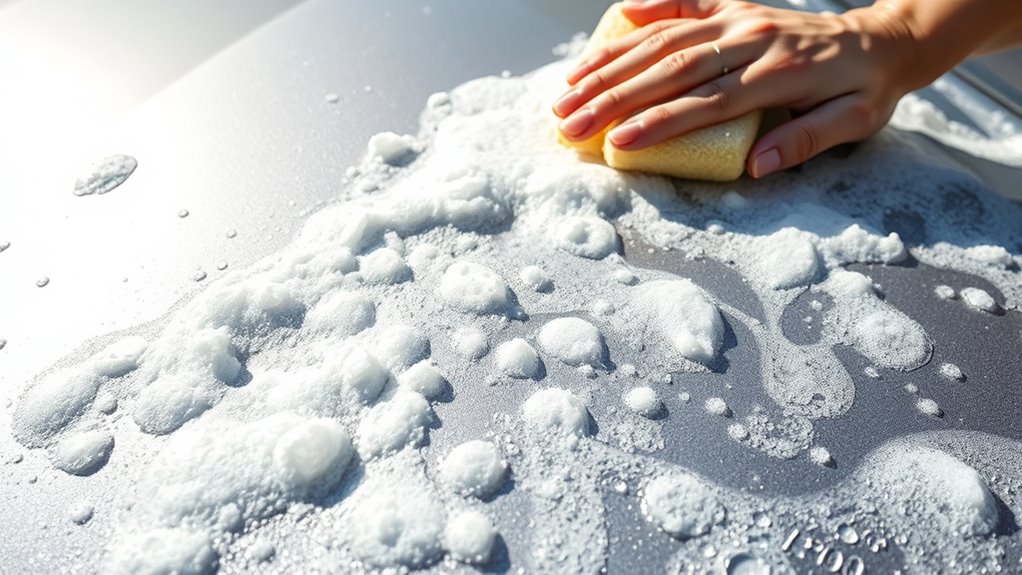
Dish soap can harm your car’s paint; use automotive-specific cleaners instead.
These ingredients can strip away the protective wax layer on your vehicle, leaving it vulnerable to scratches and damage. Although dish soap is good at removing grime, it’s too harsh for regular use on cars.
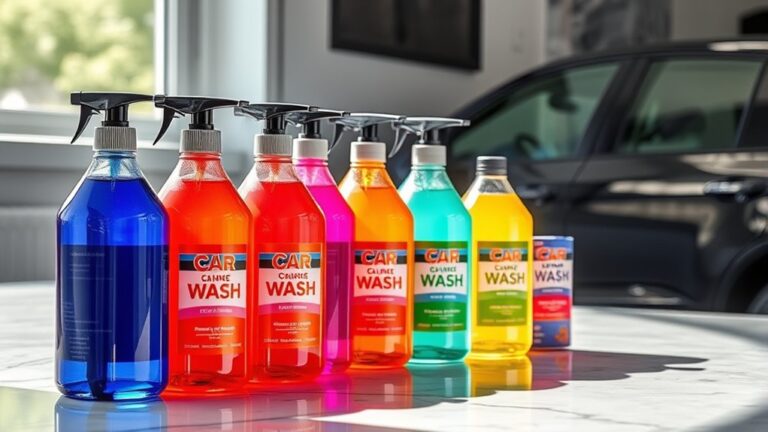
Instead, consider using products specifically designed for automotive cleaning. They help preserve your car’s finish and keep it looking great. Car wash options like pH-balanced shampoos are gentle but effective.
They contain soap ingredients made to clean without harming your vehicle’s paint or clear coat. Using the right products ensures your car stays shiny and protected, avoiding costly repairs or paint issues later on.
Stick to car-specific soaps to keep your vehicle safe and well-maintained.
What Are the Risks of Using Dish Soap on Your Car?
Using dish soap on your car can lead to several risks that might not be immediately obvious. Dish soap is made to cut through grease and food residues, not to protect automotive paint.
Regular use can strip away the protective wax layer, leaving your car more vulnerable to dirt, UV rays, and even corrosion. Over time, this can cause your paint to fade and get damaged.
Relying on dish soap instead of proper car cleaning methods can also cause scratches, especially if dirt and grit aren’t rinsed off completely.
Instead, consider using pH-balanced car washes that are gentler on your vehicle’s finish. These specialized products help keep your paint looking good while actually cleaning effectively.
Using the right cleaning techniques not only extends your car’s exterior life but also helps maintain its value.
Avoid quick fixes and choose proper, car-specific cleaning products to keep your ride in top shape.
How Does Dish Soap Damage Your Car’s Paint and Clear Coat?
Because dish soap isn’t made for car finishes, it can weaken your vehicle’s paint and clear coat over time. It strips away the natural oils that protect your car’s surface, which can lead to less protection for the paint.
Frequent use can cause the clear coat to look dull, get scratched, or chip. This exposes the underlying paint to damage from UV rays, dirt, and other contaminants. Over time, this can speed up fading and lead to costly repairs.
Instead of dish soap, try cleaning with products designed specifically for cars. These are made to clean well while keeping your paint and clear coat safe. They help maintain that shiny finish and extend your car’s protective layers.
Choosing proper car washes helps keep your vehicle looking its best and prevents damage from harsh household cleaners. Using the right products protects your investment and keeps your paint in top condition.
Does Dish Soap Really Remove Car Contaminants Effectively?
Dish soap can seem like a quick fix for removing dirt, but it often falls short when it comes to eliminating stubborn car contaminants. While it might lift surface grime, it doesn’t target more ingrained issues like brake dust, tree sap, bird droppings, or road tar. These contaminants need specialized cleaning products to be fully removed, especially for proper car maintenance.
Relying solely on dish soap might leave behind residue or even damage your car’s protective coatings over time. It’s important to understand its limitations. Dish soap is designed for dishes, not car surfaces.
It also lacks the surfactants needed to break down tough contaminants. Plus, it can strip away wax and protective layers, making your car more vulnerable. Regular use can cause long-term damage rather than effective cleaning.
For thorough contaminant removal, you should use dedicated car cleaning products formulated to preserve your vehicle’s finish. They ensure proper maintenance and help keep your car looking its best.
How Can Dish Soap Wipe Out Your Car’s Wax and Protective Layers?
When you use dish soap on your car, it can actually strip away the protective wax and coatings that are there to shield your paint. Think of it like washing your skin with regular soap – it might clean, but it can also remove the natural oils that keep your skin healthy.
Without those layers, your car’s shine can start to fade, and the surface becomes more vulnerable to scratches and damage. Over time, this can lead to the paint deteriorating faster and your car looking dull and worn out. So, it’s best to stick to a proper car wash soap to keep your vehicle looking its best!
Strips Away Protective Coatings
Using dish soap on your car can quickly strip away its protective coatings, leaving the paint exposed to potential damage. These layers, like wax and sealants, are crucial for protecting your vehicle from dirt, UV rays, and corrosion.
When dish soap removes these protective layers, your car becomes more vulnerable to scratches, oxidation, and fading. This can reduce the lifespan of your paint job and make it harder to keep your car looking shiny and smooth.
It also increases the risk of rust and corrosion over time. Plus, you’ll find yourself reapplying protective coatings more often, which can be time-consuming and costly.
Diminishes Shine and Gloss
The glossy shine that makes your car look freshly detailed can quickly fade away when dish soap strips off its protective layers. Dish soap is great for cutting through grease and grime, but it also strips away wax and sealants that boost gloss.
Without these protective coatings, your car’s paint becomes dull and loses that vibrant look you want. Using dish soap regularly can diminish your vehicle’s luster over time, making the surface seem tired and lackluster.
It’s not just about cleaning—it’s about keeping that mirror-like finish. To keep your car looking its best, avoid dish soap and choose products made to preserve and enhance shine. Your vehicle’s appearance depends on it.
Accelerates Paint Damage
Dish soap’s harsh cleaning agents don’t discriminate between dirt and your vehicle’s protective coatings. When you use it regularly, it strips away the wax and sealants that help preserve your paint protection, leaving your car more vulnerable.
Without these layers, the surface weakens, making your paint more prone to chips, scratches, and fading. Over time, this accelerated damage can lead to costly repairs and hurt your car’s overall look.
It also removes essential oils that keep the surface resilient and breaks down protective coatings faster than regular soap. This exposes your paint to environmental elements and UV rays.
As a result, oxidation speeds up, dulling the finish quickly. Regular dish soap can compromise your car’s surface, causing it to deteriorate faster.
For long-term protection, stick to products made specifically for automotive paint.
What Are the Signs That Dish Soap Is Causing Damage?
How can you tell if dish soap is damaging your car’s paint? One clear sign is if you notice a dull or chalky appearance on your vehicle’s surface after washing.
You might also see tiny scratches or swirl marks that weren’t there before. If the paint feels rough or you see patches where the color looks faded, it’s a sign that dish soap is stripping away protective layers.
Using dish soap regularly can weaken clear coats and cause long-term damage. To prevent this, switch to proper car washing techniques and consider dish soap alternatives designed specifically for automotive finishes.
Watch for water spots or streaks that don’t rinse away easily, indicating the soap has compromised the paint’s natural barrier. Recognizing these signs early helps you avoid further damage and encourages using safer products for maintaining your car’s shine and integrity.
What Are Better Products for Washing Your Car Safely?
To wash your car safely and protect its paint, it’s best to use products specifically designed for automotive detailing. These products are made to clean well without stripping away protective coatings. Look for gentle, specialized shampoos that lift dirt without damaging the paint, keeping your vehicle shiny and protected.
Use automotive-specific shampoos to clean your car gently and protect its paint.
Eco-friendly options are also available, helping you clean your car while reducing environmental impact. Using biodegradable ingredients, these products are a great choice for eco-conscious car owners.
Here are some better products to consider:
- Automotive-specific shampoos that lift dirt without damaging the paint
- pH-balanced cleaners that prevent corrosion and fading
- Eco-friendly options that use biodegradable ingredients
- Microfiber wash mitts designed for gentle cleaning and scratch prevention
Choosing these products ensures your car stays in top condition while avoiding the harsh effects of dish soap. With the right tools, you can keep your vehicle clean, shiny, and well-maintained for years to come.
How Regular Car Washes Help Maintain Your Vehicle’s Value
Regular car washes are essential for keeping your vehicle looking great and preventing damage that can lower its value over time. Cleaning your car regularly helps maintain its shine, protects the paint, and cuts down on rust.
When you keep your vehicle in good shape, it’s easier to sell or trade later because it holds its value better. Plus, regular washes save you money by avoiding costly repairs caused by dirt, grime, and rust buildup.
To see the benefits clearly, check out this table:
| No Wash | Irregular Washes | Regular Car Washes |
|---|---|---|
| Paint deterioration | Rust and corrosion risk | Preserved paintwork |
| Higher repair costs | Decreased resale value | Maintains vehicle value |
| Dull appearance | More frequent repairs | Looks newer longer |
Sticking to a regular wash schedule helps protect your investment and keeps your car looking its best.
What Are the Do’s and Don’ts When Washing Your Car at Home?
When you’re washing your car at home, it’s important to use the right cleaning tools. Soft sponges or microfiber cloths are your best friends here—they’re gentle on your paint and help avoid scratches. Also, steer clear of harsh chemicals that can strip away your car’s finish or cause damage over time.
Don’t forget to rinse your car thoroughly after washing. This helps wash away any soap or dirt residue that could cause spots or dull the paint. Following these simple do’s and don’ts will help keep your vehicle looking shiny and new, while also preventing any unnecessary harm.
Use Proper Cleaning Tools
Using the right cleaning tools is essential for washing your car effectively without causing damage. Proper tools help you follow cleaning techniques that prevent scratches and paint damage.
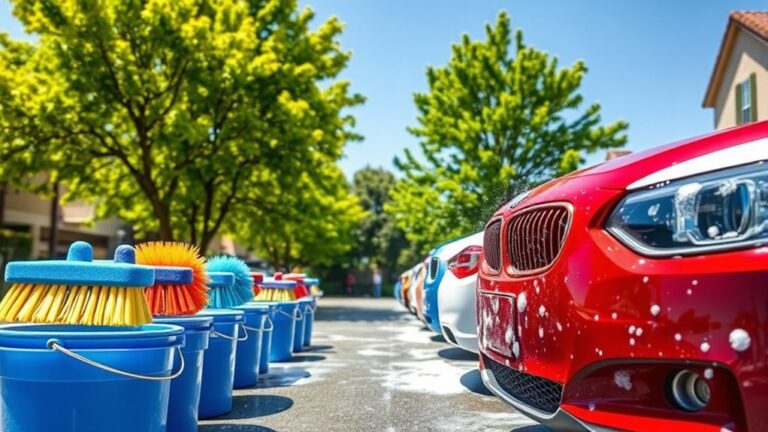
Always choose soft, microfiber wash mitts instead of rough sponges, which can scratch the surface. Use a gentle brush for tires and wheel wells, avoiding stiff bristles.
A high-quality hose with a spray nozzle helps rinse thoroughly without force. Avoid using dishcloths or old towels, which aren’t designed for car surfaces.
Instead, invest in a dedicated car washing kit with proper tools for different areas. These tools guarantee you clean safely and efficiently, reducing the risk of damage caused by improper techniques.
Proper tools make all the difference in maintaining your car’s appearance.
Avoid Harsh Chemicals
Although it might be tempting to use household cleaners or dish soap for your car, doing so can do more harm than good. Harsh chemicals strip away protective waxes and damage your paint.
Instead, opt for eco-friendly alternatives and gentle cleaners designed specifically for vehicles. These products clean effectively without harming your car’s surface or the environment.
| Harsh Chemicals | Gentle Cleaners |
|---|---|
| Damage paint | Preserve finish |
| Remove wax | Maintain protection |
| Harm the environment | Eco-friendly options |
| Cause corrosion | Safe for surfaces |
Choosing the right cleaning agents helps keep your car shiny and protected. Avoid long-term damage caused by aggressive chemicals.
Always prioritize gentle cleaners to maintain your car’s appearance and integrity.
Rinse Thoroughly After Washing
Rinsing thoroughly after washing your car is essential to remove all soap residues and dirt, preventing streaks and spots. Using proper rinse techniques guarantees that no soap or debris is left behind, which can damage your vehicle’s paint over time.
Make sure to rinse from the top down, paying attention to crevices and hard-to-reach areas. After rinsing, choose effective drying methods to prevent water spots—preferably using a microfiber towel or a chamois.
Avoid air drying, which can leave mineral deposits. Proper rinsing and drying help maintain your car’s shine and protect its finish. Remember, a thorough rinse and careful drying are key to keeping your car looking its best after each wash.
When Should You Consider Professional Car Detailing?
Knowing when to turn to professional car detailing can save your vehicle from further wear and tear. If your car’s paint looks dull, scratches are more noticeable, or dirt has built up in hard-to-reach areas, it’s time to seek expert help.
Professional detailing emphasizes thorough cleaning using techniques that go beyond regular washing. When you notice persistent stains, interior odors, or stubborn grime, DIY methods often fall short.
A professional detailer can restore your car’s appearance and protect its value. Also, if you’re preparing to sell or lease your vehicle, professional detailing guarantees it looks its best.
Regular maintenance is good, but deep cleaning and protection treatments from professionals can significantly extend your car’s lifespan. Recognizing these signs and investing in professional detailing not only improves your vehicle’s look but also helps maintain its overall condition for years to come.
Frequently Asked Questions
Can Dish Soap Cause Long-Term Damage to Your Car’s Finish?
Using dish soap can cause long-term damage to your car’s finish by leading to paint degradation and wax removal. Dish soap isn’t made for car surfaces, so it strips away protective wax layers and weakens the paint over time.
This can make your car more vulnerable to scratches, oxidation, and environmental damage. To keep your vehicle’s finish in good shape, always choose a proper car wash soap designed to protect paint and wax.
How Often Should I Wash My Car to Avoid Damage?
You should wash your car about once every two weeks to keep it protected and looking good. Regular washes help remove dirt, grime, and contaminants that can damage your paint over time.
Using gentle, proper car wash products is key to maintaining your finish. Don’t over-wash, though, because it can strip away wax or protective coatings.
Stick to this schedule to keep your car in great shape and prevent long-term damage to the paint.
Are There Specific Types of Dish Soap Safer for Cars?
Using gentle, eco-friendly dish soaps is like giving your car a soothing spa day—safer for its paint and the environment. Look for brands labeled biodegradable and free of harsh chemicals.
These safer options help maintain your car’s shine without stripping wax or causing damage. Always think about car wax, as some soaps can remove protective layers.
Choosing the right dish soap keeps your car sparkling and protected, mile after mile.
Will Dish Soap Remove Stubborn Stains From My Vehicle?
Dish soap isn’t designed for stain removal on your car, especially stubborn stains. It might help lift light dirt, but it can strip paint protection if used repeatedly on tough stains. That can leave your vehicle more vulnerable.
For those really stubborn stains, it’s best to use products made specifically for cars. They target stains effectively without damaging the paint or stripping away protective coatings.
Using the right products guarantees your car stays clean and protected, so it’s worth choosing the proper cleaners over regular dish soap.
Is Dish Soap Effective for Cleaning Car Windows and Mirrors?
Think of your car windows and mirrors as eyes to the world. Dish soap isn’t the best choice to keep them clear. It might remove dirt temporarily, but it can leave residues that dull clarity and reduce shine.
For the best window clarity and mirror shine, use a dedicated glass cleaner. Dish soap isn’t designed for this delicate job, so it’s better to opt for products made specifically for automotive glass.
Conclusion
Using dish soap on your car might seem like a quick fix, but it can strip away protective layers and damage the paint over time. It’s not formulated for automotive finishes, so it can cause more harm than good.
Studies show that frequent use of harsh cleaners accelerates paint deterioration, reducing your car’s value by up to 20%. Over time, this can make your car look dull and worn out.
To keep your vehicle looking its best, opt for car-specific shampoos and regular professional washes. They’re gentle on your paint and help maintain that shiny finish.
Protect your investment by choosing the right products. Using proper car wash solutions will preserve your car’s appearance and longevity, saving you money in the long run.