
How Do Car Washes Reuse Recycled Water?
Many car owners and operators are looking for ways to reduce water usage and be more eco-friendly. You’re not alone—water conservation is a top concern for many.
Car washes reuse recycled water by capturing used water through sloped surfaces or troughs that direct runoff to a central collection point. This water is then filtered with screens, sediment filters, and advanced purification methods like microfiltration, UV disinfection, or activated carbon.
Storage tanks hold the treated water for reuse, reducing fresh water use and supporting eco-friendly practices. If you keep exploring, you’ll uncover how these systems guarantee quality and safety for effective cleaning.
Key Takeaways
- Used water is collected through sloped surfaces or troughs and directed to a central filtration system.
- Larger particles are removed with screens, followed by advanced filtration to eliminate finer contaminants.
- Filtration, sedimentation, and biological treatments clean the water, removing chemicals and microbes.
- Recycled water is stored in tanks or ponds so it can be reused in washing processes.
- The treated water meets safety standards and is used again, helping reduce fresh water use and protect the environment.
How Do Car Wash Recycling Systems Capture Used Water?
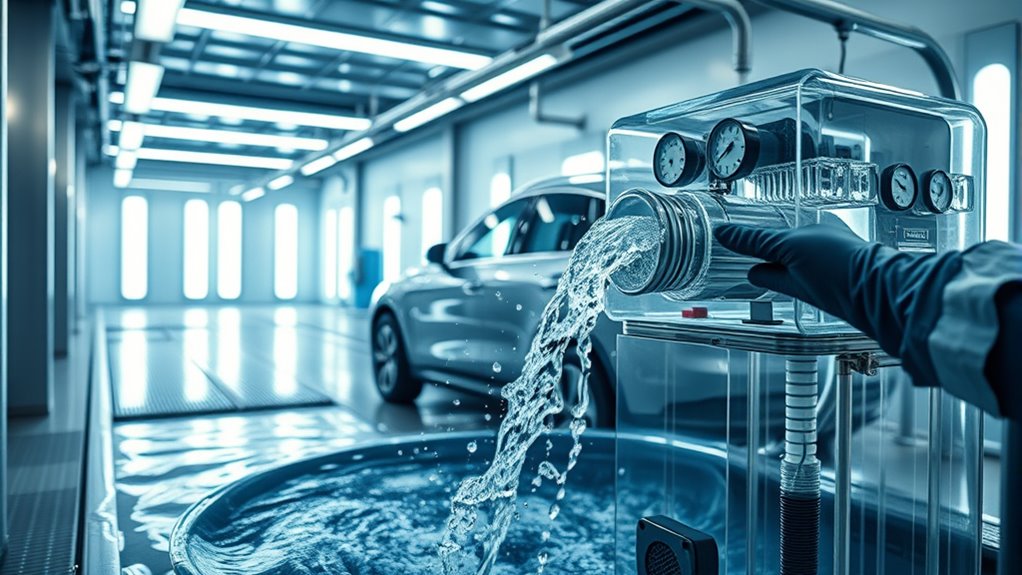
Car wash recycling systems are designed to efficiently collect and clean used water so it can be reused. You’ll find that water capture is the first step, where the system gathers runoff from washing bays.
This is often done through sloped surfaces or troughs that direct water into a central collection point. Once collected, filtration methods come into play to remove debris, dirt, and oils.
Water is directed into a central collection point using sloped surfaces or troughs.
You might see screens or mesh filters that trap larger particles, preventing them from entering the recycling process. For finer contaminants, advanced filtration methods like sand filters or cartridge filters are used, ensuring the water is as clean as possible.
These systems are typically designed to operate continuously, capturing water at various points during the wash process. By efficiently managing water capture and employing effective filtration methods, car wash recycling systems help conserve water, reduce waste, and maintain a sustainable operation.
What Technologies Enable Water Recycling in Car Washes?
Innovative technologies are key to making water recycling in car washes more efficient and sustainable.
Filtration systems are at the heart of this process, removing dirt, oils, and debris from used water so it can be reused safely.
These systems often combine multiple steps like microfiltration, ultrafiltration, and sediment filters to ensure high water quality.
Advanced filtration not only keeps the water clear but also protects equipment and helps ensure effective cleaning.
Eco-friendly practices are built into these systems, cutting down on chemical use and energy consumption.
For example, some car washes use ozone or UV treatment along with filtration to naturally disinfect water.
This reduces the need for harsh chemicals and makes the process more sustainable.
Together, these technologies help save water, lower operational costs, and promote eco-friendly practices.
How Is Recycled Water Purified and Treated for Safe Use?
Recycled water undergoes a series of rigorous purification and treatment steps to guarantee it’s safe for reuse. First, water filtration removes large debris, dirt, and particles, making the water clear.
Next, various purification methods like sedimentation and biological treatments target smaller contaminants such as oils, grease, and organic matter. Advanced techniques like activated carbon filters help remove chemical impurities and improve water quality.
In some systems, ultraviolet (UV) disinfection is used to eliminate bacteria and viruses, making the water microbiologically safe. These combined filtration and purification methods provide a thorough approach to cleaning recycled water.
How Are Contaminants Removed From Recycled Water?
To effectively remove contaminants from recycled water, treatment systems use a mix of physical, chemical, and biological processes. Filtration methods are the first step, trapping particles, dirt, and debris.
Recycled water is purified through physical, chemical, and biological processes, ensuring safe reuse in car washes.
Chemical treatments, like chlorination or other disinfectants, kill bacteria and viruses that might be present. Biological processes, such as biofiltration, naturally break down organic contaminants.
Here are four key steps used to clean the water:
- Filtration methods – physically remove particles and sediments.
- Chemical treatments – disinfect water and eliminate harmful microbes.
- Sedimentation – let heavier particles settle out.
- Activated carbon filtering – absorb organic compounds and odors.
These steps work together to make sure recycled water is clean and safe for reuse in car washes, helping reduce environmental impact while ensuring high water quality.
How Do Recycling Ponds and Storage Tanks Support Water Reuse?
Recycling ponds and storage tanks are crucial for supporting water reuse by collecting and holding treated water until it’s needed again. These ponds act as large reservoirs, making sure you have a steady supply of recycled water for your car wash.
Recycled water storage helps you manage water efficiently, cutting down on fresh water use and reducing overall consumption. Proper maintenance of the ponds is important to prevent algae growth, sediment buildup, and contamination, which can affect water quality.
Regular inspections and cleaning keep the ponds functioning well, ensuring the water stays clean and safe for reuse. Storage tanks, whether above or below ground, provide secure, controlled spaces for holding recycled water.
Together, recycling ponds and storage tanks form a reliable system that supports continuous water reuse. This helps your car wash stay environmentally friendly and cost-effective while maintaining high water quality standards.
How Do Automated Systems Monitor Water Quality?
Automated systems are crucial for keeping water quality in check by monitoring key parameters in real-time. They use sensors to detect contaminants, pH levels, turbidity, and chemical balance.
These sensors gather data instantly, which is then analyzed automatically to spot any deviations from standards. If water quality drops below acceptable levels, alerts are triggered.
When that happens, adjustments are made or water is redirected for treatment. This helps maintain the right conditions and ensures the water stays safe for reuse.
Are Recycled Water Systems Cost-Effective for Car Washes?
While implementing recycled water systems involves an initial investment, many car wash operators find them cost-effective over time. Conducting a thorough cost analysis helps you understand potential savings from lower water bills and wastewater disposal fees.
Although upgrading equipment and infrastructure requires upfront costs, these investments often lead to significant savings in the long run. Recycled water systems can improve your profit margins by decreasing operational expenses and providing a more predictable water supply.
Plus, government incentives or rebates might help offset some of the initial costs, making the investment even more attractive. Over time, relying less on fresh water sources results in ongoing savings, making the system financially sensible.
When evaluating these systems, consider both the short-term costs and the long-term benefits. Overall, recycled water systems can be a smart financial move for car wash businesses looking to boost efficiency and sustainability.
What Are the Environmental Benefits of Water Recycling?
Water recycling helps you cut down on the amount of water you use overall, which is really important for conserving this precious resource. Plus, it helps reduce pollution because fewer contaminants make their way into runoff and local waterways. These environmental benefits make water recycling a smart choice, especially for eco-conscious car wash businesses looking to do their part for the planet.
Reduces Water Consumption
By recycling water in car washes, you greatly cut down on overall water use, which is essential for conserving this important resource. This practice supports water conservation and promotes sustainable practices. When you implement recycling systems, you reduce the demand for fresh water, helping preserve local water supplies.
Here are four ways recycling reduces water consumption:
- It decreases reliance on municipal water sources.
- It lowers water bills and operational costs.
- It extends the availability of freshwater for other needs.
- It supports environmental conservation efforts.
Minimizes Pollution Levels
Recycling water in car washes not only conserves resources but also helps reduce pollution levels. By reusing water, you prevent contaminants from entering waterways.
This process limits environmental impact by reducing runoff that carries dirt, oils, and chemicals from vehicles. When water is recycled, fewer pollutants are released into the environment.
It also eases the load on treatment facilities, keeping water systems cleaner overall. Choosing recycled water directly helps lower pollution and promotes a healthier environment.
In the end, water recycling in car washes supports pollution reduction efforts and shows a real commitment to caring for the planet.
How Do Regulations Ensure Safe Water Recycling Practices?
Regulations play an essential role in guaranteeing that water recycling practices in car washes are safe for both the environment and public health. They create clear rules for recycling systems, monitoring, and reporting.
Regulations ensure safe, environmentally friendly water recycling in car washes through clear rules and regular monitoring.
These regulations help you keep practices safe by requiring regular testing of recycled water for contaminants and pollutants.
Key points include:
- Compliance with water quality standards ensures recycled water won’t harm your customers or the environment.
- Mandatory system inspections catch issues early and prevent potential health risks.
- Operator training and certification promote safe and proper practices.
- Record-keeping requirements ensure transparency and accountability for all water reuse activities.
Can Recycled Water Deliver the Same Cleaning Quality as Fresh Water?
Ever wondered if recycled water can do the same job as fresh water when it comes to cleaning? It’s a pretty common question, especially when people are concerned about whether it meets the same quality standards.
Think about it: when you’re washing a car, you want to make sure all the dirt, grime, and grease come off, right? So, the big question is whether recycled water can actually do that just as well as fresh water.
Let’s take a closer look and see if recycled water can deliver the same cleaning power without sacrificing quality.
Water Quality Standards
Ensuring recycled water meets the same cleaning standards as fresh water is essential for maintaining wash quality and customer satisfaction. To do this, you need strict water quality standards that focus on safety and effectiveness.
Proper water sourcing is crucial, making sure contaminants are minimized before treatment. Regulatory compliance guarantees your system follows health and environmental guidelines.
Key aspects include:
- Consistent testing for contaminants
- Use of approved filtration and disinfection methods
- Monitoring chemical and microbial levels
- Regular reporting to authorities
Cleaning Effectiveness Comparison
Can recycled water deliver the same cleaning quality as fresh water? In many cases, yes, thanks to advances in cleaning technology and recycled efficiency. Modern car washes use advanced filtration and treatment methods that effectively remove dirt and contaminants, ensuring recycled water maintains high cleaning standards.
Recycled efficiency has improved a lot, allowing water to be reused multiple times without losing cleaning power. While some worry about residues or lower performance, technology now ensures recycled water can match the cleaning strength of fresh water.
Proper maintenance of filtration systems and following water quality standards are key to getting the best cleaning results. Ultimately, recycled water can provide the same quality, making it a sustainable and effective choice for car washes.
Frequently Asked Questions
How Often Do Car Wash Recycling Systems Need Maintenance?
You should perform maintenance on your car wash recycling system every few months, depending on how often you use it. Regular inspections are key to catching potential issues early.
Check filters, pumps, and tanks for buildup or wear, and clean or replace parts as needed. Staying on top of maintenance ensures the system runs smoothly.
Consistent upkeep not only keeps the system efficient but also extends its lifespan and maintains water quality.
This helps save you money and reduces the chances of unexpected downtime.
What Are the Common Challenges in Implementing Water Recycling?
You might worry about water quality when implementing recycling, but effective filtration systems can help address this concern.
The main challenge is maintaining these filters to prevent contamination. It can be costly and take a lot of time to keep everything in check.
Ensuring consistent water quality means managing your filtration systems carefully and doing regular testing.
Despite these challenges, investing in reliable filtration helps you save water, cut costs, and promote eco-friendly practices at your car wash.
How Do Recycled Water Systems Impact Operational Costs?
Recycled water systems can greatly boost your operational efficiency and lead to cost savings. By reusing water, you reduce the need for fresh water, which lowers utility bills.
While initial setup costs might be higher, the long-term savings on water procurement and disposal are significant. These systems also help you stay compliant with environmental regulations, potentially avoiding penalties.
Plus, showing your commitment to sustainability can attract eco-conscious customers and improve your reputation.
Are There Specific Certifications for Recycled Water Systems?
Yes, there are certifications for recycled water systems. These certifications often focus on safety standards and environmental regulations to make sure systems operate responsibly.
Certifications from organizations like NSF or IAPMO act as quality seals. They give you confidence that your water reuse practices meet industry benchmarks.
Think of these certifications like a driver’s license—they validate your commitment to safe, eco-friendly practices. This helps keep your operation both compliant and trustworthy.
How Does Recycled Water Affect Car Wash Equipment Longevity?
Recycled water can positively impact your car wash equipment’s durability if you keep water quality in check. Using high-quality recycled water helps prevent mineral buildup and corrosion that can damage pumps, nozzles, and filters over time.
But if the water quality is poor, it can speed up wear and tear, shortening your equipment’s lifespan. To protect your investment, regularly check water quality and use filtration systems to ensure the water stays clean and consistent.
This way, you’ll help extend the life of your equipment and keep it running smoothly.
Conclusion
By now, you see how car washes cleverly reuse water through advanced filtration, treatment, and storage systems. These methods not only save you money but also help protect the environment.
With strict regulations in place, you can trust recycled water to deliver quality cleaning results. Isn’t it reassuring to know your car gets a sparkling clean while conserving our precious water resources?
Embracing these technologies makes a real difference. Supporting eco-friendly car washing by choosing facilities that reuse water helps us all.