Do Car Washes Cause Damage to Your Car’s Paint?
Are you worried that your car wash might be causing damage to your car’s paint? You’re not alone—many car owners struggle with finding ways to keep their vehicle spotless without risking scratches or swirl marks.
Car washes can cause damage if not done carefully, especially when rough brushes, high-pressure jets, or harsh chemicals are used. Automatic washes might scratch or swirl your paint over time, and improper hand washing techniques can also lead to micro-marring.
Using the right materials and gentle techniques helps protect your car’s finish.
Want to uncover the best ways to keep your car’s paint safe? Keep exploring, and you’ll find helpful tips to preserve its shine.
Key Takeaways
- Rough brushes and high-pressure jets in automatic washes can cause tiny scratches or swirl marks on your car’s paint.
- Using improper techniques or abrasive tools during traditional washes might strip or dull the paint over time.
- Washing your car often without the right materials can lead to micro-abrasions and paint deterioration.
- Signs of damage include swirl marks, scratches, and dull, hazy paint, which show your wash methods might be harming your car.
- To protect your paint, use gentle, automotive-specific products and techniques that minimize the risk of damage.
Are Automatic Car Washes Safe for Your Car’s Paint?
Some brushes and cloths can be rough, especially if they’re dirty or worn out. This can cause scratches or micro-abrasions on your car’s surface. High-pressure water jets might also harm delicate paint if they’re not properly adjusted.
Dirty or worn brushes can scratch your car; high-pressure jets may also damage delicate paint if not used carefully.
On the bright side, newer systems use soft cloth or foam brushes designed to minimize contact. They’re made to reduce the risk of damage during cleaning. Choosing car washes that focus on gentle cleaning and good equipment maintenance is key.
While automatic washes are super convenient, they aren’t always the safest for your paint if you want to keep your car looking its best long-term. Knowing the potential risks helps you make smarter choices. That way, your vehicle stays shiny and protected without unnecessary damage.
How Do Different Car Wash Methods Damage Your Car’s Paint?
Different car wash methods can cause varying amounts of damage to your car’s paint, depending on how they clean and what tools they use. Hand washing with soft cloths or mitts usually causes fewer scratches because it avoids abrasive particles trapped in sponges or brushes.
Automatic touchless washes are gentler but can still cause minor scratches if high-pressure jets loosen dirt that then scratches the surface. Traditional automatic brushes, especially stiff-bristled ones, can cause more scratches from dirt and debris trapped in the brushes.
How often you wash your car also matters. Washing too often, especially with aggressive methods, increases the risk of scratches from dirt or abrasive materials. On the other hand, washing too infrequently can let dirt and grime harden, making scratches more likely during cleaning.
Choosing the right method and washing your car at the right frequency helps protect your paint from unnecessary damage.
What Signs Indicate Your Car Has Been Damaged During a Wash?
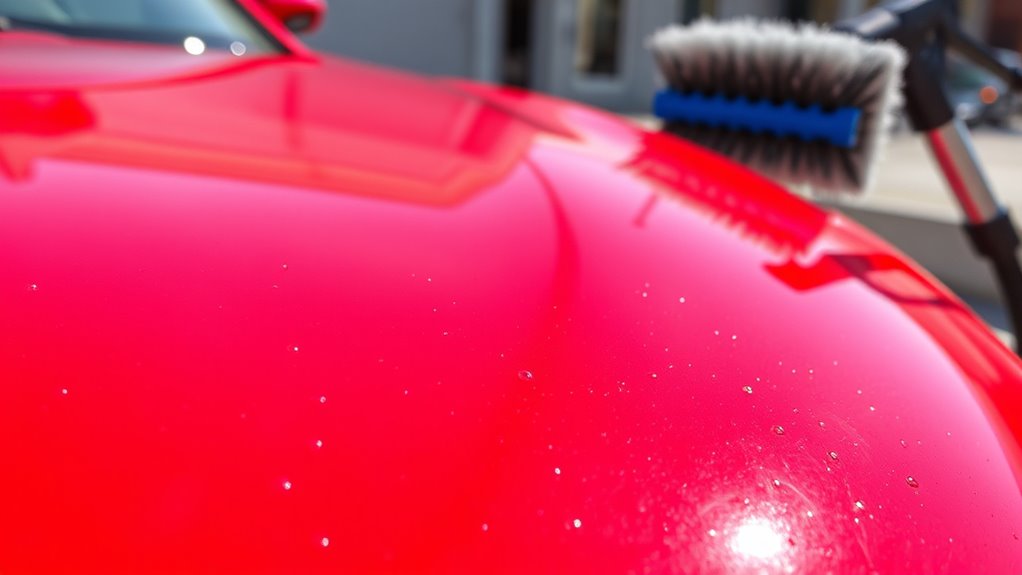
How can you tell if your car has been damaged during a wash? Look closely at the paint surface for signs of damage. One common indicator is paint swirl marks—fine, circular scratches caused by improper cleaning techniques or rough cloths.
These swirls often appear as dull or cloudy areas that disrupt the smooth finish. Scratches are more obvious and may be deeper than swirl marks, sometimes catching the light and revealing the metal beneath. You might also notice areas where the paint looks hazy or has a dull appearance, indicating that the finish has been compromised.
If you see these signs, it’s likely your car was subjected to a damaging wash. Regularly inspecting your vehicle after a wash helps catch these issues early. Addressing paint swirl and scratch marks promptly can prevent further deterioration and preserve your car’s overall appearance.
Are Hand Washes Better for Protecting Your Vehicle’s Finish?
Since improper washing techniques can cause swirl marks and scratches, many car owners wonder if hand washing offers better protection for their vehicle’s finish. Hand washing benefits include gentle cleaning and greater control, which reduces the risk of damaging your paint.
When done correctly, it minimizes the chance of dirt and debris scratching the surface. Hand washing also lets you focus on stubborn spots, ensuring thorough cleanliness without harsh chemicals or abrasive tools.
This careful approach helps protect the paint because you’re less likely to introduce micro-marring or swirl marks. Using quality microfiber cloths and proper washing techniques also helps preserve the clear coat and keeps the glossy look.
Can Using the Wrong Cleaning Materials Hurt Your Car’s Paint?
Using the wrong cleaning materials can quickly damage your car’s paint if you’re not careful. Harsh scrubbers, abrasive sponges, or dirty cloths can scratch and dull the finish, which undermines your paint protection efforts.
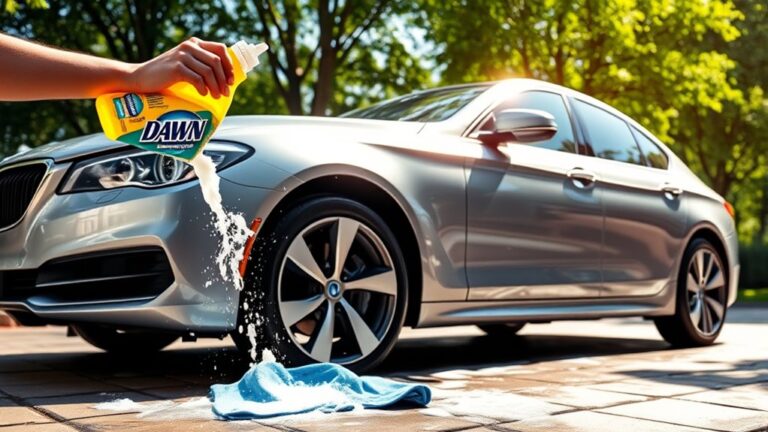
Chlorinated or acidic cleaners might seem effective, but they can strip away the clear coat, leaving your vehicle vulnerable to corrosion. Even household items like dish soap or degreasers aren’t always suitable, especially if they contain ingredients that attack the paint’s surface.
To keep your car looking its best and avoid damage, always choose gentle, automotive-specific cleaning materials. These are designed to clean effectively without harming the paint or stripping protective layers.
Proper cleaning products help maintain your vehicle’s appearance and extend the lifespan of your paint protection. Remember, investing in quality products and using them correctly is essential for keeping your car looking its best and avoiding unnecessary damage.
Do Pressure and Brushes Damage Your Car’s Paint?
Pressure washers and brushes can damage your car’s paint if you’re not careful. The high pressure from powerful washers can strip away the clear coat, especially if you hold the nozzle too close or use too much pressure.
This can create tiny scratches and make the finish look dull over time. Similarly, brush friction can cause micro-scratches if the brushes are too stiff or if dirt gets trapped between the brush and your car’s surface.
Hard bristles or aggressive scrubbing can remove paint or cause swirl marks. Even a small mistake can lead to long-term damage, making your car look dull and less protected.
To avoid this, always use a gentle pressure setting on your washer and choose soft, microfiber brushes. Proper technique is key to preventing unnecessary damage and keeping your car’s paint shiny and well-preserved.
How Can You Prevent Damage During Car Washes?
Want to keep your car looking shiny and new? One of the best ways to do that is by being careful during car washes. For example, try to wash your car in straight lines instead of circular motions. It might seem small, but it can really help prevent scratches and swirl marks on your paint.
Also, it’s super important to pick gentle cleaning products that are made specifically for your car’s paint. Using harsh chemicals can cause damage over time. So, when you’re washing your car, stick to products that are safe and designed for that purpose.
Just following these simple tips can go a long way in protecting your car’s finish and keeping it looking its best!
Use Proper Washing Techniques
Proper washing techniques are essential to prevent paint damage during a car wash. Always use lukewarm water, as extreme water temperatures can weaken or strip your paint. Hot water may cause streaks or damage clear coats, while cold water isn’t as effective at removing dirt.
When drying your car, avoid aggressive towels or rough cloths. Instead, opt for gentle drying methods like microfiber towels that absorb water without scratching the surface. Pat your car dry rather than rubbing, which can create micro-scratches.
Moreover, wash your car in a shaded area to prevent soap and water from drying too quickly, which can leave spots. Following these proper techniques helps protect your car’s paint and keeps it looking shiny and new.
Choose Gentle Cleaning Products
Choosing gentle cleaning products is essential because harsh chemicals can strip away your car’s protective layers and cause paint damage. Look for eco-friendly options that are specifically formulated for automotive use, as these tend to be safer for your car’s finish and the environment.
Pay attention to the product’s pH balance; a neutral or slightly alkaline cleaner is less likely to harm your paint compared to highly acidic or alkaline solutions. Using gentle, pH-balanced products helps preserve your car’s clear coat and prevents dullness or scratches.
Avoid strong detergents and abrasive cleaners, which can cause micro-scratches and discoloration. Opting for eco-friendly, pH-balanced cleaning products guarantees effective cleaning while minimizing the risk of damage.
This way, you keep your car’s paint looking pristine over time without risking unnecessary harm.
Are There Safer Alternatives to Traditional Car Washes?
Are traditional car washes truly the safest way to clean your vehicle? There are eco-friendly options and DIY methods that can be gentler on your car’s paint. Waterless washes, for example, use special formulas that lift dirt without scrubbing, reducing the risk of scratches.
Foam cannons provide a thick layer of soap, making cleaning easier and safer, especially when combined with microfiber towels or soft sponges. These tools help prevent swirl marks and damage. Regular maintenance tips, like rinsing thoroughly and drying with clean microfiber towels, also protect your paint.
Applying protective coatings can add a barrier against dirt and minor scratches, making future cleaning safer and easier. While traditional washes are convenient, exploring these alternatives lets you clean your car effectively while minimizing the risk of paint damage.
What Are the Long-Term Effects of Frequent Car Washes on Your Paint?
While eco-friendly and gentle washing methods can help protect your paint, frequent car washes—especially with harsh chemicals or abrasive tools—can still cause damage over time.
The long-term effects include gradual paint degradation, dullness, and tiny micro-scratches that weaken the protective layer. Over time, this makes your car more vulnerable to environmental damage like UV rays and rust.
| Wash Frequency | Potential Effect on Paint |
|---|---|
| Weekly | Slight wear, micro-scratches build up |
| Bi-weekly | Less paint protection, duller finish |
| Monthly | Noticeable loss of gloss, minor damage |
| Less frequent | Better preservation, minimal damage |
| Rarely | Keeps paint intact, slow degradation |
Reducing how often you wash your car and choosing gentle methods can help keep your paint looking fresh and protected for longer.
How Regular Maintenance Helps Preserve Your Car’s Paint Over Time
Regular maintenance is really important if you want to keep your car’s paint looking good over the years. Just sticking to gentle washing techniques can make a big difference — it helps prevent scratches that can ruin the finish.
And don’t forget about waxing! Applying wax regularly creates a nice protective layer on the paint, shielding it from dirt, UV rays, and other elements. When you combine these simple steps, it really helps your car’s paint stay fresh and shiny for much longer.
Gentle Washing Techniques
Implementing gentle washing techniques is essential for maintaining your car’s paint over time. Start by using soft cloths or microfiber mitts to prevent scratches and swirl marks. These materials are gentle on the surface and help lift dirt without damaging the paint.
Pay attention to water temperature; lukewarm water is ideal because it effectively loosens grime without risking paint damage or causing water spots. Avoid hot water, which can strip protective coatings, or cold water, which may not clean effectively.
Use a two-bucket method: one for soapy water and another for rinsing your cloth. This reduces dirt transfer back onto your car, further protecting the paint’s finish.
Consistent, gentle washing preserves your car’s shine and extends the life of its paint.
Regular Wax Application
Applying a fresh layer of wax regularly creates a protective barrier that shields your car’s paint from environmental damage, like UV rays, dirt, and road grime.
Wax benefits include a brighter gloss, a smoother surface, and better resistance to harmful elements. To get the most out of it, use proper application techniques: wash your car thoroughly before waxing, apply wax in small sections, and use a soft cloth or applicator pad in circular motions.
Let the wax dry to a haze, then buff it off with a clean, microfiber cloth. Regular waxing not only keeps your car looking shiny but also helps preserve the paint’s health over time, reducing the risk of oxidation and minor scratches from everyday exposure and car washes.
Frequently Asked Questions
Can Dirt and Debris Cause More Damage Than the Wash Itself?
Dirt and debris can actually cause more damage than the wash itself if you don’t remove them properly. They act like tiny abrasives that can scratch and dull your paint over time.
To avoid this, use gentle cleaning techniques and focus on protecting your paint. Regularly washing your car with the right methods helps get rid of harmful particles.
This reduces the risk of scratches and keeps your car’s finish looking good. Proper care makes sure dirt doesn’t do more harm than the wash.
Do Specific Types of Car Washes Pose Higher Risks to Paint?
Think of your car’s paint as a delicate painting, vulnerable to rough brushes and harsh techniques.
Certain car washes, especially those with aggressive brush types or improper wash techniques, risk scratching or dulling the surface.
Soft cloth or foam wash methods are symbols of gentle care, preserving your vehicle’s beauty.
Choose washes that prioritize gentle, effective cleaning, and avoid high-pressure or abrasive brushes to protect your car’s paint from damage.
How Does Weather Affect Potential Paint Damage During Washing?
Weather plays a big role in potential paint damage during washing. When temperatures are extreme, your car’s paint can become more vulnerable to scratches and chipping. This is especially true if water freezes or evaporates quickly.
High humidity levels can cause moisture to get trapped under dirt or debris, leading to streaks or spots. To keep your paint safe, try to wash your car in moderate weather. Avoid very hot, cold, or humid days to protect your paint best.
Are There Universal Signs Indicating Hidden Paint Damage?
Yes, there are some universal signs that can indicate hidden paint damage. Keep an eye out for uneven paint texture, small chips, or areas that look dull or faded. These signs can suggest underlying issues beneath the surface.
Regular maintenance like gentle washing and using quality products can help prevent further damage. Staying on top of your car’s paint quality makes it easier to catch problems early.
What Specific Products Are Safest for Cleaning Painted Surfaces?
You should choose detailing products with a neutral pH balance, around 7, to guarantee safety for your car’s painted surfaces. Look for gentle, specially formulated car wash soaps that are designed to clean without stripping or dulling the paint.
Avoid harsh chemicals or acidic cleaners, as they can cause damage over time. Using pH-balanced products helps maintain the integrity of your paint and keeps your car looking its best.
Conclusion
Ultimately, keeping your car’s paint pristine requires care and the right approach, much like a knight safeguarding their armor. Whether you choose hand washes, gentle materials, or safer alternatives, stay vigilant for signs of damage and maintain regular upkeep.
Remember, even in this age of technology, a careful touch beats a rush. Car washes don’t necessarily cause damage if done correctly. It’s all about how you take care of your car.
Treat your car like a treasure, and it’ll shine brighter than shining armor in a medieval court. Proper care ensures your paint stays flawless, no matter what kind of wash you choose.