What Temperature Is Too Cold to Wash Your Car?
Are you tired of struggling with washing your car during cold weather? You’re not alone—many car owners find themselves wondering when it’s safe to clean their vehicle without risking damage. Understanding the right temperatures can save you time, money, and frustration.
You should avoid washing your car when temperatures drop below 50°F, as water can freeze quickly and cause damage to the paint, glass, or locks.
In freezing conditions, water may turn to ice, creating hazards and risking cracks or chipping from expansion. Washing in cold weather also reduces cleaning effectiveness and can lead to streaks.
To protect your vehicle and guarantee a safe wash, keep these tips in mind as you learn more on how to handle cold weather cleaning.
Key Takeaways
- Avoid washing your car if the temperature is at or below freezing (32°F) because water can freeze on the vehicle.
- Don’t wash in temperatures below 50°F, as water and soap might freeze and cause damage or ice buildup.
- It’s best to wait until midday or when it’s warmer, ideally between 60°F and 70°F, for a safe and effective wash.
- Look out for frost, ice buildup, or freezing soap—these are signs it’s too cold to wash your car safely.
- If it’s too cold outside, indoor or sheltered washing with warm water is a better option.
Is It Safe to Wash Your Car in Cold Weather?
Washing your car in cold weather can be safe, but only if you take proper precautions. Cold weather brings challenges like freezing water and ice forming on your vehicle, which can affect your car maintenance routine.
When temperatures drop, water can freeze quickly, leading to ice on your car’s surface and in door locks or hinges. To stay safe, avoid washing your car if temperatures are below freezing, especially if you won’t be able to dry it thoroughly afterward.
Use lukewarm water instead of hot or cold water to prevent sudden freezing. Also, consider washing your car during the warmest part of the day, typically late morning or early afternoon.
Proper car maintenance during cold weather includes keeping your vehicle’s exterior clean, but you need to balance that with the risk of ice. If you follow these precautions, you can keep your car in good shape without risking weather-related damage.
What Temperature Is Too Cold to Wash Your Car?
When temperatures get really cold, water can freeze quickly on your car, which can cause damage and make it hard to get your car clean. Usually, it’s best to wash your car when the temperature is above 32°F. But honestly, the warmer it is, the better—so if you can choose a day when it’s a bit warmer, go for it. Knowing the right temperature to wash your car can help you avoid freezing water and make sure your car gets a good, damage-free clean.
Risks of Freezing Water
Freezing water can be a real hazard when washing your car in cold weather. It can quickly turn your effort into a dangerous situation. Water left on your vehicle or in hoses can freeze and damage paint or seals.
Frozen pipes might burst if water expands inside them, leading to costly repairs. Icy surfaces also make slipping and falling more likely, so be careful when working or walking nearby.
| Risk | Potential Damage | Prevention Tips |
|---|---|---|
| Frozen pipes | Burst pipes, costly fixes | Drain hoses and insulate pipes |
| Icy surfaces | Slips and falls | Use salt or sand on the ground |
| Water freezing | Vehicle damage | Wash in warmer weather |
| Residual water | Ice buildup on parts | Dry thoroughly |
| Cold water expansion | Cracks in paint or glass | Avoid washing in extreme cold |
Optimal Washing Temperatures
Temperatures play a big role in making sure your car wash is both effective and safe. Aim for water between 50°F and 70°F. This range helps loosen dirt without harming your vehicle’s paint or seals.
When washing in colder weather, use lukewarm water. Extremely cold water can make your washing less effective and might cause water spots or freezing. Avoid washing in direct sunlight or freezing temperatures, as this can slow drying and lead to water spots.
Getting the water temperature right helps soap work better and ensures a thorough clean. Keeping the water at the right temperature not only improves your washing techniques but also keeps your car safe from damage caused by water that’s too hot or cold.
Why Washing Your Car in Cold Weather Can Cause Damage
Washing your car in cold weather can actually do more harm than good, especially if the temperature drops below freezing. Cold weather effects, like rapid temperature changes, can cause the water on your car’s surface to freeze quickly.
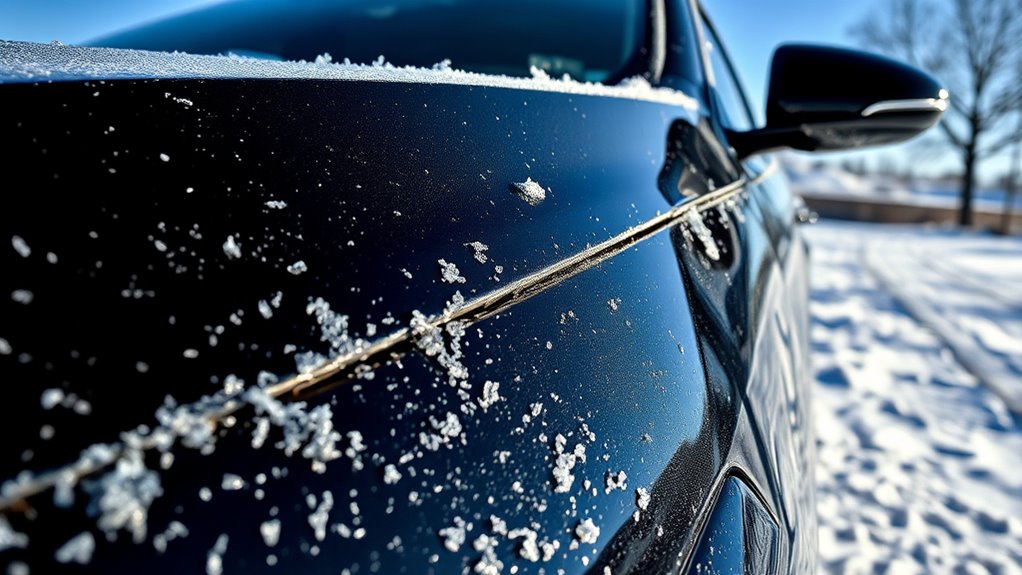
This freeze-thaw cycle can lead to paint damage, cracking, or chipping, which jeopardizes your car’s paint. When water freezes on your vehicle, it expands and puts pressure on the paint and underlying materials.
Using hot water to wash in cold temperatures can create a sudden temperature contrast that stresses the paint, increasing the risk of cracks.
Plus, cold weather makes it harder for soap and grime to rinse away completely, leaving residues that can damage your car’s finish over time.
Signs It’s Too Cold to Wash Your Car
How can you tell if it’s too cold to wash your car? Recognizing the signs is key to avoiding damage and wasted effort. When thinking about washing your car, pay attention to these warning signals:
- Frost forming on your vehicle. If ice is already building up, washing will only make things worse.
- Persistent ice buildup after washing. If ice sticks around or refreezes quickly, it’s too cold for a safe wash.
- Your soap or water freezing instantly. When water turns to ice as soon as it hits the car, cold weather means you should hold off.
- Extreme wind chill or sub-zero temps. These make it impossible for water to dry, which can cause damage.
If you notice any of these signs, it’s best to wait. Proper cold weather prep means knowing when to hold off to protect your vehicle from costly harm.
How Cold Is Too Cold for Safe Car Washing?
When it gets really cold outside, washing your car can turn into a bit of a gamble. If the temperature dips below freezing, the water on your car can freeze up pretty quickly, leading to icy patches that are slippery and dangerous. Nobody wants to slip while trying to clean their car, right?
Plus, when it’s cold, your car soap and detergents don’t work as well. They might not cut through dirt and grime like they normally do, which means your car might not get as clean as you’d like. So, it’s generally a good idea to avoid washing your car if the temperature is below 32°F. That way, you can keep things safe and make sure your car gets properly cleaned without risking slips or damage.
Risks of Freezing Water
Freezing temperatures can be a real problem when washing your car. Water can turn to ice quickly, creating dangerous conditions on your vehicle and driveway.
Ice buildup can hide hazards, making it hard to see where you’re walking or driving. Plus, when water freezes, it expands and can crack your car’s glass or paint, leading to costly repairs.
Ice can also make surfaces super slippery, increasing the chances of falls or accidents. Be aware of these risks so you can avoid damage and stay safe during cold weather.
Here are some of the main dangers:
- Cracked windshields and windows from ice expansion
- Slippery surfaces that cause falls or vehicle slips
- Hidden ice patches that can lead to accidents
- Damage to paint and trim from freeze-thaw cycles
Effectiveness of Detergents
Washing your car in cold temperatures isn’t just about safety—your cleaning products might also work less effectively. Cold weather can make detergents less powerful, making it harder to get rid of dirt, grime, and road salts.
At low temperatures, detergents don’t dissolve well, which can leave streaks and residue on your car. To see how cold impacts detergent performance, check out this table:
| Temperature Range | Effect on Detergent Performance | Recommendations |
|---|---|---|
| Above 50°F | Ideal cleaning, full effectiveness | Use standard detergents |
| 32°F – 50°F | Slight reduction, still effective | Pre-warm water if possible |
| Below 32°F | Significant performance drop | Use cold-weather-specific products |
| 20°F – 32°F | Limited cleaning ability | Consider skipping or warming water |
| Below 20°F | Very ineffective, risk of freezing | Avoid washing in extreme cold |
In cold weather, choosing the right detergent is essential to keep your car clean.
Best Temperatures for Washing
Knowing the ideal temperatures for washing your car can help guarantee a thorough clean without risking damage or ineffective results. For safe and effective car wash techniques, aim for temperatures above 50°F (10°C). When it’s colder, water can freeze or cause paint damage, making winter maintenance risky.
Consider these key points:
- Avoid washing below 50°F to prevent water and soap from freezing on your vehicle.
- Warmer days, between 60°F and 70°F, are perfect for a thorough clean.
- Early mornings and late evenings tend to be colder, so choose midday for washing.
- Use lukewarm water to optimize cleaning without harming your car’s finish.
Sticking to these temperatures guarantees your car gets a safe, effective wash, no matter the season.
Top Tips for Washing Your Car Safely in Cold Weather
When washing your car in cold weather, safety and effectiveness depend on taking a few key precautions. First, make sure your vehicle is warmed up slightly before washing. This helps prevent water from freezing on surfaces.
Use lukewarm water instead of hot or cold, since extreme temperatures can damage paint or cause glass to crack. Incorporate winter car maintenance practices, like checking for ice buildup around the wheel wells and undercarriage, to avoid damage.
Always dry your car thoroughly afterward to prevent ice formation. Avoid washing in freezing conditions unless you can do so indoors or in a sheltered area. Follow cold weather tips like working quickly and avoiding prolonged exposure to low temperatures.
What Are the Best Alternatives When It’s Too Cold to Wash?
If the temperature drops too low for a safe traditional wash, there are still effective ways to keep your car clean without risking damage or ice buildup. Waterless options and quick detailing methods are your best bets during cold weather. These alternatives save time and prevent frost from forming on your vehicle.
Here are some top options:
- Waterless Wash Products – Use specialized sprays that lift dirt without water. They’re perfect for freezing temperatures and won’t cause ice to form.
- Quick Detailing – Focus on wiping down high-traffic areas like doors, bumpers, and windows. This keeps your car looking good without a full wash.
- Microfiber Cloths – Gently remove dust and grime, reducing the need for water and helping prevent ice buildup.
- Interior Cleaning – Refresh your car’s inside with vacuuming and interior wipes. It’s a great way to maintain cleanliness when exterior washing isn’t an option.
These methods help keep your car looking great while avoiding the risks that cold weather can bring to traditional washing.
How to Protect Your Car’s Paint and Locks During Freezing Weather
Even when you’re using waterless washes or quick detailing to keep your car clean in cold weather, protecting your vehicle’s paint and locks from freezing damage is still important.
To safeguard your paint, apply a high-quality wax or paint protection sealant before temperatures drop. This creates a barrier against moisture and ice that can cause paint chipping or cracking.
For lock maintenance, regularly lubricate your locks with a silicone or graphite-based lubricant, especially before a cold snap. This prevents moisture from entering and freezing, which can make locks hard to operate or even break.
Additionally, cover your car with a breathable car cover to shield it from snow and ice. This reduces exposure to harsh elements and helps keep your vehicle in good shape.
Taking these steps helps preserve your car’s appearance and functionality during freezing weather, so your paint and lock systems stay in top condition all winter.
When Should You Wait for Warmer Days to Wash Your Car?
If it’s freezing or really cold outside, it’s probably a good idea to hold off on washing your car. Water can freeze on the surface, which isn’t good for your paint or glass, and it can make the whole process messy or even cause damage.
Plus, when it’s cold, cleaning doesn’t really work as well — dirt and grime don’t come off as easily, and your car will take much longer to dry. That can lead to spots or streaks, which nobody wants. So, waiting for a warmer day is usually the smarter move. It’ll make sure your car gets a proper, thorough clean and dries nicely without any issues.
Risk of Freezing Water
Washing your car on freezing days can cause water to freeze on the vehicle and ground, creating dangerous ice patches. These ice spots can make walking around your driveway risky and increase the chance of slips and falls.
It can also lead to frozen pipes if water seeps into small openings and then freezes. The last thing you want is to damage your driveway or vehicle because of sudden ice formation.
Think about these risks: slipping and falling on icy patches near your driveway, cracked or burst frozen pipes, and damage to your vehicle’s paint from ice buildup.
Hidden ice patches can also cause accidents or injuries, especially if you’re not expecting them. Waiting for warmer days helps avoid these hazards and keeps you and your car safe from freezing water and ice buildup.
Effectiveness of Cleaning
Cleaning your car is most effective when the outside temperature is above freezing, since cold weather can stop detergents from working properly and cause water to freeze quickly. When it’s cold, cleaning agents don’t dissolve or activate well, so they aren’t as effective.
This means dirt, grime, and salt won’t be removed thoroughly, leaving your car less protected against corrosion. Washing in cold weather can also compromise surface protection because contaminants aren’t cleaned off properly.
Waiting for warmer days helps your cleaning agents work at their best, giving you better dirt removal and helping preserve your car’s paint and coating. In the end, washing at the right temperature keeps your vehicle looking good and lasting longer.
Temperature-Dependent Drying
Since water takes longer to dry and is more likely to freeze in colder temperatures, it’s best to wait for warmer days before washing your car. Temperature effects directly influence drying time, so your car may stay wet longer in cold weather.
If you wash your car in freezing conditions, the water could freeze, causing damage and creating a hazardous surface. Cold temperatures extend drying time and increase the risk of ice formation on your vehicle.
Frozen water can damage paint and lead to rust over time. Waiting for warmer days helps prevent water from freezing on your car and protects its finish.
Proper drying ensures a cleaner, safer finish without residual moisture. Patience during colder months is key to protecting your car and preserving your efforts.
Simple Ways to Keep Your Car Shiny Without Cold Weather Risks
Even when temperatures drop, you can keep your car looking its best without risking damage from cold weather. Applying a quality car wax or protective coatings creates a barrier that shields your vehicle’s paint from harsh conditions, reducing the need for frequent washing.
Use the right cleaning tools—soft microfiber cloths and gentle brushes—to remove dirt without scratching the surface. When drying, switch to effective drying techniques like using a microfiber drying towel or a leaf blower to prevent water spots and streaks.
Avoid letting water sit on your car in low temperatures, as it can freeze and cause damage. Regularly applying car wax or protective coatings also makes future cleaning easier, especially in cold weather.
Keep your wash routine simple and gentle, focusing on maintaining a clean surface without exposing your vehicle to prolonged cold or moisture. These steps guarantee your car stays shiny and protected year-round.
Frequently Asked Questions
Can Washing Your Car in Cold Weather Cause Long-Term Paint Damage?
Washing your car in cold weather can potentially cause long-term paint damage if you’re not careful. Cold temperatures can weaken the paint, making it more likely to crack or peel over time.
To avoid cold damage, make sure the water isn’t too cold, and try to wash your car in a sheltered area. Using proper techniques and avoiding freezing temperatures helps keep your vehicle’s paint looking good longer.
Does Cold Weather Affect the Effectiveness of Car Wash Soaps?
Cold weather can really impact how well car wash soaps work because lower temperatures slow down their performance. When it’s too cold, the soap might not lather properly or clean as effectively, leaving dirt and grime behind.
Temperature also makes the soap less sticky and harder to rinse off, which can make the whole cleaning process less effective. To get a good wash, it’s best to do it when temperatures are above 50°F.
Alternatively, you can use specially formulated winter soaps designed for cold weather. These are made to perform better in lower temperatures and help you get your car clean even when it’s chilly outside.
Is It Better to Wash Your Car Before or After a Cold Snap?
It’s better to wash your car before a cold snap for pre-snow maintenance and winter protection. Doing so removes dirt and salt that can cause corrosion when snow and ice arrive. Washing beforehand guarantees your car’s protected and helps prevent damage from road salt.
After a cold snap, wait for temperatures to rise above freezing. This helps you avoid freezing water on your vehicle, which can cause ice formation and damage.
How Does Low Temperature Impact the Drying Process After Washing?
Low temperatures slow down water evaporation, making it harder to dry your car. You’ll need to use effective drying techniques like a microfiber towel or a blower to remove excess water quickly.
Cold air reduces evaporation rates, which can lead to water spots and streaks. So, it’s important to dry your car thoroughly right after washing.
In cold weather, consider using heated drying tools or drying your car in a garage to speed things up. This helps prevent water spots and makes the process easier.
Are There Specific Tools Recommended for Cold Weather Car Washing?
In cold weather, your trusty foam cannon and wash mitts become your best friends because who doesn’t love a good challenge? Use warm water to keep things manageable.
Opt for gentle drying towels, and when applying wax, choose formulas designed for low temps. Protective coatings need extra care, so make sure you’re using the right tools to avoid ice-cube mishaps.
Stay warm, and your car will thank you!
Conclusion
So, just how cold is too cold to wash your car? If you ignore the signs, you could end up damaging your paint or locking yourself out of your vehicle.
But don’t worry. You don’t have to skip washing altogether. Stay vigilant, follow the tips, and wait for those warmer days.
Because when the weather finally warms up, you’ll be glad you held off. Your car’s shine and your peace of mind will thank you.