How Do Car Washes Recycle Water?
Many car owners worry about the environmental impact of frequent washes and the amount of water used. If you’re looking for ways to keep your vehicle clean while also being eco-friendly, you’re not alone.
Car washes are stepping up with innovative water recycling systems to help reduce water waste.
Car washes recycle water by collecting used water and passing it through filters that remove dirt, oils, and debris. They often use coarse filters for larger particles and finer ones for smaller contaminants.
Advanced systems may include UV and ozone treatments to sterilize water.
Managed storage tanks hold the cleaned water for reuse in washes, reducing total water consumption.
To learn more about how these systems work and their benefits, keep exploring this topic.
Key Takeaways
- Used water is collected and passed through coarse and fine filters to remove dirt, oils, and debris.
- Specialized treatments like biological filters, chemical treatments, or UV sterilization purify the water further.
- Oil and grease are separated using skimmers, coagulation, and sedimentation processes before filtration.
- Treated water is stored in designated tanks to prevent contamination and ensure quality for reuse.
- Recycled water is circulated back into the wash system, reducing fresh water consumption and environmental impact.
Why Water Recycling Matters for Car Washes

Water recycling is essential for car washes because it helps conserve a vital resource. By adopting sustainability practices, you can reduce your environmental impact and promote responsible water use.
Water is limited, and every gallon saved really counts, especially in areas facing shortages. Recycling water helps lower your overall consumption, making your business more eco-friendly and cost-effective.
Saving water reduces costs and supports sustainability, especially in areas with shortages.
This not only benefits the environment but can also boost your reputation among eco-conscious customers. Saving water aligns with global sustainability goals and shows your commitment to reducing waste.
Using recycled water decreases demand on municipal supplies and prevents runoff that could pollute nearby waterways. It’s a simple way to operate more efficiently and save money on water bills.
Adopting water recycling practices ensures your business runs smoothly while contributing to a healthier planet. Prioritizing water recycling helps secure resources for future generations and supports sustainable growth.
How Car Wash Water Recycling Systems Work
Sure! Here’s a more conversational version of your text:
—
If you want to get how water recycling systems work in car washes, it’s helpful to look at how they filter the water and what the main parts are doing. Basically, these systems clean the used water by passing it through filters that catch dirt, oils, and debris. Once cleaned, the water can be reused instead of constantly drawing fresh water.
When you understand what each part does, it’s pretty clear how they help save water and make the whole operation more eco-friendly. It’s like giving the water a second chance, which is better for the environment and can even save money in the long run.
Water Filtration Process
When a car wash recycles water, it uses a series of filtration steps to make sure the water is clean and safe for reuse. These techniques remove dirt, oils, and debris that gather during washing.
First, coarse filters catch larger particles, helping improve water clarity. Then, finer filters remove smaller contaminants, making the water even cleaner.
Some systems also use chemical treatments or biological filters to target oils and organic matter. Sensors constantly monitor water quality to ensure standards are met.
The goal is to produce water free of pollutants, which prevents streaks and damage to equipment. By continuously filtering and testing, the system keeps the water high-quality.
This process reduces waste and helps keep the car wash environmentally friendly.
Recycling System Components
A car wash’s recycling system relies on a combination of specialized components working together to treat and reuse water efficiently. These components include sediment filters, chemical treatment units, and pumps that work with advanced recycling technology to ensure water quality.
Each part plays an essential role in sustainable practices, helping to reduce water waste and environmental impact. For example, the table below highlights key components:
| Component | Function | Benefit |
|---|---|---|
| Sediment Filters | Remove debris and sediments | Protects system and water quality |
| Chemical Treatment | Neutralizes contaminants | Guarantees safe reuse |
| Pumps | Circulate water throughout system | Maintains continuous flow |
Together, these components optimize water reuse, making car washes more eco-friendly.
How Water Is Collected at Car Washes
At a car wash, water is collected using special troughs and drainage systems that catch the runoff from vehicles and the washing equipment. It’s like a built-in catchment area that makes sure the water doesn’t just flow away freely.
Once the water is collected, it goes through filtration processes to get rid of dirt, grease, and debris. Think of it as giving the water a good cleaning so it’s ready to be used again. Understanding how this collection and filtration work helps us see how car washes can recycle and reuse water, making the whole process more eco-friendly.
Water Collection Methods
Car washes use different methods to collect the water during cleaning, making sure it can be reused or treated properly. The techniques depend on the design of the facility.
Most car washes combine catch basins, drain systems, and filtration units to gather runoff water. These systems direct water from the washing bay into designated collection points.
This helps prevent pollutants from entering the environment. The table below shows common collection techniques and what they do:
| Collection Technique | Purpose |
|---|---|
| Catch basins | Capture large amounts of runoff water |
| Drain systems | Channel water to storage tanks |
| Grates | Trap debris before water enters pipes |
| Storage tanks | Store water for recycling |
| Sedimentation basins | Settle out solids before recycling |
Filtration Processes Used
Filtration processes are key to cleaning and recycling water at car washes. They use advanced tech to remove dirt, grease, and debris, making the water suitable for reuse.
These systems often include multiple stages, like coarse filters for big particles and fine filters for smaller contaminants. This helps support eco-friendly practices and reduces water waste.
Here are the main filtration processes used:
- Screen filters trap large debris early on.
- Sand filters remove suspended solids and dirt.
- Activated carbon filters eliminate oils, grease, and chemicals.
- Ultrafiltration membranes provide the final clean-up, catching microscopic particles.
These technologies ensure water is effectively recycled, making car washes more sustainable.
Filtering and Treating Water to Remove Dirt and Oil
To effectively recycle water in a car wash, removing dirt and oil is essential. This process directly impacts water quality, ensuring recycled water doesn’t harm equipment or leave spots on vehicles.
You rely on different treatment methods to separate contaminants. First, specialized skimmers remove oil and grease from the water’s surface.
Next, coagulation and sedimentation help settle out dirt particles and oils, making the water clearer. Filtration systems like sand or cartridge filters then remove residual debris.
Coagulation, sedimentation, and filtration work together to clarify water for reuse in car washes.
These steps work together to improve water quality, making it suitable for reuse. Proper filtering and treatment prevent buildup of pollutants, which could reduce recycling efficiency.
This process keeps the water clean enough for repeated use, helping to reduce waste and conserve fresh water supplies. Proper treatment is key to sustainable and efficient car wash operations.
Using UV and Ozone Technologies to Purify Water
UV and ozone technologies are powerful tools for further purifying water in a car wash, making sure it’s safe to reuse. UV technology uses ultraviolet light to destroy bacteria and viruses by disrupting their DNA, which makes water safer and clearer.
Ozone purification involves injecting ozone gas into the water. It oxidizes contaminants, kills pathogens, and removes odors, all in an eco-friendly and efficient way. These methods help reduce the need for chemicals.
Here are four key points about their use:
- UV technology quickly sterilizes water without chemicals.
- Ozone purification effectively eliminates organic contaminants.
- Combining both methods guarantees thorough water treatment.
- These technologies extend water reuse cycles, saving resources.
How Recycled Water Is Stored and Reused in Wash Cycles
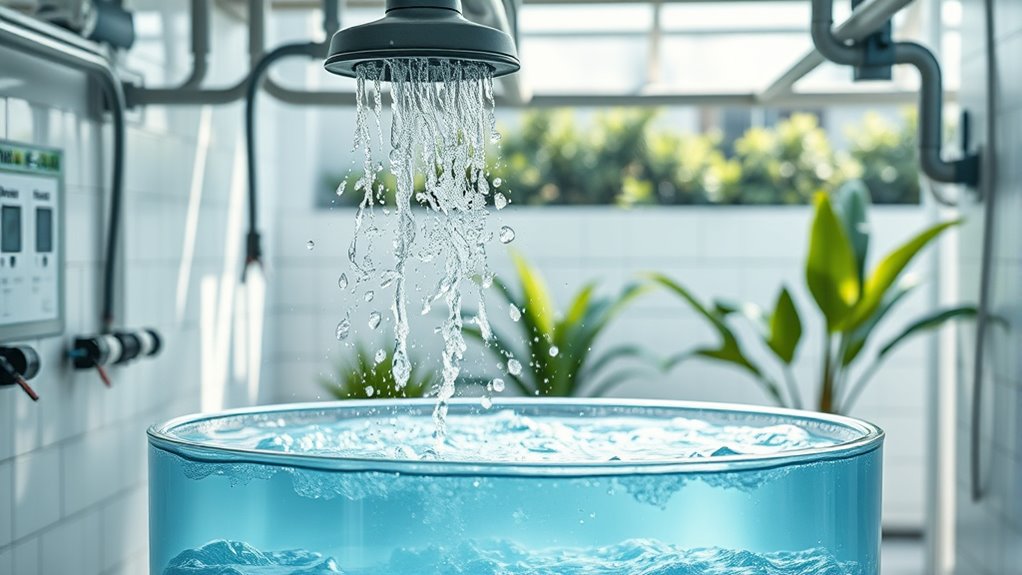
After water has been purified using UV and ozone technologies, it’s stored in specially designed tanks for reuse in upcoming wash cycles. These water storage tanks are built to prevent contamination and maintain water quality throughout the day.
Reuse methods involve carefully managing flow rates so that the recycled water feeds directly into the wash system, reducing the need for fresh water. You’ll notice that the recycled water is often filtered again before use, removing any residual dirt or particles.
Some systems use separate tanks for different stages, like pre-rinse or rinse cycles, guaranteeing the water’s effectiveness. Proper storage helps car washes optimize water efficiency and minimize waste.
This process not only conserves water but also ensures each wash cycle uses high-quality, treated water, maintaining cleaning standards. Proper water storage is key to maximizing reuse and supporting sustainable operations.
Environmental and Cost Benefits of Water Recycling
Recycling water in your car wash is a great way to use less fresh water, which is better for the environment. It helps conserve this precious resource and reduces the strain on local water supplies.
Plus, it can really help your bottom line. When you recycle water, you’re cutting down on how much you spend on water bills. So, not only is it eco-friendly, but it also makes good financial sense.
Reduces Water Consumption
By reusing water, car washes significantly cut down on their overall water use, saving both money and the environment. Using water-saving technologies helps reduce waste and makes the most of every drop.
Eco-friendly practices like recycling water help conserve resources and lower your ecological footprint. Here are four ways these measures make a real difference:
- They reduce the demand for fresh water, easing pressure on local supplies.
- They help lower water bills through smarter resource use.
- They decrease strain on sewage systems and treatment plants.
- They support sustainable operations, which appeals to eco-conscious customers.
Lowers Operating Costs
Implementing water recycling systems at your car wash can significantly lower operating costs by cutting down the amount of fresh water you need to buy and treat. This boosts your overall cost efficiency, helping you save money on water bills and wastewater disposal.
Recycling water also makes your operation more sustainable by reducing reliance on external water sources. This means your business is less affected by water shortages or restrictions, giving you more stability.
The savings from these systems can be redirected toward other upgrades or growth opportunities. Plus, using recycled water shows your commitment to environmental responsibility.
Common Challenges in Implementing Water Recycling Systems
Although water recycling systems offer big environmental benefits, many car washes face obstacles when trying to adopt them. One major challenge is designing an effective system that balances water quality and flow rate, which needs careful planning.
Regulatory compliance can also be tough, since local laws might have strict standards that are costly or complex to meet. Plus, initial installation costs can be high, discouraging smaller operators from investing.
Finally, integrating recycling systems with existing equipment can be tricky and may require technical expertise. To overcome these issues, you should plan your system carefully, stay updated on regulations, budget for upfront costs, and work with experienced professionals.
Addressing these challenges helps ensure your water recycling system runs smoothly, saves money, and supports your environmental goals.
Maintaining and Monitoring Water Recycling Equipment
Regular maintenance and vigilant monitoring are key to keeping your water recycling equipment running smoothly. Checking filters, pumps, and pipes regularly helps prevent clogs and leaks.
Make sure to clean or replace filters as needed to keep water quality high. Constant monitoring helps catch issues early, saving you both time and money.
Look out for unusual noises, pressure drops, or irregular water flow, as these can signal problems. Using gauges and sensors to track water levels, chemical levels, and system performance is also important.
Keeping detailed records of your maintenance work and system readings helps you spot patterns and potential failures early on. Proper upkeep ensures your recycling system runs at peak efficiency.
This not only conserves water but also cuts down on operational costs. Staying proactive with maintenance and monitoring will extend your system’s lifespan and keep the quality standards for your car wash high.
How to Find a Car Wash That Uses Effective Water Recycling
How can you guarantee you’re choosing a car wash that prioritizes effective water recycling? Start by researching eco-friendly options in your area. Look for businesses that highlight water conservation practices and recycling systems on their website or signage.
Next, check if the car wash complies with local regulations, which often set standards for water recycling and environmental impact. To verify, ask staff about their water reuse processes and whether they monitor their recycling equipment regularly.
Furthermore, consider visiting the wash in person to observe its operations. Finally, read reviews online to see if other customers mention eco-conscious practices.
Frequently Asked Questions
How Long Does It Take for Recycled Water to Become Reusable?
Recycled water in a car wash can become reusable within a few hours to a day, depending on the filtration processes and treatment efficiency.
You’ll find that effective filtration quickly removes dirt and debris, making the water cleaner faster. Treatment systems like chemical disinfection or UV sterilization then ensure the water is safe to use again.
The entire process is designed to be quick, so water is reused efficiently, reducing waste and conserving resources for your next wash.
Are There Any Health Risks Associated With Using Recycled Water?
There are minimal health risks with recycled water if it’s treated according to strict health standards.
Car washes carefully monitor water quality to remove bacteria, chemicals, and debris, making sure it’s safe for use.
Regular testing and advanced filters help keep the water high quality, so recycled water is safe for cleaning cars without risking health.
As long as proper protocols are followed, recycled water poses little to no health risk.
What Types of Detergents Are Compatible With Recycled Water?
You can use a variety of detergents with recycled water, but it’s important to consider detergent compatibility.
Eco-friendly options are usually better because they tend to work well with recycled water’s lower chemical levels, reducing residue buildup.
Always check the detergent label for compatibility and eco-friendliness.
Using compatible, eco-friendly detergents ensures effective cleaning while protecting the recycling system and the environment.
Can Recycled Water Be Used for Other Cleaning Purposes?
Recycled water can be a versatile tool, like a Swiss Army knife, for other cleaning tasks beyond car washes. You can use it in industrial applications such as factory cleaning, landscaping, or janitorial services.
Not only does this practice save money, but it also offers significant environmental benefits by reducing water consumption. Using recycled water for various cleaning purposes helps preserve essential fresh water supplies and promotes eco-friendly practices across industries.
How Often Should Water Recycling Systems Be Inspected or Serviced?
You should inspect and service water recycling systems regularly, ideally every three to six months, depending on usage.
Follow your maintenance protocols closely to guarantee peak performance and prevent buildup or system failure.
Frequent inspections help identify potential issues early, keeping your system efficient and compliant with regulations.
Consistent maintenance not only extends the lifespan of your equipment but also ensures water quality.
This supports eco-friendly operations and helps avoid costly repairs down the line.
Conclusion
By choosing a car wash that recycles water, you’re supporting a more sustainable future. These systems work quietly behind the scenes, making sure every drop counts without fuss.
It’s a simple way to enjoy a clean car while respecting our planet’s precious resources. So, next time you wash your car, consider an eco-friendly option.
You’ll feel good knowing your support helps keep our waters clear and healthy. Car washes that recycle water are making a big difference, one splash at a time.