5 Key Costs to Consider for Opening a Car Wash
Starting a car wash can seem overwhelming, especially when you’re trying to figure out all the costs involved. You’re not alone—many entrepreneurs struggle with budgeting for their new business. Understanding the key expenses can make the process much smoother.
When opening a car wash, you need to contemplate startup costs like land or lease expenses, high-quality equipment, and permits.
Don’t forget ongoing expenses such as labor, utilities, and maintenance, which can add up quickly.
It’s also essential to budget for insurance and unexpected emergencies that could disrupt your business.
Planning for these key costs now helps you avoid surprises later.
Keep exploring to get a full breakdown of what you’ll need to succeed.
Key Takeaways
- Startup costs for land, permits, and zoning approvals can vary a lot depending on where you’re opening. This will influence your initial expenses quite a bit.
- Investing in high-quality equipment, water systems, and infrastructure is key to making sure your operations run smoothly and efficiently.
- You’ll need licenses, permits, and insurance to stay compliant with regulations and protect your assets. These are essential steps.
- Ongoing expenses include paying staff, utilities, maintenance, and marketing. These are necessary to keep your business growing.
- It’s also smart to set aside emergency funds for unexpected costs. This helps you handle surprises without disrupting your operations.
What Are the Startup Costs to Launch a Car Wash?
Starting a car wash requires a significant upfront investment, and understanding the key costs involved is essential for planning. One of the first steps is conducting thorough location analysis and market research.
Your chosen location impacts your startup costs and potential profitability. A busy, high-traffic area usually means higher land prices but more customer flow. Market research helps you identify demand, competitor presence, and customer preferences, guiding you to a strategic spot.
Choosing a strategic, high-traffic location balances higher costs with greater customer potential.
Initial expenses include securing land or leasing space, which varies widely based on location. Furthermore, permits and zoning approvals are necessary costs that depend on local regulations.
These foundational costs set the stage for your business, so investing time in detailed research can save money and avoid surprises later. By understanding these core costs, you can better plan your budget and choose a location that maximizes your chances of success.
Essential Equipment and Infrastructure You Need to Invest In
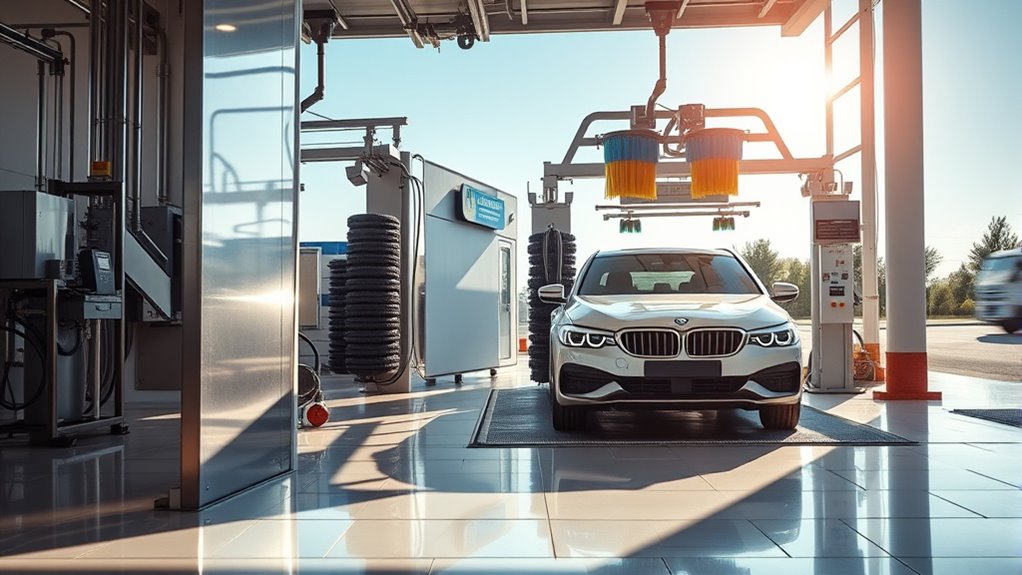
To run a successful car wash, you need to invest in essential equipment and infrastructure that guarantee efficient and quality service. The types of equipment and infrastructure you choose directly impact operations and customer satisfaction.
Think about high-quality pressure washers, automatic wash systems, water reclaim systems, and drying equipment. These ensure thorough cleaning while managing water usage effectively.
Location factors also influence your infrastructure setup—accessibility, utilities, and space are critical for smooth workflow. Be mindful of maintenance costs; regular upkeep keeps equipment running efficiently and prevents costly breakdowns.
Investing in proper drainage systems and electrical setups is vital for safety and efficiency. Your initial investment in reliable equipment and infrastructure sets the foundation for long-term success and customer retention.
Prioritize durability, compliance with safety standards, and ease of maintenance to maximize your ROI and keep your car wash operationally sound.
How Much Do Permits, Licenses, and Insurance Cost?
Are you aware of the costs involved in obtaining the necessary permits, licenses, and insurance for your car wash? Permit types vary depending on your location and services offered, like water discharge permits or business licenses, which can range from a few hundred to several thousand dollars.
Licensing costs typically include state and local requirements, often totaling between $200 and $1,000 annually. Insurance options are similarly important, covering liability, property, and worker’s compensation. Expect to spend around $2,000 to $10,000 per year, depending on coverage levels and your business size.
Securing the right permits and licenses guarantees legal operation and can help you avoid costly fines. Thorough insurance protects your investment against accidents, damage, or liability claims. Budget accordingly, as these costs are essential for establishing a compliant, secure, and successful car wash.
Estimating Your Ongoing Operating Expenses
Understanding your ongoing operating expenses is key to running a profitable car wash. These costs directly affect your bottom line and need careful planning.
You’ll want to consider several main areas. Labor costs, including wages and training, ensure your staff runs smoothly.
Utility expenses like water, electricity, and gas keep your equipment working properly.
Maintenance fees for equipment, signage, and repairs help prevent costly breakdowns.
A marketing budget is important for attracting new customers and keeping loyal ones coming back.
Supplies such as cleaning chemicals and other consumables are necessary for providing quality service.
Don’t forget about technology upgrades that can boost efficiency and keep you competitive.
Tax obligations can vary based on your revenue and expenses, so stay on top of those.
How to Prepare for Unexpected Costs and Business Contingencies
Preparing for unexpected costs and business contingencies is crucial to keeping your car wash stable and resilient. Having emergency funds gives you a financial cushion to cover sudden expenses like equipment repairs, supply shortages, or unexpected repairs.
You should also build in cost buffers within your budget to handle fluctuations in utility rates or material costs. Regularly reviewing your financial plans helps you spot potential risks and adjust your reserves as needed.
Creating contingency plans for emergencies like power outages or severe weather ensures you can respond quickly and minimize downtime. Keeping emergency funds accessible allows you to act fast without disrupting daily operations.
Frequently Asked Questions
What Are the Best Locations for a New Car Wash?
You should focus on locations with high traffic patterns like busy intersections, shopping centers, or near gyms. These areas attract a diverse range of customers, which helps keep your business steady.
Look for spots with good visibility and easy access. Avoid places with limited parking, as that can turn customers away.
Choosing a site where many people pass by daily and where your target customers hang out will give you the best shot at attracting loyal clients and making your car wash a success.
How Long Does It Typically Take to Break Even?
A break-even analysis shows you’ll likely cover your costs within 6 to 12 months, depending on your location and marketing efforts. Financial forecasting helps you understand cash flow, expenses, and revenue streams, giving you a clearer timeline.
What Marketing Strategies Are Most Effective for Attracting Customers?
You should focus on social media marketing and loyalty programs to attract customers effectively.
Use platforms like Facebook and Instagram to showcase your services and promotions, engaging with local communities. Implement loyalty programs that reward repeat customers, encouraging them to return often.
Combining these strategies boosts your visibility and keeps customers coming back, making your car wash more appealing. Keep track of your results regularly and tweak your marketing efforts to get the best results.
How Can I Reduce Energy and Water Costs?
You can cut energy and water costs by investing in energy-efficient equipment and installing water recycling systems. Use LED lighting and energy-efficient pumps to lower electricity bills.
Implement water recycling systems to reuse water, which decreases your overall consumption. Regular maintenance also ensures your equipment runs efficiently, saving you money.
These strategies help lower operational costs while promoting eco-friendly practices. This makes your car wash more sustainable and profitable in the long run.
What Are Common Legal Challenges Faced by Car Wash Owners?
You face legal challenges like making sure your liability insurance covers accidents and damages.
Zoning regulations can restrict where you can locate or operate your car wash.
Environmental compliance is crucial to handle runoff and chemical disposal responsibly.
Prioritizing employee safety helps prevent workplace injuries and legal issues.
Staying updated on local laws and putting safety protocols in place will protect your business and reputation.
This way, you can avoid costly legal disputes and keep your car wash running smoothly.
Conclusion
Starting a car wash requires careful planning and understanding of costs. Keep track of initial investments, permits, and ongoing expenses to stay financially healthy.
Remember, “a penny saved is a penny earned,” so budget wisely and prepare for unexpected costs. Staying proactive and organized now sets you up for success later.
With the right approach, you’ll be on your way to building a thriving car wash business that keeps customers coming back.