Who Invented the Car Wash?
Are you tired of spending hours washing your car by hand or dealing with unreliable car wash spots? You’re not alone—many people struggle with keeping their vehicles spotless efficiently.
The invention of the car wash isn’t credited to a single person but evolved from early 20th-century innovations by inventors who created automatic systems with rotating brushes and conveyor belts.
These pioneers developed new ways to clean vehicles more quickly and effectively. Their efforts led to the modern touchless and eco-friendly machines you see today.
If you’re curious about how these innovations shaped the industry and who played key roles, there’s more to uncover ahead.
Key Takeaways
- The first automatic car wash systems were invented in the early 20th century by inventors experimenting with rotating brushes and conveyor belts.
- Frank W. Lord patented an early automated car wash system in the 1950s, helping to shape modern self-service washes.
- The development of high-pressure water jets and automatic soap dispensers revolutionized car washing technology.
- Entrepreneurs and inventors kept refining their ideas, introducing robotic arms and eco-friendly systems over the years.
- Patent laws encouraged innovation by protecting inventions, which led to the widespread use of automated car wash technology.
The Origins of the Car Wash Industry
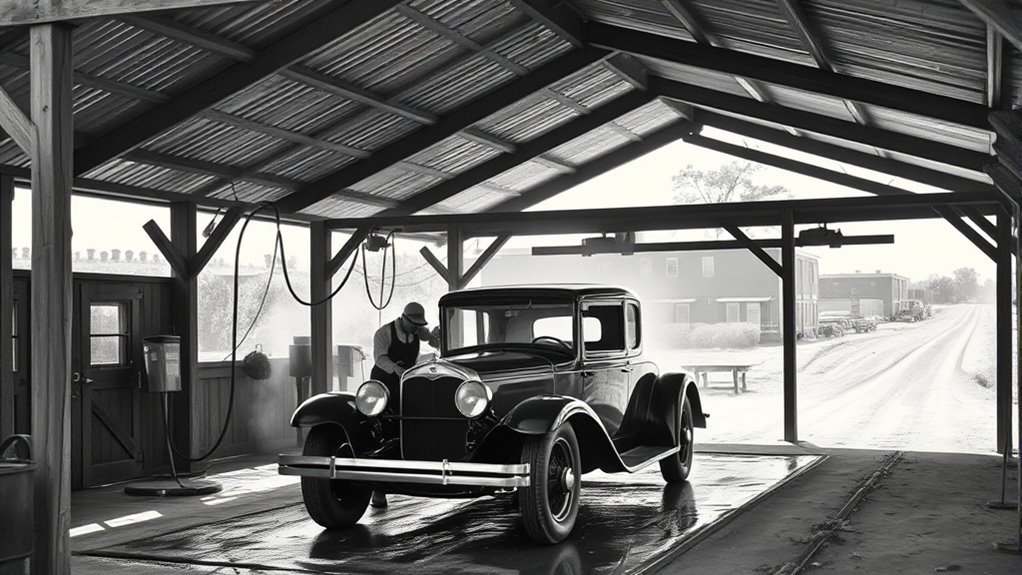
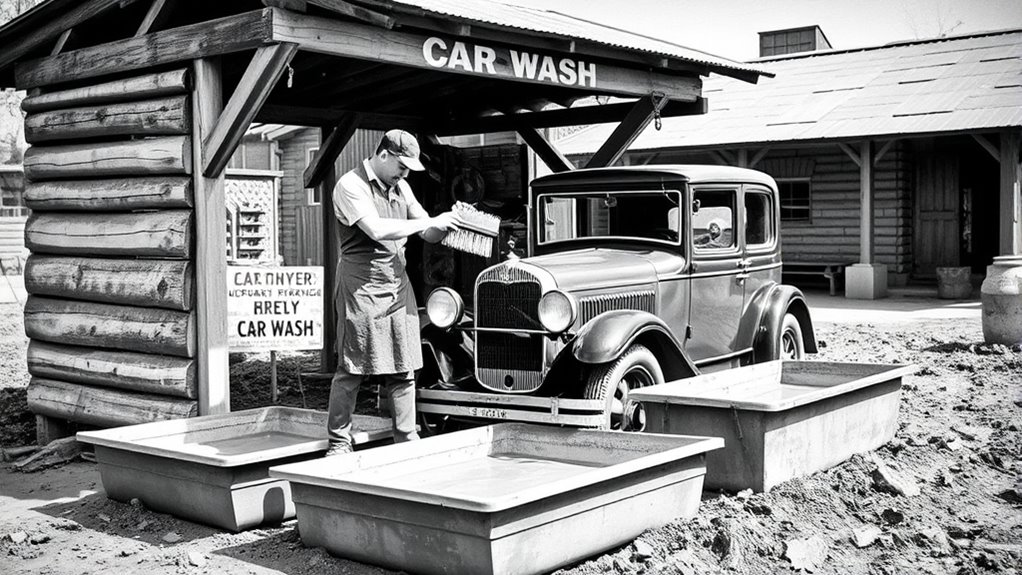
Over time, the industry evolved from simple hand-washing stations to more organized operations. Early on, entrepreneurs saw that offering quick, affordable cleaning options could attract more customers.
As technology advanced, so did the methods, leading to the development of automatic car washes and specialized equipment. The industry’s growth reflects a push toward efficiency and convenience, shaping how we take care of our vehicles today.
Early Pioneers of Car Wash Technology
You can really see how the early inventors came up with the first automatic systems that completely changed the way cars got washed. These pioneers made some pretty important innovations in the equipment, making the process faster and more effective. Thanks to their efforts, they set the stage for the modern car wash industry we know today.
First Automatic Systems
In the early 20th century, inventors started experimenting with automated solutions to clean cars faster and more efficiently. These efforts led to the first automatic wash systems, marking a big step forward in wash technology.
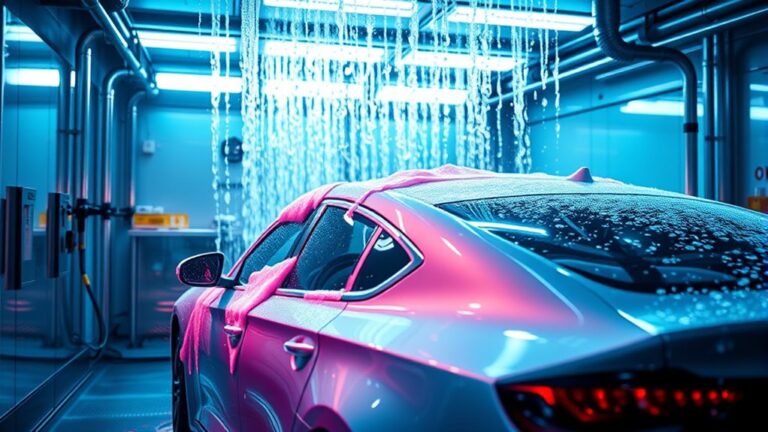
You can imagine these early systems as large rotating brushes that scrubbed the car’s surface. They also used conveyor belts to move vehicles through wash chambers.
Water spray nozzles released high-pressure jets, and chemical dispensers applied soap and wax automatically. These designs transformed manual washes into efficient, automated processes.
The main goal was to cut down on labor and save time, paving the way for modern automatic car washes. While primitive, they laid the groundwork for the sophisticated systems we have today.
Innovations in Equipment
Early pioneers in car wash technology experimented with innovative equipment that transformed how vehicles were cleaned. These advancements aimed to increase washing efficiency, making the process faster and more thorough.
They introduced high-pressure nozzles, rotating brushes, and conveyor systems that automated parts of the wash, reducing manual labor. Innovations like soap applicators and drying units improved overall results, leaving vehicles cleaner and drier.
These early developments laid the groundwork for modern automated systems, focusing on speed and quality. As technology advanced, equipment became more sophisticated, with sensors and adjustable settings to customize washes.
Your understanding of these innovations shows how essential equipment improvements have been in shaping the car wash industry into what it is today.
Early Entrepreneurial Efforts
The development of the car wash industry owes a lot to pioneering entrepreneurs who saw the potential for innovation and profit in vehicle cleaning. They used their entrepreneurial mindset to meet market demand and improve the customer experience.
These early pioneers adopted strategies like choosing prime locations to attract steady traffic, diversifying services to stand out from competitors, developing flexible pricing models to build loyalty, and using branding techniques to create memorable identities.
They focused on balancing service quality with efficiency, understanding that location and branding directly impacted customer retention. By continuously refining their approach, these entrepreneurs laid the groundwork for modern car wash operations.
Their efforts show how innovation and strategic planning can really drive industry growth.
Major Milestones in Car Wash History
Several key milestones mark the evolution of the car wash, shaping it into the efficient industry we see today. In the early 20th century, manual hand washes gave way to mechanized systems, improving speed and consistency.
Manual hand washes evolved into mechanized systems, boosting speed and consistency in car cleaning.
The rise of the self-serve model in the 1950s transformed the car wash culture, empowering customers to clean their vehicles at their own pace.
As technology advanced, conveyor-style automatic washes emerged, offering quicker and more thorough cleaning processes. These innovations improved the customer experience by reducing wait times and enhancing quality.
The development of environmentally friendly practices, such as water recycling and eco-friendly detergents, became major milestones in recent decades, reflecting industry responsibility.
Each milestone reflects a shift toward convenience, efficiency, and sustainability, turning the car wash from a simple service into a well-established industry that prioritizes customer satisfaction and modern technology.
Key Innovations Behind Automatic Car Washes
Innovations in automatic car washes have transformed the industry by combining advanced technology with efficient design. You now benefit from features like water recycling systems that conserve resources and reduce costs, making the process more eco-friendly.
Robotic systems have changed service efficiency, allowing for precise cleaning and faster turnaround times. Imagine these key innovations:
- Water recycling that minimizes waste and lowers operational costs
- Robotic systems that deliver consistent, thorough cleaning while reducing maintenance challenges
- Enhanced safety standards ensuring both workers and customers are protected during operation
- Market trend adaptations like dynamic pricing strategies that reflect demand and improve customer experience
These innovations not only improve service quality but also align with evolving safety standards and market demands. They help businesses stay competitive while maximizing efficiency and customer satisfaction in a growing industry.
Who Invented the First Commercial Car Wash?
You might be curious about who invented the very first commercial car wash. Well, it’s a story filled with early innovations and the efforts of some industry pioneers. These folks came up with the first automatic systems that really changed how cars were cleaned.
Their breakthroughs introduced new technology that laid the groundwork for today’s modern, efficient car wash industry. Thanks to their efforts, washing a car became faster, easier, and more effective than ever before.
Early Automatic Car Washes
The first commercial automatic car wash was invented in 1940 by Arthur W. This breakthrough introduced new features that transformed how vehicles are cleaned efficiently. Imagine walking into a station where:
- Heavy brushes spin and glide over your car’s surface, powered by innovative brush technology.
- Water jets blast away dirt, using water recycling systems to reuse and conserve water.
- Soft cloth strips wrap around your car, gently scrubbing away grime with precision.
- A series of dryers blow warm air, leaving your vehicle spotless and dry in minutes.
These early systems changed the game for car cleaning, making it faster and more effective. The integration of brush technology and water recycling helped reduce waste and improve cleaning quality, laying the groundwork for today’s advanced automatic car washes.
Pioneers in Industry
Building on the development of early automatic car washes, it’s important to recognize the pioneers who made commercial systems a reality. These industry innovators shaped car wash culture by prioritizing efficiency and convenience, transforming how people clean their vehicles.
Frank McCormick, for example, opened one of the first successful commercial car washes in 1946. He focused on providing a smooth customer experience with automated cleaning. His approach emphasized speed, quality, and affordability, setting new standards for the industry.
Other early entrepreneurs refined the concept, creating systems that attracted more customers and helped the industry grow. Their vision turned car washes into a staple of everyday life, emphasizing customer satisfaction and accessibility. These are the cornerstones of modern car wash culture.
Technological Innovations
Innovations in technology transformed the car wash industry, leading to the creation of the first true commercial systems. You can picture these advancements as a sequence:
- Automated brushes that scrubbed cars efficiently, reducing water and chemical use.
- Conveyor belts that moved vehicles steadily through cleaning stages, increasing throughput.
- Recycling systems that reused water, supporting sustainable practices.
- High-pressure spray nozzles that improved cleaning power with less waste.
These innovations not only made car washes faster and more effective but also aligned with future trends emphasizing eco-friendly operations. Today’s technology continues to evolve, focusing on sustainability and smarter systems to ensure the industry’s growth while minimizing environmental impact.
How Entrepreneurs Shaped the Car Wash Industry
Entrepreneurs have played a key role in transforming the car wash industry from simple, manual operations into more advanced, automated services. They use strategies like expanding into new markets and offering diverse services to attract different customers and keep up with changing trends.
By analyzing competitors through competitive analysis, they spot gaps and opportunities, helping them improve what they offer. Technology is a big part of this—they invest in innovative equipment and automated systems to boost efficiency and enhance the customer experience.
Building a strong brand is essential for retaining customers and creating loyalty, which is crucial for long-term success. Entrepreneurs focus on providing convenient, high-quality services tailored to what consumers want.
They stay flexible, constantly adapting to market shifts and new trends. Their proactive approach drives the industry forward, making car washes more accessible, faster, and appealing to a wider audience.
Ultimately, their vision and strategic actions shape the industry’s growth and sustainability.
The Role of Patent Laws in Car Wash Innovation
Patent laws play an essential role in shaping how new technologies and methods are developed within the car wash industry. They directly impact innovation incentives by protecting inventors’ rights and encouraging investment in new ideas.
When a patent is granted, you can visualize:
- A mechanic confidently refining a robotic arm for touchless washes.
- An engineer testing a new eco-friendly soap dispensing system.
- Entrepreneurs securing exclusive rights to a faster, more efficient drying process.
- Developers sharing their innovations, knowing they’ll be protected from copycats.
This patent impact motivates inventors to push boundaries, knowing their ideas are safeguarded. It also fosters healthy competition, leading to better, more advanced car wash technologies.
Without robust patent laws, you might see less innovation as creators hesitate to invest time and money. Overall, patent laws serve as a catalyst for continuous progress in the industry, benefiting both consumers and businesses alike.
Environmental Concerns and Car Wash Technologies
Have you noticed that nowadays, many car washes are really making an effort to save water? They’re using special water conservation techniques to cut down on waste, which is great for the environment. Plus, a lot of these places are switching to eco-friendly cleaning products that don’t contain harmful chemicals.
It’s pretty cool to see how these improvements are helping create a more sustainable way to keep our cars clean. These new methods are making a real difference, and it’s nice to know that we’re doing our part to protect the planet while getting our cars looking good!
Water Conservation Methods
As environmental concerns about water use grow, car wash technologies have evolved to prioritize water conservation. You can see this in various methods, like:
- Using water recycling systems that treat and reuse wash water, which helps reduce waste.
- Installing rainwater harvesting setups to collect rain for cleaning, lowering reliance on municipal supplies.
- Implementing greywater systems that reuse water from sinks and rinses for other purposes.
- Equipping washes with efficient nozzles that minimize water flow without sacrificing cleaning power.
Additional practices include drought-resistant landscaping around facilities, promoting conservation education for customers, and using biodegradable soaps to lessen environmental impact.
Some washes also adopt smart irrigation for surrounding greenery, ensuring water is used responsibly everywhere.
Eco-Friendly Cleaning Products
These products often come with eco certifications, showing they follow green practices and use sustainable materials. Waterless solutions are another eco-friendly innovation that cuts water use significantly.
Choosing environmentally friendly cleaning agents supports sustainable materials and greener operations. Picking products with eco certifications guarantees your car wash is making eco-conscious choices that protect the planet.
Using biodegradable soaps and organic ingredients is a smart way to adopt eco-friendly strategies. It helps make your car wash more sustainable and aligned with environmentally conscious practices.
Modern Car Wash Machines and Their Innovations
Modern car wash machines have transformed how vehicles are cleaned, integrating advanced technology to deliver faster and more efficient service. Today, you can experience innovations like:
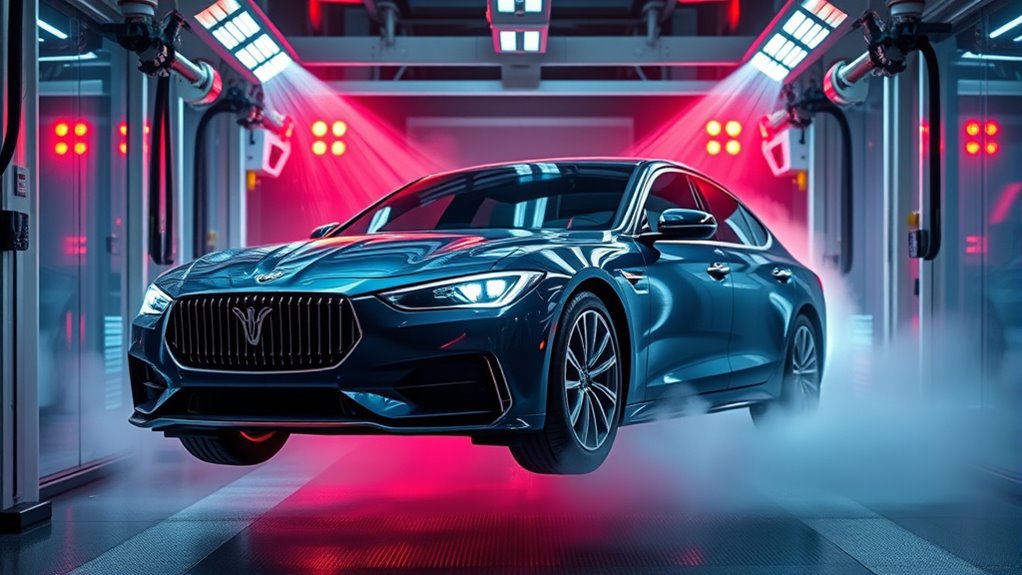
- Touchless systems that use high-pressure water and soaps without brushes, reducing scratches.
- Self-service options that let you control the wash process, saving time and money.
- Mobile carwash services that bring cleaning directly to your driveway, offering convenience and flexibility.
- Eco-friendly equipment that recycles water and uses biodegradable cleaning agents to minimize environmental impact.
These innovations allow for a more personalized experience, whether you prefer to wash your car yourself or have it done professionally. The integration of automation and sustainable practices guarantees your vehicle gets a thorough clean quickly and responsibly.
Modern machines make car washing easier, more efficient, and tailored to your needs, whether at a station or on the go.
Leading Companies in Car Wash Technology Today
Several leading companies are driving innovation in car wash technology today, constantly pushing the boundaries of efficiency, automation, and sustainability. They shape industry advancements by integrating digital solutions that meet evolving customer preferences and market trends.
These companies focus on automation benefits, streamlining operations to improve service quality while reducing water and energy consumption. In a competitive landscape, they offer cutting-edge systems that attract franchise opportunities and help operators stand out.
Digital integration is key, enabling seamless payment options, real-time monitoring, and customer engagement tools. This aligns perfectly with modern consumer expectations. As the industry evolves, these firms prioritize eco-friendly practices, speed, and convenience.
Their technology stays ahead of market demands by continuously innovating. These advancements not only improve operational efficiency but also enhance customer experiences, making car wash services more reliable, faster, and environmentally responsible.
Staying at the forefront of industry trends, these companies are shaping the future of car wash technology with their innovative solutions.
Frequently Asked Questions
How Did Water Quality Influence Early Car Wash Designs?
Water quality greatly influenced early car wash designs by emphasizing the need for effective water filtration systems to remove minerals and contaminants that could damage paint or cause spots.
You’ll notice that pressure systems were tailored to optimize cleaning without excessive water use or damage. Good water quality guaranteed that the cleaning process was efficient, protecting vehicle surfaces while reducing water wastage.
This focus on water quality shaped the evolution of early car wash technology.
Were There Any Safety Concerns With Early Automatic Car Washes?
A stitch in time saves nine, and early automatic car washes did face safety concerns. You should be aware that mechanical hazards posed risks to operators and customers, such as moving parts and electrical issues.
Water safety was also a concern because improper handling could lead to slips or water damage. Manufacturers quickly addressed these issues by adding safety features, but initial designs required caution to prevent accidents.
How Did the Great Depression Affect the Car Wash Industry?
The Great Depression had a big impact on the car wash industry. Economic challenges meant people had less disposable income, so they spent less on car cleaning.
You might notice that consumer habits changed. Many people focused on essentials instead of car maintenance.
Despite these tough times, some entrepreneurs adjusted by offering more affordable options. This helped the industry survive and set the stage for future growth when the economy got better.
What Role Did Marketing Play in Popularizing Car Washes?
Marketing played an essential role in popularizing car washes by using innovative advertising strategies that appealed to consumer behavior. You see, businesses emphasized convenience, affordability, and time-saving benefits, which matched what customers wanted.
By showcasing spotless results and promoting easy access, they attracted more car owners. This targeted approach changed how people saw car washes, making them a regular part of vehicle maintenance.
All of this ultimately helped grow the industry and made car washes widely popular.
Are There Specific Patents That Significantly Shaped Modern Car Wash Technology?
Think of patents as the secret recipes behind modern car wash tech. You’ll find specific patent innovations that considerably shaped the industry, like automatic brush systems and high-pressure water jets.
These technology advancements, protected by patents, pushed the industry forward, making washes faster and more efficient. If you’re curious about progress, exploring these key patents reveals how ingenuity and legal protections combined to transform car cleaning into a sophisticated science.
Conclusion
As you reflect on the journey from humble beginnings to modern marvels, keep in mind the evolution of the car wash echoes the timeless pursuit of progress—similar to Da Vinci’s inventive spirit.
Each innovation, like a brushstroke on a masterpiece, shows humanity’s drive to improve efficiency and sustainability.
So, next time you roll through a car wash, appreciate the centuries of ingenuity that have brought this convenience to your fingertips.
The history of the car wash blends innovation with tradition seamlessly.