How Often Should I Wash My Car?
Many car owners worry about keeping their vehicle clean but struggle to find the right balance. You’re not alone—deciding how often to wash your car can be confusing. You want it to stay looking good, but don’t want to waste time or water.
You should wash your car every two weeks to keep it looking good, protect it from damage, and extend its lifespan. If you drive in polluted areas, on dirt roads, or after storms, more frequent washes are needed.
Seasonal changes, weather, and parking location also impact how often you should clean your vehicle.
Continuing further will help you understand the factors that influence your personal car washing schedule and how to tailor it to your needs.
Key Takeaways
- Wash every two weeks for general maintenance and to prevent dirt, grime, and salt damage.
- Increase washing frequency in polluted, rural, or winter conditions to remove accumulated debris and salt.
- Clean promptly after storms or snowy weather to prevent paint damage and corrosion.
- Adjust your washing schedule based on your driving environment, like urban pollution or dusty trails.
- Consider doing it yourself or hiring professional services depending on your vehicle exposure, effort, and budget for the best results.
How Often Should You Wash Your Car for Basic Maintenance?
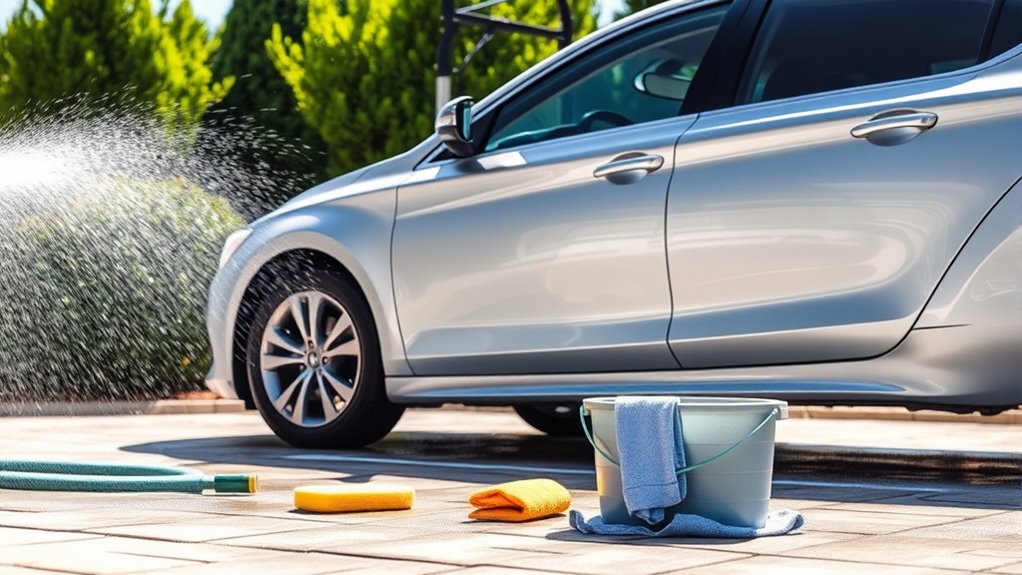
How often should you wash your car to keep it in good shape? For basic maintenance, washing your car every two weeks is a good rule of thumb.
Regular washing helps prevent dirt, grime, and road salt from damaging your vehicle’s paint and body. When you wash regularly, you also get a chance to spot issues early, like scratches or chips, that might need attention.
Using gentle cleaning techniques is key, especially if your car has protective coatings. These coatings act as a shield, making it easier to clean and protecting your paint from environmental damage.
Skipping washes can lead to buildup that damages the surface and reduces the effectiveness of protective layers. By sticking to a bi-weekly schedule, you preserve your car’s appearance, maintain its value, and extend its lifespan.
All while keeping it looking sharp and well cared for.
What Factors Affect How Frequently You Should Wash Your Car?
Your climate and weather really play a big role in how often you should wash your car. For example, if you’re dealing with lots of mud, salt from the roads, or pollen in the air, your car can get dirty pretty quickly. So, you might find yourself needing to wash it more often.
Also, if you’re driving in a busy city or on rough, unpaved roads regularly, your car is more likely to pick up dirt and grime faster. That means sticking to a more frequent cleaning schedule is a good idea.
Thinking about these things can help you figure out the best washing routine to keep your car looking good and in great shape.
Climate and Weather Conditions
Climate and weather greatly influence how often you should wash your car. In humid environments, you’re more likely to face rust and mold, so frequent washes are necessary.
During seasonal changes, dirt and salt from winter can cling to your vehicle’s surface, risking damage if not cleaned promptly. Warm, dry climates may require less frequent washing, but dust and pollen can still settle on your car.
Also, washing your car regularly helps maintain your car wax’s protective layer, especially after harsh weather. If you live in an area with heavy rain or snow, consider washing your car more often to prevent grime buildup.
Ultimately, adapting your washing routine to the weather guarantees your car stays clean, protected, and looking great year-round.
Vehicle Usage and Environment
The way you use your vehicle really affects how often you should wash it. For example, driving in the city exposes your car to pollution, bird droppings, and dirt from busy streets, so you might need to wash it more often.
Rural driving usually involves dirt roads and mud, which can quickly soil your vehicle. This is especially true during seasons like rain or snow when mud and grime are more common.
Road conditions also play a role. Salted roads in winter can speed up corrosion, so regular cleaning helps protect your car. Larger trucks or SUVs tend to collect more grime, too.
How often you drive also matters—more driving usually means more dirt buildup. Environmental pollutants like smog or pollen can settle on your car, affecting its look and paint.
Adjust your washing schedule based on these factors to keep your vehicle in good shape and looking its best.
How Climate Changes Your Car Washing Routine
Climate really plays a big role in how often you should wash your car. For example, if you’re in a place with high humidity, dirt and grime tend to build up faster, so you might find yourself washing your car more often to keep it looking nice.
And don’t forget about the temperature! Fluctuations can affect how well your cleaning products work. So, depending on whether it’s hot or cold outside, you might need to tweak your routine a bit to get the best results.
Humidity Accelerates Dirt Accumulation
When humidity levels are high, dirt and grime tend to stick to your car’s surface more quickly. The humidity effects amplify the adhesion of different dirt types, making your car dirtier faster. You’ll notice that dust, mud, and even pollen cling more stubbornly, requiring more frequent washes.
Keep in mind that increased humidity means you’ll need to wash your car more often. Sticky grime can cause paint damage if left unchecked, so regular cleaning is key. High humidity also makes dirt removal harder, so staying on top of washes is even more important.
Being aware of humidity effects helps you stay ahead of dirt buildup. This way, you can protect your car’s appearance and prolong its lifespan.
Temperature Affects Cleaning Effectiveness
Higher temperatures can greatly impact how effectively you clean your car. When it gets really hot, cleaning products might evaporate too quickly, making it harder for them to break down dirt and grime.
Hot weather can also cause soap and water to dry faster, which might leave streaks or spots if you’re not careful. On the flip side, cold temperatures slow down the cleaning process.
Cold weather makes it harder for cleaning products to do their job and can even cause water to freeze on your car’s surface. To get the best results, choose products suited for the climate and wash during cooler parts of the day.
Washing when temperatures are moderate helps ensure your cleaning products work well and prevents water spots or residue from quick evaporation or freezing. Adjusting your routine for the weather makes cleaning easier and keeps your car looking great.
Do Your Driving Habits Influence How Often You Wash Your Car?
Your driving habits play a big role in how often you should wash your car. If you often drive on muddy, dusty, or salted roads, your vehicle gets dirtier faster, so you’ll need to wash it more often.
On the other hand, if you mostly drive on smooth, clean roads, you can wait longer between washes. Road conditions directly affect how quickly dirt and grime build up on your car’s surface.
Think about these factors:
Consider your driving environment to determine how often your car needs cleaning and maintenance.
- Driving daily through construction zones can lead to quicker debris buildup.
- If you frequently drive in areas with heavy salt use during winter, regular washing is important to prevent rust.
- Scenic, dusty trails mean your car needs more attention to stay clean and protected.
Being aware of your driving environment helps you find the right balance between cleanliness and maintenance, keeping your car in good shape longer.
Why You Should Wash Your Car After Storms or Snow
Storms and snow can leave harmful substances on your car’s surface that can cause damage if not removed promptly. Storm residue, like dirt, leaves, and debris, can scratch the paint and clog your drainage systems if left unwashed.
Snow salt, which is often used on roads during winter, is especially corrosive. It speeds up rust and surface deterioration. When snow melts or storms pass, salt and grime settle on your vehicle, forming a layer that’s tough to remove later.
Washing your car soon after these weather events helps eliminate these damaging substances before they can damage the paint or cause rust. It also helps restore your car’s appearance and keeps its value intact.
A thorough wash clears away storm residue and snow salt, preventing long-term corrosion and paint damage. Regular cleaning after storms or heavy snowfall is a simple way to protect your vehicle’s exterior and keep it in top shape.
When Is It Time to Wash Your Car More Often?
After harsh weather events, it’s a good idea to wash your car more often to keep it protected. But how do you know when to bump up your washing schedule? Here are some signs to watch for:
Harsh weather warrants more frequent car washes to protect your vehicle.
- Seasonal changes: During winter or rainy seasons, dirt, salt, and grime build up faster, so washing more often is a smart move.
- Exposure to pollutants: If your car spends a lot of time near construction sites, industrial areas, or busy roads, it’s worth increasing washes to prevent damage.
- Visible dirt or streaks: When dirt, bird droppings, or bugs leave noticeable marks, it’s a sign to wash your car sooner rather than later.
Pay attention to these signs and seasonal changes to decide when to wash your car more frequently. Regular cleaning keeps your vehicle looking sharp and helps maintain its value.
Signs Your Car Needs an Immediate Wash
Have you noticed sudden spots or streaks on your car’s surface? That’s a clear sign your car needs an immediate wash. Dirt buildup can cause these marks, especially if grime and road debris accumulate without regular cleaning.
If you see stubborn spots that won’t come off with a quick wipe, it’s time to increase your wash frequency. Also, check for a dull or cloudy appearance on the paint—this indicates dirt and pollutants are embedded, which can damage the finish over time.
Bird droppings or tree sap are urgent issues; they can eat into the paint if left unattended. If your car looks dirty or streaked, don’t delay—washing it promptly protects the finish and prevents long-term damage.
Regularly evaluating these signs helps you maintain your car’s appearance and value, making sure dirt buildup doesn’t get out of control. When in doubt, it’s better to wash sooner rather than later.
How Parking Location Impacts Your Car Washing Schedule
Where you park your vehicle really affects how often you should wash it. Different parking spots expose your car to different things, which can speed up dirt buildup and cause damage.
For example, street parking exposes your car to dust, pollution, and bird droppings. This means regular washing is crucial to keep your paint protected.
Garage parking cuts down on surface impacts, so you can go longer between washes. But a quick clean now and then still helps keep your car shiny.
Garage parking reduces surface exposure, allowing longer intervals between washes while maintaining a shiny, clean appearance.
Open lots or exposed areas leave your vehicle open to weather elements like rain, mud, and tree sap. These require more frequent washes to prevent rust and stains.
Your parking choice impacts how much dirt and damage your car faces, which directly affects your cleaning schedule. Being aware of where you park helps you decide how often to wash your car and keep it looking its best.
Should You Wash Your Car Yourself or Use a Professional Service?
Deciding whether to wash your car yourself or hire a professional really depends on a few things like your budget, how much time you have, and what kind of finish you’re after. If you’re looking to save some money and don’t mind getting your hands a little dirty, doing it yourself can be a good option. Plus, it can be pretty satisfying to see your car sparkling clean after a little effort.
On the other hand, if you’re short on time or want that perfect, showroom-quality shine, going with a professional service might be the way to go. They have the tools and expertise to give your car a thorough, high-quality cleaning that can be hard to match on your own. So, think about what’s most important to you—saving a few bucks or having a super polished look—and that should help you make the best choice.
Cost and Budget Considerations
When comparing the costs of washing your car yourself versus hiring a professional, it’s important to think about your budget and the quality you want. Doing it yourself can save you money upfront and might be more cost-effective if you’re okay with investing your time.
But professional services often do a more thorough job, which can help prevent damage that might end costly repairs later. Here are some tips to help you decide.
First, calculate how much you’ll spend on supplies compared to a single professional wash.
Next, consider how much your time is worth—will saving money be worth the effort?
Finally, think about the possible damages from DIY washing and the repair costs that might follow.
Your decision depends on how much you value convenience and quality. It’s about balancing your budget with the level of care you want for your vehicle.
Time and Convenience Factors
Choosing between washing your car yourself and hiring a professional often depends on how much time and effort you’re willing to put in. If your schedule is busy, convenience might lead you to pick a professional service. They save you time and ensure a thorough clean without any hassle.
On the other hand, washing your car yourself gives you more flexibility but can take a lot of time. Think about this comparison:
| Aspect | Do It Yourself | Professional Service |
|---|---|---|
| Time Constraints | Takes longer, needs planning | Quick and efficient |
| Convenience Factors | Requires effort and setup | Ready when you are |
| Cost | Usually cheaper | Slightly more expensive |
| Effort Level | Moderate to high | Minimal effort |
| Frequency | Depends on your schedule | Scheduled or on-demand |
Make your choice based on how much time you have and how much convenience matters to you.
Quality and Detailing Level
The level of quality and detail you want for your car’s appearance can really influence whether you wash it yourself or hire a professional. If you want perfect detailing and top-notch wash quality, going with professionals might be your best bet. They have specialized tools and techniques to get a flawless finish, saving you time and effort.
Think about these feelings when making your choice:
- Pride in perfection — you want every inch spotless and gleaming.
- Time saved — you’d rather focus on other things.
- Peace of mind — knowing experts handle delicate or tricky detailing tasks.
Choosing a professional ensures your car looks its best, especially if your standards are high or you don’t have the skills and equipment for detailed work yourself.
Creating a Personalized Car Washing Routine That Works for You
Creating a personalized car washing routine starts with understanding your vehicle’s specific needs and your schedule. Your personal preferences influence how often you wash, whether you prefer quick washes or detailed cleanings.
Consider how exposed your car is to dirt, road grime, or environmental elements—this helps determine a baseline frequency. Seasonal adjustments are also essential; for example, you might wash more often in winter to remove salt and mud or less in dry, mild seasons.
Think about your available time and how much effort you’re willing to invest. Routine washes might be quick, while deep cleans require more time. By tailoring your routine, you guarantee your car stays clean without unnecessary effort.
Regularly assess your vehicle’s condition and environmental factors, then adjust your schedule accordingly. This personalized approach keeps your car looking good and protected, aligning with your preferences and seasonal needs.
Frequently Asked Questions
What Are the Best Products for Washing My Car Effectively?
You should choose the best products for washing your car by focusing on effective cleaning agents like pH-balanced car wash soaps that lift dirt without stripping wax.
Use quality microfiber cloths or mitts for gentle, thorough cleaning. Stick to proper car wash techniques, such as rinsing before soap application and rinsing again afterward.
This approach guarantees a spotless finish while protecting your paint. Avoid harsh chemicals that could damage your vehicle’s surface.
How Can I Tell if My Car Needs a Wash Beyond Visual Cues?
You can tell your car needs a wash beyond just looking at it by feeling for dirt buildup on the surface. Focus on spots like wheel wells and under the car where dirt tends to hide.
Also, if your car looks dull or streaky, that could be hurting your paint protection. Regularly touching and inspecting your car helps catch these signs early.
Doing this can prevent damage and keep your vehicle looking great without waiting for it to look visibly dirty.
Does Washing My Car Regularly Improve Its Resale Value?
Yes, washing your car regularly boosts its resale benefits by keeping it looking good and preventing damage from dirt, grime, and corrosive substances.
Consistent cleaning also helps with long-term maintenance, protecting the paint and exterior parts.
When your car is clean, it looks better to potential buyers and shows you’ve taken good care of it.
That can increase its value and appeal when you’re ready to sell.
Are There Specific Times of Day to Wash My Car?
You should wash your car in the morning to enjoy benefits like cooler temperatures and less sun exposure. This helps prevent water spots and streaks.
Morning washes also allow your car to dry faster. Avoid washing in the evening, as cooler temperatures and dew can cause water spots or streaks.
Plus, washing in the morning keeps your car looking clean and shiny throughout the day.
How Does Washing Frequency Affect My Car’s Paint Health?
Washing your car too often is like over-vaccinating. It might seem protective but can actually harm your paint.
Regular washing with proper techniques helps keep your paint protected by removing dirt and contaminants that cause damage.
But if you wash too much, you risk stripping away wax and dulling the finish.
Stick to gentle washing methods, use quality products, and find a good balance. Your paint will thank you with a lasting shine and protection.
Conclusion
Just as a well-tended garden flourishes with regular care, your car benefits from consistent washing. Paying attention to factors like climate, driving habits, and parking spots helps you create a routine that keeps your vehicle looking its best.
Neglecting these signs is like leaving the glass slipper behind—missed chances to preserve your car’s shine and condition. Regular car washing is key to maintaining its appearance and value.
Remember, the right frequency depends on your lifestyle, but generally washing your car every two weeks or more often if you drive a lot or in harsh conditions works well.
Keeping your car clean not only looks great but also protects it over time.