Can You Put Car Mats in the Washing Machine?
Many car owners struggle with keeping their vehicle’s interior clean and fresh. Car mats take a lot of wear and tear, making it tough to find easy ways to clean them regularly. You’re not alone—wondering if your mats can go in the washing machine is a common question.
Yes, you can put some car mats in the washing machine, but it depends on the type. Rubber and all-weather mats usually handle machine washes well, while carpet mats might need extra care.
Before washing, remove loose dirt, check care instructions, and use gentle settings with cold water. Hand washing is an option for delicate or textured mats.
Want to uncover the best techniques and tips to keep your mats clean and lasting longer? Keep going to find out more.
Key Takeaways
- Most rubber and all-weather mats are generally safe to machine wash, but always check care instructions first.
- Carpet mats can be washed in a machine if they’re durable and don’t have delicate embellishments.
- Use cold water, a gentle cycle, and mild detergent to prevent damage or deformation during washing.
- Pre-remove dirt and stains with vacuuming or spot cleaning before putting them in the washer.
- Hand washing is a safer choice for mats with fragile textures or foam backing to avoid damage.
Is It Safe to Wash Your Car Mats in a Washing Machine?
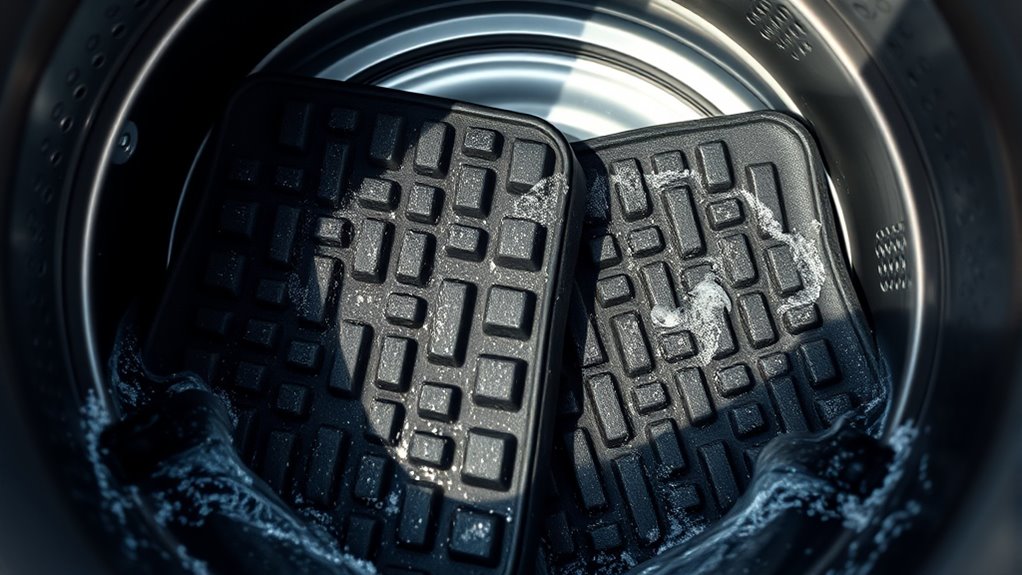
But keep in mind, washing too often might wear out the mats over time, causing fibers to break down or tear. To be safe, always check your mats’ care instructions before tossing them in the machine. Using a gentle cycle and cold water can help protect their material and keep them in good shape.
Make sure to remove loose dirt or debris before washing to avoid clogging your machine. Avoid harsh detergents because they can weaken the material. If you’re worried about damaging your mats or shortening their lifespan, try spot cleaning instead and limit how often you wash them.
With proper care, machine washing can be an easy and effective way to keep your car mats clean without harming their quality.
What Types of Car Mats Can You Wash in a Machine?
Many car mats are suitable for machine washing, but their material type determines whether this method is safe and effective.
Rubber mats, for example, are durable and can usually handle the washing machine without damage.
Carpet mats and fabric mats are also often washable, especially if they’re designed for easy cleaning.
All-weather mats, made from tough, weather-resistant materials, typically tolerate machine washing well, but check the manufacturer’s instructions first.
Keep in mind that some mats with intricate textures or delicate embellishments may not be suitable for machine cleaning.
Always verify whether your specific mats are labeled as washable, and consider using a gentle cycle with mild detergent.
Avoid washing mats that contain foam backing or vinyl surfaces that could warp or deteriorate.
How to Prepare Your Car Mats for Washing
First things first, take out your car mats and give them a good shake to loosen up any loose dirt and debris on the surface. It’s a simple step, but it really helps get rid of the surface grime before you do anything else.
After that, take a quick look at the mats to see what kind of material they’re made of. You want to make sure they’re safe to put in the washing machine and won’t get damaged. Checking this beforehand can save you some trouble and make sure your mats come out looking as good as new.
Remove Loose Debris
Before washing your car mats, give them a good shake or vacuum to get rid of loose dirt, crumbs, and debris. Use your vacuum effectively to target different types of debris like dirt, sand, or small stones, making sure to lift particles embedded in the fibers.
Make sure to focus on all areas, especially corners and seams where debris tends to hide. Removing loose debris first prevents scratching the mat’s surface during cleaning and helps you get a deeper clean.
Use a vacuum with strong suction and adjustable settings to maximize debris removal without damaging the material. Clearing out loose dirt beforehand saves time and effort when washing and reduces the chance of clogging your drain or filter.
Properly prepared mats come out cleaner and last longer. Taking a few extra minutes to remove loose debris makes the whole cleaning process easier and more effective.
Shake Out Mats
Give your car mats a vigorous shake to dislodge any remaining loose dirt and debris before washing. This step is crucial for effective mat maintenance and seasonal cleaning, helping prevent dirt from settling deeper into the fibers during washing.
Shaking also helps loosen embedded debris, making the cleaning process more efficient. To get the best results, consider the type of mats you’re washing:
| Mats Type | Best Preparation Tips |
|---|---|
| Rubber Mats | Shake thoroughly, then hose off dirt |
| Carpet Mats | Shake gently to avoid damage |
| All-Weather Mats | Shake and spot clean stubborn stains |
| Custom Mats | Shake and vacuum for deeper dirt |
Proper preparation guarantees your mats are ready for washing, which helps prolong their lifespan and keeps your vehicle interior clean.
Check Material Compatibility
Knowing your mat’s material is essential to avoid damage and guarantee effective cleaning. Different types like rubber, carpet, or vinyl need specific washing techniques.
Rubber mats are durable and can usually handle a gentle cycle and soap, but avoid high heat to prevent warping. Carpet mats may need a more delicate approach, such as a cold wash with mild detergent, to preserve fibers.
Vinyl mats are similar to rubber but might be more prone to cracking if exposed to harsh chemicals or high temperatures. Check labels or manufacturer instructions whenever possible.
By understanding your mats’ material types, you can choose the right washing techniques. This helps ensure a thorough clean without risking damage.
Proper preparation makes washing your car mats safer and more effective.
What Are the Best Washing Machine Settings for Car Mats?
Use cold water to protect materials like rubber or carpet fibers, which can warp or fade if exposed to heat. How often you wash depends on how dirty your mats get. Usually, every few months is enough, but if they’re often muddy or dirty, more frequent cleanings might be necessary.
Avoid heavy-duty cycles that use high spin speeds because they can distort or weaken the mats’ structure. Instead, pick a low or no-spin option to help prevent stretching or damage.
Adding a mild detergent designed for delicate fabrics helps lift dirt gently while keeping your mats’ material intact. Following these tips will help keep your car mats clean, looking good, and in great shape.
How to Remove Tough Stains and Odors From Your Car Mats
If you’re dealing with tough stains and odors on your car mats, the first step is to give those problem spots a good pre-treatment with a strong stain remover. It’s all about loosening up that stubborn grime before you do a deep clean.
You can try using a mix of vinegar and baking soda—they work pretty well together to break down dirt and neutralize odors. Alternatively, there are specialty cleaners made specifically for car mats that can do the trick. Just make sure to follow the instructions on the label for the best results.
Once you’ve cleaned the mats thoroughly, don’t forget to dry and deodorize them. Air drying is usually best, and you can sprinkle some baking soda on them before vacuuming it off later to keep things smelling fresh. With these simple steps, your car mats will look, smell, and feel like new!
Pre-Treat Stains Effectively
In addressing stubborn stains and lingering odors on your car mats, pre-treating is a must. Start by spotting the toughest stains and applying a stain removal solution directly to those areas. Use simple cleaning solutions like a mix of dish soap and water or specialized fabric stain removers.
Gently scrub the solution into the stain with a soft brush or cloth, letting it soak into the fibers. Give it at least 10-15 minutes to work before you wash. This step breaks down dirt and grime, making stain removal more effective.
Proper pre-treatment helps your mats come out cleaner and fresher. It also reduces the chances of stubborn stains and odors sticking around after cleaning.
Use Proper Cleaning Solutions
After pre-treating stains, choosing the right cleaning solutions can really help remove tough spots and odors. Use cleaning agents that match your mat materials—for example, mild soap and water work well on rubber mats, while carpeted mats may need a special upholstery cleaner.
Avoid harsh chemicals that could damage or discolor your mats. For stubborn stains, a mixture of vinegar and water can be effective, and baking soda helps neutralize odors.
Always check the manufacturer’s recommendations to make sure the cleaning agents won’t harm the material. Using the correct solution ensures deep cleaning without hurting your mats’ durability or look.
This careful approach makes removing tough stains and lingering odors easier and more effective.
Dry and Deodorize Properly
Drying and deodorizing are essential steps to make sure your car mats look fresh and smell clean.
To dry your mats effectively, use techniques like air drying in a well-ventilated area or using a low-heat setting on a dryer, if it’s safe.
Avoid exposing your mats to direct sunlight for too long, as it can cause fading.
For deodorizing, sprinkle baking soda evenly over the mats and let it sit for several hours or overnight to absorb odors.
After that, vacuum up the baking soda thoroughly.
You can also use a fabric freshener or a mixture of water and a few drops of essential oil for a quick refresh.
Proper drying and deodorizing help keep your mats clean, fresh, and odor-free.
Risks of Washing Car Mats in a Machine
Washing car mats in a machine can pose several risks that might damage both the mats and your appliance. One big concern is that harsh agitation or improper settings can weaken the rubber or fabric, leading to tears or premature wear.
Over time, this reduces their effectiveness and lifespan. Heavily dirtied mats with embedded debris can clog your washing machine’s filters or even damage the drum, causing costly repairs.
The rough movement during a wash cycle can also distort or deform mats, especially if they’re thick or stiff. If you’re not careful, the mats could cause unbalanced loads, putting extra strain on your washer’s motor and suspension.
While a quick clean might seem tempting, these risks show why it’s better to choose proper cleaning methods. Doing so helps avoid expensive repairs and ensures your mats last longer.
Alternatives to Machine Washing Your Car Mats
If you’re not into using a washing machine, hand washing your car mats is a pretty easy alternative. Just grab a brush and some water mixed with your favorite cleaning solution, and give those mats a good scrub. It’s a great way to really get into those stubborn dirt spots and make sure your mats stay looking fresh and clean.
Hand Washing Techniques
When you choose to hand wash your car mats, you get more control over the cleaning process and can target stubborn dirt more effectively. Use the right tools like a stiff-bristled brush, a sponge, and a bucket of warm water with mild detergent.
To make sure you clean thoroughly:
- Scrub the mats vigorously with the brush to loosen dirt and grime.
- Use the sponge to reach into corners and fabric textures.
- Rinse well with clean water to remove soap residue.
This method lets you customize your approach based on the mat’s material and how dirty it is, helping you avoid damage from harsh chemicals or harsh machine cycles. Hand washing is a gentle yet effective way to refresh your car mats without risking machine-related wear.
Using Cleaning Solutions
After hand washing with basic soap and water, you might want to look into alternative cleaning solutions that can boost your mats’ cleanliness without risking damage from machine cycles. Using specialized cleaning solutions can help break down dirt and stains more effectively.
Try finding effective detergents designed for heavy-duty cleaning or automotive mats, as these are made to remove grime without harming the material. You can also mix warm water with vinegar or use a mild degreaser to increase cleaning power.
Apply the solution with a scrub brush, working it into the mats’ surface, then rinse thoroughly. These alternatives give you a thorough clean while keeping your mats in good shape, making them a smart choice for regular maintenance.
How to Properly Dry and Maintain Your Car Mats
To keep your car mats clean and in good shape, proper drying and maintenance are key. Using the right drying techniques can help prevent mold and bad odors.
After cleaning, avoid air drying in direct sunlight because it can cause fading or warping. Instead, follow these simple steps:
- Use a clean towel to blot away excess water, which helps speed up drying.
- Air dry in a well-ventilated area, making sure the mats are completely dry before putting them back.
- Regularly check your mats for signs of wear or damage and replace them if needed.
How Often Should You Clean Your Car Mats?
Maintaining clean car mats is an ongoing task that helps keep your vehicle fresh and looking new. How often you should clean your mats depends on your driving habits and environment.
Generally, cleaning once every 2 to 4 weeks is recommended for regular use. If you often drive in mud, snow, or dusty areas, you’ll want to clean more frequently to prevent dirt buildup.
For maintenance, spot clean when you see stains or debris, and do a deep clean regularly to extend their lifespan. Here’s a quick reference:
| Driving Environment | Cleaning Frequency | Maintenance Tips |
|---|---|---|
| Urban, clean roads | Every 3-4 weeks | Remove debris after trips |
| Off-road, muddy | Weekly | Use a stiff brush for dirt |
| Snowy, wet conditions | Every 2 weeks | Dry thoroughly to prevent mold |
| Dusty rural areas | Every 2-3 weeks | Shake out mats regularly |
Adjust your cleaning schedule based on these tips for the best results.
Tips for Keeping Your Car Mats Clean and Fresh Long-Term
Keeping your car mats clean and fresh over the long term takes some regular habits and proper care. To keep them looking new and lasting longer, try to do seasonal maintenance and routine cleaning.
Maintaining your car mats with regular cleaning and seasonal care keeps them fresh and durable.
Here are three simple tips:
- Shake out and vacuum your mats regularly to get rid of loose dirt and debris. This helps prevent buildup that can wear down the material.
- Deep clean seasonally using methods like machine washing or scrubbing with mild soap. It’s a great way to remove stains and odors.
- Protect against extreme weather by removing mats during harsh seasons. Make sure to clean and dry them thoroughly before putting them back.
Frequently Asked Questions
Can Washing Machine Damage My Car Mats’ Material?
Yes, washing machine damage can happen depending on your car mats’ material sensitivity. Some mats, especially rubber or foam, might warp or degrade with harsh washing techniques or high heat.
To avoid damage, use a gentle cycle, cold water, and steer clear of bleach. Always check the care label first to be safe.
Hand washing is often a better choice for delicate mats. It helps keep them in good shape without risking machine damage.
Are There Specific Detergents Recommended for Cleaning Car Mats?
Did you know that using the right detergent can extend your car mats’ lifespan by up to 30%?
For cleaning, choose mild, non-abrasive detergents like gentle laundry detergents or specialized automotive cleaners.
When washing, remember to avoid bleach and fabric softeners, and use cold water.
These simple steps help keep your mats’ material and appearance in top shape, so they stay fresh and durable after each clean.
How Long Does It Take to Wash Car Mats in a Machine?
Washing your car mats in a machine takes about 30 to 45 minutes, depending on your machine’s settings.
Choose a gentle cycle with warm water and avoid heavy-duty options to prevent damage.
After washing, use your machine’s drying options, like air drying or low heat, to thoroughly dry the mats.
This process helps ensure your mats come out clean without warping or cracking.
Will Washing Machine Cleaning Eliminate All Odors From Car Mats?
Washing your car mats in a machine can help reduce odors, but it might not eliminate all of them. Odor removal techniques like using baking soda or specialized cleaners often work better for stubborn smells.
After washing, proper mat drying methods—air drying or towel blotting—are essential to prevent mold and lingering odors.
Can I Wash All Types of Car Mats Together in One Load?
You can’t wash all types of car mats together in one load because materials vary. Rubber mats usually handle washing machines well, but carpet or rubber mats with heavy dirt might need a gentler approach.
Also, check your washing machine’s load capacity to avoid overloading, which can damage the machine or prevent proper cleaning. It’s best to separate mats based on material and size.
That way, you can ensure a thorough and safe wash for all your car mats.
Conclusion
In the end, washing your car mats in the machine is like giving them a fresh start, restoring their look and feel. Just make sure you select the right settings and prep them properly so they come out spotless and odor-free.
Regular cleaning keeps your car’s interior inviting and helps maintain its value. Think of it as tending to a garden—you’ll enjoy the rewards of your effort with mats that stay clean and inviting for miles to come.
So, yes, you can put car mats in the washing machine, but it’s all about doing it right. Proper preparation and care will keep your mats looking great and extend their lifespan.