What Happens If You Use Dish Soap to Wash Your Car?
Many car owners struggle with keeping their vehicle’s paint looking shiny and new. It’s frustrating when your car’s finish dulls or gets scratched, and you’re not sure what’s causing it.
If you use dish soap to wash your car, it can damage your vehicle’s paint and protective coatings. Dish soap is too harsh and strips away wax, sealants, and the clear coat, which can leave your car dull, scratched, and vulnerable to environmental damage.
Over time, this can cause discoloration and reduce your car’s overall finish.
Keep going, and you’ll find out how to protect and restore your vehicle’s shine effectively.
Key Takeaways
- Dish soap weakens the car’s clear coat, causing dullness and surface scratches.
- It strips away the protective wax and sealants, leaving your paint more exposed to environmental damage.
- Using it regularly can speed up paint deterioration, oxidation, and fading over time.
- The strong detergents in dish soap can be too harsh, making your car more vulnerable to rust and corrosion.
- Since dish soap isn’t made for cars, it risks long-term damage even though it cleans dishes well.
What Happens to Your Car’s Paint When You Use Dish Soap?
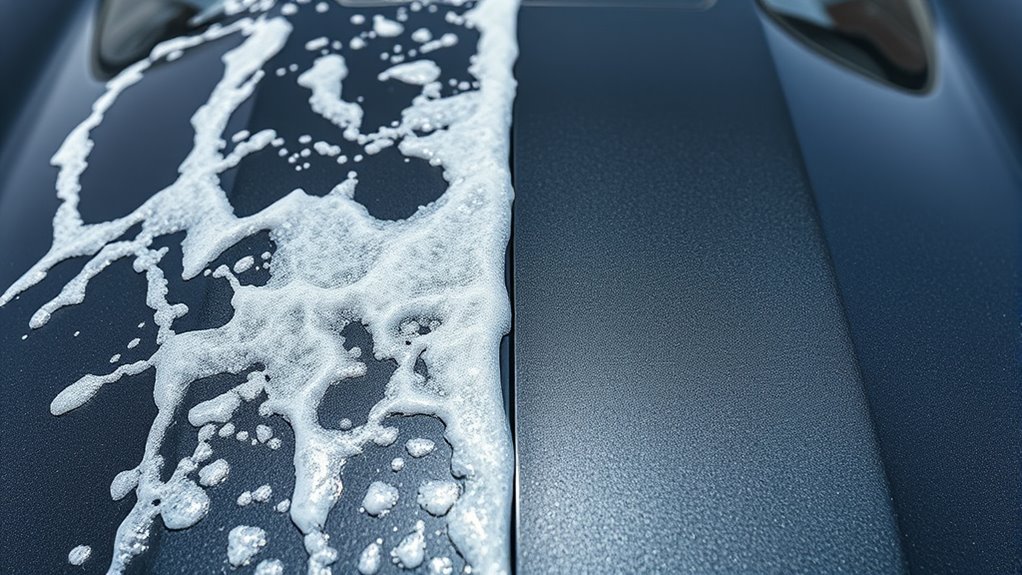
While dish soap might seem like a quick fix for washing your car, it can actually harm your vehicle’s paint over time. It’s made to cut through greasy food, not to protect your car’s surface.
Regular use can cause the paint’s clear coat to weaken and become dull. Dish soap strips away the protective layer, leaving your paint exposed to the environment.
This can lead to tiny scratches and indentations called surface etching. Not only do they affect how your car looks, but they also make it more prone to rust and damage.
The harsh chemicals in dish soap break down the paint’s integrity, speeding up wear and tear. If you want your car to stay shiny and new, use products made specifically for automotive paint.
Otherwise, you risk damaging your car’s finish in the long run.
Why Dish Soap Isn’t Designed for Car Surfaces
Dish soap isn’t formulated for car surfaces; it’s meant to tackle greasy dishes, not delicate automotive paint. Its strong detergents are designed to break down food and grease, which can be too harsh for your car’s paint.
These detergents can strip away the wax and protective coatings that shield your vehicle, leaving the surface vulnerable to damage. Plus, dish soap’s pH level isn’t balanced for automotive finishes, which can cause dryness and dullness over time.
Dish soap can remove wax and coatings, leaving your car vulnerable to damage and dullness over time.
Car surface compatibility isn’t usually considered in dish soap formulas since it’s meant for kitchen use, not vehicle care. Using it on your car can cause unintended harm, as the strong chemicals may remove sealants and waxes.
This exposes the paint to dirt, UV rays, and environmental pollutants. That’s why dish soap isn’t a safe or effective choice for washing your car’s delicate, painted surface.
How Dish Soap Can Wipe Out Your Car’s Wax and Protective Coatings
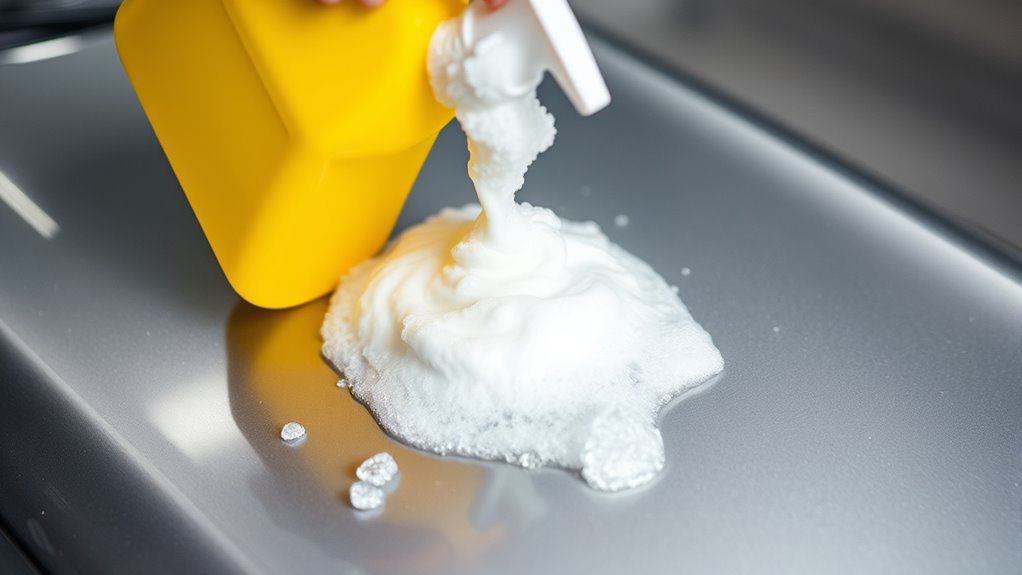
When you use dish soap on your car, it can quickly strip away the wax and protective coatings that keep the paint shiny and shielded from damage. Dish soap is meant to cut grease in the kitchen, not to protect car finishes.
This means it removes wax, which acts as a barrier against dirt, UV rays, and pollutants. Without these protective layers, your car’s paint becomes vulnerable to scratches, oxidation, and fading.
Regular use of dish soap can lead to a dull appearance and more frequent repairs. To understand the impact better, consider this:
| Effect of Dish Soap on Your Car | Result |
|---|---|
| Wax removal | Loss of glossy shine |
| Protective layers | Increased risk of damage |
| Dirt and pollutants exposure | Faster paint deterioration |
| Need for re-waxing | Higher maintenance costs |
Using dish soap compromises your car’s finish, making it more prone to damage over time.
Signs Your Car’s Finish Has Been Damaged by Dish Soap
If your car’s finish has been damaged by dish soap, you’ll likely notice a dull, streaky appearance that wasn’t there before. This dullness shows paint deterioration caused by the soap stripping away protective layers and exposing the bare surface.
You might see uneven spots or patches where the shine has faded. Surface abrasion is another sign; dish soap can be harsh and scratch the clear coat, creating tiny scratches that reduce gloss and smoothness. These scratches often look like fine lines or a rough texture when you run your hand over the surface.
Over time, repeated exposure can make these signs worse, leading to a more noticeable loss of paint quality and increased vulnerability to environmental damage. If you see these signs, it’s a clear sign that dish soap has compromised your car’s finish, and you should take steps to restore and protect the surface.
What Are the Long-Term Effects of Using Dish Soap on Your Car?
Using dish soap on your car over the long term can cause serious damage that gets worse with each wash. The harsh chemicals in dish soap strip away the protective wax layer, leaving your paint vulnerable.
Over time, this can lead to discoloration, making your car’s paint look dull and faded. Plus, dish soap’s abrasive nature can scratch the surface, gradually wearing down the clear coat and exposing the metal or primer underneath.
This kind of damage not only makes your car look worse but also increases the risk of rust and corrosion. If you keep using dish soap regularly, these problems build up and cause irreversible harm to your vehicle’s finish.
In the end, long-term use of dish soap can lead to a damaged paint job that’s hard to fix, lower resale value, and higher maintenance costs. It’s better to use products made specifically for cars to keep your vehicle’s finish protected over time.
Are There Better Alternatives for Washing Your Car Safely?
Switching to safer cleaning methods can help protect your car’s paint and extend its lifespan. Instead of harsh dish soaps, consider eco-friendly alternatives designed specifically for vehicles. These products are formulated to clean effectively without stripping away protective wax or damaging your paint.
You can also look into homemade solutions, like a mixture of water and mild natural ingredients such as vinegar or baking soda. They safely lift dirt without harsh chemicals. These options are gentle and environmentally friendly, reducing your impact on the planet.
Using eco-friendly alternatives or homemade solutions keeps your car clean without risking long-term damage. Plus, they’re often cheaper and easier to prepare at home. That makes them a practical choice for regular washing routines.
Ultimately, choosing these safer options supports better vehicle maintenance and contributes to a healthier environment.
How to Properly Wash Your Car to Protect Its Finish
Start by rinsing your car thoroughly with water to remove loose dirt and debris. This step is essential to prevent scratches during washing.
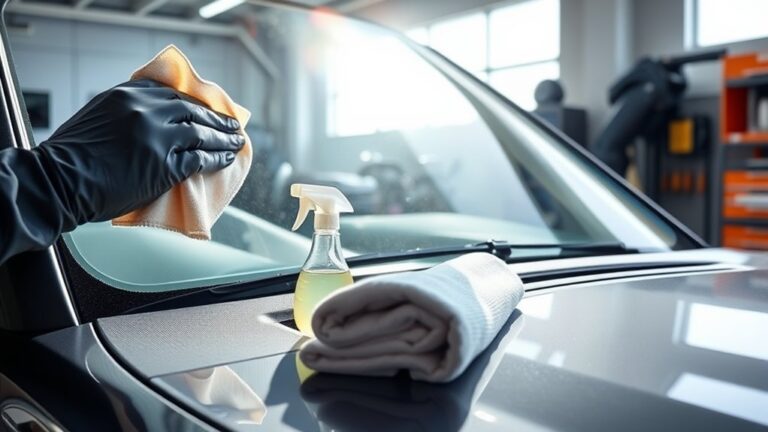
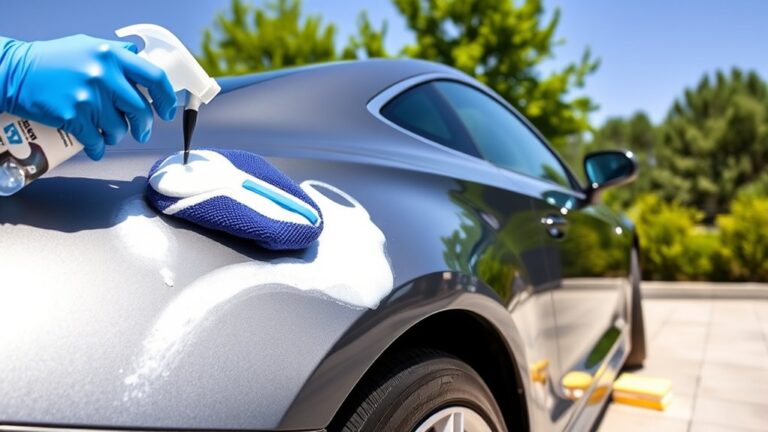
Use gentle car wash techniques, such as a microfiber wash mitt, to clean the surface without harming the paint. Work from the top down, paying special attention to contaminated areas.
Use a microfiber wash mitt and work from the top down to protect your car’s paint during cleaning.
Avoid applying too much pressure, as aggressive scrubbing can strip paint protection. Use a pH-balanced automotive soap designed for car finishes; never rely on dish soap, which can damage your paint.
Rinse frequently to keep dirt from settling on the surface. After washing, dry your vehicle with a clean microfiber towel to prevent water spots.
Applying a wax or paint sealant periodically helps maintain paint protection and keeps your car looking glossy. Following proper car wash techniques not only improves the appearance but also preserves your vehicle’s paint for years to come.
Common Myths About Dish Soap and Car Cleaning Debunked
A lot of folks think that dish soap works just as well as those special car cleaners, but that’s actually a myth. Sure, it might seem like a quick fix, but using dish soap too often isn’t a great idea. People often assume it won’t harm their paint, but the truth is, regular use can actually strip away the protective coatings on your car’s surface.
Dish Soap’s Effectiveness
Despite its reputation as a powerful cleaner, dish soap isn’t the miracle solution for washing your car that many believe it to be. Its effectiveness in removing grease and grime is undeniable in the kitchen, but in terms of cars, it can fall short.
Dish soap is designed to cut through food oils, not the stubborn dirt and road grime on your vehicle’s surface. While it may seem like a quick fix, it’s not a suitable long-term car wash alternative.
Regular car washes with proper soap are formulated to clean effectively without harming your paint or protective coatings. Relying on dish soap can lead to incomplete cleaning and may cause you to overlook better car wash options that are safer and more effective for your vehicle’s finish.
Potential Car Damage
A common myth is that dish soap will instantly damage your car’s paint, but the reality is more nuanced. Using dish soap occasionally won’t cause immediate harm, but repeated use can lead to paint deterioration over time.
Dish soap is designed to cut through grease, and its strong detergents can strip away the protective clear coat, exposing the underlying paint. This increases the risk of surface etching, where tiny scratches or marks develop on the paint’s surface.
While a single wash might not be noticeable, frequent use can weaken the paint’s integrity, making it more vulnerable to environmental damage. To protect your car’s finish, it’s best to use cleaners specifically formulated for automotive paint rather than relying on dish soap regularly.
Common Misconceptions
One common misconception is that dish soap is the best option for cleaning your car because it’s inexpensive and readily available. Many believe these dish soap myths, thinking they’re safe and effective for regular car washes.
However, this isn’t true. While dish soap can remove dirt, it’s not designed for automotive paint. Frequent use can strip protective wax and damage the clear coat.
People often dismiss proper cleaning alternatives, assuming they’re unnecessary or costly. The truth is that car-specific shampoos are formulated to clean thoroughly without harming your vehicle’s surface.
Using dish soap regularly can lead to dullness and long-term damage. So, don’t fall for the myths—stick with cleaning products made for cars to keep your paint protected and shiny.
Tips for Maintaining Your Car’s Shine Without Harsh Chemicals
Maintaining your car’s shine doesn’t require harsh chemicals; instead, simple, natural methods can do the trick. Focus on eco-friendly options that keep your car looking great without harming the environment or damaging the finish.
Here are some tips:
Use a mixture of water and white vinegar for a gentle, effective clean that’s safe for your paint. Apply natural car waxes or polishes made from plant-based ingredients to boost shine.
Regularly wash your car with a microfiber cloth and eco-friendly soap to prevent dirt buildup. Park in shaded areas whenever possible to minimize paint damage and preserve your car’s gloss.
How to Fix Damage Caused by Dish Soap and Restore Your Car’s Finish
Dish soap can strip away your car’s protective wax and damage the clear coat, leaving the finish dull and vulnerable. To fix this, start with a thorough wash using a gentle, automotive-specific cleaner to remove any remaining soap residue.
Then, evaluate the extent of the damage—if the finish looks dull or scratched, consider a paint restoration process. Using a rubbing compound or polishing compound can help remove surface imperfections and restore shine.
After polishing, apply a high-quality wax or a synthetic sealant to rebuild finish protection. This step is essential to shield your car from future damage and restore its glossy appearance.
For deeper scratches or extensive damage, professional detailing might be necessary. Regularly maintaining your car with proper washes and protective products will help preserve the paint and prevent further harm.
Frequently Asked Questions
Can Dish Soap Cause Scratches on My Car’s Surface?
Yes, dish soap can cause scratches on your car’s surface. It’s too harsh and strips away the car paint’s natural oils, which reduces surface protection.
When you wash with dish soap, it can create micro-scratches over time, especially if dirt or debris gets trapped.
For the best care, stick to car-specific shampoos that preserve your paint’s integrity and help maintain proper surface protection.
Is Dish Soap Effective at Removing Stubborn Stains From Cars?
Dish soap isn’t very effective for stubborn stain removal on your car. It’s designed to cut through grease, but tough stains like tar or bird droppings might need specialized automotive cleaners.
Relying on dish soap can strip away surface protection, making your paint more vulnerable. For the best results, use a product made specifically for cars.
These products help preserve your vehicle’s finish while tackling stubborn stains effectively.
How Often Is It Safe to Use Dish Soap on My Vehicle?
You should limit dish soap use to occasional car washes, about once every few weeks, to prevent paint damage.
Frequent dish soap cleaning isn’t recommended because it strips protective wax and can harm your vehicle’s finish.
For regular car wash frequency, consider using dedicated car shampoos that are gentler on your paint.
This helps maintain your vehicle’s shine and protects its surface over time.
Does Dish Soap Affect the Car’s Clear Coat or Paint Job?
Using dish soap on your car is like using a rough brush on delicate fabric; it can harm the clear coat and paint job. Dish soaps often contain harsh chemicals that strip away protective layers, which can reduce the longevity of your clear coat and potentially damage your vehicle’s finish.
For proper paint maintenance, stick to automotive-specific cleaners. These are designed to preserve your car’s shine and protect its surface over time, keeping it looking its best.
Can Dish Soap Damage Other Car Parts Like Rubber or Plastic?
Yes, dish soap can damage other car parts like rubber and plastic. The harsh chemicals can cause rubber to deteriorate, leading to cracks or brittleness over time. It may also cause plastic to fade, making your car’s trim and interior parts look dull or discolored.
Regularly using dish soap can weaken these materials, so it’s best to stick with products specifically designed for automotive use. That way, you can help preserve your car’s appearance and overall integrity.
Conclusion
Using dish soap on your car might seem like an easy fix, but it’s actually a bad idea in disguise. It can strip away your wax, damage your paint, and leave your car looking dull over time.
Instead, stick to proper car washes and gentle products designed for automotive finishes. They’re made to clean without harming your paint or protective layers.
Treat your car with care, and it’ll reward you with a shiny, protected surface that lasts longer and saves you money in the long run. Using dish soap for your car isn’t worth the risk.