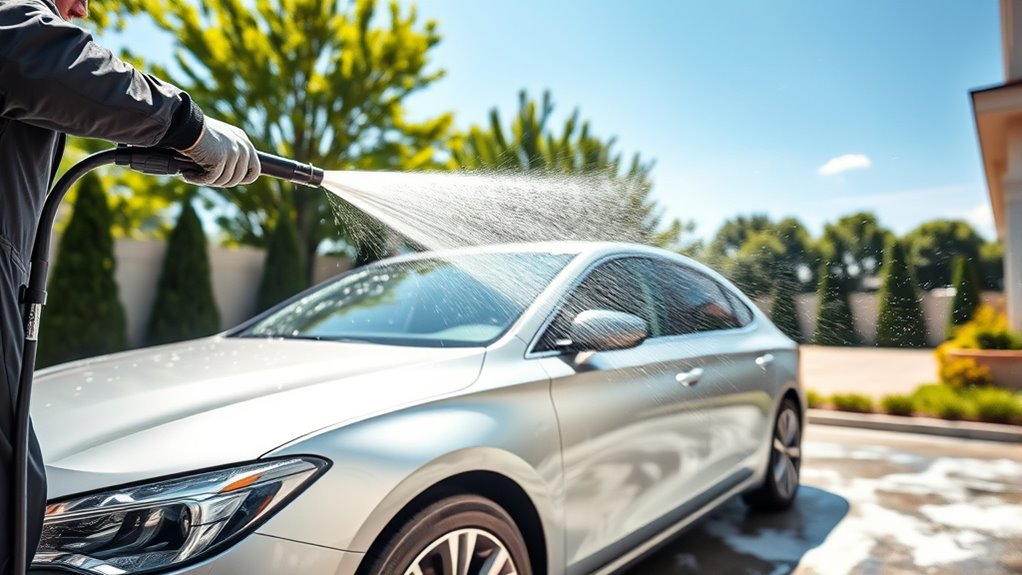
Safely Pressure Wash Your Car: A Step-by-Step Guide
Many car owners want that perfect, spotless shine but worry about damaging their vehicle in the process. You’re not alone—pressure washing can be tricky if you’re unsure how to do it safely.
The good news is, with the right techniques, you can get your car sparkling without risking harm.
To safely pressure wash your car, start by removing loose debris and protecting sensitive areas like windows and trims with covers or tape.
Use a pressure washer with adjustable pressure settings and a wide nozzle, holding it about 12 inches from the surface.
Work in sections, starting from the top, rinsing thoroughly and using gentle techniques to avoid damage.
For detailed guidance on all the steps, keep going—this guarantees a spotless, damage-free clean.
Key Takeaways
- Use a pressure washer with adjustable pressure settings and wide nozzles to prevent paint damage.
- Keep a safe distance of about 12 inches from the car surface while washing.
- Protect sensitive areas like windows and trims with covers or painter’s tape.
- Start cleaning from the top and work your way down for even results.
- Wear protective gear and check your equipment regularly to stay safe.
Why Pressure Washing Is a Safe Way to Clean Your Car
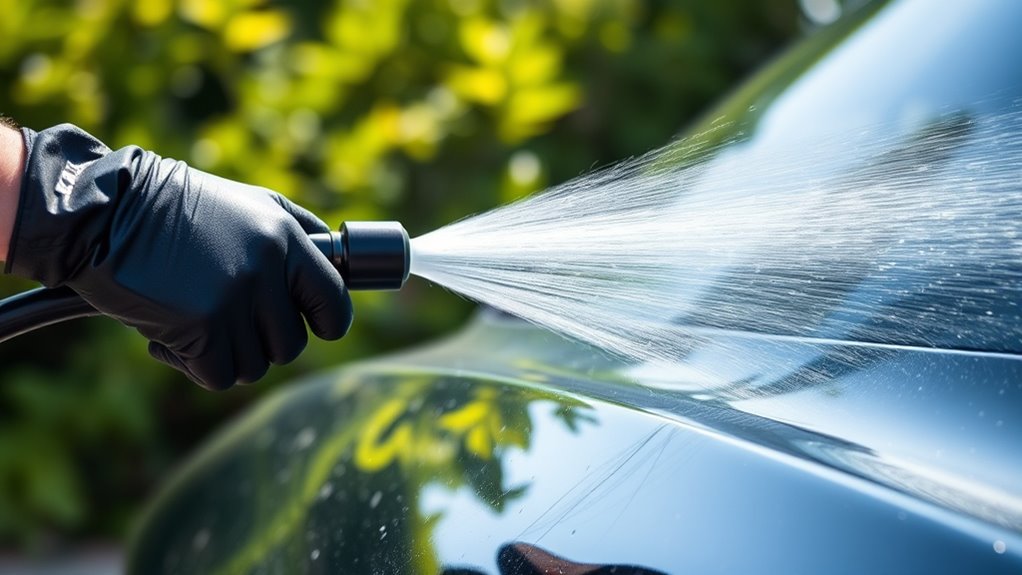
Pressure washing is considered a safe way to clean your car because it effectively removes dirt and grime without causing damage when used correctly.
The benefits include cleaning hard-to-reach areas efficiently and saving you time compared to traditional washing methods.
Many car cleaning myths suggest that pressure washing can harm your vehicle’s paint or trim. But these are false if you use the right technique and equipment.
When done properly, pressure washing can safely restore your car’s appearance without stripping paint or damaging delicate surfaces.
It’s crucial to keep the nozzle at an appropriate distance and avoid focusing on one spot for too long.
Understanding these facts helps you avoid misconceptions and ensures a safe, effective cleaning process.
What Equipment You Need for Pressure Washing Your Car
If you’re planning to pressure wash your car, the first thing you’ll need is a good pressure washer. Make sure it has the basics like a pump, a motor, and an adjustable nozzle. Having these parts will help you control the water flow and pressure for a safe and effective clean.
You might also want to grab some extra accessories to make the job even easier. Things like brushes, soap dispensers, or extension wands can really come in handy. They help you reach tricky spots and get a thorough cleaning without much hassle.
Having the right equipment is key to getting your car spotless without accidentally causing any damage. So, take a little time to gather what you need before you start, and you’ll be all set for a great pressure wash!
Essential Pressure Washer Components
Having the right equipment is key for effective and safe car washing with a pressure washer. The main parts you need include the pressure washer itself, a compatible spray gun, and the right nozzles.
Different pressure washer types vary in power. It’s best to choose one with adjustable pressure settings to avoid damaging your car. For cleaning cars, a lower pressure setting is safer and still effective.
Here’s a quick overview of the components:
| Component | Description |
|---|---|
| Pressure washer | Provides water flow; choose between electric or gas models. |
| Spray gun | Controls the direction and pressure of the water spray. |
| Nozzles | Determine the spray pattern; wider nozzles are safer for cars. |
Selecting the right pressure washer components, especially with suitable pressure settings, is essential for a safe and effective wash.
Additional Cleaning Accessories
When preparing to pressure wash your car, adding the right cleaning accessories can make a big difference in getting a thorough and safe clean.
Cleaning mitts are essential for gentle, detailed washing, helping you remove dirt without scratching the paint. They’re soft, reusable, and great for applying soap or water evenly.
Detailing brushes are perfect for reaching tight spots like around badges, vents, and wheel wells, making sure no dirt is missed.
Using these accessories along with your pressure washer lets you do a more meticulous clean, especially in tricky areas.
Together, cleaning mitts and detailing brushes help you achieve a professional-looking finish while protecting your vehicle’s surface during the whole washing process.
Getting Your Car and Space Ready for Pressure Washing
Before you start pressure washing your car, it’s important to prepare both the vehicle and the surrounding space. Begin with car preparation by removing loose debris like leaves, dirt, and trash from the surface. Check that all windows, mirrors, and vents are closed to prevent water from entering.
Next, organize your workspace to guarantee safety and efficiency. Clear the area of obstacles and lay down a tarp or plastic sheet if needed to protect nearby surfaces. Move any outdoor furniture, plants, or delicate items away from the washing zone.
Clear obstacles and protect surrounding surfaces for a safe, efficient pressure washing session.
Make sure your pressure washer is easily accessible and in good working condition. Having everything in order helps prevent accidents and makes the process smoother. By taking these steps, you’ll set a solid foundation for a safe and effective pressure washing session.
This way, your car gets thoroughly cleaned without risking damage or clutter in your workspace.
How to Set Up Your Pressure Washer Safely
Before you get started, take a good look at your pressure washer to make sure there’s no damage or leaks. It’s a small step that can save you a lot of trouble later on.
Next, pick the right nozzle — this is really important because it controls the pressure and spray pattern. Using the correct nozzle helps you clean effectively without risking any damage to your car.
Getting these setup steps right isn’t just about safety; it also keeps your car in good shape while you’re washing it.
Inspect Equipment Thoroughly
Making sure your pressure washer is in good shape is key for a safe and effective cleaning session. Before you start, take a close look at your equipment, especially the maintenance parts.
Check hoses, nozzles, and connections for leaks, cracks, or any damage. Make sure the pressure washer matches the manufacturer’s guidelines for cleaning cars.
Ensure all fittings are secure and that the spray gun works smoothly. Doing this maintenance beforehand can prevent malfunctions that might cause injury or damage.
If you spot any problems, fix them before you start washing. A quick inspection helps reduce risks and makes sure your pressure washer works at its best.
Taking these simple steps keeps the process safe and efficient, giving you peace of mind while you clean your car.
Choose Correct Nozzle
Choosing the right nozzle is key to setting up your pressure washer safely and effectively. Nozzle types vary by their spray pattern, which influences cleaning power and safety.
For car washing, a nozzle with a wider angle, like a 25 or 40-degree nozzle, is ideal because it provides a gentle, broad spray that won’t damage the paint. Narrower nozzles, such as 0 or 15 degrees, produce a concentrated, high-pressure stream that can strip paint or cause dents if used improperly.
Always start with a wider nozzle angle to prevent damage and switch to a narrower one only if needed for stubborn dirt. Proper nozzle selection guarantees safe, effective cleaning without risking harm to your vehicle’s finish.
How to Rinse Your Car to Remove Loose Dirt
To effectively rinse your car and remove loose dirt, start by using a gentle stream of water from a hose or pressure washer set to a low-pressure setting. This is crucial for proper rinsing techniques that prevent damage to your vehicle’s paint.
Begin at the top of the car and work downward, allowing the water to wash away surface dirt without forcing it into crevices. Use slow, steady motions to guarantee even coverage.
Focus on areas with visible dirt buildup, but avoid concentrating water in one spot for too long. This initial rinse loosens and lifts dirt, making subsequent cleaning steps easier.
Keep the pressure moderate to avoid stripping paint or causing scratches. Remember, the goal is dirt removal without harming your car’s finish, so take your time and be thorough.
Proper rinsing sets the foundation for a cleaner, safer car wash process.
How to Safely Apply Cleaning Solutions
Applying cleaning solutions safely is essential to protect your car’s paint and finish. Start by choosing safe products specifically designed for automotive cleaning. Avoid harsh chemicals that can damage the paint or strip protective coatings.
Use safe, automotive-specific cleaning products to protect your car’s paint and finish during cleaning.
When applying the solution, use proper techniques: spray evenly across the surface in a light, controlled manner. Keep the nozzle about 12 inches from the car to prevent applying too much solution in one spot.
Always work in sections, starting from the top and moving downward. This helps ensure thorough coverage. Use a gentle spray setting to avoid forcing the cleaner into seams or cracks.
Let the cleaner sit for a few minutes, following the manufacturer’s instructions. Just don’t let it dry out, as that can make cleaning harder. Proper techniques help clean your car effectively without causing damage, leaving it ready for rinsing and more cleaning.
Proper Techniques for Pressure Washing Your Car’s Exterior
Hold the pressure washer about 12 inches from your car’s surface and keep the nozzle moving steadily. This helps avoid putting too much pressure on one spot and protects your paint.
Set your pressure to medium or low. Too high can strip paint, while too low might not clean well enough. Adjust as needed for the best results.
Start from the top of your car and work downward. Cover all areas evenly without missing spots.
Use a wide-angle nozzle to spread the pressure across the surface. This reduces the risk of damage and makes cleaning more effective.
Keep the nozzle moving in a steady, sweeping motion. This prevents streaks and uneven cleaning, giving your car a thorough wash.
Protecting Windows, Trims, and Lights During Pressure Washing
While pressure washing your car, it’s important to be careful around windows, trims, and lights because these areas can be more prone to damage. Start by covering your windows with sturdy window coverings or plastic sheets to keep water out and prevent scratches.
Use trim protection techniques, like gently covering trims with a cloth or painter’s tape, to avoid chipping or paint coming loose. For lights, apply light shielding with plastic wrap or special covers to keep water from getting in and causing fogging or electrical problems.
Making sure these sensitive areas are water-resistant helps prevent damage during the wash. Be careful with the pressure nozzle, keeping it at a safe distance to avoid dislodging trims or cracking glass.
Taking these simple precautions will keep your car’s delicate parts safe, help them stay looking good, and make sure your pressure washing session is effective and damage-free.
How to Rinse and Dry Your Car for a Perfect Finish
To get that perfect, flawless finish, start by rinsing your car thoroughly with clean water. Make sure to work from the top down so you wash away all soap and dirt without leaving streaks.
Use a gentle, steady stream of water to avoid damaging the paint or forcing water into tiny crevices. Once the car is rinsed, it’s time to dry it properly to prevent water spots.
Pick a microfiber or waffle weave towel to absorb water quickly and gently—this helps avoid scratches. You can also use a leaf blower or air compressor to blow off water from hard-to-reach areas for a streak-free shine.
Finish up with a quick wipe using a clean, dry microfiber cloth to buff the surface and give it that glossy, professional look. Proper rinsing and drying techniques make sure your car looks spotless and professionally cleaned.
Troubleshooting Common Pressure Washing Problems and Safety Tips
Having trouble with your pressure washer? Don’t worry, it’s pretty common, and the key is to figure out what’s going wrong quickly so you can fix it without causing any damage or wasting time.
One thing to keep in mind is that adjusting the pressure and choosing the right nozzle can make a big difference, especially when you’re cleaning delicate surfaces like your car. And of course, safety always comes first—make sure you’re wearing protective gear like gloves and goggles before you start spraying.
Knowing these common issues and safety tips will help you get your cleaning done effectively and safely, whether you’re tackling your driveway or giving your car a good wash.
Identifying Pressure Washer Issues
Pressure washer issues can disrupt your cleaning routine and even pose safety risks if not addressed promptly. Common problems include leaks, poor pressure, and strange noises. To troubleshoot:
- Check for leaks around hoses or connections. Leaks can reduce efficiency and point to worn seals or damaged fittings.
- Inspect the pump for signs of wear or lack of proper maintenance. A faulty pump can cause inconsistent pressure or failure.
- Listen for unusual noises during operation, which might mean internal component issues or debris blocking the spray nozzle.
Finding these problems early helps prevent further damage and keeps your pressure washer running safely. Fix leaks quickly and do regular pump maintenance to keep it working smoothly and safely.
Preventing Surface Damage
Even when used carefully, pressure washing can accidentally damage your car’s paint or trim if you’re not careful. To keep your surface protected, always keep the pressure washer about 2 feet away from the surface.
Avoid aiming directly at delicate areas like trims or decals. Use a wide-angle nozzle to spread out the pressure evenly, which helps prevent stripping paint or causing scratches.
Keep the spray moving in smooth, overlapping strokes. This prevents putting too much force on any one spot. Also, use a cleaning solution made for automotive surfaces to help preserve your paint.
Check your equipment regularly for leaks or damage. Never use too high pressure settings. These steps help keep your car looking great and prevent surface damage.
Ensuring Personal Safety
Using the right techniques to prevent surface damage also helps protect you. Always wear personal protective safety gear like goggles, gloves, and closed-toe shoes to shield yourself from high-pressure sprays and debris.
To guarantee your safety:
- Check your pressure washer’s settings and adjust the pressure to avoid injury or damage.
- Keep a safe distance from the surface, usually 12 to 18 inches, to prevent accidental kicks or ricochets.
- Make sure the area is clear of bystanders and pets so no one gets hurt or distracted during the process.
Following these safety tips minimizes risks and keeps you safe while pressure washing your car. Proper safety gear and cautious techniques are key to a successful, injury-free cleaning experience.
Frequently Asked Questions
Can I Pressure Wash My Car in Direct Sunlight?
You can pressure wash your car in direct sunlight, but it’s not the best idea. Sunlight can cause soap and water to dry too quickly, which might leave streaks or spots.
To avoid this, make sure to rinse thoroughly and keep the surface wet as you wash. If you can, try to wash your car during cooler parts of the day or in shaded areas.
This way, you’ll get a thorough clean without risking damage to your paint.
How Often Should I Pressure Wash My Vehicle?
You should pressure wash your vehicle every 4 to 6 months to keep it in top shape. Regular car maintenance like pressure washing helps remove dirt, grime, and corrosive substances.
If you drive often on muddy or salty roads, consider washing your car more frequently. This routine helps prevent rust and paint damage, keeping your car looking newer longer.
Is It Safe to Pressure Wash Around the Engine Bay?
It’s generally safe to pressure wash around the engine bay if you take some precautions. Keep the pressure low and avoid spraying directly on electrical parts, sensors, and exposed wiring.
Cover vulnerable areas with plastic or a waterproof cover, and stay away from high-pressure streams that could dislodge parts or push water into sensitive areas. This way, you can keep your engine bay clean while protecting your electrical components.
What Temperature Should the Water Be During Pressure Washing?
You should use lukewarm water during pressure washing, ideally between 90 to 120 degrees Fahrenheit. This temperature helps loosen dirt without damaging your car’s paint or seals.
Keep your pressure settings moderate—around 1,200 to 1,500 PSI—to avoid causing harm. Too hot water can strip wax or damage sensitive parts, so stick to lukewarm.
Adjust your pressure accordingly to ensure a safe, effective clean.
Can Pressure Washing Damage the Car’s Paint or Clear Coat?
You might be surprised, but improper pressure washing can damage your car’s paint or clear coat.
Studies show that high-pressure settings can remove paint if not used carefully. To protect your paint, keep pressure settings moderate and maintain a safe distance.
Using the right pressure and avoiding direct, close spray helps preserve paint protection and prevents scratches or peeling. This way, your car stays shiny and well-maintained.
Conclusion
By following these steps, you can safely and effectively pressure wash your car, keeping it looking its best without risking damage. Imagine a neighbor using this method and discovering their car’s paint stayed shiny and scratch-free after a thorough clean.
With proper technique and safety precautions, you’ll enjoy a spotless, gleaming vehicle—just like that neighbor—without the hassle or harm. Now, gear up and give your car the professional clean it deserves using pressure washing.