10 Simple Steps to Wash Fabric Car Seats Like a Pro
Many people struggle with keeping their fabric car seats clean and fresh. Between everyday spills, dirt, and stains, it can feel overwhelming to maintain that brand-new look. But don’t worry—you’re not alone, and with a few simple steps, you can wash your fabric car seats like a pro.
To wash fabric car seats like a pro, start by removing debris and vacuuming thoroughly, focusing on seams. Identify stains and treat them with suitable cleaners—grease, water-based, or protein stains—depending on the type. Choose eco-friendly products and test them first.
Apply the cleaner evenly, work in small sections, and blot excess moisture to prevent over-wetting.
Maintain your seats with regular vacuuming, odor neutralizers, and proper drying, ensuring your seats stay fresh and clean longer. Keep going to master each step!
Key Takeaways
- Remove debris and vacuum thoroughly, paying attention to seams and crevices.
- Identify stains accurately and treat them with the right cleaning solutions.
- Use eco-friendly, tested cleaning products to protect your fabric’s integrity.
- Clean in small sections, avoiding oversaturation, and gently blot excess moisture.
- Keep your seats in good shape with regular vacuuming, protective covers, and odor neutralizers for the best results.
How to Prepare Your Car for Fabric Seat Cleaning
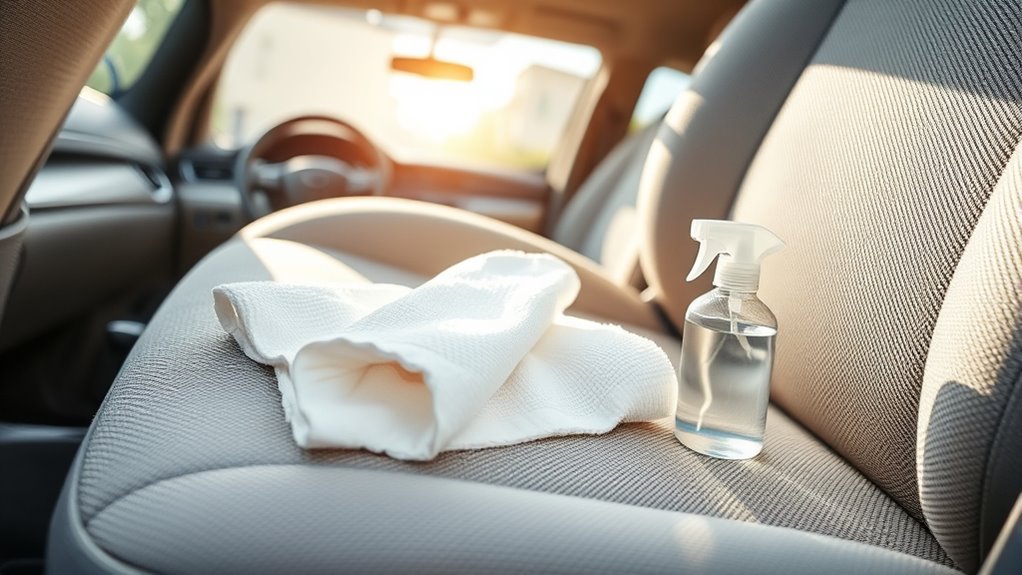
Before you start cleaning your fabric seats, it’s important to prepare your car properly. First, take out all personal items, trash, and loose debris from the seats and floor. This helps prevent dirt from spreading during cleaning.
Use a vacuum with an upholstery attachment to thoroughly clean the fabric, focusing on seams and crevices. This step helps protect your seats and reduces dirt buildup that can wear down fibers over time.
Next, think about how often you should clean your seats. Regular upkeep prevents stains from setting and keeps your seats looking fresh. If your seats are very dirty, plan for more frequent cleanings to keep them in good shape.
It’s also a good idea to protect your seats with covers or seat protectors, especially if you often transport kids or pets. This makes future cleanings easier and keeps your seats looking better longer.
Proper preparation makes sure your fabric seats stay cleaner longer and makes the cleaning process more effective.
Identifying Common Fabric Seat Stains and How to Treat Them
Spills and dirt are common culprits behind fabric seat stains, and recognizing these stain types quickly can make treatment more effective.
For example, greasy stains from food or drinks need a different treatment than water-based stains like mud or coffee. Oil-based stains often look shiny and need a degreasing solution or a specialized stain remover.
Greasy stains from food or drinks require a different approach than water-based spills like mud or coffee.
Water-based stains, such as soda or juice, usually look wet and can often be lifted with a mild soap solution and blotting. Protein stains from sweat or bodily fluids might smell and need enzymatic cleaners to break down the organic material.
Ink or dye stains are more stubborn and may require specific stain removers designed for dyes. Identifying stain types accurately helps you choose the right treatment methods, preventing further spreading or setting the stain.
This way, your fabric seats stay looking fresh and clean.
Choosing the Best Cleaning Products for Your Fabric Car Seats
Choosing the right cleaning products is key to freshening up your fabric car seats without causing damage. Start with eco-friendly options that are gentle on both your upholstery and the environment.
Look for cleaning solutions labeled safe for fabric seats and free from harsh chemicals. Some materials like microfiber or velour need specific products to avoid damage or discoloration.
Always read labels carefully to make sure they’re compatible with your seats. You can also try natural alternatives like diluted white vinegar or baking soda, which are effective and eco-conscious.
Avoid heavy-duty cleaners or bleach, as they can weaken fabric fibers and cause fading. Testing a small, hidden area first helps prevent unwanted reactions.
How to Vacuum and Remove Loose Dirt From Your Fabric Seats
Start by thoroughly vacuuming your fabric seats to remove loose dirt, dust, and debris that can settle deep into the fibers. Use slow, overlapping passes to make sure you pick up every speck of dirt.
Pay close attention to seams, crevices, and under the seat edges, where debris often hides. If your car has removable seat covers, consider taking them off to vacuum more effectively and check for extra dirt underneath.
For non-removable covers, use the crevice tool attachment to reach tight spots. Regular vacuuming helps prevent dirt from embedding further into the fabric, making deep cleaning easier later.
Keep in mind that seat cover options like slip-on protectors can also help reduce dirt buildup in the future. Taking the time to vacuum properly now sets a solid foundation for a thorough, professional-looking clean later on.
Step-by-Step: Applying the Right Cleaning Solution for Deep Cleaning
To really get your seats spotless, it’s important to pick the right cleaning solution, whether you’re dealing with fabric or leather. Taking a moment to understand how to use it properly can make all the difference—no one wants to end up with damage or sticky residue.
Using the correct technique not only makes your deep cleaning more effective, but it also helps keep your seats looking great and in good shape for the long run.
Choosing the Correct Cleaner
Selecting the right cleaner is key for deep cleaning your car seat without causing damage. First, steer clear of common myths that suggest harsh chemicals are always the best choice.
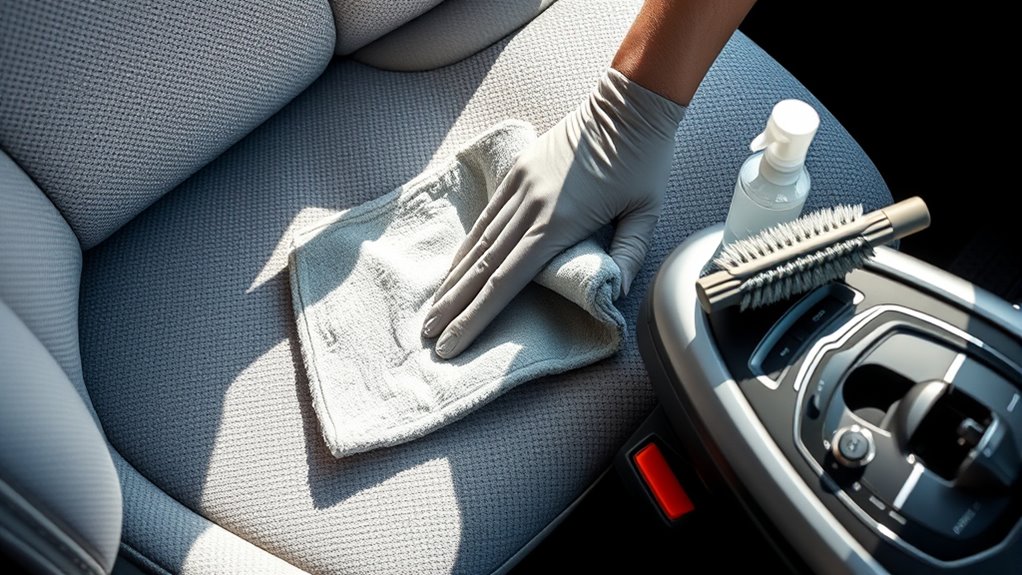
Instead, look for eco-friendly options that are gentle but still effective. When choosing a cleaner, picture this:
A spray bottle filled with a biodegradable solution.
A foam cleaner that lifts dirt without soaking the fabric.
A microfiber cloth that won’t harm delicate fibers.
And a brush designed for gentle scrubbing, targeting stubborn stains.
Proper Application Techniques
Once you’ve chosen the right cleaning solution, applying it properly is key to getting the best results. Start with the correct application methods to ensure even coverage across the fabric.
Use a spray bottle or a soft cloth to gently apply the solution, being careful not to oversaturate the fabric. Too much liquid can cause damage or make the cleaning less effective.
Work in small sections so the cleaner doesn’t dry out before you get a chance to scrub or blot. For stubborn stains, let the solution sit for a little while to loosen dirt.
Then, gently agitate the stain with a soft-bristled brush. Always follow the manufacturer’s instructions for how long to leave the cleaner on and how to apply it.
Using proper techniques helps maximize cleaning power while protecting your fabric seats. Take your time and don’t rush—precision is the secret to a deep, professional-level clean.
Scrubbing and Agitating Fabric Seats Effectively
When cleaning fabric seats, scrubbing and agitating the material effectively helps loosen dirt and stains, making the cleaning process more thorough. Using the right fabric seat tools, like soft-bristled brushes or microfiber cloths, boosts your effort. Remember, cleaning frequency matters—regular agitation prevents deep dirt buildup.
To scrub effectively:
- Start with gentle circular motions to lift surface grime.
- Focus on heavily stained areas with more pressure.
- Use a firm yet soft brush to reach into fabric fibers.
- Keep your tools clean to avoid spreading dirt.
This approach guarantees you break up dirt particles embedded in the fabric. Agitating consistently prevents dirt from settling deeper and makes subsequent cleaning easier. Be mindful not to overdo it, as excessive scrubbing can damage delicate fibers.
Incorporate a routine of regular scrubbing sessions, especially after spills, to keep fabric seats fresh and clean. Proper technique and the right tools really make a noticeable difference in achieving a professional-level clean.
How to Remove Excess Moisture and Dry Your Fabric Seats Properly
To get rid of any excess moisture from your fabric seats, start by gently blotting them with a clean towel. Just press down softly to soak up as much liquid as you can—no need to rub, or you might spread the stain or damage the fabric.
Next, make sure the area is well-ventilated. Open up your car doors or windows to let fresh air in, and if you can, turn on some fans to help speed up the drying process. It’s really important to keep an eye on the seats and give them enough time to dry completely. This way, you’ll prevent any mold or mildew from developing, keeping your fabric seats fresh and clean.
Blotting Excess Moisture
Start by gently blotting the fabric seats with clean, absorbent towels or microfiber cloths to lift out as much moisture as possible. Effective blotting helps you get rid of excess water and prevents it from soaking deeper into the fabric.
To do this efficiently, follow these steps: Place the cloth on the wet area, pressing lightly without rubbing. Apply steady pressure to absorb moisture without damaging the fabric.
Lift and replace the cloth as it becomes damp, repeating the process. Use a dry section of the towel or cloth to make sure you’ve removed as much moisture as possible.
These actions help prevent over-wetting and set the stage for proper drying. Focus on gentle, consistent blotting to remove excess moisture without spreading dirt or causing damage.
Air Circulation Techniques
After blotting away excess moisture, the next step is to promote proper drying. You want to maximize airflow to speed up evaporation and prevent mold or mildew from forming.
Open all car windows and doors to create natural ventilation. This encourages fresh air to circulate around your fabric seats. You can also use fans or a portable air mover to boost airflow and ensure even drying.
Avoid leaving windows partially open, as this can trap moisture inside. Good air circulation is key to maintaining fabric and preventing odors or mildew growth.
If your vehicle has air conditioning, turn it on with the vents directed at the seats. This will help dry out moisture more quickly and efficiently.
Proper air circulation not only removes excess moisture but also helps preserve the fabric’s appearance and longevity.
Proper Drying Times
Ensuring your fabric seats dry thoroughly is key to preventing mold, mildew, and lingering odors. Drying times depend on how well you dry and care for the fabric.
To speed things up, try these steps: use a clean microfiber towel to gently blot away excess moisture. Turn on your vehicle’s ventilation and open windows to help air circulate.
You can also use a fan or drying blower directed at the seats for faster evaporation. Just avoid sitting on them until they’re completely dry, which might take several hours or even overnight.
Tips to Keep Your Fabric Car Seats Clean and Fresh Longer
Keeping your fabric car seats clean and fresh longer is all about consistent habits and being proactive. Start with preventive maintenance by using protective covers to shield your seats from dirt and spills.
Regular inspections are key to catching stains or debris early, making cleanup much easier. Make it a habit to vacuum your seats weekly to remove dust and loose dirt.
Applying fabric conditioners helps keep the material soft and resistant to wear. Stain repellents are also great—spray them after cleaning to create a barrier against future stains.
When you stick to these habits, your seats stay cleaner and smell fresher longer. Remember, quick responses to spills prevent stains from setting, and routine care reduces deep cleaning needs over time.
Incorporate these tips into your car care routine to make your fabric seats last longer and look better.
Troubleshooting Persistent Stains and Odors
Persistent stains and odors can be really frustrating, but don’t worry—you can handle them effectively. First things first, it’s a good idea to figure out which stains are the toughest. That way, you can pick the right treatment for each one. Once you’ve tackled the stains, it’s equally important to learn how to get rid of any lingering odors. This will help keep your car smelling fresh and clean.
Identifying Tough Stains
Have you ever noticed stains that just won’t come out no matter how much you scrub? Recognizing these tough stains begins with proper stain identification techniques. To figure out the type of stain, look at its color, texture, and where it might have come from.
Here are some common stain types to watch for:
- Dark, oily spots from grease or food spills
- Bright, colorful marks from drinks or markers
- Pale, sticky patches from soda or juice
- Brownish, stubborn spots from mud or dirt
Eliminating Lingering Odors
Even after removing visible stains, some odors can linger and become quite stubborn. To tackle these, start with odor neutralizers or fabric refreshers designed for upholstery.
Baking soda is a natural remedy; sprinkle it on the seats, let it sit, then vacuum thoroughly. A vinegar solution can neutralize stubborn smells—lightly spray it and allow it to dry.
Essential oils or citrus cleaners add a fresh scent, while enzymatic cleaners break down organic odors at their source. Steam cleaning is also effective, penetrating deep into the fabric to eliminate lingering smells.
For quick refreshes, use upholstery sprays or natural remedies like vinegar mixed with water. Regularly maintaining your car seats with these methods keeps odors at bay and your interior smelling fresh.
When to Get Professional Help for Your Fabric Car Seats
Sometimes, despite your best cleaning efforts, stains and odors just won’t budge on your fabric car seats. When this happens, it’s time to consider professional cleaning for proper seat maintenance.
You should seek expert help if:
- Stains have set deeply and won’t lift with typical cleaning methods.
- Persistent odors linger even after multiple attempts.
- You notice mold or mildew developing, which can be harmful.
- Your seats look faded or stained despite regular upkeep.
Professional cleaning can tackle tough stains, eliminate stubborn odors, and restore your seats’ appearance. It’s especially recommended if you’re unsure how to handle delicate fabrics or if DIY methods aren’t working.
Frequently Asked Questions
Can I Use Household Cleaning Products on Fabric Car Seats?
You can use household cleaning solutions on fabric car seats, but you should choose carefully to protect the fabric.
Avoid harsh chemicals like bleach or ammonia, as they can damage the material. Instead, go for mild soap, a mix of water and vinegar, or special fabric cleaners.
Always test a small, hidden spot first before cleaning the entire seat. Gently clean to prevent discoloration or damage, so your seats stay fresh and well-maintained.
How Often Should I Clean My Fabric Car Seats?
Think of your fabric seats as the heart of your car’s comfort. Keeping them clean keeps your ride lively.
For fabric seat maintenance, you should clean your seats every 3 to 6 months, or more often if you have kids or pets.
Regular cleaning prevents dirt from settling in deeply, making your car feel fresh. It also helps prolong the life of your fabric seats.
Don’t wait for messes to pile up—stay ahead with consistent care.
Are There Eco-Friendly Options for Fabric Seat Cleaning?
Yes, there are eco-friendly options for cleaning your fabric car seats. You can use biodegradable cleaners that break down naturally and are gentle on the environment. Natural alternatives like vinegar, baking soda, and castile soap work effectively without harmful chemicals.
These options keep your car fresh and clean while reducing your ecological footprint. Always test a small area first to verify compatibility and avoid any damage to your fabric seats.
How Do I Prevent Future Stains on Fabric Car Seats?
Think of your car seats as a canvas—protect them with fabric protection and smart stain prevention. Regularly spray a fabric protector to create a barrier against spills and dirt.
Encourage passengers to avoid eating or drinking inside, and clean up messes right away to stop stains from setting. Vacuum often to pick up debris that could cause staining.
You might also consider using seat covers for extra protection. These simple steps will help keep your seats looking fresh and stain-free longer.
Is Steam Cleaning Safe for Fabric Car Seats?
Yes, steam cleaning is safe for fabric car seats when done properly. The benefits include deep cleaning and effectively removing dirt, grime, and odors, which helps keep your fabric seats in good shape.
Steam cleaning also kills bacteria and allergens without using harsh chemicals. Just make sure the steam isn’t too hot and avoid over-saturating the fabric.
When done carefully, it’s an efficient and eco-friendly way to keep your car seats fresh and clean.
Conclusion
With these simple steps, you’ll quickly and effectively scrub, stain, and sanitize your car’s fabric seats. This keeps your interior inviting and spotless.
By following easy fabric care tips, you’ll avoid stubborn problems and help your seats stay plush longer.
So, learn the skills, make the process simple, and enjoy a fresh, flawless finish every time.
Remember, regular cleaning helps create a clean, comfortable cabin you can confidently cruise in.