A Step-by-Step Guide to Washing Your Car at Home
Many car owners want that perfect, shiny finish but often feel overwhelmed by the process or unsure where to start. You’re not alone—knowing how to wash your car at home properly can make a huge difference in keeping it looking its best.
To wash your car at home, start by gathering your supplies like a bucket, soft sponge, microfiber towels, and a hose. Rinse the car thoroughly to remove loose dirt, then wash from top to bottom using the right soap and proper techniques to avoid scratches.
Scrub tires separately and dry with microfiber towels. Finish with a wax or sealant for shine and protection. If you keep going, you’ll uncover more tips to keep your car spotless and well-maintained.
Key Takeaways
- Gather all the supplies you’ll need, like a bucket, sponge, microfiber towels, and a hose with a spray nozzle, before you start.
- Rinse the car thoroughly to wash away loose dirt. Then, wash from top to bottom using proper soap and techniques.
- Use a dedicated wheel brush and cleaner to scrub the tires and wheels separately. This helps avoid transferring dirt to other parts of the car.
- Dry the car with microfiber towels to prevent streaks and swirl marks. Blot carefully from top to bottom for the best results.
- Apply wax or sealant evenly in small sections to protect the paint. Then, check for missed spots and dirt to make sure everything looks perfect.
Gather Your Car Washing Supplies
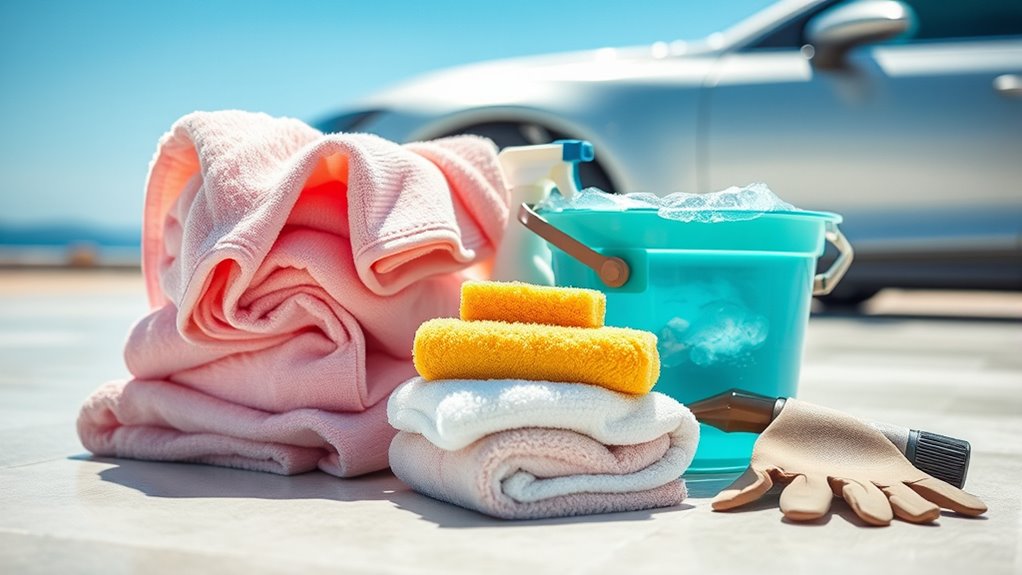
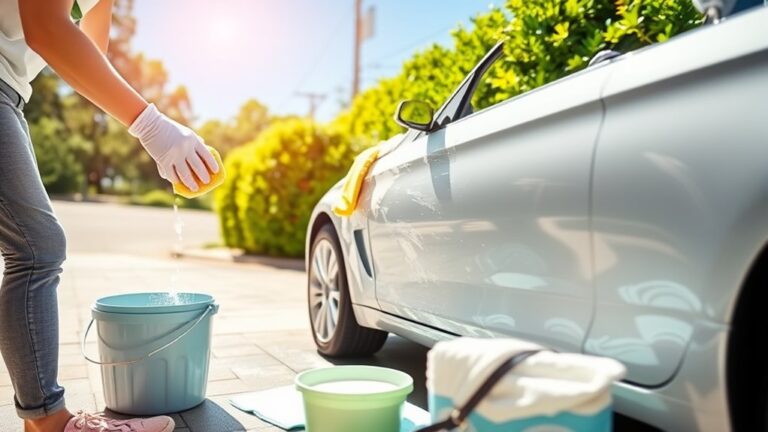
Before you start washing your car, gather all the necessary supplies to make the process smooth and efficient. Having the right car washing essentials on hand prevents interruptions and guarantees you don’t miss anything.
Gather your car washing supplies beforehand for a smooth, efficient, and interruption-free cleaning session.
You’ll need a bucket, a soft sponge or wash mitt, and microfiber towels for drying. A hose with a spray nozzle helps you rinse off loose dirt and debris. Consider including a wheel brush and a dedicated interior cleaner if you plan to do a thorough job.
Using DIY washing techniques works best when you’re organized, so lay out everything beforehand. Avoid rushing or skipping steps, as this can cause scratches or streaks. Keep your supplies clean and in good condition to get the best results.
With your supplies ready, you’ll be able to wash your car efficiently, preserving its paint and shine while enjoying the process. Proper preparation is key to a successful car wash at home.
Choose the Right Soap and Techniques for Your Car
Choosing the right soap is really important if you want to keep your car’s paint and finish looking great. You want a soap that’s gentle yet effective, so it cleans well without stripping away protective coatings. Trust me, using the wrong soap can do more harm than good, so it’s worth picking the right one.
And don’t forget about your washing techniques! Using proper methods helps you avoid scratches and streaks, making sure your car gets a nice, thorough clean. Be gentle, use the right tools, and take your time. It’s all about being careful so you don’t accidentally damage your vehicle.
Also, keep an eye out for common mistakes—things like washing in the sun, using dirty sponges, or applying too much pressure can really hurt your car’s finish. Staying mindful of these little details makes a big difference in how your car looks after every wash.
Selecting Suitable Car Soap
Selecting the right car soap is key to cleaning your vehicle effectively without causing damage. You want a soap that lifts dirt and grime without harming your paint.
There are various types of car soap available, like traditional synthetic and natural options. Eco-friendly choices are also popular if you’re environmentally conscious.
Think about your car’s finish when choosing soap. Some formulas are milder and safer for delicate paint. Here’s a quick comparison:
| Car Soap Types | Eco-Friendly Options |
|---|---|
| Synthetic detergents | Plant-based, biodegradable |
| Natural soaps | Free from harsh chemicals |
| Foam-based washes | Concentrated, eco-conscious |
Matching the soap to your needs ensures a safe, effective wash that leaves your car spotless.
Proper Washing Techniques
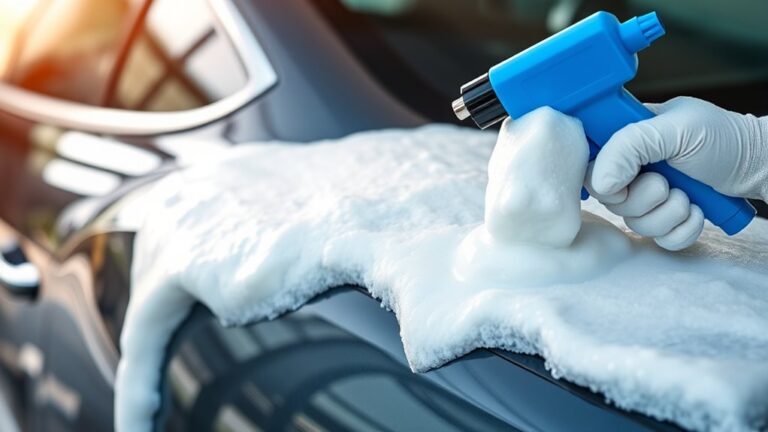
Start by thoroughly rinsing your car to remove loose dirt and debris, which helps prevent scratches during washing. Using a foam cannon can make this step easier by applying a thick layer of foam that lifts dirt off the surface.
When it’s time to wash, switch to hand washing with a soft microfiber mitt. Use the right soap designed specifically for cars, as household cleaners can damage your paint.
Work from the top down, cleaning one section at a time to avoid spreading dirt. Rinse frequently to keep the soap and dirt from drying on your car.
This method guarantees a gentle, effective clean while minimizing scratches. Proper technique and the right tools make all the difference in achieving a spotless, glossy finish.
Avoiding Common Mistakes
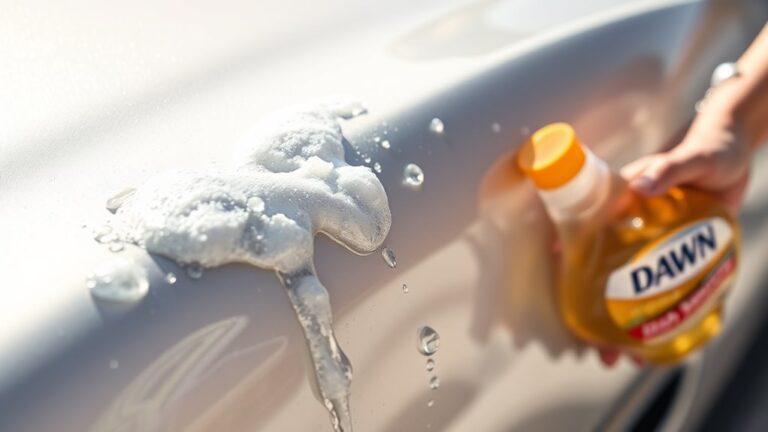
Using the right soap and techniques is essential to prevent damage and achieve a professional-looking shine. One common pitfall is using harsh or dish soaps, which can strip wax and harm your paint. Choose a soap specifically formulated for cars to guarantee gentle cleaning.
Also, avoid washing your car in direct sunlight, as it can cause streaks and spots, wasting your time on rework. Proper time management helps you stay efficient. Wash from top to bottom to prevent dirt from spreading back onto cleaned areas.
Don’t rush through the process. Skipping steps or using improper tools can lead to scratches or missed spots. Being mindful of these common mistakes keeps your car’s finish pristine and makes your washing routine more effective and less time-consuming.
Rinse Your Car Thoroughly to Remove Loose Dirt
First, give your car a good rinse with gentle water pressure. This helps remove any loose dirt and prevents scratching the paint when you start washing. Be sure to cover every surface—every nook and cranny—so everything gets loosened up properly. Think of this step as laying a solid foundation for a clean, scratch-free wash.
Use Gentle Water Pressure
Pour a gentle stream of water over your car to loosen and remove loose dirt and debris. Using the right water pressure is key—you want enough force to wash away dirt without damaging the paint.
Adjust the pressure settings on your hose or pressure washer to low or medium. High pressure can cause scratches or strip paint, so it’s best to avoid it. Here’s a quick visual:
| Water Pressure Level | Effect |
|---|---|
| Low | Gentle rinse, safe for all surfaces |
| Medium | Effective cleaning, safe for paint |
| High | Risk of damage, avoid for regular use |
Stick to low or medium pressure settings to protect your vehicle’s finish. This guarantees a thorough rinse without risking damage.
Cover Entire Surface
Once you’ve adjusted your water pressure to a safe level, it’s time to rinse the entire surface of your car thoroughly. Use a gentle stream to wash away loose dirt, dust, and debris, which helps prevent scratches during cleaning.
Make sure to cover all areas, including the roof, hood, trunk, and sides, to ensure everything gets protected evenly. This initial rinse loosens stubborn grime and prepares the paint for soap and detailing products.
A complete rinse also reduces the risk of dirt scratching the surface when you wash. Take your time moving systematically around the vehicle, paying attention to hard-to-reach spots.
Proper rinsing with clean water boosts the effectiveness of your car wash and makes sure your detailing products work better, leaving your car shiny and protected.
Wash Your Car From Top to Bottom to Prevent Recontamination
To effectively prevent recontamination, wash your car from the top down. This method makes sure dirt and grime don’t spread back onto areas you’ve already cleaned.
Starting at the roof and working downward minimizes the chance of transferring contaminants to the clean surfaces below. Using eco-friendly products helps protect the environment while keeping your vehicle spotless.
These gentle yet effective products reduce water use and avoid harsh chemicals. As you rinse, remove contaminants from the highest points first, then move to the lower sections.
This approach prevents dirty water from running onto areas you’ve already cleaned, making your wash more thorough and efficient. By following this top-to-bottom technique, your car stays cleaner longer and reduces recontamination.
Plus, it supports eco-friendly practices, making your car cleaning both effective and environmentally conscious.
Scrub Tires and Wheels Separately for a Deep Clean
Give your tires and wheels a dedicated scrub to remove stubborn dirt and brake dust that often cling to these surfaces. This step is essential for effective tire cleaning and wheel care. Use a stiff-bristled brush and automotive-specific cleaner to target the grime embedded in the treads and around lug nuts.
Cleaning tires separately makes sure you don’t transfer dirt onto your car’s body and helps you focus on their unique needs. Here’s a quick guide to your tire cleaning process:
| Step | Action |
|---|---|
| 1 | Spray with tire cleaner |
| 2 | Scrub with a stiff brush |
| 3 | Rinse thoroughly |
| 4 | Apply tire protectant (optional) |
This focused approach guarantees a deep clean, improves wheel care, and keeps your tires looking their best longer.
Rinse Off Soap and Debris Completely
Rinsing off soap and debris thoroughly makes sure your car’s surface is free of leftover residue that can cause streaks or spots. Use lukewarm water, as it helps dissolve soap better without hurting the paint.
As you rinse, move your hose or shower head in gentle, overlapping strokes to remove all suds and dirt. Pay close attention to crevices and hard-to-reach areas to make sure no residue is left behind.
Here are some tips:
- Keep the water temperature consistent to prevent paint damage.
- Use a wide spray pattern for gentle, even rinsing.
- Start from the top and work downward to catch falling debris.
- Use proper drying techniques afterward to avoid water spots.
Thorough rinsing is essential for prepping your car for drying and finishing touches. Proper water temperature and technique help you get a spotless, streak-free finish.
Dry Your Car With a Microfiber Towel to Prevent Streaks
Drying your car with a microfiber towel is key to avoiding streaks and water spots.
Microfiber is great because it absorbs a lot of water and is gentle on your paint, so you won’t scratch the surface.
Microfiber absorbs water quickly and gently, protecting your car’s paint from scratches.
Use proper drying techniques to get that streak-free look and keep your car’s paint looking shiny and new.
Start by gently blotting or lightly dragging the towel across the car, working from the top down to catch dripping water.
Avoid circular motions, as they can leave streaks or swirl marks on the paint.
Use a clean, dry microfiber towel for each section to maximize absorbency and prevent dirt from spreading.
Wring out excess water regularly to keep the towel working at its best.
This method dries your car faster and helps preserve the paint’s shine.
Mastering these techniques with microfiber towels will give you a professional-looking, streak-free finish every time you wash your car at home.
Apply Wax or Sealant for a Shine and Protection
Choosing the right wax or sealant is pretty important if you want that awesome glossy finish and good protection for your car. Take a moment to read the labels and pick a product that matches your car’s paint type—you want something that works well without causing any damage.
When you’re ready to apply, use smooth, even strokes and make sure to follow the instructions on the product. That way, you’ll get the best shine and protection without any hassle!
Choosing the Right Product
Selecting the right product to improve your car’s shine and protect its paint is essential. You want to choose from quality car cleaning essentials that suit your needs, whether for a quick shine or long-lasting protection.
Consider eco-friendly options if you prefer environmentally conscious choices. When comparing waxes and sealants, look at these factors:
- Type: Natural wax or synthetic sealant
- Durability: How long the protection lasts
- Finish: High gloss or matte look
- Application: Ease of use and time required
Choosing the right product depends on your car’s paint, climate, and personal preferences. Opting for eco-friendly options benefits the environment and reduces harsh chemical exposure.
Carefully selecting your products guarantees your car stays protected and shiny over time.
Proper Application Techniques
To achieve a sleek, protected finish, start by applying your wax or sealant in small, manageable sections. Proper application techniques are key for even coverage and good protection. Use a clean, soft applicator pad or cloth, and follow the manufacturer’s instructions for drying or curing times.
When applying, use gentle, circular motions to spread the product smoothly. Avoid pressing down too hard, as that could cause streaks. It’s best to work in shaded areas and on cool surfaces to prevent quick drying or uneven spots.
Make sure to wash your car thoroughly first using the right washing methods. This removes dirt and debris and creates a clean surface for the wax or sealant. Consistent, careful application not only boosts shine but also helps your car’s protective layer last longer.
Clean Windows and Mirrors for a Clear View
Keeping your windows and mirrors spotless is key for a clear view while driving. Focus on good window cleaning and mirror polishing to get the best results.
Start by spraying a quality glass cleaner onto the surfaces, then wipe with a microfiber cloth to avoid streaks. For stubborn spots, use a gentle circular motion to lift dirt without scratching the glass.
Here are some helpful tips: Use a dedicated glass cleaner for maximum clarity. Wipe in a consistent pattern to prevent streaks. Avoid cleaning in direct sunlight to stop rapid drying and streaking. Regularly polish mirrors with a soft cloth to keep their shine.
Conduct a Final Inspection and Tips to Keep Your Car Looking Great
Before finishing your car wash, take a few moments to do a thorough final inspection. Check for leftover soap, streaks, or spots, and make sure all areas are clean. These last little touches really make a difference in how your car looks.
Also, look for any missed dirt or grime, especially in tight spots. Catching these now helps your car stay spotless longer.
To keep your car looking great longer, follow some simple tips. Regular washing helps prevent buildup, and applying wax or sealant every few months protects the paint.
Whenever possible, park in shaded areas and avoid harsh chemicals that can damage the finish. These small habits make a big difference.
| Final Touches | Maintenance Tips | Common Mistakes |
|---|---|---|
| Remove water spots | Wash your car frequently | Skipping drying after washing |
| Clean door jambs and trims | Use proper cleaning products | Using abrasive tools |
| Check for streaks or smudges | Apply a protective wax layer | Forgetting to inspect thoroughly |
Following these steps helps keep your car shiny and extends its lifespan.
Frequently Asked Questions
How Often Should I Wash My Car at Home?
You should wash your car at home about once every two weeks for regular maintenance, but feel free to adjust based on the season.
In winter, it’s a good idea to wash more often to remove salt and grime that can cause rust.
During summer, if your car stays mostly clean, you might stretch it to every three weeks.
Regular washing helps protect your paint and prevents rust, keeping your vehicle in good shape year-round.
Can I Wash My Car in the Rain?
You can wash your car in the rain, but it’s usually not the best idea.
Imagine washing your car on a rainy day only to see water spots forming afterward because rainwater often has minerals.
These spots can be tough to remove and might dull your car’s finish.
If you do wash in the rain, make sure to dry your car thoroughly afterward.
This helps prevent water spots and keeps your paint looking shiny and new.
What Are Common Mistakes to Avoid During Washing?
You should avoid common mistakes like using harsh brushes or improper drying techniques, which can cause scratches or water spots. Always rinse thoroughly to remove dirt and use soft, clean towels for drying.
Be careful with water spots—dry your car promptly after washing to prevent mineral deposits. Avoid letting soap dry on the surface, and use two buckets: one for soap and one for rinsing to keep your wash safe and effective.
Is It Safe to Use Household Cleaning Products on My Car?
Using household cleaners on your car is like bringing a bulldozer to a butterfly race—they’re too harsh.
Household cleaners often contain chemicals that can strip away your car paint or damage the clear coat.
Stick to products designed for cars, as they’re formulated to be gentle yet effective.
How Do I Remove Stubborn Stains or Bird Droppings Effectively?
To remove stubborn stains or bird droppings, start by using a soft cloth or microfiber towel. Dampen it with warm water and a gentle car-specific cleaner.
Gently scrub the affected area, but be careful not to scrub too hard, as that can damage the paint. For tougher spots, you can use a soft-bristled brush.
Rinse the area thoroughly with clean water and dry it with a microfiber towel to prevent streaks or water spots.
Conclusion
By following these simple steps, you’ll find that washing your car at home becomes a satisfying routine. It’s almost like giving your vehicle a mini spa day.
It’s funny how a little effort can totally transform your car’s look, making you appreciate its shine and cleanliness every time you get behind the wheel.
With a bit of practice, you’ll enjoy that fresh, polished feel. You might even catch yourself smiling at how a simple car wash can brighten your day and your ride.
And remember, regular car washing at home keeps your vehicle looking great and helps maintain its value.