Properly Wash Your Car in 7 Steps
Looking to keep your car looking its best but feeling overwhelmed by the cleaning process? You’re not alone—many people struggle to find the right method to wash their car effectively without causing damage.
The good news is, with a few simple steps, you can achieve a spotless, shiny vehicle that’s protected from the elements.
To properly wash your car in 7 steps, start by parking in a shaded spot and removing debris.
Use car-specific, eco-friendly products and gentle tools like microfiber mitts and soft brushes. Rinse off loose dirt with a gentle spray, then wash sections carefully to avoid scratches.
Clean wheels and underbody for a deep clean.
Dry thoroughly with microfiber towels to prevent water spots, and finish by applying wax or coatings for lasting protection.
Continue for more tips.
Key Takeaways
- Prepare your car in a shaded spot, remove any debris, and give it a good rinse before you start washing.
- Use eco-friendly, pH-neutral cleaning products and gentle tools like microfiber mitts for the best results.
- Rinse the car with a gentle stream to loosen dirt, avoiding high-pressure sprays on delicate areas.
- Dry the car with microfiber towels, using light, blotting motions to prevent water spots.
- Apply wax or ceramic coating in small sections for protection, shine, and easier cleaning next time.
How to Prepare Your Car for a Safe and Effective Wash
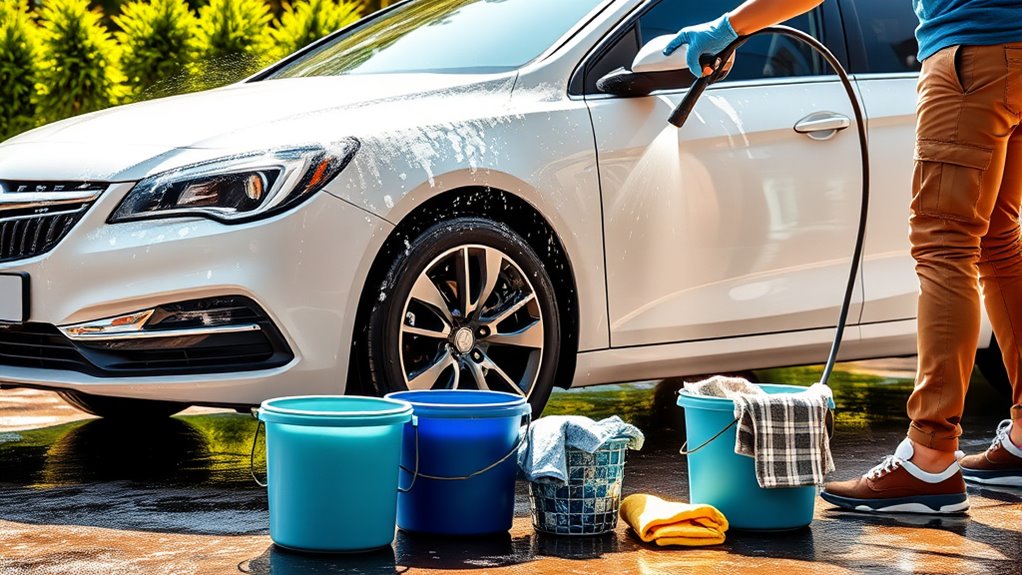
Before you start washing your car, it’s important to prepare properly to ensure a safe and effective clean. Proper prep helps protect your vehicle’s paint and finish. Park your car in a shaded area to prevent soap and water from drying too quickly, which can cause streaks or spots.
Check how often you wash your car—regular washes, especially if you drive often or get dirty, keep it looking good and prevent damage. Remove loose debris like leaves or stones from your car’s surface and wheels to avoid scratching during the wash.
Close all windows and the sunroof to stop water from seeping inside. If your car is really dirty or muddy, rinse it first with water to loosen the dirt. Preparing your vehicle this way makes for a safer, more efficient wash that helps protect your car’s finish and keeps its value high.
Choosing the Best Cleaning Products and Supplies for Your Car
When you’re picking out cleaning products for your car, it’s a good idea to go for safe, car-specific options. You want to make sure they won’t harm your paint or any of the surfaces. Using the right tools, like soft mitts and gentle brushes, can make a big difference in cleaning effectively without scratching your car. When you choose the proper supplies, you’re all set to give your car a thorough, damage-free wash every time.
Selecting Safe Cleaning Agents
Choosing the right cleaning agents is essential to protect your car’s paint and finish while making sure it gets really clean. Look for eco-friendly options that are gentle on the environment and your vehicle.
Pay attention to the pH balance—aim for products labeled as pH neutral. These help prevent stripping wax or damaging the clear coat. Visualize these options as:
- A biodegradable wash soap that foams easily without harsh chemicals
- A pH-balanced cleaner that preserves your car’s glossy shine
- An eco-friendly spray designed for quick, streak-free wipes
- A gentle, non-abrasive clay bar lubricant that protects delicate surfaces
Choosing safe, balanced products keeps your car looking its best without risking harm or environmental impact.
Choosing Proper Application Tools
Selecting the right application tools is vital to achieving a thorough, scratch-free clean. Use microfiber mitts for gentle, effective washing and soft foam applicators for applying wax or polish evenly.
Choose sponge types suited for specific tasks—natural sponges for delicate areas and synthetic ones for general cleaning. Brush options vary; soft-bristled brushes help clean crevices without scratching.
Towel selection is essential. Opt for plush, lint-free towels to dry without streaks. Applicator pads give you control when applying detailing products.
Wash buckets with grit guards keep dirt away from your cleaning tools, making your job easier. Investing in quality detailing tools guarantees efficient, safe cleaning.
Proper tool selection helps you avoid scratches and achieve a professional finish while maintaining your car’s paintwork.
How to Rinse Off Loose Dirt and Debris Properly
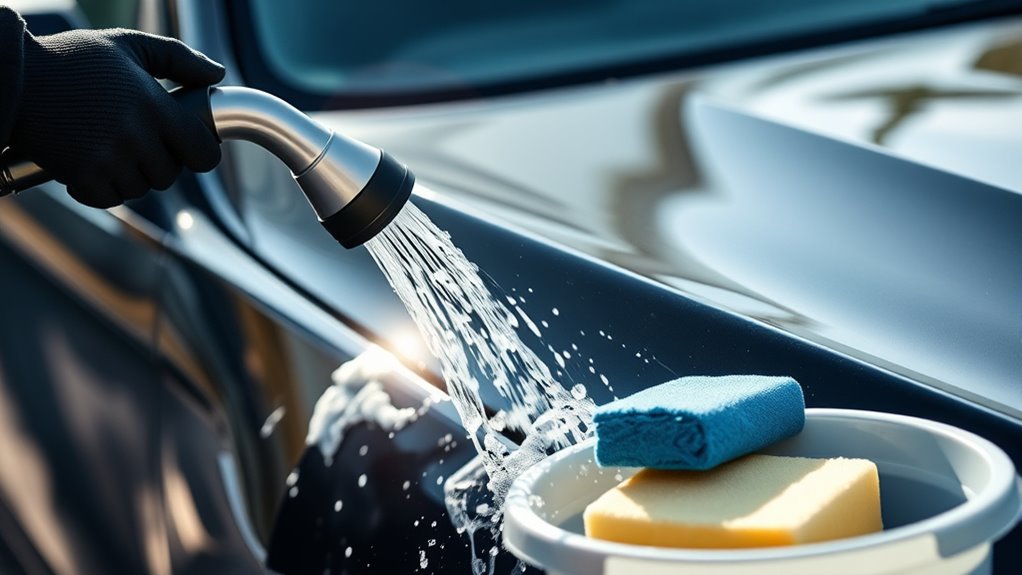
First, grab your hose and give your car a gentle spray of water. The goal here is to loosen up all that loose dirt and debris without scratching the paint. So, keep the pressure steady but moderate—that way, you’re not forcing dirt into the surface or risking any damage.
Doing it this way helps ensure your car is nicely cleaned and protected before you move on to the rest of your washing routine. It’s a simple step, but it makes a big difference in keeping your car looking its best!
Gentle Water Application
To rinse off loose dirt and debris effectively, use a gentle stream of water from a hose or spray nozzle set to low or medium pressure. Keep the flow soft and steady to avoid scratching the paint.
Hold the nozzle about two feet from the surface and use sweeping motions, starting from the top and working downward. This helps lift dirt without forcing it into the paint.
Keep the spray at an angle to gently lift dirt away. Avoid concentrated, high-pressure bursts on delicate areas to prevent any damage.
Use Proper Pressure
Using the proper pressure when rinsing off loose dirt is essential to prevent damage to your car’s paint.
You should adjust your pressure settings to a moderate level—too high can cause scratches, while too low might not remove debris effectively.
Use nozzle types designed for rinsing, such as a wide spray or fan nozzle, to distribute water evenly and reduce the risk of paint damage.
Start rinsing from the top and work your way down, making sure to loosen dirt without applying too much force.
Avoid using a nozzle with a concentrated jet, which can be too aggressive. Proper pressure and the right nozzle type help remove dirt efficiently while protecting your vehicle’s surface.
Step-by-Step: Washing Your Car Without Scratches
Washing your car without scratching its surface takes careful technique and attention to detail. The goal is to keep your paint looking pristine by preventing scratches.
Start by rinsing the car thoroughly to remove any loose dirt and debris. Then, fill a bucket with soapy water that’s specially made for cars.
Begin by rinsing off loose dirt, then fill a bucket with car-specific soapy water for gentle cleaning.
Next, follow these simple steps: Use a soft, microfiber wash mitt to gently lift dirt without scratching. Wash from top to bottom so dirt flows downward and doesn’t re-contaminate cleaned areas.
Make sure to rinse the mitt often to prevent dirt transfer. Finally, use a clean cloth to dry the vehicle, which helps avoid water spots and scratches.
Cleaning Wheels and Underbody: Tips for a Deep Clean
Cleaning your wheels and underbody thoroughly is key to keeping your vehicle looking good and running well. Dirt, brake dust, and road grime can harm your wheels and weaken underbody protection if you ignore them.
Use a dedicated wheel cleaner and soft brushes to scrub away stubborn grime, making sure to get into all the nooks and crannies for the best results. For the underbody, a pressure washer or hose with a high-pressure nozzle works great to loosen dirt and debris.
Pay extra attention to areas prone to rust or corrosion. Regular cleaning stops buildup that could affect handling and vehicle longevity. Check out the table below for quick tips:
| Tip | Tool Needed | Focus Area |
|---|---|---|
| Use a wheel brush | Soft-bristled brush | Wheels |
| Apply degreaser | Wheel cleaner | Brake dust removal |
| Use a pressure washer | High-pressure nozzle | Underbody cleaning |
| Check for rust spots | Inspection | Underbody protection |
| Rinse thoroughly | Water hose | Complete cleaning |
Keeping your wheels and underbody clean helps your car stay in top shape and look sharp.
How to Dry Your Car to Prevent Water Spots
Drying your car properly is key to preventing water spots from forming. Water spots happen when minerals in the water dry unevenly on your car’s surface. To avoid this, use high-quality microfiber towels designed specifically for drying.
Follow these simple drying tips for the best results: Gently lay a microfiber towel over the wet surface so it can absorb water without scratching. Use light, blotting motions instead of rubbing to lift water gently without damaging the paint.
Make sure to switch to a dry towel often to prevent spreading water spots around. For stubborn spots, lightly mist the area with a quick detailer and then dry with a clean microfiber towel.
Imagine a soft microfiber towel gliding smoothly over your car’s surface, soaking up excess water and leaving a streak-free finish. Proper drying techniques will keep your car shiny and free of water spots, so it always looks freshly washed.
Protect Your Car’s Finish: Applying Wax and Protective Coatings
After you’ve thoroughly dried your car to prevent water spots, the next step is to protect its finish with wax or a protective coating. Wax creates a barrier that shields your paint from dirt, UV rays, and road grime, giving your car a glossy shine.
Use a clean applicator pad to apply the wax in small, circular motions, working section by section. Let it haze, then buff with a microfiber cloth for a smooth, shiny finish.
For longer-lasting protection, consider ceramic coatings. These liquid polymer treatments bond chemically to your car’s surface, providing superior durability and resistance to scratches, chemicals, and UV damage.
Applying a ceramic coating requires careful preparation and often professional expertise, but it offers extended protection compared to traditional wax.
Whether you choose wax or ceramic coatings, regular application helps maintain your car’s appearance and preserves its resale value. Proper protection guarantees your car stays looking pristine longer.
Frequently Asked Questions
How Often Should I Wash My Car to Maintain Its Appearance?
You should wash your car at least every two weeks to keep it looking good, but how often you do it can depend on the season.
In winter or rainy months, it’s a good idea to wash more often to get rid of salt and grime that can hurt the paint.
During summer, dirt and dust tend to build up faster, so a weekly wash might be better.
Adjust your washing schedule based on the weather so your car stays in great shape all year round.
Can I Wash My Car in the Rain or Cold Weather?
You can wash your car in the rain or cold weather, but it’s not ideal. Rain might seem convenient, but it often leaves dirt and grime behind.
Cold conditions can cause water to freeze, which can damage your paint or create slippery surfaces. If you decide to wash your car in these conditions, do it quickly and dry it thoroughly afterward.
This helps prevent ice from forming and keeps streaks from developing. It’s generally better to wait for better weather to get the best results.
Is It Safe to Use a Pressure Washer on My Vehicle?
Using a pressure washer on your vehicle is like wielding a powerful storm, so yes, it can be safe if you follow pressure washer safety tips. Keep the nozzle at a safe distance to avoid stripping paint or causing damage.
Proper technique helps preserve your vehicle’s paint and prevents costly repairs. Always use a wide spray pattern and adjust the pressure so you clean effectively without risking harm to your car’s delicate finish.
What Are Common Mistakes to Avoid During Car Washing?
You should avoid common mistakes like using sponges that can scratch the paint or applying too much pressure with tools like pressure washers. Always opt for gentle, microfiber cloths or mitts and use proper cleaning solutions.
Rushing through the process can cause scratches or damage. Take your time, be gentle, and don’t skip rinsing thoroughly. Washing in direct sunlight can lead to streaks and spots, so try to do it in shaded areas.
Using quality materials and being careful will make your car wash safer and more effective. Just remember, patience and the right tools go a long way!
How Do I Clean and Maintain My Car’s Interior?
To clean and maintain your car’s interior, start with regular interior detailing to keep everything fresh. Use a vacuum to remove dirt from carpets and upholstery, then apply appropriate upholstery cleaning solutions for seats and fabric.
Wipe down surfaces with a damp cloth, paying attention to vents and consoles. Regularly cleaning your interior helps keep its look and feel, making your drives more comfortable and your car’s value higher over time.
Conclusion
Now that you’ve uncovered the gentle art of car washing, you’re ready to keep your vehicle shining like new. With a little care and the right touch, washing your car can become a satisfying ritual rather than a chore.
Enjoy the process and the fresh feeling that comes with it. Watch your car’s beauty flourish under your attentive care, making every wash rewarding.
After all, a well-loved car deserves your best efforts to keep it looking its best. Properly washing your car regularly will help maintain its appearance and value, ensuring it stays in top shape.