10 Essential Steps to Use a Car Wash Effectively
If you’re like many car owners, keeping your vehicle looking spotless can feel overwhelming. Between dirt, grime, and stubborn spots, it’s easy to wonder if you’re doing it right or risking damage. Don’t worry—you’re not alone, and with a few simple steps, you can wash your car effectively and safely every time.
Start by inspecting and pre-rinsing your car to remove loose dirt and debris, preventing scratches.
Choose a gentle, vehicle-specific wash and dilute it properly. Wash from top to bottom in small circles, ensuring even coverage.
Rinse thoroughly with moderate pressure to clear all soap. Dry with microfiber towels or a blower to avoid streaks.
Afterward, inspect for damage and consider applying wax for extra protection.
Keep these steps in mind to maintain a flawless look and avoid common mistakes.
Key Takeaways
- Prepare your vehicle by inspecting it and removing loose dirt with a gentle brush or microfiber cloth.
- Pick the right type of car wash and use cleaning products made specifically for car surfaces.
- Rinse your car from top to bottom with moderate water pressure to safely wash away loose dirt.
- Apply the wash solution evenly using circular motions, making sure to cover every area without streaks.
- Dry your car with microfiber towels or a blower. Once dry, check for any spots and add protective coatings like wax if needed.
Why Proper Preparation Matters for a Scratch-Free Car Wash
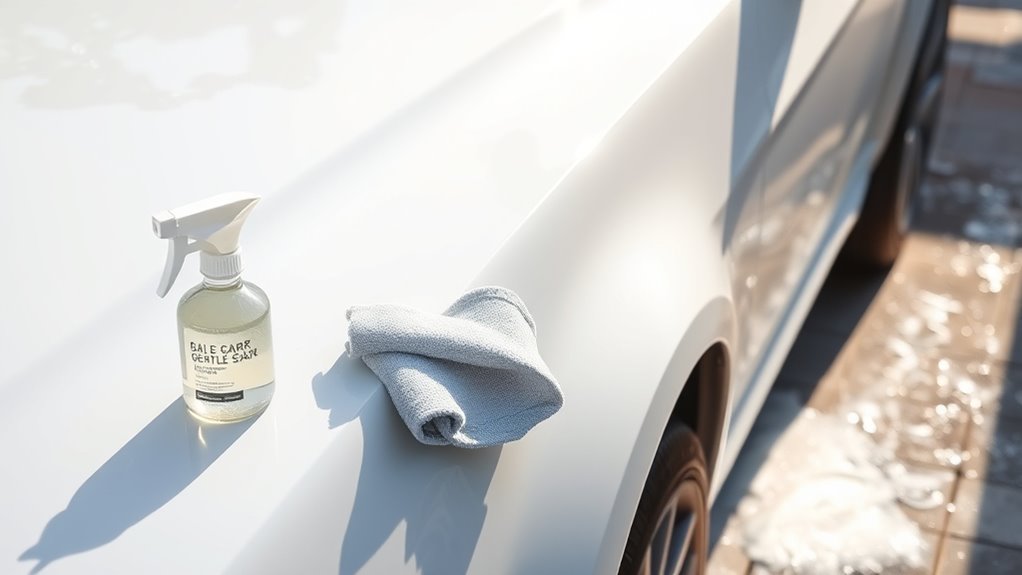
Proper preparation is essential to keep your car scratch-free during a wash. Before you start, do a quick pre-wash inspection to find any loose dirt or debris that could cause scratches. Removing these early helps prevent them from grinding into your paint when you wash.
Proper prep prevents scratches and ensures a safe, effective car wash.
Use a gentle brush or microfiber cloth to clear off loose dirt from the surface. Also, check the condition of any protective coatings like wax or sealant. If your paint has a good layer on it, it acts as a barrier and reduces the risk of scratches.
Making sure that layer is intact helps protect your vehicle during the wash. Proper prep sets the foundation for a safe, effective clean. Skipping these steps can lead to scratches or swirl marks, especially if dirt gets trapped under your wash mitt.
Taking the time to inspect and prepare means a cleaner, scratch-free finish every time.
How to Choose the Right Car Wash for Your Vehicle
Choosing the right car wash depends on your vehicle’s specific needs and the kind of finish you want to keep.
Start by thinking about the different types—touchless, hand wash, or automatic—and how each fits your vehicle’s materials.
If your car has delicate finishes or special paint, a gentle hand wash or touchless option is best to avoid scratches.
For sensitive materials like matte paint or custom wraps, pick a place that specializes in cleaning these carefully.
For regular cars with standard paint, most automatic washes work well, but check if they use soft cloth brushes or high-pressure jets that could damage your car.
Always read reviews or ask about the cleaning methods used.
Your goal should be to find a wash that’s gentle, effective, and protects your vehicle’s materials and finish.
Choosing the right car wash helps keep your car clean and well-maintained without risking damage.
How to Safely Rinse Your Car to Remove Loose Dirt
Before you start rinsing your car, make sure to remove any loose dirt and debris. This helps prevent scratching the paint during the wash. Use a gentle pre-rinse technique, starting from the top and working down.
Keep the water pressure moderate. Too high can damage the paint or push dirt into scratches, while too low might not remove debris effectively.
Here’s a quick guide to help you optimize your rinse:
| Step | Action | Tip |
|---|---|---|
| Pre rinse | Use a hose with adjustable water pressure | Keep water pressure moderate |
| Start at the top | Rinse roof first, then sides and hood | Prevents dirt from settling back |
| Use wide spray | Cover large areas evenly | Avoid concentrated jets |
| Gentle movement | Keep the nozzle moving smoothly | Prevents accidental damage |
Follow these steps to safely remove loose dirt without harming your car’s finish.
Applying the Correct Car Wash Solution for a Sparkling Finish
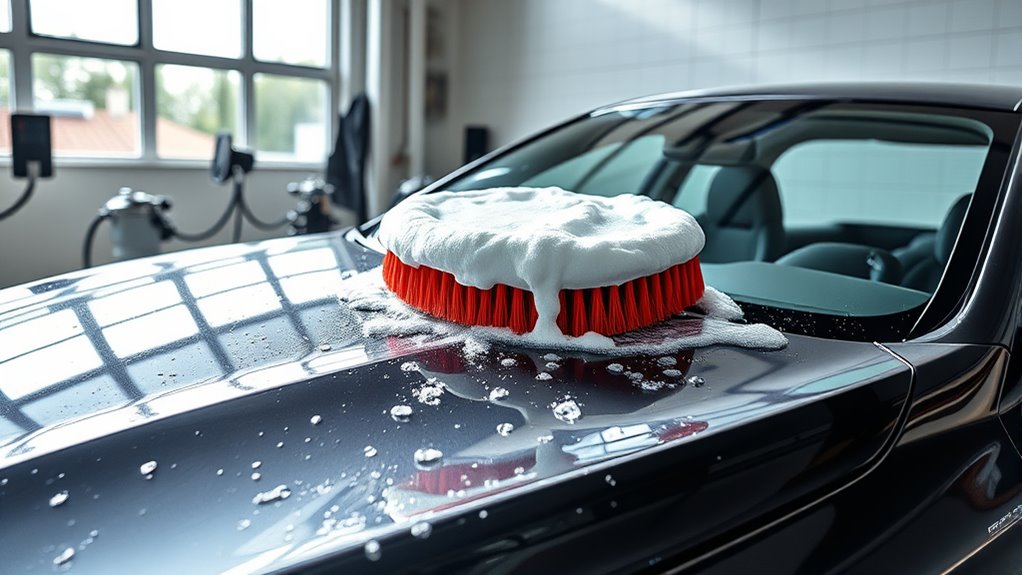
Once you’ve rinsed away loose dirt, choosing the right car wash solution is key to a spotless, shiny finish. When applying solutions, your techniques matter—use a soft sponge or microfiber cloth to prevent scratches.
Start by picking solutions suited for your car’s paint type and how dirty it is. Read labels carefully to make sure the product is gentle but effective. Dilute the solution as recommended because concentrated formulas can cause streaks or residue.
Choose the right solution for your paint type, follow label instructions, and dilute properly for a streak-free shine.
Apply the wash solution in small, circular motions, working from the top down to avoid re-contaminating areas. Be consistent with your technique, making sure to cover all surfaces evenly.
Using the right solutions and proper application methods guarantees a thorough clean without damage. This leaves your car with a brilliant, streak-free shine. Remember, choosing solutions wisely combined with careful techniques results in a professional-looking finish every time.
How to Wash Your Car Without Scratching the Paint
Washing your car without scratching the paint starts with using the right tools and techniques. Use soft microfiber cloths or wash mitts designed for paint protection, avoiding abrasive materials that can cause damage. Always rinse your car thoroughly before washing to remove loose dirt and debris, which can scratch the surface during cleaning.
Use a gentle, pH-balanced car wash solution and wash in straight, overlapping strokes instead of circular motions. Pay attention to washing frequency; washing too often with harsh scrubbing can wear down the paint. Balance regular cleaning with gentle techniques to keep your car looking its best.
Also, avoid washing in direct sunlight, which can cause soap spots and make contaminants harder to remove. Properly maintaining your washing routine helps preserve your car’s paint, keeping it shiny and scratch-free longer.
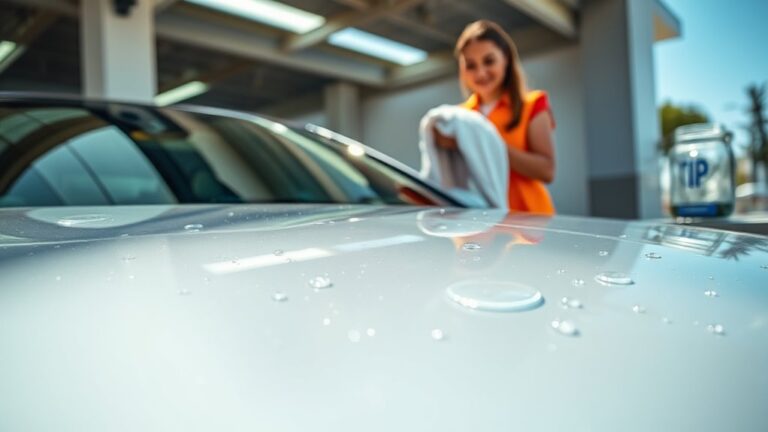
How to Dry Your Car to Prevent Water Spots
To prevent water spots from forming on your car’s surface, it’s important to dry it quickly and properly after washing. Using microfiber towels is one of the best ways because they soak up water fast without scratching the paint.
Gently pat or drag the towel across the surfaces, avoiding circular motions that can cause swirl marks. For the best results, use multiple clean microfiber towels and switch them out as needed.
| Technique | Description |
|---|---|
| Blotting | Gently pressing microfiber towels onto the surface |
| Dragging | Carefully pulling the towel across the car’s surface |
| Overlapping | Using overlapping strokes to ensure thorough drying |
These techniques help remove water residue, preventing mineral deposits and spots. Always work from the top down, and make sure your towels are clean and dry.
Proper drying keeps your paint smooth and spotless, helping maintain your car’s finish.
Inspecting Your Car for Hidden Damage or Dirt Buildup After Washing
After you finish washing your car, take a good look at the surface to catch any hidden damage or dirt buildup that might have been missed. Check for small scratches, chips, or dents, especially around the edges and other vulnerable spots.
Make sure to examine the paintwork carefully to spot any streaks or spots that could mean dirt was missed. Pay close attention to seams, around mirrors, and near door handles, as these areas tend to trap dirt and grime.
If you notice any dirt buildup, give those spots a quick re-clean to prevent staining or corrosion over time. Also, look for signs of damage that could be hidden under dirt or grime and might need professional attention.
Being thorough now helps keep your car looking great and prevents small issues from turning into bigger problems. Taking just a few extra moments for this inspection will help keep your vehicle in top shape after every wash.
Best Practices for Maintaining Your Car’s Exterior Between Washes
Once you’ve checked your car for hidden damage or dirt buildup, maintaining its exterior between washes gets easier. To keep your car looking sharp, follow these simple tips:
- Regularly wash off dirt and debris with a gentle car wash soap to prevent buildup and scratches.
- Apply a quality wax or protective coating every few months to keep the paint looking fresh and shiny. Wax creates a barrier against dirt and UV rays.
- Use a microfiber cloth to wipe down your car’s surface regularly, removing dust and fingerprints without scratching the paint.
These steps help maintain your car’s appearance and protect it from the environment. Proper waxing and coatings can extend the time between full washes and keep your car looking new. Consistent care not only makes it look better but also reduces long-term maintenance costs and helps preserve its value.
Common Car Wash Mistakes and How to Avoid Them
Using the wrong cleaning products can actually harm your car’s paint, so it’s really important to pick ones that are made specifically for vehicles. Trust me, regular household cleaners might seem convenient, but they can cause more harm than good.
Also, don’t rush through the drying process. If you skip it or try to do it quickly, water spots and streaks can form, which can damage the finish over time. Taking a little extra time to dry thoroughly makes a big difference.
Using Wrong Cleaning Products
Using the wrong cleaning products can do more harm than good when washing your car. Choosing incompatible products might damage your paint or clear coat. To keep your car safe, pay attention to:
- Product Compatibility: Always pick detergents made specifically for automotive surfaces. Household cleaners may have abrasives or chemicals that can harm your car’s finish.
- Chemical Safety: Look at the labels for safe, non-corrosive formulas. Harsh chemicals can strip away wax or cause paint discoloration.
- Avoid Multi-Purpose Cleaners: These aren’t usually designed for cars and might contain ingredients that weaken your vehicle’s protective layer.
Neglecting Drying Process
Neglecting to properly dry your car after washing can leave water spots and streaks that tarnish its appearance. To avoid this, use effective drying techniques like gently blotting with microfiber towels or using a blower to remove water from crevices.
Choose high-quality drying materials that won’t scratch or damage the paint. Avoid air drying with a cloth that might leave lint or streaks.
Make sure to dry all surfaces thoroughly, including mirrors, door jambs, and around the trim. Skipping this step can cause mineral deposits from water to leave spots, reducing your car’s shine.
Proper drying techniques and materials help you achieve a spotless, streak-free finish. This preserves your car’s pristine look and protects the paintwork from water-related damage.
How to Extend the Life of Your Car’s Paint After Washing
After washing your car, taking steps to protect its paint can really help it last longer and stay shiny. Proper paint protection stops damage from UV rays, dirt, and other contaminants. One of the best ways to do this is by applying wax regularly, which adds a protective layer and boosts the shine.
Here are three essential tips:
- Apply wax after each wash to keep a barrier against environmental elements and make your car look fresh.
- Choose a quality wax product that’s designed for your car’s finish to ensure effective protection.
- Buff the wax properly using a clean, soft cloth to reveal a smooth, glossy surface that resists dirt and grime.
Consistent wax application not only protects your paint but also makes future washes easier. This helps keep your car looking great for years to come.
Frequently Asked Questions
Can I Wash My Car in Direct Sunlight Without Damaging the Paint?
Washing your car in direct sunlight can harm the paint because sunlight can cause soap and water to dry too quickly. This often leads to spots or streaks that are hard to remove.
To protect your paint, try to wash your car in the shade whenever possible, or do it early in the morning or late in the evening. This way, the water and soap stay wet longer, making cleaning easier.
Cleaning your car in the shade helps maintain the paint’s protection, prevents water spots, and makes sure you get a thorough clean without risking damage from rapid drying in the sun.
How Often Should I Wash My Car to Maintain Its Appearance?
You should wash your car every two weeks to keep it looking good, following general guidelines. Seasonal factors like winter salt or summer pollen might mean washing more often.
Regular cleaning helps prevent dirt buildup, scratches, and paint damage. During harsh weather, it’s a good idea to increase how often you wash your car.
Try to wash your car in a shaded area or early in the day. This helps avoid quick drying that can leave streaks and spots on your car’s surface.
Is It Safe to Use Household Cleaning Products on My Car?
Using household cleaners on your car is a bad idea. Think of them as poison for your paint! These cleaners often strip away paint protection and can cause lasting damage.
Instead, stick to products designed for cars. They safeguard your paint and keep it shiny. Your vehicle deserves proper care, not a DIY chemical experiment that could turn your sleek ride into a dull, scratched mess.
What’s the Best Way to Clean Car Wheels and Tires?
For the best wheel cleaning and tire care, start by rinsing your wheels to remove loose dirt and debris. This makes the cleaning process more effective and prevents scratching the surface.
Next, use a dedicated wheel cleaner and a stiff brush to scrub away grime, paying close attention to crevices and hard-to-reach spots. Don’t forget to clean the tires with a tire-specific cleaner and a softer brush to avoid damaging the rubber.
After scrubbing, rinse everything thoroughly with water to wash away any remaining cleaner and dirt. Finally, dry the wheels and tires with a microfiber cloth to prevent water spots and give your car a polished look.
Regular cleaning not only keeps your car looking sharp but also helps extend the life of your tires and wheels.
Should I Wash My Car Before or After Applying Wax or Sealant?
Think of your car as a blank canvas awaiting a masterpiece; you should wash it before applying wax or sealant. Pre-wash benefits clear away dirt and grime, ensuring a smooth surface for wax application.
If you wax first, dirt can get trapped, dulling the shine. So, give your car a thorough wash first, then let the wax shine like a mirror.
This way, your ride turns into a sleek, gleaming jewel.
Conclusion
Now that you’re armed with these 10 essential steps, your car’s shine will rival a mirror’s gleam. Think of each wash as a gentle dance, carefully preserving your vehicle’s paint like a delicate work of art.
With proper care and attention, your car will sparkle like a star in the night sky, turning heads wherever you go. Keep these tips close, and watch your car’s beauty shine through every mile.
Using a car wash effectively is key to maintaining that stunning shine. Follow these simple steps, and your vehicle will always look its best on the road.