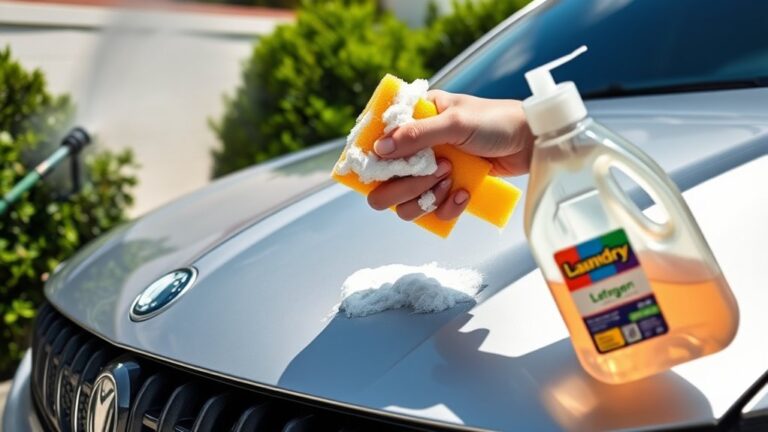
10 Essential Steps to Safely Wash Your Car Motor
Many car owners find themselves overwhelmed when it’s time to wash their car motor. You’re not alone—safely cleaning your engine can seem tricky, especially with all the electrical parts and delicate components involved.
To safely wash your car motor, start by gathering your tools and ensuring the engine is cool and off. Protect sensitive electrical parts with plastic covers, and use engine-specific cleaning products.
Gently apply the cleaner and let it sit, then rinse carefully without over-wetting. Dry the engine thoroughly using microfiber cloths or compressed air.
Finally, check for issues and secure all components. Keep going to uncover detailed tips for a thorough, safe cleaning process.
Key Takeaways
- Make sure the engine is cool and disconnect the battery before you start. This helps prevent any electrical issues.
- Cover sensitive parts like the alternator and fuse box with plastic bags to keep water away from them.
- Use engine-specific, biodegradable cleaning products. Apply foam degreasers gently and let them sit for a bit.
- Rinse carefully with a soft stream of water, avoiding electrical parts and wiring to prevent any damage.
- Dry everything thoroughly with microfiber cloths or compressed air. Take a moment to check for leaks, loose wires, or damaged parts.
Prepare Your Tools and Workspace
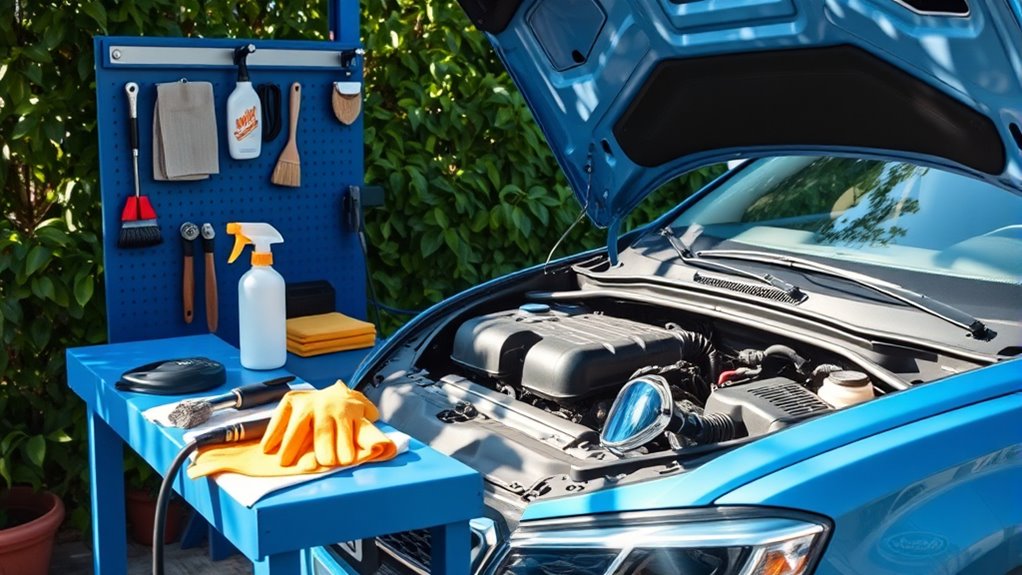
Before you start washing your car, gather all the tools you need and set up a clean, organized workspace. Having everything within reach makes the process smoother and more efficient.
Gather your tools and organize your workspace for a smooth, efficient car washing experience.
Lay out your brushes, sponges, microfiber cloths, and cleaning solutions in one spot. Clear the area of clutter to avoid accidents and spills.
A tidy workspace minimizes interruptions so you can focus on cleaning without searching for tools. Use a sturdy table or mat to keep supplies stable.
Keep a spray bottle, gloves, and protective gear nearby. Preparing your tools and space ahead of time helps prevent forgetting essentials and creating a mess.
An organized area makes your job easier and safer, ensuring your car gets the proper care during cleaning.
Make Sure the Engine Is Cool and Off
Once your workspace is set and your tools are ready, focus on the engine. Making sure the engine is cool and off is crucial for safety and effective cleaning.
An engine that’s hot can cause burns or damage parts when water touches it. Check the radiator cap or wait until the engine has been off for at least 15-30 minutes to be sure it’s safe.
Remember:
- Never wash a hot engine to avoid burns or warping parts.
- Wait until the engine is completely cooled down.
- Turn off the ignition and remove the keys.
- Let the engine sit for at least 15-30 minutes.
- Confirm the engine temperature is safe before moving on.
Taking these precautions helps prevent injuries and keeps your engine from getting damaged during cleaning. Always prioritize safety and patience when working on your car’s engine.
Protect Electrical Components From Water Damage
To keep your electrical components safe from water damage, it’s a good idea to cover up sensitive parts like the alternator and fuse box before you start washing. That way, you’re not accidentally splashing water where it shouldn’t go.
When you’re rinsing, make sure to use gentle water pressure. You don’t want to blast water into tight spots and cause problems down the line. After you’re done, take the time to dry everything thoroughly—this helps prevent any moisture from lingering and causing issues later on.
Following these simple steps will help protect your electrical parts and keep your engine running smoothly.
Cover Sensitive Electrical Areas
Protecting electrical components during a car wash is essential to prevent water damage that can lead to costly repairs. To do this effectively, cover sensitive areas with water-resistant covers or use electrical tape to secure connections. Make sure you shield the alternator, fuse box, and engine control modules thoroughly.
Wrap connectors and exposed wiring with electrical tape for added protection. Double-check that all covers are snug and won’t slip off during washing. Remember, even small openings can let water in and cause damage.
Taking these precautions keeps your electrical system safe from water intrusion. This simple step minimizes the risk of corrosion and short circuits, saving you time and money on repairs later. Stay vigilant, and your car’s electrical system will stay protected.
Use Gentle Water Pressure
Using gentle water pressure is essential when washing your car’s electrical components. High water pressure can push water into sensitive areas, risking electrical damage and engine problems.
To avoid this, keep the pressure low, especially around connectors, sensors, and wiring. Use a spray nozzle that creates a wide, gentle stream to rinse dirt away without forcing water into tight spots.
Avoid spraying directly at electrical parts. Instead, spray at an angle to reduce water penetration. Proper water pressure protects your electrical system and prevents delicate components from being dislodged.
Controlling water pressure is a simple but important step to keep your engine safe during cleaning. It’s all about being gentle and careful to avoid any costly damage.
Dry Components Thoroughly
Even after rinsing off dirt, water can stay in tiny crevices and around electrical parts, which can cause damage if not dried properly. Using the right engine drying techniques is key to preventing moisture buildup.
You should use compressed air to blow water out of tight spots and gently wipe electrical parts with a microfiber cloth. Avoid high heat, as it can harm sensitive components.
Applying a leave-on engine protector spray helps repel moisture, and letting the engine air dry in a warm, ventilated area is also a good idea.
These moisture prevention methods help prevent corrosion or electrical issues caused by residual water. Taking the time to dry everything thoroughly reduces risks and helps your engine last longer.
This makes your car maintenance safer and more effective overall.
Use the Right Products for Engine Cleaning
When you’re cleaning your engine, it’s really important to pick products that are made specifically for motors. This way, you can avoid any damage or mishaps.
Stay away from harsh chemicals because they can harm delicate parts or even strip away protective coatings. Using the right engine-cleaning products helps keep your motor running smoothly and safely, so it’s worth taking the time to choose wisely.
Engine-Specific Cleaning Products
Choosing the right cleaning products is essential to avoid damaging your engine while effectively removing dirt and grease. Using engine-specific cleaning products guarantees you’re providing proper care without risking corrosion or damage.
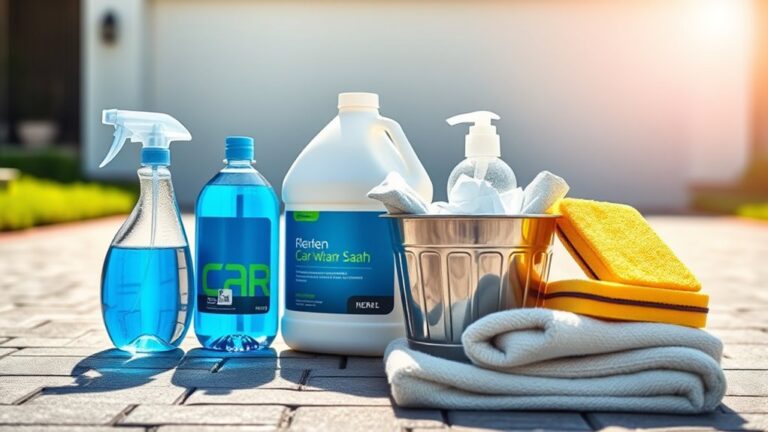
Look for products formulated for engine care that break down grease without harming electrical components or plastics. Here are some product recommendations:
- Foam engine degreasers
- Non-abrasive brushes
- Engine-safe degreasing sprays
- Microfiber cleaning cloths
- Water-based engine cleaners
These tools and products help you clean effectively while preserving your engine’s integrity. Always select products designed specifically for engines to guarantee safety and peak results.
Using the right engine-specific cleaning products makes your maintenance routine safer, more efficient, and keeps your engine looking and performing its best.
Avoid Harsh Chemical Alternatives
Using harsh chemical alternatives can damage your engine’s sensitive components and compromise its performance. Instead, choose eco-friendly options like biodegradable cleaners specifically made for engine cleaning.
These products are gentle yet effective at breaking down grease and grime without risking corrosion or damage. Avoid strong solvents or industrial degreasers that aren’t formulated for automotive use, as they can cause long-term harm.
By selecting biodegradable cleaners, you protect your engine, the environment, and your vehicle’s lifespan. Always read labels carefully and follow instructions for proper use.
Using the right, eco-friendly products guarantees a safe, efficient cleaning process that preserves your engine’s health while being kind to the planet.
Carefully Apply Cleaning Solutions and Let Them Sit
Gently apply the cleaning solutions to your car’s surface, making sure to cover all affected areas evenly. This step is key for effective cleaning and getting the most out of the solution. Take your time to spread it out smoothly, avoiding drips or spots you might miss.
Once you’ve applied the solution, let it sit for a few minutes. This gives it time to loosen dirt and grime without needing to scrub hard. During this wait, you can observe how the solution is working on stubborn stains, check that all areas are covered, and prevent rushing that could cause damage.
While waiting, you can also get your scrubbing tools ready for the next step and confirm that the product is doing its job effectively. This little pause helps ensure a thorough and safe cleaning process.
Gently Scrub Away Dirt and Oil
When it’s time to clean, grab a soft scrubbing tool like a microfiber brush or sponge. These are great because they help lift dirt and oil without scratching the surface. Just be gentle—apply light pressure as you work to keep everything safe, especially the delicate parts.
Taking this careful approach ensures you get a thorough clean without risking any damage to your motor. It’s all about being gentle but effective!
Use Proper Scrubbing Tools
Selecting the right scrubbing tools is key to removing dirt and oil without hurting your car’s paint. You want tools that support proper scrubbing techniques and work well on different surfaces.
Go for gentle, non-abrasive materials to avoid scratches. Consider options like microfiber cloths for delicate areas, soft-bristled brushes for stubborn grime, foam sponges that won’t scratch, microfiber mitts for even coverage, and non-abrasive scrub pads for tough spots.
Choosing tools made from the right materials ensures you scrub effectively without causing damage. Always match your scrubbing technique with the softness or firmness of the tool.
This way, you can keep your car’s finish looking pristine while removing dirt and oil efficiently.
Apply Gentle Pressure
Once you’ve chosen the right scrubbing tools, it’s important to apply the correct amount of engine pressure to avoid damaging your car’s paint. Use gentle wash techniques, focusing on light, consistent pressure rather than pressing hard.
Excessive pressure can cause scratches or compromise the protective layer on your motor. When scrubbing, let the cleaning agent do the work—avoid forcing it with brute force.
Pay attention to areas with stubborn dirt or oil, applying slightly more pressure but still remaining cautious. Keep your movements smooth and controlled to ensure you don’t loosen any components.
Rinse the Engine Thoroughly Without Over-Saturating
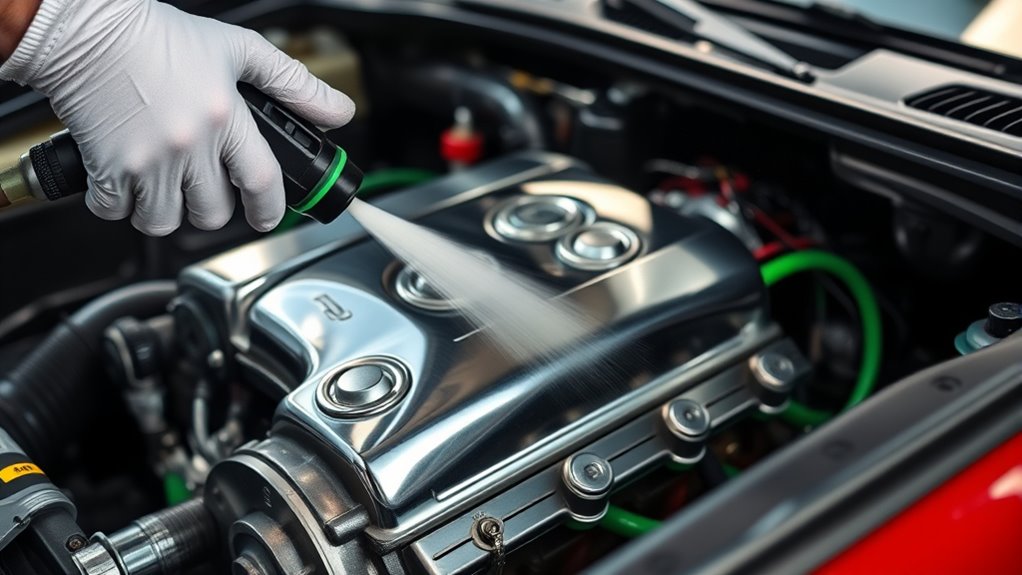
Start rinsing the engine carefully, making sure to remove dirt and soap without soaking electrical parts or sensitive areas. It’s important to be gentle to avoid damage while keeping the engine clean. Use a soft stream of water to rinse away soap residue and grime without over-saturating the parts.
Too much water can cause electrical problems or rust, so control your spray. Keep these tips in mind: use low-pressure water to avoid reaching sensitive areas, and focus on rinsing the engine bay evenly. Avoid spraying directly at connectors or electrical components.
Rinse from a safe distance to reduce the risk of over-saturation, and make sure water doesn’t pool in crevices or near sensors. Keep the water flow brief around electrical parts to prevent issues. Being cautious helps you clean effectively without risking damage.
Dry the Engine Completely to Prevent Moisture Damage
After rinsing the engine thoroughly, it’s important to dry it completely to prevent moisture from causing damage. Engine moisture can lead to corrosion, electrical issues, or degraded components over time.
To guarantee proper drying, use a clean microfiber towel or compressed air to remove excess water from all engine surfaces, focusing on hard-to-reach areas like wiring harnesses and vents. Avoid using heat sources that can damage sensitive parts.
Employ simple prevention techniques, such as blotting instead of wiping vigorously, to avoid pushing water into delicate areas. Pay close attention to the engine bay’s nooks and crevices, where moisture tends to linger.
Proper drying not only prevents corrosion but also reduces the risk of electrical shorts or malfunctions caused by residual water. Taking these steps guarantees your engine stays dry, protected, and ready for peak performance.
Perform Final Inspection and Maintenance Tips
Performing a final inspection ensures your engine is properly cleaned and maintained, so you can catch issues before they turn into bigger problems. Use your maintenance checklist to make sure all parts are in good shape and free of dirt or damage.
Start by checking for leaks, frayed belts, or loose wires. Then, confirm that all fluid levels—oil, coolant, and others—are at the right levels. Also, look at the battery terminals to see if they’re clean and secure.
Check for leaks, frayed belts, loose wires, and ensure fluid levels and battery terminals are clean and secure.
Check for signs of corrosion or buildup on the battery. Inspect the air filter and hoses for cracks or blockages to keep your engine running smoothly. Tighten any loose bolts or clamps as needed.
Examine belts and hoses for signs of wear. Verify fluid levels and top off fluids if necessary. Finally, inspect the electrical connections and make sure everything is secure.
This simple step helps your engine last longer and keeps your driving safe and reliable.
Troubleshooting Common Issues When Washing Your Engine
While inspecting your engine after washing helps prevent problems, it’s also important to recognize common issues that can arise during the cleaning process. Engine overheating can happen if water seeps into sensitive components or the cooling system, so avoid spraying directly on radiators or fans.
Oil leaks might develop if seals are compromised or if excess cleaning weakens gaskets. Electrical failures can occur if moisture gets into wiring or connectors, causing short circuits. To prevent rust, dry the engine thoroughly and keep an eye on coolant levels, topping them up as needed.
Battery corrosion caused by moisture and dirt can be reduced by regularly inspecting terminals. Washing too aggressively might raise emissions concerns if sensors or valves are affected. Always let your engine dry completely before starting it and perform routine checks to catch issues early.
This helps maintain peak engine performance and extends its longevity.
Frequently Asked Questions
Can I Wash My Engine With a Pressure Washer?
You can use a pressure washer for engine cleaning, but you need to be careful about safety. Keep the nozzle about 12 inches away from the engine and avoid pointing high-pressure water at electrical parts.
Cover electrical components and the air intake to protect them. It’s also a good idea to apply a degreaser before washing to help loosen grime.
Follow these safety tips to prevent damage and ensure a thorough, safe engine cleaning.
How Often Should I Clean My Car Motor?
Think of your engine as the heart of your car. Keeping it healthy is essential. You should clean your car motor every 3 to 6 months, depending on driving conditions and environment.
Regular engine maintenance, including cleaning, helps prevent dirt buildup and corrosion. If you drive in harsh conditions or notice performance issues, consider cleaning more often.
Consistent care ensures your engine runs smoothly and can help prolong its lifespan.
Is It Safe to Use Degreasers on All Engine Parts?
Using degreasers on all engine parts isn’t always safe because some components are sensitive to harsh chemicals. When caring for your engine, it’s best to use gentle cleaning methods and avoid spraying degreasers directly on delicate electronics or plastic parts.
Always check the labels before using a degreaser and test it on a small, hidden area first. Proper use can help you remove grease and grime effectively, but overdoing it or applying it incorrectly can lead to damage.
What Should I Do if I Notice Corrosion After Cleaning?
If you notice corrosion after cleaning, act quickly. Corrosion affects about 10% of vehicles each year, so prevention is really important.
First, disconnect the battery to avoid any electrical issues. Then, gently scrub the corroded area with a mixture of baking soda and water, using proper cleaning techniques.
After cleaning, apply a corrosion inhibitor to help prevent future damage. Regular inspections and proper cleaning methods can keep your engine healthy and save you from costly repairs.
Can Washing My Engine Improve Vehicle Performance?
Washing your engine can boost vehicle performance by keeping it cleaner. A tidy engine helps with better heat dissipation and reduces the risk of corrosion.
To get the best results, use gentle cleaning methods like avoiding high-pressure water and choosing engine-safe cleaners. Regular cleaning gets rid of dirt and grime that can slow down engine function.
This helps your engine run smoother and more efficiently. During cleaning, check hoses and belts to keep everything in good shape and maintain peak engine performance.
Conclusion
Now that you’ve navigated the engine washing voyage, think of your engine as a resilient heart—clean and cared for, it beats stronger and longer.
With each step, you’re shielding it from the storms of dirt and grime, turning routine maintenance into a dance of precision.
Keep your engine shining like a lighthouse in the night, guiding your vehicle’s performance to safe harbors.
Your car’s health is in your hands. Keep it glowing with confidence and care, and remember that a clean engine means a safer ride.