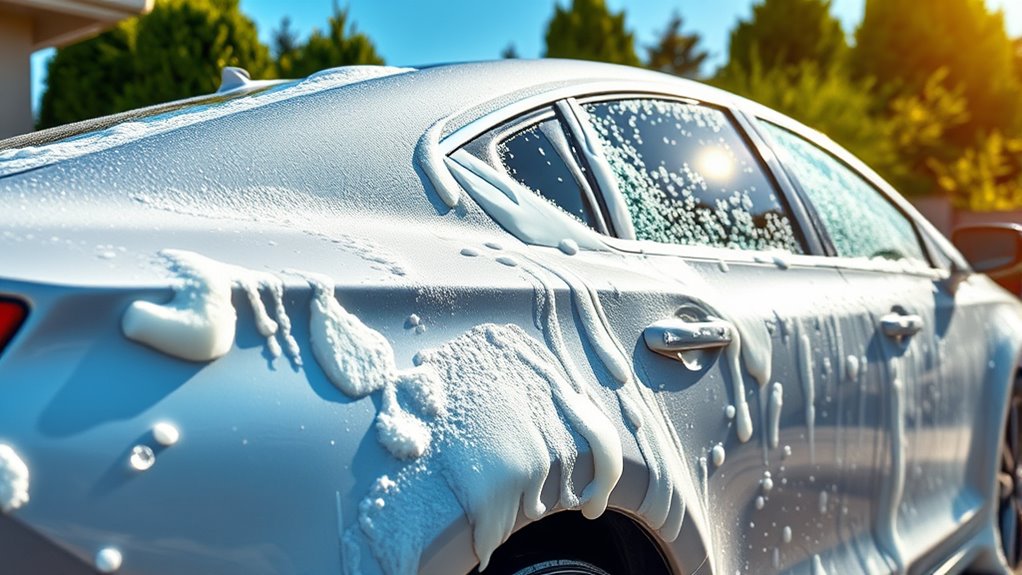
What Happens When I Wash My Car With Dish Soap?
Many car owners want that perfect, shiny finish but often worry about the best way to keep their vehicle looking its best. You’re not alone—many people struggle with choosing the right cleaning methods that protect their car’s paint.
Washing your car with dish soap can strip away the protective wax and clear coat, leaving your paint vulnerable to UV rays, dirt, and damage.
It can dull the finish, cause scratches, and weaken the paint over time. Dish soap’s harsh chemicals aren’t made for cars, so they speed up aging and fading.
If you want to keep your car looking great, it’s best to learn safer, proper cleaning techniques—continue to explore how to protect your vehicle.
Key Takeaways
- Dish soap strips away the car’s protective wax and clear coat, exposing the paint to damage.
- Over time, it can dull or fade the paint, reducing both the shine and surface protection.
- The harsh chemicals in dish soap can degrade the clear coat, making your car more vulnerable to scratches and environmental harm.
- Using it regularly speeds up paint aging and causes dirt to build up, which can lead to costly repairs.
- To keep your car looking its best, opt for gentle, pH-balanced car wash solutions that help maintain the paint’s integrity and shine.
Is Dish Soap Safe for Your Car’s Paint?
Regular use can compromise your car’s paint longevity because it strips away the protective wax and clear coat. Without this surface protection, your paint becomes more vulnerable to UV rays, dirt, and other environmental damage.
Dish soap’s strong detergents are effective at cutting grease, but they’re also too harsh for your car’s delicate surface. Over time, this can cause the paint to dull or fade faster.
If you want to keep your car’s paint looking fresh and glossy, you should use a proper car wash soap formulated specifically for automotive surfaces. These products are designed to clean thoroughly without stripping away protective layers.
Protect your investment by choosing the right cleaning products, and avoid dish soap if you want to maximize your car’s paint longevity.
What Does Dish Soap Do to Your Car’s Finish?
When you use dish soap on your car, it can actually take away the wax that’s protecting your paint. That wax is what helps keep your car looking shiny and new. Without it, your car’s surface becomes more exposed to dirt, grime, and even scratches over time.
Plus, if you’re using dish soap regularly, your car’s paint might start to look dull and lose that nice, glossy finish you want. So, it’s best to stick with products made specifically for car care to keep your paint looking its best!
Strips Wax Protection
Using dish soap on your car can quickly remove its wax layer, leaving the paint unprotected. When the wax is stripped away, your car’s finish loses its natural barrier against dirt, UV rays, and other contaminants.
While dish soaps are great for cleaning dishes, they aren’t formulated for car paint protection. That’s why many car owners look for dish soap alternatives designed specifically for vehicles, which clean without harming the wax or sealant.
Regular use of dish soap can speed up paint wear and dullness over time. To keep your car’s shine and protection, it’s best to avoid dish soap for routine washes. Instead, choose products made to preserve and enhance your car’s paint.
This way, your car stays cleaner longer and keeps its vibrant finish.
Causes Paint Dullness
Dish soap contains harsh detergents that strip away the natural oils and protective layers on your car’s paint, making it look duller over time. Without these coatings, your car’s surface becomes more vulnerable to environmental damage, which can cause the paint to lose its shine.
This loss of gloss affects your car’s overall look and can shorten its surface lifespan. Using dish soap regularly speeds up paint dullness because it erodes the clear coat and protective sealants that help preserve the finish.
Over time, this leads to a less vibrant, more aged appearance. To keep your car’s paint protected and looking fresh, it’s best to avoid dish soap and choose products specifically designed for automotive finishes.
Why Dish Soap Isn’t Designed for Car Care
Although dish soap is great for cutting through greasy food and grime on your dishes, it’s not made for your car’s delicate surfaces. Its ingredients are designed to break down fats and oils quickly, which can strip away your car’s protective coatings.
These harsh chemicals don’t tell the difference between food residue and your car’s clear coat. Over time, that can cause damage. Instead, it’s better to use car care products like pH-balanced shampoos made specifically for vehicles.
These products are gentle but effective, helping preserve your car’s shine and protection. Here’s a quick comparison:
| Dish Soap Ingredients | Car Care Alternatives |
|---|---|
| Strong detergents | Mild, pH-balanced formulas |
| Fragrances | No harsh perfumes |
| Surfactants | Gentle surfactants |
| Abrasives | Non-abrasive formulas |
| Dyes | Clear or lightly colored |
Picking the right products keeps your car protected and looking glossy for longer.
How Dish Soap Can Damage Your Car’s Protective Coatings
Using dish soap on your car might seem like a quick fix, but it can actually do more harm than good. When you wash your car with regular dish soap, it can strip away the wax layers that help protect the paint. Without that wax, your car’s paint becomes more vulnerable to dirt, grime, and the elements.
Plus, dish soap can damage the clear coat, which is the shiny, protective layer on top of the paint. If that gets compromised, your car might lose its glossy finish and look dull over time. And the worst part? This kind of damage can speed up paint aging and might lead to more expensive repairs down the line. So, it’s best to stick with products made specifically for car care!
Strips Wax Layers
When you wash your car with dish soap, it can quickly strip away the wax layer that protects your vehicle’s paint. Wax acts as a barrier against dirt, UV rays, and contaminants, helping maintain your car’s appearance.
Regularly using dish soap for car maintenance removes this protective layer, leaving your paint vulnerable. Without wax, your vehicle is more prone to scratches, fading, and damage from environmental elements.
To avoid this, consider soap alternatives designed specifically for cars, which gently clean without stripping essential coatings. These products help preserve the wax and extend the life of your paint job.
Skipping proper car care and relying on dish soap can lead to costly repairs later. So, choosing the right cleaning methods is vital for maintaining your car’s value and appearance.
Damages Clear Coat
Removing wax with dish soap can also harm your car’s clear coat, the transparent layer that protects the paint beneath. Dish soap’s harsh chemicals can cause clear coat degradation over time, which reduces your car’s paint protection.
This layer acts as a shield against UV rays, dirt, and pollutants. When it’s compromised, your paint becomes more vulnerable to damage and fading. Here’s a visual to help you understand the effects:
| Effect | Cause | Result |
|---|---|---|
| Clear coat degradation | Frequent washing with soap | Weakened protective layer |
| Loss of gloss | Chemical stripping | Dull, faded paint |
| Increased scratches | Reduced surface protection | Easier to dent or scratch |
| Accelerated aging | UV exposure plus damage | Cracking, peeling |
| Reduced resale value | Paint deterioration | Lower market worth |
Accelerates Paint Aging
Dish soap’s harsh chemicals can speed up the aging process of your car’s paint by breaking down its protective coatings. This erosion reduces paint longevity and weakens surface protection. Over time, your car’s exterior becomes more vulnerable to UV rays, dirt, and pollutants, which can cause fading and discoloration.
Constant use of dish soap strips away the thin layer that shields your paint, exposing it to damage. Diminished surface protection accelerates cracking and peeling, making your car look older faster.
UV rays damage exposed paint, speeding up fading. Dirt and pollutants stick more easily to unprotected surfaces, leading to a dull and neglected appearance. Overall paint longevity decreases, which can mean costly repairs down the line.
Using dish soap regularly compromises your car’s finish, reducing its value and making it look older sooner.
Signs Your Car’s Paint Might Be Damaged by Dish Soap
Even if you’ve been using dish soap to wash your car for a while, it’s important to stay alert for signs that your paint might be taking damage. Look for dullness or a hazy appearance, which indicates the paint’s protective layer is compromised.
If you notice scratches or swirl marks after washing, it could be a sign that dish soap has stripped away your paint protection. Fading or uneven color may also suggest damage, especially if the paint looks dull or patchy.
Over time, repeated use of dish soap can weaken the clear coat, leading to long-term effects like peeling or chipping. Keep an eye out for water spots or etching marks, which show that the paint isn’t as resilient as it should be.
Repeated dish soap use can weaken your clear coat, causing peeling, chipping, and water spots over time.
Recognizing these signs early helps prevent more severe damage, preserving your car’s finish and maintaining its value.
Better Alternatives for Washing Your Car Safely
To protect your car’s paint while cleaning it effectively, choose gentle, pH-balanced car wash solutions made specifically for automotive finishes. These products are designed to remove dirt without stripping protective coatings or harming the paint.
If you’re into eco-friendly options, look for biodegradable soaps that are safe for the environment and your car’s surface. Homemade solutions, like water mixed with a small amount of mild dish soap or natural ingredients such as vinegar, can work well if used sparingly.
Just be careful to avoid harsh chemicals that could damage your car’s finish. Consider using eco-friendly car wash soaps, homemade natural solutions, microfiber cleaning cloths, or soft wash mitts for gentle cleaning.
Using these alternatives helps prevent damage and keeps your car looking its best without harming the environment.
How to Wash Your Car Properly and Protect Its Surface
Washing your car properly is key to maintaining its finish and preventing damage. Start with the right car wash techniques: use a two-bucket method—one for soapy water and one for rinsing your sponge or mitt.
Always wash from the top down, as dirt tends to settle lower on the vehicle. Use gentle, microfiber cloths or mitts to avoid scratching the surface. Rinse thoroughly between sections to remove dirt and soap residue.
To protect your car’s surface, avoid harsh scrubbing and choose a pH-balanced soap designed for automotive finishes. Dry your car with a clean microfiber towel to prevent water spots.
Regular washing with proper techniques not only keeps your car looking great but also preserves its paint and clear coat. By paying attention to surface protection during each wash, you extend the life of your vehicle’s finish and maintain a shiny, new appearance longer.
Why pH Levels in Car Wash Soaps Matter
Understanding the pH level of your car wash soap is important because it directly impacts your vehicle’s paint and clear coat. When the pH balance is off, it can cause damage or dullness over time. Knowing why pH levels matter helps you pick the right soap formulation.
Proper pH balance in car wash soap protects your vehicle’s paint and keeps it looking shiny and new.
Acidic soaps (pH below 7) can strip away wax and cause your paint to fade.
Alkaline soaps (pH above 7) tend to be harsher and may damage the clear coat.
A neutral pH (around 7) is gentler and safer for regular washing.
Getting the pH balance right ensures your soap cleans effectively without harming your car’s surface. Always check the label or product details to make sure your soap supports your car’s longevity and shine.
Tips to Maintain a Shine Without Using Dish Soap
If you’re looking to keep your car shiny without reaching for dish soap, there’s a simple trick: use a gentle car wash soap that’s specially made for automotive finishes. These soaps are milder and designed to clean without stripping away your paint’s protective layer.
And don’t forget about waxing! Regular waxing is a game-changer—it helps protect the paint and keeps that glossy, showroom shine intact. Just try to wash your car in the shade and steer clear of direct sunlight during the process, so you don’t end up with streaks or spots.
Following these easy tips can really help your car stay clean and shiny longer, all without risking damage from harsh cleaning agents.
Use Gentle Car Wash Soap
Using gentle car wash soap is key to keeping your vehicle’s shine without causing damage. It helps protect your car’s clear coat and paint, preventing the dulling that harsh cleaners can cause.
When choosing soap alternatives, look for products made specifically for cars. They’re designed to be mild yet effective, so you get a thorough clean without risking harm.
Proper car wash techniques involve gentle scrubbing and rinsing. This approach helps prevent scratches and swirl marks, keeping your car looking its best.
Here are some tips:
- Use a pH-balanced soap to protect your paint
- Opt for soft microfiber cloths or wash mitts
- Steer clear of household cleaners with harsh chemicals
- Rinse thoroughly to remove all soap residues
Regular Waxing Maintains Shine
Regular waxing is essential for maintaining that glossy shine and protecting your car’s paint over time. Applying a good car wax creates a protective barrier that guards against dirt, UV rays, and other environmental damage.
This barrier helps preserve the depth and clarity of your vehicle’s paint, keeping it looking fresh longer. Regular waxing also improves shine longevity, so your car stays glossy and eye-catching for extended periods.
It’s best to wax your car every few months, depending on your climate and driving habits. Use a high-quality car wax and apply it evenly with a soft cloth, buffing until you achieve a smooth, reflective surface.
Consistent waxing is a simple but effective way to maintain your car’s appearance without relying on harsh cleaning methods.
Wash in Shade, Avoid Sun
Washing your car in the shade helps prevent water spots and streaks that can form when soap or water evaporates quickly under direct sunlight. The shade benefits your car’s paint by reducing the risk of sun damage and allowing soap to work more effectively.
When you wash in the shade, you give your car a thorough clean without rushing, avoiding quick drying that can leave residues. Plus, it’s easier to spot dirt and grime that needs attention.
- Protects paint from sun damage
- Prevents water spots and streaks
- Guarantees soap stays wet longer for better cleaning
- Makes drying easier and safer for your car’s finish
What Do Car Care Experts Say About Using Dish Soap?
Car care experts generally advise against using dish soap on your car because it can strip away the protective wax layer and damage the paint over time.
While dish soap is great for cleaning dishes, it’s not designed for automotive finishes. Using it during a car wash can remove the wax coating that protects your vehicle’s paint, leaving it vulnerable to dirt, UV rays, and corrosion.
Experts recommend sticking with specialized cleaning products formulated for cars, which are gentle yet effective at removing dirt without harming the paint or clear coat.
These products help maintain the integrity of your car’s finish and preserve its shine. Regular use of dish soap might seem convenient, but over time, it can lead to dullness and costly repairs.
Trust professional advice and use proper car wash soaps to keep your vehicle looking its best and protected for years to come.
Frequently Asked Questions
Can Dish Soap Remove Stubborn Stains From My Car?
Dish soap can help with stain removal on your car, but it might not be the best choice for stubborn stains. While it cuts through grease and grime, it can strip away wax and damage your car’s paint if used repeatedly.
For stubborn stains, consider a specialized car cleaner or a clay bar to ensure proper car maintenance. Using dish soap occasionally is okay, but don’t rely on it for tough stains long-term.
How Often Is It Safe to Wash My Car With Dish Soap?
You should limit washing your car with dish soap to once every two weeks or so, following basic frequency guidelines. Using dish soap too often can strip your car’s wax and paint, which can lead to damage.
When possible, consider using soap alternatives like automotive-specific cleaners that help protect your paint. If you do choose to use dish soap, make sure to rinse thoroughly afterward.
It’s also a good idea to follow up with a wax or sealant to keep your car’s shine and protect its finish. That way, you can keep your car looking great without risking damage.
Does Dish Soap Affect the Longevity of My Car’s Wax?
Washing your car with dish soap can reduce wax durability and compromise paint protection over time. Dish soap strips away wax layers because it’s designed to cut grease, which also removes protective coatings.
If you want to keep your wax effective and your paint looking good longer, avoid using dish soap regularly. Instead, go for a car-specific shampoo that’s made to preserve wax and keep your paint protected.
Will Dish Soap Strip Away My Car’s Clear Coat?
Dish soap can strip away your car’s clear coat if used frequently or harshly, leading to potential damage. This can compromise your paint protection and make your car more vulnerable to scratches, UV rays, and environmental harm.
To keep your paint in top shape, try not to use dish soap regularly. Instead, choose a pH-balanced automotive car wash soap that helps preserve your clear coat and keeps your paint looking great for longer.
Are There Any Environmental Impacts of Using Dish Soap on Cars?
Using dish soap on your car can contribute to environmental degradation because its ingredients often contain harsh chemicals that may harm plants and aquatic life when washed away.
These soap ingredients can pollute waterways and affect ecosystems. To minimize impact, choose eco-friendly car wash products or biodegradable soaps.
Always wash your car in a way that prevents runoff from entering storm drains to help protect the environment.
Conclusion
If you keep using dish soap on your car, you might as well be scrubbing it with a brillo pad on a glass slipper—your paint could vanish faster than your favorite ice cream on a hot day!
Protect your investment and keep that shiny finish intact by sticking to proper car washes.
Don’t turn your sleek ride into a dull, sad-looking hunk of metal.
Treat your car right, or risk turning it into a forgotten relic by washing it with dish soap.