Mastering the Art of Washing Your Car at a Car Wash
Many car owners struggle with washing their vehicle effectively at a car wash, worried about damaging the paint or missing spots. You’re not alone—getting that perfect clean can be tricky, but with a few tips, you can master the art of washing your car at a car wash.
To master the art of washing your car at a car wash, start by preparing your vehicle. Remove loose dirt and inspect for any damage.
Choose the right type of wash—automatic, touchless, or self-service—based on your needs.
Pay attention to hard-to-reach spots like wheel wells and the undercarriage using specialized tools.
Avoid common mistakes such as using the wrong soaps or high pressure that can damage your paint.
Want to learn more tips? Keep going for expert advice.
Key Takeaways
- Before you start, remove loose debris from your vehicle and check for any damage. It’s a good way to prevent scratches and spot issues early.
- Use the right tools and gentle cleaning products. That helps keep your paint looking shiny and free from scratches.
- Pay attention to those tricky spots with special brushes or high-pressure rinses. It makes sure everything gets a thorough clean.
- After washing, dry your car with microfiber towels and consider applying wax or sealant. It helps protect the finish and keeps your car looking great.
- How often you wash depends on your climate and how much road grime your car picks up. Regular cleaning keeps your vehicle looking its best.
Why Regular Car Washes Keep Your Vehicle Looking New
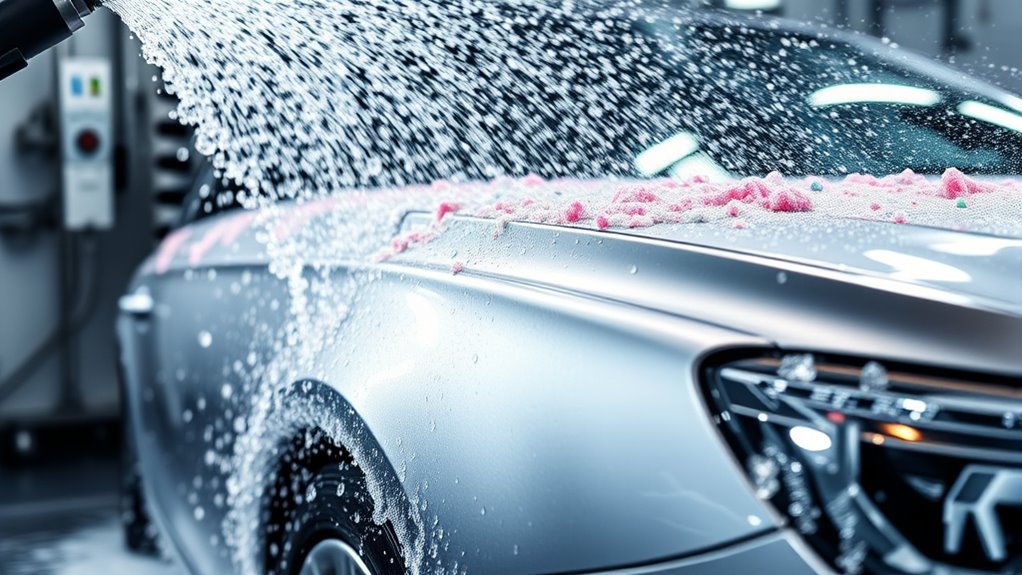
Regular car washes are essential because they prevent dirt, grime, and corrosive substances from damaging your vehicle’s paint and finish. When dirt buildup stays on your car, it can cause scratches and dullness, which hurts the paint protection.
Regular washes help keep the surface shiny by removing pollutants caused by environmental factors like dust, bird droppings, and road salt. Applying wax during washes adds a protective layer, making your car more resistant to water spots and minor scratches.
Regular washes remove pollutants and protect your car with wax, preventing water spots and minor scratches.
Keeping up with regular cleaning also supports your overall maintenance routine by extending your vehicle’s exterior lifespan. Professional detailing services can further improve your car’s appearance, giving it a thorough clean that helps preserve its new look.
Neglecting regular washes can lead to long-term damage, making your vehicle look worn and lowering its resale value. By sticking to a routine, you’ll keep your car looking fresh, protected, and in top condition for years to come.
How to Choose the Best Car Wash for Your Needs
When you’re trying to pick the best car wash for your needs, first think about the different types available—automatic, hand wash, or self-service. Each one has its perks, so choose the one that best suits your vehicle and your preferences.
Next up, take a look at the pricing and packages. You want something that fits your budget, but also doesn’t skimp on quality. Sometimes paying a little more gets you a much better clean and a nicer experience.
And don’t forget about location and accessibility. Picking a car wash that’s easy to get to will make it more convenient to keep your car looking its best regularly.
Types of Car Washes
Choosing the right type of car wash depends on your vehicle’s needs and your priorities. Automatic washes are quick and convenient, perfect for regular maintenance if you want minimal effort.
Touchless options are gentle, using high-pressure water and detergents without brushes, which helps reduce the risk of scratches. Self-service stations let you wash your car manually, giving you control over the process.
Eco-friendly products are great if you want to minimize environmental impact while keeping your car clean. Mobile detailing offers thorough cleaning at your location, including wax applications and seasonal maintenance.
Think about how often you wash your car to decide whether a simple wash or more extensive services fit your schedule. Each type has its benefits, so choose based on your vehicle’s condition, budget, and environmental values.
Pricing and Packages
Selecting the right car wash package depends on your budget and how much cleaning your vehicle needs.
You’ll see a variety of options and pricing tiers to match different preferences, from basic washes to premium services.
Keep an eye out for promotional discounts or seasonal packages that can save you money during certain times of the year.
Membership plans often offer unlimited washes or discounted rates based on how often you wash your car, making regular cleaning more affordable.
Add-on services like waxing, tire shines, or interior cleaning let you customize your experience.
Many car washes reward loyalty with points or discounts, encouraging you to come back.
Think about your vehicle’s needs and how often you wash when choosing a package to get the best value for your money.
Location and Accessibility
Look for facilities with multiple entry points, drive-through bays, or plenty of parking. These features make the process smoother and more convenient.
Think about how close it is to your home or work, and whether the routes in and out are straightforward. Also, check if they have multiple lanes or are open 24/7 for flexible scheduling.
A well-situated car wash helps you stay consistent without hassle. Prioritize locations that are easy to access so your vehicle stays clean with minimal stress.
Preparing Your Car Before Washing for Better Results
Before you start washing your car, it’s really important to prepare it properly to get the best results. Do a quick pre-wash check to spot any stubborn dirt, bugs, or debris that could scratch the paint if you wash over them.
Surface prep is key for a smooth clean. Remove loose dirt with a gentle rinse to help prevent scratching. Pay extra attention to areas that tend to build up grime, like wheel wells and door sills.
Surface prep is essential—rinse away loose dirt, especially around wheel wells and door sills, to prevent scratches.
Check for any damage, like chips or scratches, and note them for future touch-ups. Removing loose dirt and debris allows the soap and water to work more effectively, giving you a cleaner finish.
This first step helps prevent scratches and ensures even cleaning. Spending a few extra minutes on surface prep makes a big difference in how your car looks after washing.
A clean, well-prepared surface sets the stage for a sparkling, flawless shine.
Step-by-Step Guide to Properly Washing Your Car
Sure! Here’s a more conversational version of the text:
—
To wash your car properly, the first thing you want to do is gather all your supplies—grab some clean microfiber cloths, a good quality car wash soap, and a bucket. It’s best to have everything ready so you can keep the process smooth.
When you start washing, make sure to rinse your car often. And remember, always work from the top down. That way, dirt and grime don’t get dragged over areas you’ve already cleaned, helping you avoid streaks and scratches. Following these simple steps will give your car a thorough, safe, and shiny clean every time.
Preparing Your Equipment
Gather all your equipment before starting, making sure everything is clean and in good working order. An equipment checklist helps you stay organized and avoid missing essential items.
Make sure your washing supplies are ready, including soap, sponges, and brushes. Check for any damage or dirt on your tools to prevent scratching your car.
Here’s what you should have:
- Buckets with clean water
- Microfiber cloths or sponges
- Car-specific wash soap
- Soft brushes for wheels and crevices
Having these items prepared saves time and keeps the process smooth. Double-check your supplies to ensure they’re suitable for car washing and free of debris. Proper preparation sets the foundation for a thorough, scratch-free clean.
Effective Washing Techniques
Start by rinsing your car thoroughly with clean water to remove loose dirt and debris. Next, apply foam generously, making sure to cover the entire surface to loosen stubborn grime.
For the best results, do a spot-free rinse after applying the foam. This helps prevent water spots and streaks, leaving your car looking shiny.
Use a soft sponge or microfiber cloth to gently scrub in sections. Work from the top of the car down to avoid spreading dirt around.
| Technique | Purpose | Tips |
|---|---|---|
| Foam application | Loosens dirt and grime | Use a thick, even layer |
| Spot free rinse | Prevents water spots | Rinse thoroughly after foam |
| Gentle scrubbing | Avoid scratching the paint | Use soft cloths |
| Final rinse | Leaves a clean, streak-free surface | Rinse slowly and evenly |
Tips for Cleaning Hard-to-Reach Areas Like Wheel Wells and Underneath
Reaching into tight spaces like wheel wells and underneath your car can be tricky, but it’s important for keeping your vehicle looking good and preventing rust. Using the right tools and techniques makes all the difference.
Here are some tips for those hard-to-reach spots: Use specialized brushes designed for tight spots to scrub away grime. Incorporate detailing tools like spray nozzles to flush out debris.
After cleaning, applying protective coatings can help prevent future buildup. Consider a high-pressure rinse to loosen stubborn dirt from underneath.
Focusing on these areas helps stop rust and keeps your car in top shape. Regularly inspecting and cleaning those tricky spots ensures your vehicle stays protected. With the right tools and techniques, you’ll master cleaning these spaces efficiently.
How to Protect Your Car’s Finish After Washing
Protecting your car’s finish after washing is key to keeping it shiny and damage-free. Start with proper drying techniques, using a microfiber towel to prevent water spots and scratches.
Once dry, apply a quality wax or sealant to enhance protection. Wax gives a nice natural gloss, while sealants last longer and offer benefits like UV protection.
For extra durability, think about a ceramic coating. It creates a tough barrier against dirt, contaminants, and UV rays.
Don’t forget regular maintenance, like cleaning trim and glass thoroughly. A consistent routine helps keep your car looking its best.
Applying wax and sealant regularly helps preserve your paint over time. Remember, a well-maintained finish not only looks great but also shields your car from environmental damage.
Follow these steps, and your vehicle’s paint will stay vibrant, smooth, and protected for miles to come.
Common Mistakes That Can Damage Your Car During a Wash
Even experienced car owners can make mistakes during a wash that unintentionally damage the vehicle’s finish. Common errors include using the wrong soap, which can strip protective coatings or cause streaks. Setting the pressure too high risks damaging paint or scratching surfaces, especially with aggressive rinses.
Even seasoned car owners can unintentionally damage their vehicle’s finish with improper washing techniques.
Over-washing or washing too often can wear down wax and expose the paint to environmental damage. Using improper brushes or neglecting proper drying techniques can also cause scratches and water spots. Be mindful of these pitfalls to keep your car looking its best.
Choose gentle soap that won’t harm protective coatings, and avoid high-pressure settings that could damage the paint. Don’t wash too frequently, as this can wear down wax protection. Use soft brushes and dry carefully to prevent scratches and water spots.
Also, make sure to clean your tires regularly since dirt buildup can transfer to the paint. Remember to practice eco-friendly methods to reduce environmental impact. Proper technique helps your car stay protected and looking pristine.
DIY Car Wash vs. Professional Services: Which Is Right for You?
When you’re trying to decide between washing your car yourself or going to a professional, it really comes down to what matters most to you—cost or convenience. Doing it yourself can save you some cash and is super flexible—you can do it whenever it fits into your day. But, let’s be honest, sometimes the results might not be as shiny or thorough as you’d like.
On the flip side, professional car wash services usually do a better, more detailed job. They have the right tools and expertise to get your car looking its best. The catch? It’s going to cost a bit more, so it’s all about whether you’re okay with spending extra for that extra shine and care.
Cost and Convenience
Deciding between a DIY car wash and professional services often comes down to balancing cost and convenience. DIY washes tend to be more budget-friendly, saving you money on labor. They also offer significant time savings, especially if you do quick touch-ups.
However, professional services may cost more upfront but provide a thorough cleaning and often faster turnaround for multiple vehicles. Consider these points:
- DIY washes are budget-friendly but require your time.
- Professional services cost more but save effort and time.
- DIY options are flexible, fitting into your schedule.
- Professional washes often offer better results with less effort.
Ultimately, if you value cost efficiency and quick results, a DIY wash works well. If you prioritize convenience and a high-quality finish, professional services might be the better choice.
Quality and Care
Choosing between a DIY car wash and professional services often depends on how much quality and care you want for your vehicle. If you care about using top-notch products, professional car washes usually have high-grade soaps, waxes, and equipment that give a thorough, gentle clean.
They also use advanced wash techniques to reduce scratches and ensure even coverage. On the flip side, DIY washes let you control the process, so you can pick specific products and customize your wash.
But you need to be careful with your techniques to avoid damaging your paint or missing spots. In the end, if you want the best quality and consistent care, professional services might be your best bet.
However, if you’re detail-oriented and ready to put in the effort, a DIY approach can still give you great results.
How Often Should You Wash Your Car for Optimal Care
Regularly washing your car is key to keeping it looking good and protecting its paint. How often you wash it depends on things like the season, environment, and local rules.
Most cars do well with a wash every two weeks, but you might need to do it more often if you’re often exposed to dirt, salt, or bird droppings. These can damage the paint if not cleaned off promptly.
Use gentle, high-quality wash materials to avoid scratches or damage. Think about your climate—during winter or rainy seasons, grime and salt build up faster, so more frequent washes are a good idea.
If you live in a less polluted area or where cleaning rules are strict, you can cut back on washing. Adjust your routine based on these factors to keep your car looking sharp and preserve its value over time.
Troubleshooting Common Car Wash Problems and How to Fix Them
Even with proper washing routines, you might run into issues like streaks, water spots, or scratches. Water spots usually come from minerals in hard water, so make sure to dry your car thoroughly with effective drying techniques.
For streaks, check your foam types. Using the right foam can help prevent uneven wax application and chemical buildup. Scratches might happen if your brushes are damaged—avoid harsh bristles and inspect them before each use.
Water spots can also be reduced by rinsing your car well and drying it away from direct sunlight. Remember to clean the undercarriage thoroughly since grime can hide underneath. Applying a quality sealant adds protection and makes future washes easier.
To troubleshoot common problems, here’s a quick guide:
| Issue | Cause | Solution |
|---|---|---|
| Water spots | Hard water, improper drying | Use soft water, dry quickly |
| Streaks | Wrong foam type, chemical residue | Switch foam, rinse thoroughly |
| Scratches | Brush damage, dirt buildup | Use gentle brushes, clean tools |
| Uneven wax | Poor application technique | Practice even waxing motions |
Frequently Asked Questions
What Type of Soap Is Best for Washing My Car?
You should use a pH-balanced car wash soap because it’s gentle on your paint and good at removing dirt. Foam types matter too—thick, lubricating foam helps lift grime without scratching.
For the best results, wash your car regularly—about every two weeks—so dirt doesn’t build up. Avoid household soaps, which can strip wax and damage your paint.
Stick to quality car wash soap for a clean, shiny finish every time.
How Do I Remove Stubborn Stains or Bird Droppings?
Think of stubborn stains as uninvited guests that refuse to leave. To get rid of bird droppings or tough stains, act quickly with a dedicated stain removal product or a mix of water and a gentle car-safe cleaner.
Use a soft cloth or detailing brush, gently working in circular motions. For the best results, follow your detailing tips and don’t let stains set. This will help keep your car’s paint fresh and spotless.
Can I Wash My Car in Direct Sunlight?
You can wash your car in direct sunlight, but it’s not the best idea. The sun can cause the soap and water to dry too quickly, which might leave streaks and water spots.
To avoid this, try washing your car during early morning or late afternoon when the sun isn’t as strong. This helps ensure a cleaner, streak-free finish.
What’s the Safest Way to Dry My Car Without Scratches?
The safest way to dry your car without scratches is to use high-quality microfiber towels and proper drying techniques.
Gently pat or drag the microfiber towel across the surface, avoiding harsh rubbing. Always dry in straight lines or circular motions to prevent swirl marks.
Make sure your towels are clean and free of debris. This approach minimizes scratches and keeps your car’s finish smooth and shiny.
Are There Eco-Friendly Car Wash Options Available?
Yes, eco-friendly car wash options are available. You can find facilities that use biodegradable soaps, which break down naturally and help reduce environmental impact.
Many places also focus on water conservation by using high-pressure systems or recycling water to minimize waste. By choosing these options, you’re helping protect the environment while keeping your car clean.
Look for eco-conscious car washes in your area that prioritize sustainability and environmentally friendly practices.
Conclusion
Mastering car washing is like tending a delicate garden. You need the right tools, patience, and attention to detail.
When you choose the right methods and avoid common pitfalls, your vehicle shines like a well-tended bloom. Regular washes keep your car looking fresh and protect its value over time.
Think of it as nurturing a prized plant. With care and consistency, you’ll enjoy a vehicle that always looks its best, gleaming like a mirror reflecting your dedication.
Mastering car washing is essential for maintaining your vehicle’s appearance. Doing it right ensures your car stays clean and retains its value for years to come.