Safely Power Wash Your Car: A Step-by-Step Guide
If you’ve ever tried to power wash your car only to worry about damaging the paint or missing spots, you’re not alone. Many people struggle with cleaning their cars safely and effectively.
To safely power wash your car, start by parking in the shade and rinsing your vehicle to loosen dirt. Protect sensitive areas like electrical components with waterproof covers and use the right pressure setting and nozzle.
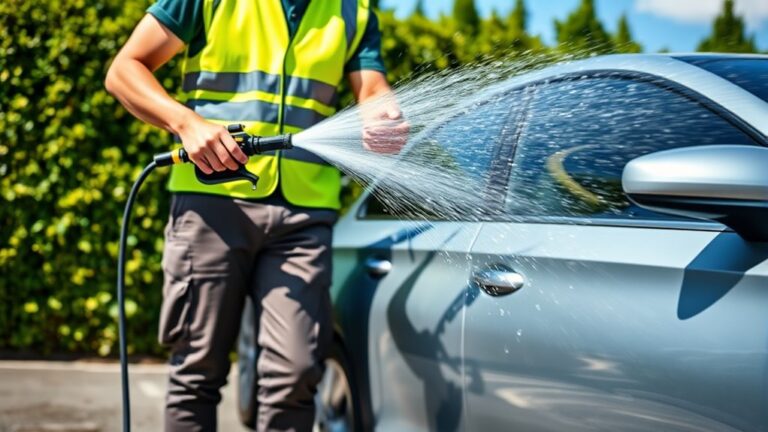
Keep the spray at about 2 feet from the surface, moving steadily to avoid damage. Rinse from top to bottom, then dry with a microfiber cloth.
For more tips to keep your car spotless without harm, keep exploring this guide.
Key Takeaways
- Before washing, cover electrical parts and sensitive spots with plastic bags or covers to keep them dry.
- Use a power washer that lets you adjust the pressure and choose a wide-angle nozzle to prevent damage to your paint.
- Keep about 2 feet of distance from your car and move the nozzle steadily to avoid focusing too much pressure on one spot.
- Start rinsing from the top and work down gently, then dry your car with a microfiber towel for a scratch-free shine.
- Check your equipment regularly and fix any stubborn dirt or potential damage areas right away.
How to Prepare Your Car for Safe Power Washing
Before you start power washing your car, it’s essential to prepare properly to prevent damage and ensure a thorough clean. Begin by parking your vehicle in a shaded area to avoid water spots and protect the paint.
Rinse the car with water to loosen dirt and grime, which helps prevent scratching during washing. If your car has a wax coating, this step makes sure the water and cleaning agents don’t strip away your paint protection prematurely.
Consider applying a quality car wax regularly, as it creates a barrier that shields your paint from contaminants and makes cleaning easier. Remove any loose debris, like leaves or bugs, with a soft brush or cloth.
Check your car’s surface for any chips or scratches that might need touch-up. Proper preparation minimizes the risk of damaging your vehicle’s paint and preserves the paint protection.
This way, your car will stay shiny and new after power washing.
Choosing the Best Equipment and Detergents for Car Power Washing
When you’re picking out your equipment, it’s important to choose a power washer that has the right pressure and flow rate for your car. You don’t want to use something too strong that could damage the paint, but it also needs enough power to get your car really clean.
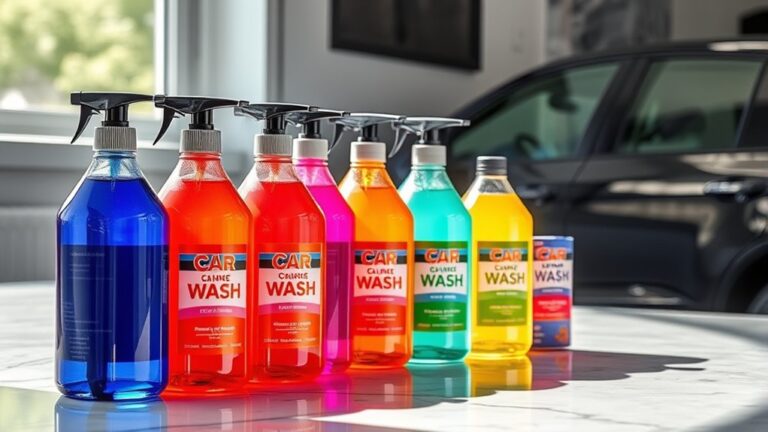
As for detergents, go for ones that are safe for automotive finishes. You want something that can cut through dirt and grime without harming the paint or any sensitive parts. Always keep safety in mind and make sure the products you choose are compatible with your vehicle’s surface — this way, you’ll get a thorough clean without any worries.
Selecting Appropriate Power Washers
Choosing the right power washer is essential for cleaning your car effectively without causing damage. You want adjustable pressure settings to prevent stripping paint or harming delicate surfaces.
Nozzle types, like wide or pinpoint spray, help target dirt without harming the finish. Water temperature matters—hot water can boost cleaning but avoid using it on sensitive surfaces.
Different surfaces need specific settings to avoid etching or scratches. Reputable brands offer reliable features, but regular maintenance, like checking hoses and filters, helps extend the equipment’s lifespan.
Think about how often you’ll use it; frequent washes may require gentler settings. Also, consider environmental factors—use eco-friendly detergents and conserve water to keep your cleaning effective while minimizing environmental impact.
Choosing Suitable Detergents
Selecting the right detergents is key to cleaning your car effectively without harming its paint or finish. You want detergents that are specifically made for automotive use because they’re gentle but still good at removing dirt and grime.
Look for options labeled safe for paint and clear coat. Eco-friendly choices are worth considering too, since they’re better for the environment and contain fewer harsh chemicals.
Biodegradable detergents usually have plant-based ingredients and are free from phosphates and other harmful substances. Always check labels to make sure they’re compatible with your car’s finish.
Using the right detergent not only keeps your vehicle looking great but also ensures a safe, thorough clean. Picking the proper detergent is a crucial step to maintaining a spotless, well-kept vehicle.
Considering Safety and Compatibility
Guaranteeing safety and compatibility during power washing involves carefully selecting equipment and detergents that won’t damage your vehicle. Car wash safety is really important, so choose a power washer with adjustable pressure settings to prevent dents or scratches.
Check that your equipment is compatible with your car’s surface—using the right nozzle and pressure level is essential. Always opt for detergents formulated specifically for car wash safety; harsh chemicals can strip paint or cause corrosion.
Before starting, test your gear on a small, inconspicuous area to confirm compatibility. Using the wrong equipment or detergents can lead to costly repairs or damage, so prioritize quality and suitability for your vehicle.
Properly matching your power washer and cleaning products guarantees a safe, effective, and damage-free car wash.
Rinsing Your Car to Remove Loose Dirt and Debris
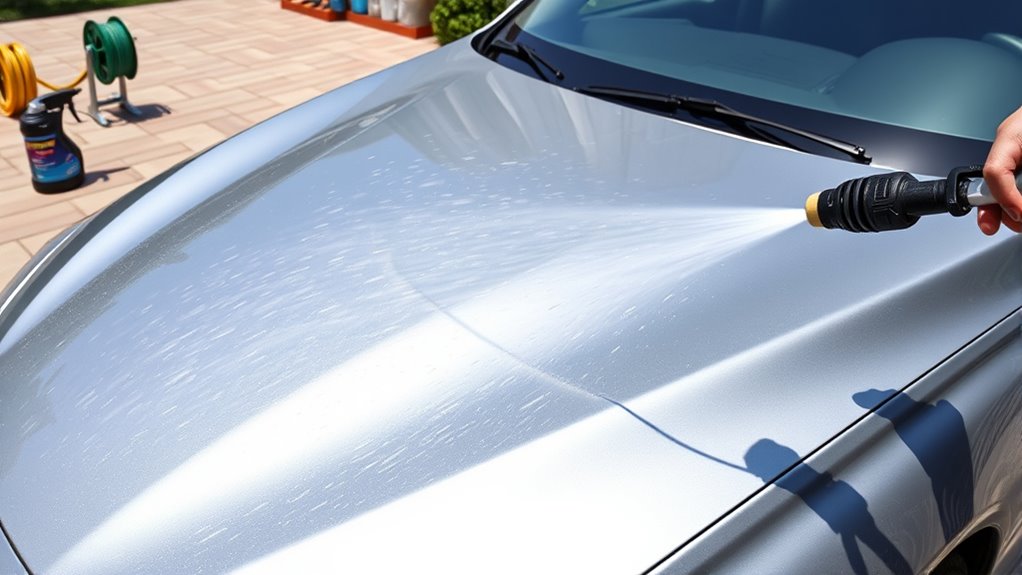
Start by thoroughly rinsing your car with a gentle stream of water to loosen and wash away loose dirt, dust, and debris. This step is key because it prepares the surface for effective cleaning, helps prevent scratches, and makes dirt removal more efficient.
Use a steady, wide spray to cover all areas, paying close attention to the grille, wheel wells, and undercarriage. Rinsing lifts loose particles that could scratch the paint if you start scrubbing right away.
Use a steady, wide spray to thoroughly rinse, especially grille, wheel wells, and undercarriage, to prevent scratches.
It also reveals stubborn spots that may need extra attention later. Take your time to ensure water flows smoothly over every surface, especially those hard-to-reach spots.
Proper rinsing makes the next cleaning steps easier and more effective, reducing the risk of damaging your car’s finish. Once you’ve rinsed thoroughly, your car will be ready for the next part of the power washing process.
Applying the Right Cleaning Solutions for Stubborn Stains
When dealing with stubborn stains on your car, applying the right cleaning solutions is essential for effective removal. Start by choosing stain removal techniques suited to the specific stain, whether it’s bird droppings, tree sap, or grease.
For most stains, a dedicated automotive cleaner works best, but opt for eco-friendly solutions whenever possible to protect the environment and your car’s paint. Mix a small amount of cleaner with water, following the product instructions, and apply it directly to the stain.
Use a soft cloth or sponge to gently scrub the area, allowing the solution to loosen the stain without damaging the paint. Avoid harsh chemicals or abrasive tools, as they can cause scratches or discoloration.
Rinse thoroughly with water after treatment to remove any residue. Using the right cleaning solutions and stain removal techniques guarantees stubborn stains are lifted effectively without harming your car or the environment.
Protecting Windows, Mirrors, and Electrical Components During Power Washing
When you’re power washing your car, it’s a good idea to cover up your windows and mirrors first. This way, you can stop water from sneaking inside and causing any damage.
Also, don’t forget to protect electrical parts like the battery and sensors. Covering these parts helps prevent water from getting in and messing things up.
Just taking these simple steps can really help keep your car’s delicate parts safe while you’re cleaning.
Shield Windows and Mirrors
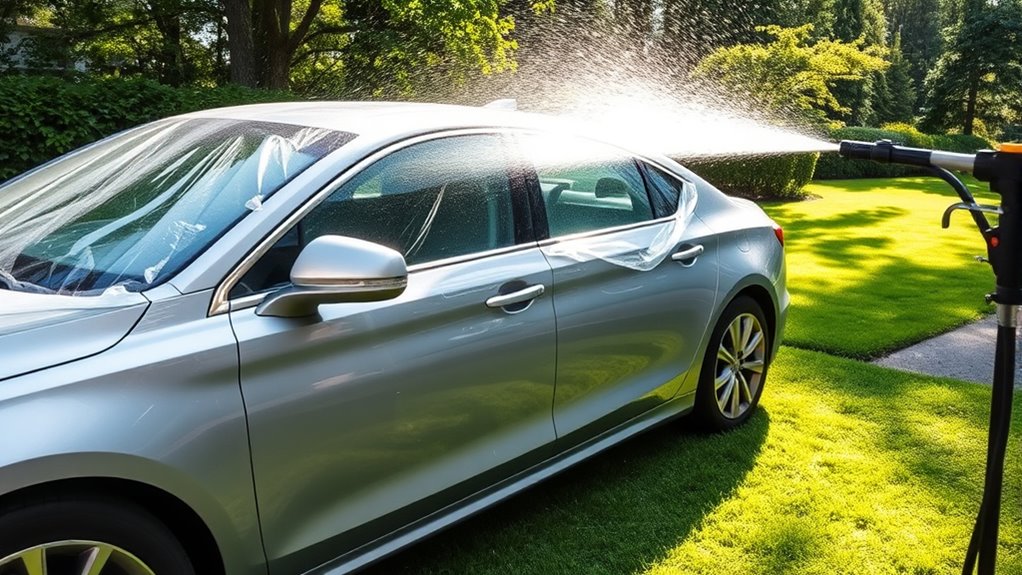
Covering your windows and mirrors before power washing is essential to prevent water from seeping inside and causing damage. Use tape or plastic sheeting to shield your windows and mirrors effectively.
Proper mirror shielding keeps water out of delicate surfaces, so they stay clear and free from moisture. Visualize this setup:
| Window Protection | Mirror Shielding | Safety Precaution |
|---|---|---|
| Plastic wrap over glass | Covering with a tarp | Keep electrical parts dry |
| Tape sealing edges | Bubble wrap for mirrors | Use gentle pressure |
| Clear tape on borders | Foam padding around mirrors | Avoid direct water spray |
This simple step guarantees your vehicle’s sensitive areas stay dry, maintaining clarity and functionality during your power wash.
Cover Electrical Components
To prevent electrical damage during power washing, it’s important to carefully protect all electrical components on your vehicle. Start by covering sensitive parts like the alternator, battery terminals, and exposed wiring with waterproof covers or plastic bags.
Make sure windows and mirrors are securely shielded to avoid water getting inside. Using painter’s tape around electrical connectors can add an extra layer of protection.
Remember, electrical safety is key. Water contact can cause short circuits or corrosion, so take your time to double-check that no electrical parts are exposed before you start washing.
Properly covering these components protects your vehicle’s electrical system and ensures your power washing session is both safe and effective.
Proper Techniques for Power Washing Without Damaging Your Car’s Paint
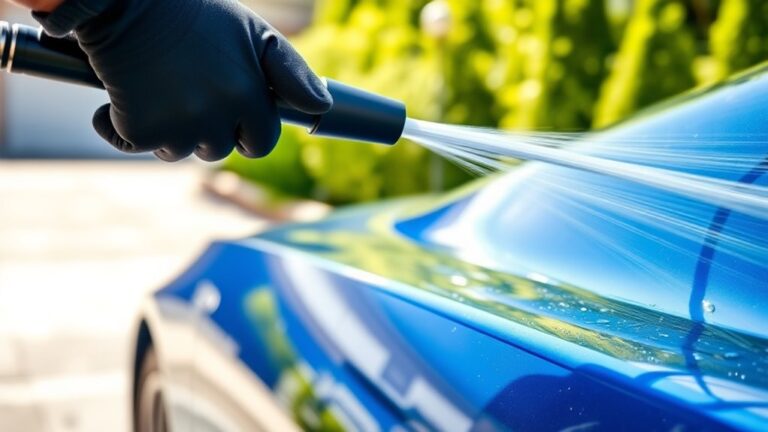
Using the right techniques is essential to power washing your car without harming its paint. Start by keeping a safe distance—about 2 feet—between the nozzle and your vehicle.
Use a wide-angle spray, around 40-60 degrees, to evenly distribute water. Avoid direct, concentrated streams that can strip away paint protection.
Keep the nozzle moving constantly to prevent focused pressure that might cause damage. Always use a low to medium pressure setting; high pressure can chip or scratch the paint.
When spraying, aim at the vehicle’s surface at a slight angle. This lifts dirt without forcing it into the paint. Avoid aiming directly at seams, edges, or cracked areas.
How to Rinse and Dry Your Car for a Scratch-Free Finish
Want that perfect, scratch-free shine on your car? The key is to start by rinsing it gently with a soft spray. This helps remove loose dirt without risking any scratches on the paint. Take your time and be gentle—your car will thank you!
Once it’s rinsed, it’s all about drying it properly. Grab a microfiber towel or a chamois—these are great for absorbing water smoothly. Just be careful and gentle as you dry, so you don’t accidentally leave swirl marks behind. If you follow these simple steps, your car will stay smooth, shiny, and looking like new after every wash.
Gentle Rinsing Techniques
Start by rinsing your car thoroughly with a gentle stream of water, working from the top down to prevent dirt from settling on already-clean surfaces. Use gentle techniques and low water pressure to avoid damaging the paint or causing scratches. Keep the flow steady and consistent, avoiding high-pressure jets that can force dirt into the paint’s surface.
To improve your rinsing, use a wide, soft spray to cover large areas evenly. Keep the nozzle at a safe distance to maintain gentle water pressure. Rinse in smooth, overlapping motions to prevent missed spots and streaks.
This approach minimizes the risk of swirl marks and guarantees dirt is loosened without harm. Remember, gentle techniques are key for a scratch-free, pristine finish.
Proper Drying Methods
After rinsing your car, it’s important to dry it properly to avoid water spots and scratches. Use high-quality drying towels made for cars to soak up water quickly without hurting the paint.
Start drying from the top and work downwards. Be gentle—pat or blot the surface instead of dragging the towel across it. This helps prevent pushing dirt or debris around and causing scratches.
Make sure to dry all areas, including mirrors, door jambs, and around trim. If needed, switch to a clean, dry towel to keep drying. Proper drying gives you a smooth, scratch-free finish and gets your car ready for waxing or detailing.
Tips for Maintaining Your Car’s Shine Between Washes
Maintaining your car’s shine between washes is all about quick, consistent care. Regularly addressing small details helps keep your vehicle looking its best.
Start with proper waxing techniques; a light wax every few weeks adds a protective layer that boosts shine and repels dirt. Keep your interior clean by vacuuming and wiping surfaces to prevent dust buildup, which can dull the overall appearance.
Use a microfiber cloth to regularly wipe down your car’s exterior, removing fingerprints and smudges. Here are some tips to help maintain that shine:
- Apply a quick detailer spray for instant gloss and protection
- Regularly clean windows and mirrors to improve visibility and appearance
- Keep an eye out for bird droppings or tree sap, and remove them promptly to prevent damage
Following these simple steps will extend the time between full washes, ensuring your car stays gleaming and well-maintained.
Common Power Washing Mistakes to Avoid
One of the biggest mistakes you can make when power washing your car is using too much pressure or holding the nozzle too close to the surface. This can damage the paint or strip away protective coatings. To avoid this, use gentle power washing techniques, maintaining a safe distance—about 12 inches from the surface.
Many people think higher pressure cleans better, but it actually risks causing harm. Instead, focus on a consistent, sweeping motion to prevent streaks or missed spots.
Another mistake is neglecting to test the pressure on a small area first, which can lead to unexpected damage. Also, avoid using the same pressure setting for every part of your car; delicate areas like trim or tinted windows need lower pressure.
Troubleshooting Power Washing Problems and When to Seek Help
Have you ever experienced uneven cleaning, streaks, or equipment problems while power washing your car? These issues are often caused by incorrect pressure settings, nozzle choices, or water temperature.
First, check your pressure settings. Too high can damage your paint, while too low might not clean well enough. Make sure you’re using the right nozzle type; a wide-angle nozzle is best for cars to avoid damaging the paint.
Next, adjust the water temperature depending on your vehicle. Hot water works well for grease, but cold water is safer for your paint. Using the wrong nozzle or ignoring safety tips can lead to equipment issues or even injuries.
Regularly maintaining your equipment can prevent problems. Clean filters and check hoses to keep everything running smoothly. If issues keep happening, especially with equipment or water temperature, it’s best to get professional help for safe, effective cleaning.
Frequently Asked Questions
Can I Power Wash My Car in the Rain?
You shouldn’t power wash your car in the rain because it can affect safety and weather considerations. Rain can dilute cleaning agents, making your wash less effective.
It also increases the risk of slipping or electrical hazards if water gets into sensitive parts.
Plus, it’s harder to see dirt and grime when it’s wet, so waiting for clear, dry weather is a good idea.
That way, you can be sure your power wash is both safe and thorough.
How Often Should I Power Wash My Vehicle?
Think of your car’s cleanliness like watering a garden—you don’t want to overdo it or neglect it.
Generally, you should power wash your vehicle every 4 to 6 weeks, depending on driving conditions.
Follow best practices, like using the right pressure and soap, and avoid common mistakes such as high-pressure damage or missing spots.
Regular cleaning keeps your car shining and prevents buildup, helping to extend its lifespan.
Is It Safe to Use a Pressure Washer on All Car Types?
Using a pressure washer is generally safe for most car types, but you should choose the right pressure washer for your vehicle’s materials.
For example, softer washers are better for delicate paint and plastic parts, while more powerful ones are suitable for tougher surfaces like metal or heavily soiled areas.
Always keep the nozzle at a safe distance and avoid spraying directly with high pressure on sensitive components to prevent damage.
What Should I Do if I Notice Paint Damage After Washing?
If you notice paint damage after washing, think of it as a crack in your car’s armor. Quickly assess the damage to see how bad it is, and focus on protecting your paint.
Avoid harsh scrubbing, which can make things worse. If you’re unsure, it’s a good idea to consult a professional.
Addressing problems early can stop further harm and help keep your car’s finish looking great. Remember, taking action quickly helps preserve your vehicle’s beauty and value, like fixing a shield before it breaks.
Can I Use Household Cleaning Products for Power Washing?
You shouldn’t use household cleaners for power washing your car because they aren’t made for automotive surfaces and can damage your paint. It’s best to stick with car-specific wash soaps.
Also, set your pressure washer to a low or medium pressure setting to prevent any harm. Using the right cleaners and pressure ensures a safe, effective clean.
This way, you avoid risking paint damage or other issues while getting your car looking its best.
Conclusion
Just as a master artist protects their masterpiece, treat your car with care and respect.
With the right steps, you’ll keep its shine like a precious gem, avoiding scratches and damage. Power washing isn’t just about cleaning; it’s about preserving your vehicle’s beauty for miles to come.
So, take your time, follow these steps, and let your car’s renewed glow be a reflection of your careful touch. Properly power washing your car helps maintain its value and appearance over time.