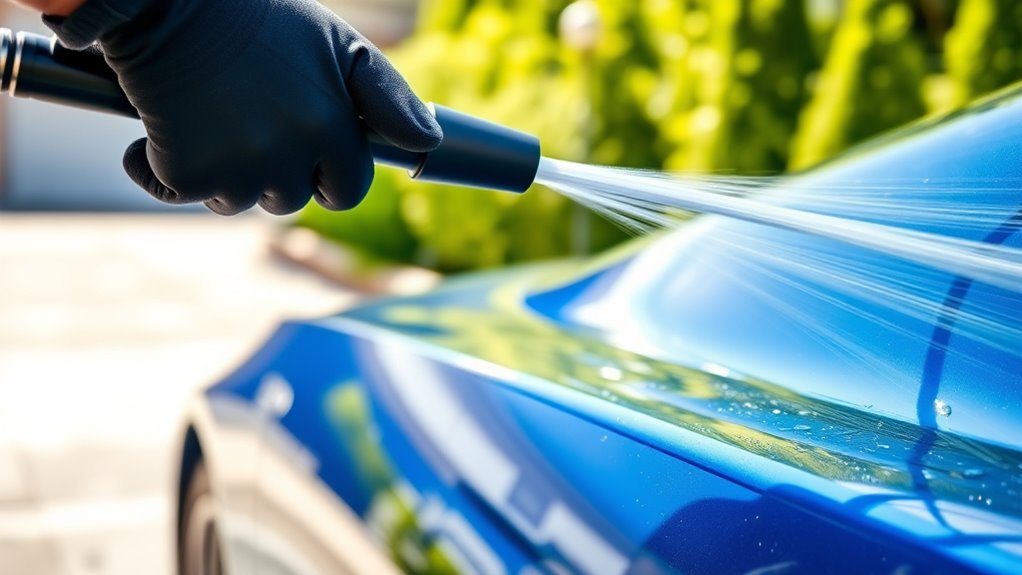
How Can You Safely Wash Your Car With a Pressure Washer?
Many car owners want a spotless, shiny vehicle but worry about damaging their paint or delicate parts in the process. You’re not alone—nobody wants to risk scratches or dents when cleaning their car.
Using a pressure washer can make the job easier, but it’s important to do it safely.
To safely wash your car with a pressure washer, start by choosing a pressure between 1200 and 1900 PSI and use a nozzle with a 25°-40° spray angle.
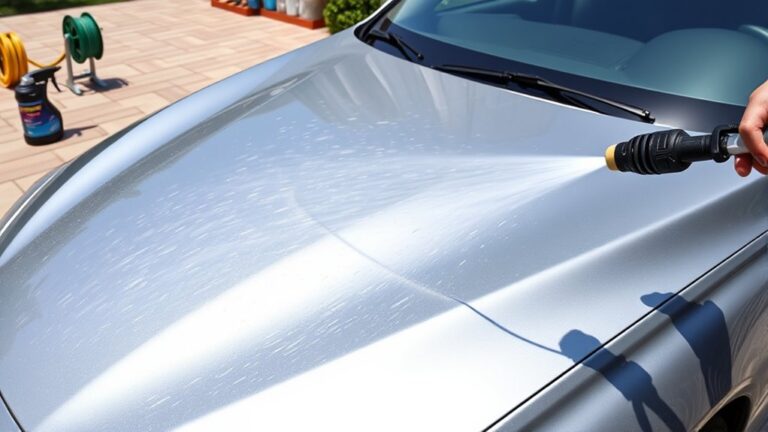
Keep the nozzle about 2 feet away, moving in smooth, overlapping strokes to avoid damage. Make sure you protect delicate areas and use gentle pressure settings for trims and mirrors.
If you continue, you’ll find out how to make your car shine without risking harm.
Key Takeaways
- Keep about 2 feet away from the car and use a 25°–40° nozzle for safe, effective cleaning.
- Start with low pressure, around 1200 PSI, and slowly increase to prevent damaging the paint.
- Use gentle, overlapping strokes, and avoid spraying directly at seams, vents, or electrical parts.
- Cover or avoid spraying sensitive areas like the engine and electrical components.
- Apply biodegradable, car-specific detergent with a foam cannon, following the dilution instructions for gentle cleaning.
How Does a Pressure Washer Work, and Why Is It Good for Car Washing?
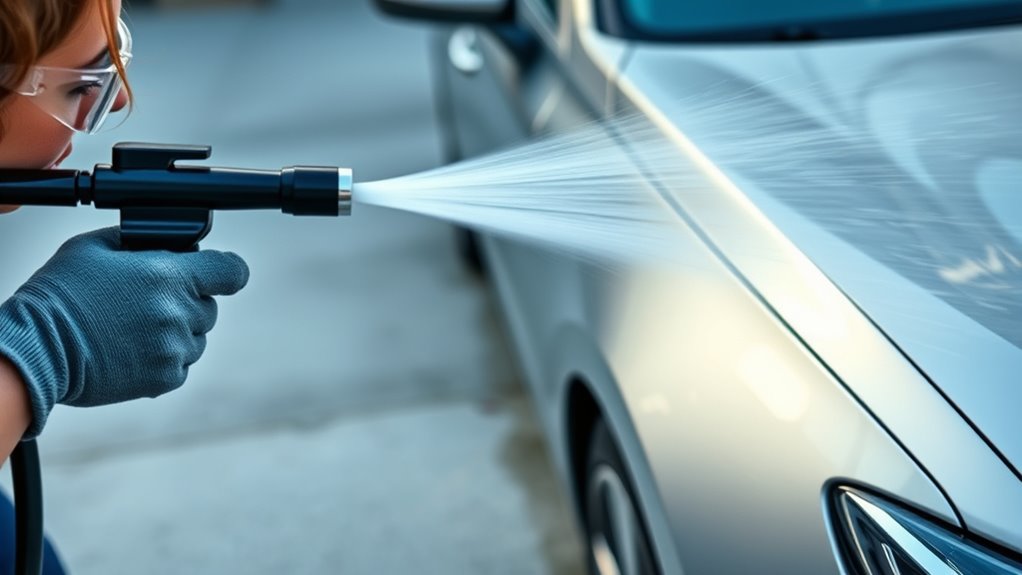
A pressure washer works by using a motor or engine to power a pump that forces water through a narrow nozzle at high pressure. This creates a powerful stream that effectively removes dirt, grime, and mud from your car’s surface.
The benefits include saving time and effort compared to traditional washing methods, and achieving a deep clean without harsh scrubbing. There are different types, like electric and gas-powered models, each suited for various needs.
Save time and effort while achieving a deep clean with the right pressure washer for your needs.
Electric pressure washers are lightweight, quiet, and great for light to moderate cleaning tasks. Gas-powered units offer higher pressure for tougher dirt and larger areas.
When used correctly, a pressure washer makes car washing easier and more efficient, giving your vehicle a professional-grade clean. Understanding how it works and the options available helps you choose the right type for safe and effective cleaning.
Preparing Your Car and Equipment for a Safe Pressure Wash
Before you get started, take a good look at your vehicle to check for any existing damage or loose parts. It’s always better to spot these beforehand so you won’t accidentally make things worse.
Next, gather up all the equipment you’ll need—things like nozzles, brushes, and protective gear. Having everything ready will make the whole process smoother and safer.
And don’t forget to protect sensitive areas like your engine and electrical components. Covering them up will help prevent any water or cleaning solutions from causing damage while you’re pressure washing.
Inspect Vehicle Carefully
Inspecting your vehicle carefully is essential to ensure a safe and effective pressure washing process. Start by checking the vehicle condition, looking for loose parts, cracked windows, or any existing damage. Use an inspection checklist to identify vulnerable areas that could be worsened by high pressure.
Make sure side mirrors, antennas, and trim are secure, and remove or secure any loose accessories. Check for rust or chipped paint, as these spots can be sensitive to pressure. Also, verify that no personal belongings or valuables are left inside, since water might damage them.
Taking these steps helps prevent accidental damage and guarantees you’re targeting dirt and grime safely and efficiently. A thorough inspection sets the foundation for a successful pressure wash.
Gather Proper Equipment
Gathering the right equipment sets the stage for a safe and efficient pressure washing session. You’ll need essential tools like a pressure washer suited for cars, a garden hose, and appropriate nozzles.
Equipment types vary, so choose one with adjustable pressure settings to prevent damage. Make sure you have a spray wand or nozzle that allows you to control water flow.
Additional essentials include a ladder if you need to reach high spots and protective gear like goggles and gloves. Having these tools ready ensures you can clean your vehicle thoroughly without risking damage.
Double-check that your pressure washer is in good condition and compatible with your car’s cleaning needs. Proper equipment helps you work efficiently and keeps safety a top priority throughout the process.
Protect Sensitive Areas
To guarantee a safe and effective pressure wash, you need to protect your car’s sensitive areas, like the engine bay, electrical parts, and interior. Taking these protective steps helps prevent water damage and costly repairs. Cover these spots with plastic bags or waterproof covers, especially around vents and electrical connectors.
Use painter’s tape to seal gaps and keep water out. Keep the pressure washer about 2-3 feet away to avoid forcing water into delicate parts. This distance is key for a safe clean without risking damage.
For the engine bay, cover it with plastic or waterproof covers. Just be sure not to spray directly at high pressure. When cleaning electrical components, use painter’s tape and plastic shields, and angle the spray downward.
To protect the interior, close all doors and windows, and cover seats and carpets with plastic sheets. This way, you keep splashes from reaching sensitive areas. Following these tips keeps your car dry and protected during cleaning.
Choosing the Right Pressure and Nozzle for Your Car
To clean your car properly, you’ve got to pick the right pressure setting and nozzle. If you use too much pressure, you might end up damaging the paint, which nobody wants. On the other hand, if the pressure is too low, your car might not get as clean as you’d like.
Choosing the right nozzle is just as important. It ensures you’re applying the right amount of water — enough to do a good job without risking any harm. So, taking a little time to pick the right tools can make a big difference in getting your car spotless and safe.
Optimal Pressure Settings
Choosing the right pressure and nozzle is key to cleaning your car effectively without causing damage. The ideal pressure usually falls between 1200 and 1900 PSI, depending on your vehicle’s paint and surface.
Adjust the pressure to fine-tune the water flow, avoiding excessive force that could chip or scratch the paint. Start with a lower setting and gradually increase if needed, keeping the spray about 2 feet from the surface.
Remember, higher pressure isn’t always better; it can do more harm than good. Focus on maintaining gentle, consistent pressure to loosen dirt without risking damage.
Proper pressure adjustment ensures your car gets a thorough clean while staying protected from potential harm.
Suitable Nozzle Types
Selecting the right nozzle is key for effective car cleaning without causing damage. The materials, like brass or plastic, affect durability and performance, so pick wisely.
Nozzle angles, usually between 0° and 40°, control the spray pattern and intensity. For washing your car, a 25° or 40° nozzle gives a gentle yet effective spray that cleans without stripping paint or harming delicate surfaces.
A narrower angle, like 0°, provides powerful cleaning but can cause damage if used improperly. Start with a wider angle and switch to a narrower one if needed. Using the right nozzle helps you control pressure and spray direction.
This ensures a thorough, safe clean without hurting your vehicle’s finish.
How to Maintain a Safe Distance and Angle When Pressure Washing
Maintaining the right distance and angle when pressure washing is key to cleaning effectively and avoiding damage. Keep the spray nozzle about 2 feet from your car’s surface, sticking to this distance to prevent streaks or dents.
Adjust the spray angle to around 45 degrees for most surfaces. This helps loosen dirt without hurting the paint. Move the spray in smooth, overlapping strokes to get even coverage.
Here’s a quick visual guide:
| Distance Measurement | Angle Adjustment | Effect |
|---|---|---|
| 2 feet from surface | 45 degrees | Deep cleaning, safe |
| Closer than 1 foot | Steeper angle | Risk of damage |
| Further than 3 feet | Flatter angle | Less effective cleaning |
Keep an eye on these parameters to clean safely and efficiently.
Selecting and Applying the Best Detergents for Your Car
Picking the right detergent is really important if you want to clean your car well without hurting the paint. It’s not just about the soap you use, but also how you mix it and apply it. Getting the dilution right is key — you don’t want to use too much and waste product, or too little and end up not cleaning properly.
Once you’ve got your cleaner ready, applying it the right way makes all the difference. Taking your time and doing it carefully helps ensure your car gets a good, thorough wash while keeping that shiny finish intact.
Choosing Appropriate Car Detergents
In regard to cleaning your car effectively, using the right detergent is essential. Look for eco-friendly options that are safe for your vehicle and the environment.
Many modern detergents are biodegradable and free of harsh chemicals, making them gentle yet effective. Foam cannons are a great tool to apply these detergents evenly, creating a thick layer of foam that lifts dirt without scratching your paint.
When choosing a detergent, verify it’s specifically formulated for automotive use, as household cleaners can damage your car’s finish. Read labels carefully and opt for products that emphasize safety and environmental responsibility.
Properly selected detergents help you achieve a thorough clean with less risk of damage, setting a solid foundation for a safe and effective pressure washing process.
Proper Dilution Techniques
To get the best results from your pressure washer, it’s essential to dilute your car detergent properly before application. Start by following the recommended dilution ratios on the detergent label.
These ratios ensure you use enough cleaner to remove dirt without wasting product or damaging your paint. When mixing, use clean measuring tools to get accurate amounts.
Add the detergent to water, not the other way around, to prevent spills. Mix thoroughly with gentle stirring or shaking to avoid uneven cleaning or concentrated spots.
Proper mixing techniques help ensure your car gets an even clean without any damage. Always double-check the instructions for your specific detergent, since incorrect dilution can reduce cleaning power or harm your vehicle’s finish.
Accurate dilution and proper mixing are key to a safe, efficient, and effective car wash.
Application Best Practices
Selecting the right detergent is key to getting a clean, damage-free car wash. Using the proper cleaning agents helps protect your car’s paint while effectively removing dirt.
When applying detergents, focus on proper pressure techniques—keep a safe distance and spray gently to avoid any damage. Always follow safety measures like wearing gloves and eye protection to stay safe.
Here are some tips for success:
- Use eco-friendly detergents to protect both your vehicle and the environment.
- Start with low pressure and increase gradually to prevent stripping the paint.
- Keep the nozzle moving consistently to avoid streaks or damage.
Applying detergents with the right pressure and safety measures ensures a thorough clean without harming your car’s finish. Proper technique means better results and a vehicle that looks its best.
Effective Techniques to Wash Your Car Without Damaging Paint or Trim
Using a pressure washer can be really effective for cleaning your car, but it’s important to use the right technique to avoid damaging the paint or trim. Keep the nozzle about 2 to 3 feet away from the surface and use a wide spray pattern to spread out the pressure evenly.
Always keep the wand moving to prevent high-pressure spots that could chip or scratch your paint. When aiming at trim, turn down the pressure even more since trim is more delicate. Use gentle, sweeping motions instead of holding the nozzle still.
To protect your paint, avoid pointing high-pressure jets directly at seams, edges, or decals. These areas are more likely to peel or get damaged. Proper technique helps you clean effectively while keeping your car’s finish and trim safe.
Being mindful of pressure and distance will help preserve your vehicle’s appearance and extend the life of its paint protection.
Adjusting Pressure Settings for Different Car Parts
Adjusting the pressure settings on your pressure washer is key to cleaning different car parts effectively without causing damage. Different areas need different pressure levels to get the job done safely.
For delicate spots like mirrors, trim, and windows, use a lower pressure to avoid chips or scratches. For tougher areas like tires or wheel wells, crank up the pressure to remove dirt and grime more efficiently.
Remember, using the wrong pressure can lead to costly repairs or even paint damage. Keep these tips in mind to stay confident and worry-free:
- Start low and gradually increase to find the right setting for each part
- Test on hidden areas before cleaning visible surfaces
- Adjust the pressure quickly based on what you’re cleaning
Thoroughly Rinsing Your Car to Remove Residue and Prevent Damage
Before you finish washing your car, thoroughly rinsing it is key to removing all soap, dirt, and residue. Proper rinsing ensures nothing is left behind, which helps prevent streaks and spots. It also protects your car from damage caused by leftover debris.
Use a gentle, wide spray pattern to cover all surfaces evenly. Pay special attention to crevices and seams where dirt can hide and be stubborn to remove.
| Area to Rinse | Technique | Purpose |
|---|---|---|
| Body panels | Gentle spray | Remove soap and dirt |
| Wheels | Focused rinse | Prevent brake dust buildup |
| Undercarriage | Low-pressure spray | Avoid corrosion and damage |
This systematic approach makes sure all residues are washed away. It reduces the risk of damage from trapped grime or soap residue.
Thorough rinsing not only leaves your car cleaner but also helps protect its paint and surfaces. In the end, it keeps your car looking good and lasting longer.
Drying Your Car Safely After Pressure Washing
After pressure washing your car, it’s important to dry it thoroughly to avoid water spots and streaks. Proper drying keeps your vehicle looking great and protects its finish.
Dry your car thoroughly after washing to prevent water spots and keep it looking pristine.
You can dry your car quickly and effectively with a soft microfiber towel. Gently absorb water from all surfaces, being careful not to scratch the paint or cause streaks, especially on delicate areas.
Alternatively, you can let your car air dry. Just make sure to do this in a shaded spot to prevent spots caused by mineral deposits from the water.
To make sure your car dries safely and looks amazing, keep these tips in mind:
- Use a clean, soft microfiber towel for gentle towel drying
- Avoid harsh rubbing that might scratch the paint
- Park in a shaded area for better air drying
When done carefully, both methods will leave your car spotless, shiny, and ready for your next drive.
Common Mistakes to Avoid When Using a Pressure Washer on Your Car
Using a pressure washer incorrectly can easily damage your car’s paint or cause water to seep into sensitive areas. To stay safe, avoid common mistakes like holding the nozzle too close or keeping it in one spot for too long.
Keep the spray about 12 inches away and use a sweeping motion. This helps prevent concentrated pressure that could chip or strip your paint. Also, don’t use the highest pressure setting unless necessary. Start low and adjust as you go.
Never aim the nozzle at seams, vents, or electrical parts. Water can cause serious damage there. Be especially careful around delicate parts like side mirrors or window seals.
Being mindful of these mistakes helps protect your vehicle and makes cleaning more effective. Using proper technique keeps your car looking great while ensuring safety.
Frequently Asked Questions
Can I Use a Pressure Washer on All Car Types Safely?
You can’t use all pressure washer types on every car safely. Different car materials, like paint, glass, and plastic, need specific care.
For delicate finishes, avoid high-pressure washers or use a wide spray nozzle. Light-duty electric washers are safer for most vehicles. Gas-powered models with adjustable settings work well for tougher grime.
Always keep the nozzle at a safe distance and test on a small area first to prevent damage.
How Often Should I Pressure Wash My Car?
You should pressure wash your car about once a month for ideal cleanliness, but feel free to adjust depending on where you live.
Using the right frequency helps keep your vehicle looking its best without risking damage. Keep the pressure settings moderate—around 1200 to 1900 PSI—to avoid harming the paint or seals.
Regular washing with proper pressure and care helps maintain your car’s appearance and value without causing any damage.
Is It Safe to Pressure Wash Around Windows and Mirrors?
Yes, it’s safe to pressure wash around windows and mirrors if you take some precautions. Keep the pressure low and stay a safe distance to avoid damaging window seals or dislodging mirrors.
Be gentle around edges and avoid spraying directly on seals and glass. Using a wide spray pattern helps, and it’s always a good idea to test a small area first.
This way, you can prevent water from sneaking in or causing damage while still cleaning those sensitive areas effectively.
What Safety Gear Should I Wear During Pressure Washing?
Imagine your safety as your shield. What safety gear should you wear during pressure washing? You should wear safety goggles to protect your eyes, gloves to prevent injuries, and sturdy footwear for stability.
Ear protection is a good idea if your pressure washer is loud. Follow pressure washer tips and safety precautions by wearing these essentials.
This will keep you safe from flying debris or water spray. Stay protected and make your cleaning task a breeze.
Can Pressure Washing Damage Car Decals or Paint?
Pressure washing can damage car decals or paint if you use too high a pressure setting or hold the nozzle too close.
To protect your decals and paint, keep the nozzle at a safe distance, use a wide spray pattern, and avoid focusing on delicate areas.
Proper car decal care and paint protection techniques help prevent peeling or scratches, keeping your vehicle looking new after pressure washing.
Conclusion
Now that you know the key steps to safely wash your car with a pressure washer, you’re almost ready for your next detailing session.
But remember, a single mistake can turn your car wash into a costly mishap. Are you confident you’ll find that perfect balance of power and care?
Stay vigilant, follow these tips, and you’ll keep your car sparkling without risking damage. Your spotless ride is just a spray away.