Safely Pressure Wash My Car: A Step-by-Step Guide
Cleaning your car with a pressure washer sounds simple, but many people struggle with doing it safely and effectively. You’re not alone—finding the right techniques can be tricky, especially if you’re worried about damaging your paint or delicate parts.
Luckily, with a few tips and the right equipment, you can make your car look great without any hassle.
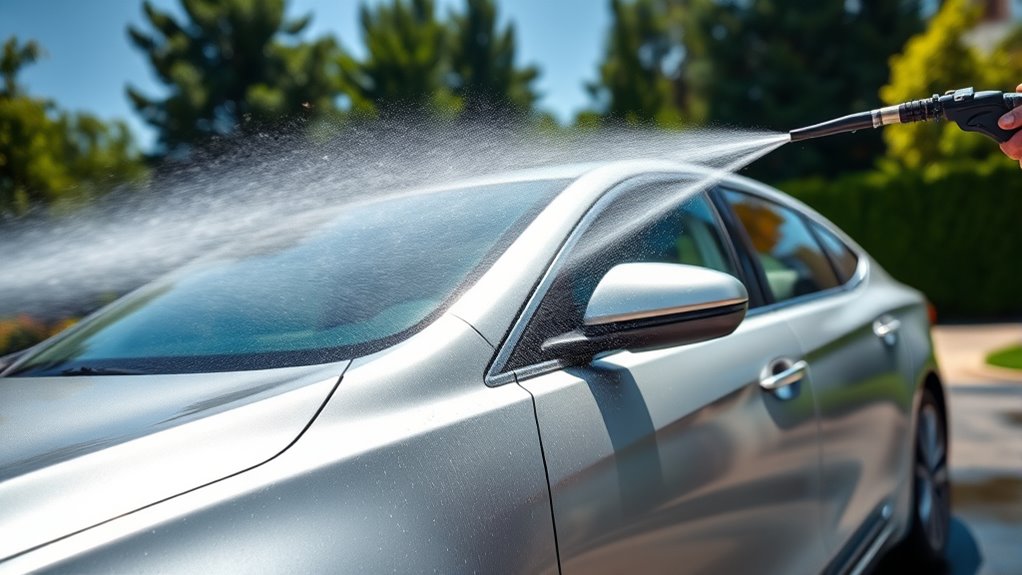
To safely pressure wash your car, start by choosing a lightweight electric washer with a wide, low PSI nozzle (1200-1900 PSI). Keep the nozzle 2-3 feet from the surface and use gentle, overlapping motions to rinse from top to bottom.
Avoid high pressure on delicate areas and never spray directly at seams or electrical parts. Using eco-friendly soap and drying thoroughly helps protect your paint.
For more detailed steps, continue with these tips.
Key Takeaways
- Use a pressure washer with adjustable settings, keeping it between 1200-1900 PSI and a 25-40 degree nozzle for safe cleaning.
- Choose a shaded spot, clear any obstacles, and gather all your supplies before you start. This helps protect your vehicle and environment.
- Keep the nozzle about 2-3 feet from the car surface and spray gently in overlapping motions to avoid damaging the paint.
- Be careful not to spray directly on delicate parts like mirrors, gaskets, or electrical components, especially at high pressure.
- Once done, dry your car thoroughly with microfiber towels or a blower, then add a wax coating to keep the paint and finish looking great.
Why Pressure Washing Your Car Is Important for Its Finish
Regular pressure washing is crucial because it removes dirt, grime, and harmful contaminants that can damage your car’s paint over time. When you keep your vehicle clean, you help preserve its paint protection and prevent corrosive materials from settling in and causing deterioration.
Regular pressure washing prevents paint damage and preserves your car’s appearance and value.
Dirt and debris can create tiny scratches on the surface if not removed properly, which speeds up paint wear and shortens the life of your finish. Using the right pressure and technique ensures you clean effectively without harming the paint.
Consistent washing also helps you spot any damage or chips early on, so you can fix issues before they get worse. Maintaining a clean car isn’t just about looks; it’s a vital step in protecting your investment.
When you prioritize pressure washing, you extend the life of your car’s finish, keeping it looking newer longer and helping maintain its resale value. Regular cleaning is key to preserving your vehicle’s overall health and appearance.
How to Choose the Right Pressure Washer and Nozzle for Your Car
Choosing the right pressure washer and nozzle is key to safely and effectively cleaning your car without damaging the paint.
First, think about the pressure washer types. Electric models are lightweight, easy to handle, and perfect for washing cars. Gas-powered units are more powerful for tougher dirt but tend to be heavier and louder.
Next, pay attention to nozzle sizes. A 25-degree or 40-degree nozzle is best for cars because they offer a gentle, wide spray that cleans well without stripping paint. Using a narrower nozzle, like a 15-degree, can cause damage.
Always start with a wider spray and adjust if needed. Make sure the pressure washer has adjustable pressure settings so you can fine-tune the flow.
Preparing Your Car and Environment Before You Start
Before you start pressure washing your car, it’s important to prepare both your vehicle and the surrounding environment. First, pick a good spot—ideally in the shade—to prevent soap from drying too quickly.
Next, check the weather. It’s best to avoid windy or rainy days so dirt and debris don’t spread around or stick back onto your car. Make sure the area is clear of obstacles like tools or other vehicles to prevent accidents.
Gather all your equipment and cleaning supplies nearby so you don’t have to leave mid-clean. Proper prep protects your car’s paint, avoids water runoff issues, and makes the whole process smoother.
Selecting Safe Cleaning Solutions for Your Vehicle
Selecting the right cleaning solutions is key to protecting your car’s paint and finish during pressure washing. Using eco-friendly options helps reduce environmental impact, while pH balanced cleaners prevent damage to your vehicle’s surface.
Choose products specifically made for automotive use and avoid harsh chemicals that can strip paint or cause corrosion. This way, you get a safe, effective clean every time.
Here’s a quick guide:
| Solution Type | Benefits | Suitable Uses |
|---|---|---|
| Eco-friendly solutions | Gentle on paint and eco-conscious | Regular cleaning, eco focus |
| pH balanced cleaners | Help maintain paint integrity and prevent damage | All-purpose, routine wash |
| Heavy-duty cleaners | Remove tough grime but may cause damage | Heavy dirt, grease |
Stick to these options for a safe clean. Always read labels to ensure they are compatible with automotive surfaces, and avoid household cleaners not designed for cars.
Step-by-Step: How to Pressure Wash Your Car Safely
Sure! Here’s a more conversational version of your text:
—
If you want to pressure wash your car safely, the first thing you should do is get your equipment ready. Make sure all your nozzles and hoses are in good shape—that way, you won’t run into any surprises while cleaning.
Then, it’s important to use the right pressure settings. Too much pressure can damage your car’s paint, so start low and adjust as needed. And when you’re washing, use gentle techniques to avoid scratches—like keeping the nozzle at a safe distance and moving it smoothly over the surface.
Following these simple steps will help you clean your car thoroughly without risking any damage.
Prepare Your Equipment Properly
Gather all your equipment and make sure everything is in good working condition before you start. Proper prep helps ensure a smooth and safe pressure washing experience.
Start by checking your equipment types—look over the pressure washer, hoses, nozzles, and extension wands. Follow these simple maintenance tips:
- Inspect hoses for leaks or cracks.
- Make sure nozzles are clear and working properly.
- Test the pressure washer to see if it powers on and maintains pressure.
- Keep spare parts or attachments nearby for quick replacements.
Use Correct Pressure Settings
Before you start pressure washing your car, set your pressure washer to an appropriate level—usually between 1200 to 1900 PSI—to avoid damaging the paint or delicate parts. Use the pressure gauge to confirm you’re within this safe range.
Choose the right nozzle type; a wider spray tip, like a 25 or 40-degree nozzle, provides a gentler spray that’s safer for your vehicle’s surface. Avoid high-pressure nozzles that can cause dents or scratches.
Keep the nozzle about 12 inches from the car’s surface and don’t aim directly at seams or vents. Adjust the pressure as needed, especially when working around sensitive areas.
Proper pressure control helps you clean effectively without risking damage.
Apply Safe Washing Techniques
Start by rinsing your car thoroughly with a gentle stream of water to remove loose dirt and debris. This initial step is essential for safe washing, preventing scratches during pressure washing.
Next, follow these safe washing techniques: maintain a consistent distance of 2-3 feet from the surface to avoid damage. Use a wide spray pattern to cover larger areas evenly.
Keep the nozzle moving continuously to prevent concentrated pressure on one spot. Avoid spraying directly at seams, vents, or sensitive areas to prevent water intrusion.
Using Proper Pressure Settings and Maintaining the Right Distance
Using the correct pressure settings and maintaining the right distance are essential for cleaning your car effectively without causing damage. Proper distance control helps prevent stripping paint or harming delicate surfaces.
Start by adjusting your pressure to a safe level, usually between 1200-1900 PSI for cars. Keep the nozzle about 2-3 feet from the surface and move consistently to avoid concentrated pressure.
Use the table below to guide your adjustments:
| Pressure Level | Distance from Car | Effect |
|---|---|---|
| Low | 3+ feet | Gentle cleaning, no damage |
| Medium | 2-3 feet | Effective and safe for most surfaces |
| High | Less than 2 feet | Risk of damage, avoid use |
Always stay mindful of your pressure calibration and keep a steady distance. This will help you achieve a safe, thorough wash every time.
Rinsing and Drying Your Car to Prevent Damage
After adjusting your pressure settings and maintaining a safe distance, the next step is to thoroughly rinse your car to remove all loosened dirt and soap residue. Effective rinsing techniques guarantee no grime is left behind, which helps prevent scratches and streaks.
Thorough rinsing removes dirt and soap, preventing scratches and streaks for a spotless, protected finish.
Use a gentle, overlapping pattern, starting from the top and working downward, to avoid water spots. Once rinsed, drying methods become essential to prevent water spots and streaks.
- Use a microfiber drying towel for gentle, absorbent drying.
- Pat the surface rather than dragging the towel to prevent scratches.
- Dry in sections, focusing on areas prone to water spots like mirrors and windows.
- Consider using a blower or air compressor for hard-to-reach spots.
Proper rinsing techniques and drying methods protect your car’s paint and finish, keeping it clean and shiny without damage.
Common Mistakes to Avoid When Pressure Washing Your Car
One mistake people often make is using the wrong pressure settings. If the pressure is too high, it can actually damage your car’s paint, which nobody wants. So, it’s important to be careful with that.
Another thing to watch out for is the distance from the surface. Getting too close can cause chipping or even dents, so make sure to keep a safe distance while you’re washing.
Paying attention to these little details makes all the difference. It helps you get a thorough clean without risking any damage to your car.
Using Wrong Pressure Settings
Choosing the wrong pressure setting can cause serious damage to your car’s paint and finish. When selecting your pressure settings, it’s important to consider how they’ll impact your vehicle’s surface.
Using too high pressure can strip paint, leave scratches, or cause chips. On the other hand, too low might not clean effectively. To avoid this, keep these tips in mind:
- Use a gentle setting for delicate areas like trim or decals.
- Adjust pressure based on how dirty the surface is.
- Test spray on a small spot before doing the full clean.
- Stay aware of how your surface reacts to prevent damage.
Neglecting Proper Distance
Neglecting to maintain the proper distance between the pressure washer nozzle and your car can lead to serious damage. If you’re too close, even with the right pressure settings, you risk stripping paint or denting the surface.
Always keep the nozzle at least 12 inches away, and adjust based on nozzle types and spray patterns. Different nozzles produce varying spray intensities, so a narrow spray tip can concentrate pressure and cause harm if too close.
Use wider spray tips for general cleaning and avoid holding the nozzle directly against the car. Keeping a safe distance helps you remove dirt effectively without damaging your paint or clear coat.
Keep a steady hand, and always test a small area first. This way, you can verify you’re maintaining the right distance for safe, effective cleaning.
Tips to Protect Your Car’s Paint and Delicate Parts During Cleaning
To prevent damage during pressure washing, it’s important to take some precautions to protect your car’s paint and delicate parts. Always keep the pressure washer’s nozzle about 2 feet away from the surface to avoid paint damage.
Keep the nozzle about 2 feet away to protect your car’s paint during pressure washing.
Use a wide spray pattern to spread water evenly and reduce the risk of focused pressure harming sensitive components. Avoid spraying directly at seams, gaskets, or electrical parts, as these are vulnerable to water getting in.
When cleaning areas like side mirrors or trim, opt for a gentle, lower pressure setting. These steps help keep your car’s paint protected and shield delicate parts from unnecessary stress.
Following these guidelines ensures a thorough clean without risking damage. It helps your car’s finish stay fresh and well-preserved. Proper technique is key to safe pressure washing and long-term vehicle care.
Post-Wash Care: Maintaining Your Car’s Finish After Pressure Washing
After you’ve finished pressure washing your car, it’s really important to dry it completely. This helps prevent water spots from forming and keeps your car looking its best.
Once it’s dry, applying a protective wax coating is a great idea. It not only helps preserve the finish but also keeps that shiny look intact. Following these simple steps will help your vehicle stay well-maintained and protected for the long run.
Dry Thoroughly After Washing
Once you’ve finished pressure washing your car, it’s really important to dry it thoroughly to prevent water spots and streaks. Proper drying helps keep the finish looking great and stops mineral deposits from hard water.
Use the right tools, like microfiber towels or a blower, to make sure you dry gently and streak-free. Start with a soft microfiber towel to absorb any excess water.
Next, use a blower or compressed air to reach those tricky spots. Pat dry instead of rubbing to avoid scratching the paint.
Make sure to pay special attention to seams, door jambs, and around mirrors for a spotless finish.
Apply Protective Wax Coating
Applying a protective wax coating seals in the shine and guards your car’s finish against dirt, UV rays, and environmental contaminants. To get the best protection, make sure your car is completely dry before waxing.
Use a clean, soft cloth or applicator pad to spread the wax evenly across the surface in circular motions. Let the wax haze over as directed, then buff it off with a clean microfiber cloth for a smooth, glossy look.
Regular waxing not only makes your car look better but also helps the paint last longer by creating a barrier against damage. This simple step keeps your pressure-washed car looking sharp and well-maintained over time.
Frequently Asked Questions
Can I Pressure Wash My Car in the Rain?
You can pressure wash your car in the rain, but it’s not the best idea. Rain can dilute your cleaning solutions and make it harder to control the pressure washing process.
Washing in the rain might also cause water spots or streaks on your car’s surface. If you do decide to do it, use lower pressure and avoid sensitive areas like the windows and trim.
After washing, make sure to dry your car thoroughly to prevent streaks. Overall, it’s better to wait for a clear day to get the best cleaning results.
How Often Should I Pressure Wash My Vehicle?
You should pressure wash your vehicle every few months—yes, even if you think it’s overkill—because dirt and grime love to hide in plain sight.
Regular pressure washing is a smart part of car maintenance, preventing buildup that could damage your paint. Just don’t go overboard; once a season usually does the trick.
After all, your car isn’t a billboard for your driveway mess!
Is It Safe to Pressure Wash a Car With Scratches?
Yes, it’s safe to pressure wash a car with scratches if you use proper scratch protection and gentle washing techniques.
Avoid high pressure directly on scratches to prevent further damage. Use a wide spray pattern and keep the nozzle at a safe distance.
Wash with a soft brush or sponge to protect your vehicle’s finish while cleaning effectively. This minimizes the risk of worsening existing scratches.
Can I Use Hot Water for Pressure Washing My Car?
Coincidentally, using hot water for pressure washing your car can improve cleaning effectiveness, especially when targeting grease and grime. Hot water helps loosen dirt more efficiently than cold water.
However, make sure your pressure washer is rated for hot water use, and avoid excessive heat that might harm your vehicle’s paint. Proper technique guarantees you get the benefits without risking damage.
Making hot water a practical choice depends on using the right equipment and being cautious with the temperature.
Should I Pressure Wash My Car Before or After Waxing?
You should pressure wash your car before waxing to ensure a clean, smooth surface for the best results. It removes dirt and debris, making your waxing more effective and longer-lasting.
If you wax first, dirt can get trapped in the wax, which can reduce shine and protection. So, it’s best to clean your car thoroughly beforehand.
Always dry your car completely after pressure washing before applying wax. This helps you achieve a flawless finish without streaks or water spots.
Conclusion
Think of pressure washing your car as giving it a refreshing shower—it revives its shine and keeps it looking new.
By following the right steps and precautions, you’re not just cleaning; you’re nurturing your vehicle’s finish. Handle your pressure washer with care, and it’ll be your car’s best friend.
It helps your car shine bright like a diamond. Keep up with regular cleaning, and your car will stay dazzling for miles to come.