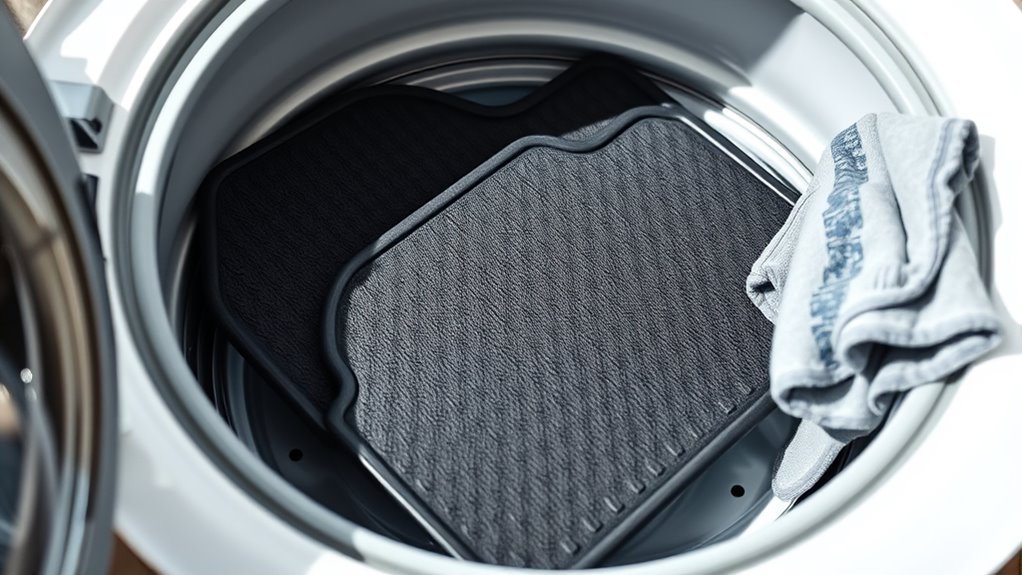
How You Can Safely Put Car Mats in the Washing Machine
Many people struggle with keeping their car mats clean and fresh without making a mess or damaging them. If you’re tired of stubborn dirt and stains, you’re not alone. Luckily, washing your car mats in the washing machine can be a simple solution.
To safely wash your car mats in the machine, first check the manufacturer’s care label for instructions. Shake out loose dirt and vacuum thoroughly, focusing on seams.
Use a mild detergent and select a gentle cycle with cold or warm water. Avoid overloading the machine and guarantee mats are balanced.
Air dry in a well-ventilated area away from direct sunlight. Want to find out even more tips? Continue for all the essential details.
Key Takeaways
- Remove loose dirt and debris before putting your mats in the washing machine.
- Check the care label for any specific washing instructions and recommended cycle settings.
- Use a mild detergent and choose a gentle cycle with cold or warm water.
- Make sure not to overload the washer, so the mats get cleaned properly and the machine stays safe.
- Let the mats air dry completely in a well-ventilated space, keeping them out of direct sunlight or high heat.
Are Your Car Mats Suitable for Machine Washing?
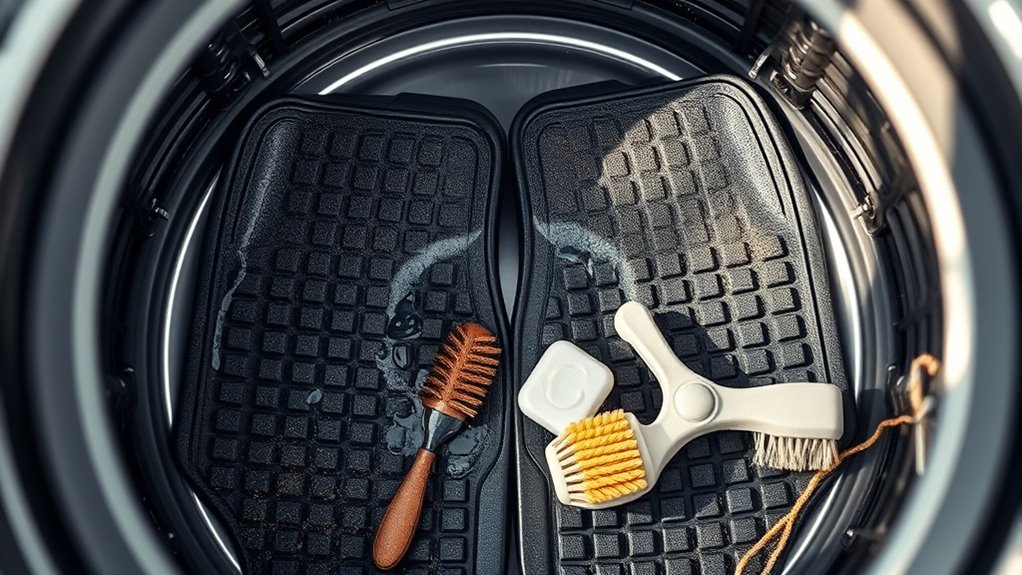
Check the manufacturer’s care instructions to see if your mats are machine washable. Think about how often you drive in muddy or snowy conditions—frequent cleaning might be necessary, but not all mats can handle repeated machine cycles.
Always check care instructions and consider driving conditions to determine if your mats can withstand machine washing.
For rubber mats, washing every few weeks helps keep dirt and grime away. Carpet mats might need less frequent cleaning, depending on how much you drive. Knowing your mats’ material and recommended cleaning schedule helps you decide if machine washing is safe and effective.
When in doubt, hand washing is a gentler option, especially for delicate materials.
How to Prepare Your Car Mats Before Washing
Before you start washing your car mats, it’s a good idea to remove any loose dirt and debris. Just give them a good shake to loosen up all that dust and bits stuck in the fibers. This little step makes a big difference because it helps ensure a cleaner, more thorough wash when you get to the actual cleaning part.
Remove Loose Dirt
Start by giving your car mats a thorough shake outdoors to loosen and remove loose dirt and debris. This simple step helps dislodge surface particles before deeper cleaning. Use effective vacuum techniques to pick up remaining dirt, especially in textured or heavily soiled areas.
Focus on edges, corners, and seams where dirt tends to accumulate. Recognize different dirt types—dry dust, mud, or pet hair—and adjust your approach accordingly. For dry dust, a quick vacuum pass works well; for mud or sticky residues, you might need to pre-treat or scrub before vacuuming again.
Removing loose dirt thoroughly guarantees your mats are primed for washing, preventing dirt from settling into the fibers during the wash cycle. This step makes deep cleaning more effective and extends the life of your car mats.
Shake Off Debris
Give your car mats a good shake to loosen up any remaining loose debris before washing. This step helps get rid of surface dirt and makes your cleaning more effective, no matter what kind of mats you have.
Regularly shaking your mats also helps prevent grime buildup, so you won’t have to wash them as often. Keep in mind, how often you should clean depends on the material—rubber mats need less frequent cleaning, while carpeted ones might need more attention.
Choosing the Right Detergent for Washing Car Mats
Choosing the right detergent is key to cleaning your car mats effectively without causing damage. The trick is picking a detergent that matches the material and how dirty the mats are.
You can choose from different types, like heavy-duty cleaners for tough stains or gentle options for delicate mats. Eco-friendly choices are smart because they clean well without harmful chemicals that could hurt your mats or the environment.
Here’s a quick guide:
| Detergent Type | Best For | Eco-Friendly Options |
|---|---|---|
| Heavy-duty | Mud, grease, tough stains | Plant-based, biodegradable |
| Mild | Light dirt, regular cleaning | Natural ingredients |
| Enzymatic | Organic stains, odors | Eco-certified brands |
| Powder | General cleaning | Eco-friendly powders |
| Liquid | Versatile, quick dissolve | Natural liquid formulas |
Choosing the right detergent helps keep your mats clean and durable, all while protecting the environment.
Step-by-Step: How to Wash Car Mats in the Machine
Begin by removing loose dirt and debris from your car mats to prevent it from spreading during washing. This step guarantees a thorough clean, especially for mats made of rubber, carpet, or other materials.
Next, check the care label for specific washing instructions based on your mats’ material. Place the mats in your washing machine, ideally one at a time or with similar items to avoid imbalance.
Use a mild detergent suitable for your mats’ material, and select a gentle cycle with cold or warm water. For heavily soiled mats, consider pre-treating stains.
Wash mats regularly, as washing frequency depends on usage and environment. After washing, air dry your mats completely before reinstalling.
Proper drying prevents mold and odors. Remember, consistent cleaning prolongs your mats’ lifespan and keeps your interior fresh.
Know your car mat materials to choose the right wash settings. Avoid overloading the machine to prevent damage.
Pre-treat stubborn stains before washing. Use the appropriate washing frequency for longevity.
Ensure thorough drying to prevent mold and odors.
How to Handle Heavy-Duty or Stained Mats Safely
Handling heavy-duty or stained mats requires extra caution to prevent injury and damage. These mats are often made of tough materials that can be difficult to clean and handle.
Before washing, inspect the mats for stubborn stains or dirt. For stains, apply a dedicated stain treatment and let it sit for a few minutes to loosen grime. Avoid harsh chemicals that could damage the material.
When lifting or moving heavy-duty mats, bend your knees and lift with your legs to prevent strain. If the mats are very bulky or heavy, consider splitting them into smaller sections if possible.
Always check the manufacturer’s cleaning instructions to make sure you don’t harm the material. Use gentle cycle settings on your washing machine to avoid ripping or warping the mats.
Taking these precautions helps ensure you handle heavy-duty or stained mats safely, which can prolong their lifespan and keep them looking good.
Dry Your Car Mats Properly to Prevent Damage
To keep your car mats in good shape, it’s really important to let them dry properly. Just place them somewhere with good air circulation, like a well-ventilated area, and give them plenty of time to dry out.
You’ll want to avoid exposing them to too much heat, though. Direct sunlight or high-heat dryers can actually warp or weaken the material, which isn’t what you want. Taking a little extra time to dry your mats the right way can make a big difference in how long they last and how good they look.
Proper Air Circulation Techniques
Guaranteeing proper air circulation is essential when drying your car mats to prevent mold, odors, and material damage. Good airflow helps mats dry evenly and quickly, avoiding damp spots that can cause issues later.
To optimize mat placement, spread mats flat in a well-ventilated area, avoiding overlapping. Position them so air can flow around all surfaces. Keep them away from direct sunlight or heat sources that might cause warping.
Raise mats on a drying rack or hang them to maximize air exposure. Proper airflow techniques not only speed up drying but also help preserve the material’s integrity.
Use a fan or open windows for better airflow. Keep mats spread out and not bunched together, and avoid stacking them. Place mats on a raised surface for optimal drying.
Check periodically to ensure even drying and to prevent any moisture from lingering.
Avoid Excessive Heat Exposure
Exposing your car mats to excessive heat can cause them to warp, crack, or deteriorate faster. To prevent heat damage, avoid using high heat settings when drying. Instead, opt for gentle drying techniques like air drying in a well-ventilated area or using a low heat setting on your dryer.
Direct sunlight can also cause damage, so keep mats out of direct sunlight until they are fully dry. If you’re air drying, hang the mats or lay them flat on a clean surface, turning them occasionally to ensure even drying.
Using too much heat during the drying process accelerates deterioration and shortens your mats’ lifespan. Proper drying techniques help preserve their integrity and keep them looking new longer.
Tips to Keep Your Car Mats Clean and Fresh Longer
Keeping your car mats clean and fresh longer takes some consistent effort and smart habits. Regular maintenance helps prevent dirt buildup and stains, making cleaning easier over time. Developing good habits like shaking out mats weekly and wiping them down can help extend their life and keep your vehicle looking tidy.
To keep things smelling fresh, avoid letting mud, leaves, or spills sit for too long. Using protective mats or liners in high-traffic areas can really minimize direct contact with dirt. Spot cleaning stains right away prevents them from turning into permanent marks. Regular vacuuming helps remove debris before it gets embedded deep into the fibers. Also, airing out your mats when you can keeps odors at bay.
Make a habit of shaking out your mats often to remove loose dirt. Use a brush or vacuum to prevent debris from building up. Treat stains as soon as you see them for easier cleaning later. Rotating your mats evenly distributes wear and tear. And after cleaning, keep your mats dry and aired out to prevent odors from developing.
Common Mistakes to Avoid When Washing Car Mats
When washing your car mats, it’s best to steer clear of harsh cleaning agents. These strong chemicals can actually damage the material of your mats and even cause fading over time. Nobody wants their mats to look worn out or faded, so gentle cleaners are the way to go.
Also, be careful not to overload your washing machine. Putting too many mats in at once can make the cleaning less effective and might even cause some damage to your machine or the mats themselves. Taking these simple precautions will help keep your mats clean and in great shape for a long time.
Using Harsh Cleaning Agents
Be mindful of these common mistakes:
- Using overly concentrated cleaning agents
- Ignoring manufacturer instructions
- Mixing different chemicals
- Applying harsh chemicals directly onto mats
- Neglecting rinsing thoroughly after cleaning
Sticking to mild, appropriate cleaning agents helps protect your mats and guarantees safe, effective cleaning. Remember, using the right products is key to prolonging your car mats’ lifespan and maintaining a safe environment.
Overloading Washing Machine
Overloading your washing machine can cause uneven cleaning and potential damage to your car mats. To avoid this, always stay within your machine’s capacity.
Overloading disrupts proper weight distribution, which can strain the motor and reduce washing effectiveness. When loading mats, make sure they have enough space to move freely, allowing water and detergent to reach all surfaces.
If you try to wash too many mats at once, you risk damaging both the mats and your machine. Check your washer’s maximum load limit and distribute the weight evenly.
Properly balancing the load helps prevent vibrations and mechanical issues. Remember, washing fewer mats at a time is better than risking damage, guaranteeing a thorough clean without harming your washing machine’s longevity.
Should You Hand Wash or Skip the Machine Method?
Is hand washing or machine cleaning the better option for your car mats? It really depends on the material and how dirty they are. Hand washing gives you more control, allowing you to target stubborn stains and avoid damage. It’s gentle, especially for delicate mats, and you can choose the cleaning agents you prefer.
On the other hand, machines are more convenient and can clean thoroughly, saving you time and effort. They handle large loads and deep grime, making them perfect for heavily soiled mats.
Think about these points:
- Hand washing minimizes wear and tear on fragile mats
- Machines are more efficient for big jobs
- Hand washing lets you spot treat carefully
- Machines are easier and more consistent
Both methods need proper cleaning products and care. Choose based on your mats’ material and how dirty they are, but always follow the manufacturer’s instructions for the best results.
How to Tell If Your Car Mats Need Replacement After Washing
Wondering if your car mats are still good after washing? Look for signs like cracks, tears, or thinning areas that reveal the backing. If your mats lose their texture or become overly stiff or flimsy, it’s probably time to replace them.
Material durability indicators, like fading color or fraying edges, also suggest it’s time for new mats. After washing, inspect the surface closely—if stains or odors stick around, replacing might be necessary, especially if cleaning no longer restores their look or smell.
Keep in mind that some mats, especially those made from rubber or heavy-duty materials, are more resistant to wear. But if they’re excessively damaged, replacing them is a good idea.
Regularly checking for these signs helps ensure your mats provide proper protection and comfort. When in doubt, swapping out worn mats prevents further damage to your car’s interior and keeps things looking fresh and clean.
Frequently Asked Questions
Can I Wash All Types of Car Mats in the Washing Machine?
You can’t wash all types of car mats in the washing machine. Materials compatibility varies—rubber mats usually handle machine washing well, but carpeted mats may need gentle washing or hand cleaning.
Use the right washing techniques: opt for cold water, a gentle cycle, and mild detergent. Always check manufacturer instructions to avoid damage.
For delicate or non-machine-safe mats, consider spot cleaning or vacuuming instead.
How Often Should I Wash My Car Mats to Maintain Cleanliness?
You should wash your car mats every 1 to 3 months, depending on how often you drive and how much they get dirty. Regular cleaning helps get rid of dirt, mud, and debris that can wear down the mats over time.
If you notice stains or if you drive in high-traffic areas, you might want to clean them more often. Keeping a consistent cleaning schedule helps your mats stay fresh and last longer.
Plus, it keeps your vehicle interior cleaner and healthier overall.
Are There Any Safety Precautions to Consider During Machine Washing?
Think of your washing machine as a delicate symphony conductor—every element must be in harmony. To keep your car mats safe, set the water temperature to lukewarm, avoiding extremes that could warp rubber or fade fabric.
Choose a gentle detergent, like a whisper rather than a shout, to clean without damage. Always secure mats properly, and avoid overloading the machine to prevent accidents.
Ensure the machine is level and check pockets beforehand to avoid damage. It’s also a good idea to use a mesh bag for small or delicate mats. This way, you keep everything safe and get a thorough wash.
How Do I Remove Embedded Odors From Car Mats Effectively?
To remove embedded odors from your car mats, start with odor elimination techniques like sprinkling baking soda and letting it sit overnight. This helps absorb the smells naturally.
Then, wash the mats with a mixture of water and natural deodorizers such as vinegar or lemon juice. Rinse thoroughly to remove any residue.
After washing, air dry the mats in the sun to help eliminate remaining smells. This natural approach guarantees your mats smell fresh without harsh chemicals.
Can Washing Machine Cleaning Damage the Rubber Backing of Mats?
Washing machine cleaning can potentially damage the rubber backing of your mats if you use harsh washing techniques or high heat. Rubber deterioration may happen over time, especially with frequent washes or aggressive cycles.
To protect your mats, try using gentle cycles, cold water, and avoid high spin speeds. These careful washing methods help keep the rubber backing intact while still getting your mats clean.
Conclusion
Just like tending a garden, caring for your car mats requires gentle attention and the right tools. When you wash them carefully, they bloom with cleanliness and freshness, ready to greet your next journey.
Avoid harsh chemicals and rushing the process, and your mats will thrive under your care. Think of your effort as nurturing a precious plant.
With patience and proper handling, your car mats will stay vibrant and inviting for miles to come. Properly washing and maintaining them in the washing machine is a simple way to keep them looking their best.