How to Wash Your Car Engine Safely
Many car owners find themselves overwhelmed when it’s time to clean their engine. You’re not alone—knowing how to wash your car engine safely can feel tricky and risky. The good news is, with a few simple steps, you can keep your engine spotless without causing damage.
To wash your car engine safely, start by confirming the engine is cool and the car is parked in a shaded area. Protect sensitive parts like the alternator and wiring with plastic covers or masking tape.
Use gentle cleaning products designed for auto engines, and avoid high-pressure water to prevent damage. Carefully spray away dirt, then dry thoroughly with a microfiber cloth or compressed air.
For detailed steps and helpful tips, keep exploring to confirm a safe, effective cleaning.
Key Takeaways
- Ensure the engine is cool and park the car in a shaded area before you start.
- Cover electrical components, the air intake, and sensitive parts with plastic sheets secured with masking tape.
- Use biodegradable, automotive-specific cleaners, and steer clear of harsh chemicals or high-pressure water.
- Rinse gently with a stream of water, making sure not to spray directly on delicate areas with high pressure.
- Dry thoroughly with a microfiber cloth or compressed air, and do a quick post-cleaning inspection.
Why Cleaning Your Car Engine Is Important for Performance
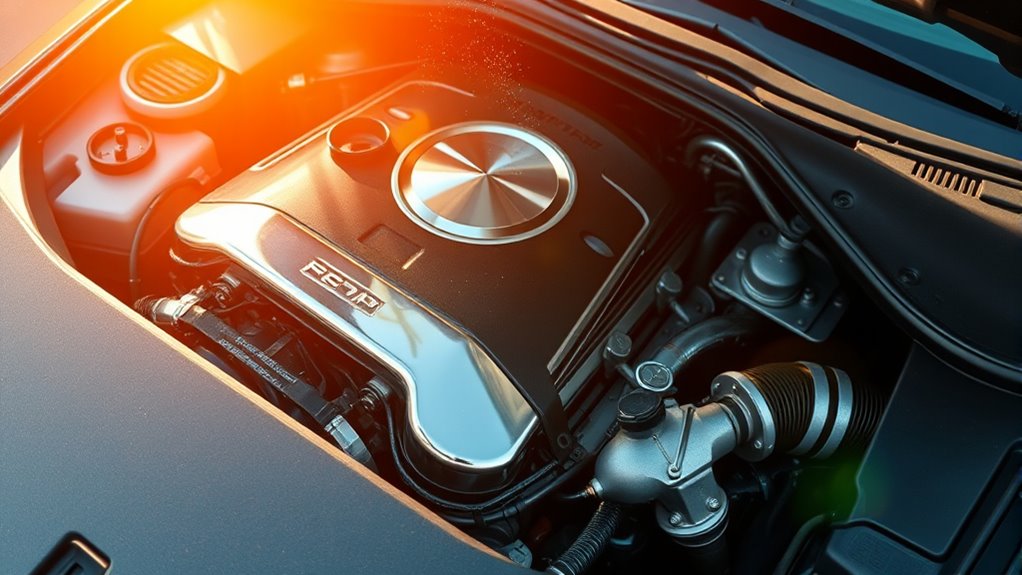
Cleaning your car engine is essential because it helps maintain peak performance. When you remove dirt, grease, and debris, you prevent buildup that can hinder your engine’s efficiency. A clean engine runs more smoothly, reducing the risk of overheating and improving overall engine performance.
Regular cleaning also makes it easier to spot leaks, corrosion, or worn-out parts early. This supports better maintenance and helps prevent bigger issues down the line. Keeping the engine bay tidy ensures components like belts, hoses, and wires aren’t compromised by grime, which can extend their lifespan.
Plus, a well-maintained engine is more responsive and reliable. That means fewer repairs and less time spent dealing with breakdowns. When you prioritize cleaning, you’re protecting your investment and making sure your vehicle performs at its best.
Gather Tools and Safety Gear for Engine Cleaning
Before you start cleaning your engine, gather all the necessary tools and safety gear to make sure everything goes smoothly and safely. You’ll need basic tools like a wrench, brushes, and microfiber cloths.
A spray bottle or hose with a gentle spray nozzle will help you apply cleaning solutions effectively. Safety precautions are super important—wear gloves to protect your skin from chemicals and goggles to shield your eyes from splashes.
Use a spray bottle or hose with a gentle nozzle and always wear gloves and goggles for safety.
Make sure you have engine degreaser and a car-safe cleaner on hand because these are essential for proper engine cleaning. It’s also a good idea to keep a plastic sheet or cover for sensitive components, even if you plan to do that later.
Having everything ready beforehand helps minimize accidents and ensures you follow proper safety steps throughout the process. Preparing your tools and safety gear in advance keeps you organized, focused, and makes the engine cleaning safer and more efficient.
Protect Sensitive Engine Parts Before Washing
Once you’ve gathered your tools and safety gear, it’s important to protect sensitive engine components from water and cleaning chemicals. Start by covering critical areas like the air intake, alternator, and exposed wiring with plastic bags or engine covers.
This helps ensure proper coverage and prevents water from seeping into parts that are vulnerable to moisture. Use masking tape to secure the covers firmly, especially around wiring connectors and sensitive sensors.
Avoid spraying directly onto electrical components to reduce the risk of moisture penetration. Remember, moisture prevention is key to avoiding electrical issues and corrosion after washing.
Take your time to confirm all vulnerable parts are thoroughly protected; a few extra minutes can save you from costly repairs later. Proper shielding allows you to clean the engine confidently, knowing that water won’t damage crucial components.
Choose the Best Cleaning Products for Your Engine
Choosing the right cleaning products for your engine is really important if you want to keep everything running smoothly. You want something that works well but doesn’t end up harming your engine in the process.
It’s best to steer clear of harsh chemicals that can cause damage or wear down your engine parts. Instead, look for cleaning agents that are effective yet gentle. Using the right products ensures your engine gets a thorough clean without putting it at risk.
Suitable Cleaning Agents
Selecting the right cleaning agents is key to washing your car engine safely and effectively. Look for biodegradable cleaners and non-toxic solutions to reduce environmental impact and protect engine parts.
Eco-friendly products are designed to break down grime without harsh chemicals, making them safer for your engine and your skin. Always pick cleaners made specifically for automotive use, since household cleaners can be too strong.
Check labels carefully to ensure the product is safe for engines and compatible with plastics, rubber, and metal parts. Using the right cleaners helps protect your engine and ensures a thorough clean that won’t cause corrosion or damage over time.
Prioritize environmentally friendly, non-toxic solutions for a safer, more effective engine wash.
Avoid Harsh Chemicals
Harsh chemicals can damage your engine’s delicate parts, so it’s important to avoid them when cleaning. Instead, choose eco-friendly options like biodegradable cleaners that are gentle but effective.
These products break down naturally, which helps reduce environmental impact and lowers the risk of corrosion or damage to engine parts. Always check labels carefully to ensure the cleaner is safe for automotive use.
Avoid products with strong acids, solvents, or degreasers not designed for engines. Using gentle, eco-conscious cleaners protects your engine while still giving it a thorough clean.
How to Safely Wash Your Car Engine Step-by-Step
Washing your car engine safely is all about taking the right steps to protect it. First, you’ll want to prepare the engine and the area around it. This helps prevent any water from sneaking into places it shouldn’t, which could cause damage.
Once everything’s ready, spray an engine degreaser evenly over the engine. This stuff works to loosen up all the grease and grime that’s built up over time. After letting it sit for a few minutes, give the engine a good rinse with water, making sure to remove all the degreaser and dirt.
And don’t forget, drying is just as important as cleaning. Use a microfiber towel or compressed air to dry off the engine thoroughly. This helps prevent moisture from lingering, which could lead to corrosion down the line.
Prepare Engine and Area
Before you start cleaning, make sure the engine is cool to the touch and the car is parked in a shaded area. Proper engine prep and workspace setup are key to avoiding damage and mess.
First, disconnect the battery terminals to prevent electrical issues. Cover sensitive parts like the alternator, air intake, and exposed wiring with plastic bags or protective covers.
Clear out loose debris like leaves or dirt from the engine bay to make cleaning easier. Remember, a tidy workspace helps you work efficiently and safely.
Ensure proper ventilation for fumes, and always wear protective gloves and eyewear. Keep a fire extinguisher nearby just in case of emergencies.
Taking these steps will help you clean safely and effectively.
Apply Engine Degreaser
Begin by applying the engine degreaser evenly over all greasy and dirty areas of the engine bay. Choose the right type, like foam, spray, or aerosol, based on your preference and the engine’s condition.
For application, spray or brush the degreaser onto stubborn grease spots, making sure to cover everything without over-saturating electrical parts.
Let the degreaser sit for a few minutes to loosen grime, but avoid letting it dry out completely.
Use a brush or cloth to reach hard-to-access areas, working the product into greasy surfaces.
Always follow the manufacturer’s instructions for the specific degreaser you’re using. Proper application ensures effective cleaning and reduces the risk of damaging sensitive engine parts.
Rinse and Dry Thoroughly
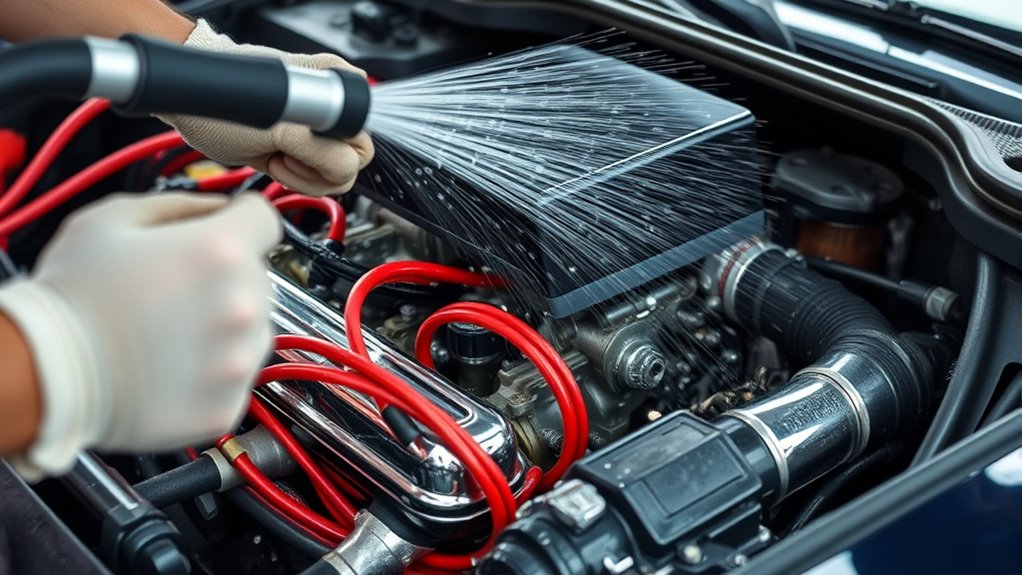
After letting the degreaser do its thing, it’s time to rinse off the engine thoroughly. Use a gentle stream of water, avoiding high pressure that could damage components. Focus on removing all soap residue and dirt, making sure no spots are missed.
Proper rinsing helps prevent dirt buildup and keeps your engine running smoothly. When drying, use methods like compressed air or microfiber towels to quickly soak up excess moisture. This step is key to avoiding rust and corrosion.
Keep these moisture prevention tips in mind: don’t leave water in hard-to-reach areas and make sure all parts are dry before starting the engine. Taking your time with rinsing and drying ensures a clean engine and a longer lifespan.
Rinse and Dry Your Engine Without Causing Damage
To rinse and dry your engine safely, start with a gentle stream of water to remove loose dirt and debris. Avoid high-pressure hoses that could damage sensitive components.
Focus on areas around the cooling system and electrical parts, making sure water doesn’t get into connections. Keep the water flow low to prevent dislodging connectors or causing water to enter tight spaces.
Pay attention to proper drainage by directing runoff away from critical parts like the alternator or distributor. This helps prevent water pooling, which could lead to corrosion or electrical problems later.
After rinsing, dry the engine thoroughly with a microfiber cloth or compressed air. Be especially careful to remove water from crevices to avoid future issues.
Proper rinsing and drying protect your engine’s components, keep it safe, and help ensure it runs smoothly without water-related damage.
Common Mistakes to Avoid When Cleaning Your Engine
Be careful not to use high-pressure water when cleaning your engine. It can actually push water into sensitive electrical parts and cause damage. It’s a common mistake that can lead to bigger problems down the line.
Also, don’t forget to take some protective measures. Covering electrical components and air intake openings can really make a difference. It helps prevent water from sneaking in where it shouldn’t and causing costly issues.
Skipping these precautions might seem like a time-saver, but in the long run, it can do more harm than good. So, take a little extra time to do it right—your engine will thank you!
Using High-Pressure Water
Remember these key points:
Never use excessive pressure near delicate parts.
Maintain a steady, controlled spray.
Keep the nozzle moving to prevent focusing water in one spot.
Neglecting Electrical Components
Electrical components are often overlooked during engine cleaning, but neglecting them can lead to costly damage. Water and cleaning agents can harm electrical insulation, causing corrosion or short circuits.
You might think that a quick spray won’t hurt, but exposing wiring protection to too much moisture can weaken connections and cause malfunctions. Be careful around sensitive areas like wiring harnesses, sensors, or the alternator.
Use a damp cloth or a carefully directed spray to clean near electrical parts. If you’re unsure, cover or shield electrical components to protect them. Avoid aggressive jet washes that can force water into tight spaces.
Protecting electrical insulation and wiring helps your engine run smoothly and prevents expensive repairs later on.
Skipping Protective Measures
Key points to take into account:
- Make sure to cover electrical components thoroughly to protect them during cleaning.
- Use the right cleaning agents for your specific engine type to avoid damage.
- Avoid spraying high-pressure water directly on sensitive parts, as it can cause harm.
When and How to Use Engine Degreasers Effectively
Knowing when and how to use engine degreasers can really make a difference in safely cleaning your car’s engine. Use degreasers when your engine is covered in heavy grease or grime, especially during routine cleaning.
Before applying, make sure the engine is cool to avoid any damage or wear. This helps prevent accidents and protects sensitive parts.
Here’s a quick guide to applying degreaser:
| Step | Action | Tip |
|---|---|---|
| 1 | Spray degreaser evenly over surfaces | Avoid electrical components |
| 2 | Let it sit for 5-10 minutes | Loosen stubborn grime |
| 3 | Use a brush or rag to scrub gently | Focus on heavily soiled areas |
| 4 | Rinse with water carefully | Keep water away from sensitive parts |
Using the right cleaning techniques and applying the degreaser properly will help you get a thorough clean without risking damage to your engine parts.
Post-Cleaning Checks to Ensure Your Engine Runs Smoothly
After finishing the cleaning process, it’s important to do some quick checks to make sure your engine runs smoothly. Start by inspecting for any loose wires or hoses that might have shifted during cleaning.
Listen for unusual sounds when you start the engine—sputtering, knocking, or loud noises could be signs of a problem. Also, observe how the engine idles and accelerates; smooth operation usually means everything’s in good shape.
Don’t forget to confirm all caps and covers are securely in place. Look for leaks or drips around the engine components. And check that the belts and hoses are in good condition and not cracked or worn.
These simple checks help you confirm your engine’s health and support your regular maintenance routine. Doing this after cleaning can prevent future issues and keep your engine running at its best.
If anything seems off during your checks, it’s a good idea to schedule a professional tune-up. This will help maintain your engine’s health and keep it running smoothly for a long time.
Regular Maintenance Tips to Keep Your Engine Clean and Healthy
Regular maintenance is essential to keep your engine clean and running smoothly over time. Following a consistent schedule helps protect your engine’s health and prevents dirt, grease, and debris from building up.
Make it a habit to check and replace oil, filters, and other fluids regularly, as these help keep the engine components clean and functioning properly. Inspect hoses and belts for signs of wear and replace them if necessary.
Keeping your engine bay free of grime not only improves engine health but also makes it easier to spot leaks or issues early. Using the right cleaning products and gentle tools ensures you don’t damage sensitive parts.
Frequently Asked Questions
Can I Wash My Engine With a Garden Hose Only?
You can’t rely on a garden hose alone for engine cleaning methods because water safety is essential.
Using only a garden hose risks getting water into sensitive electrical parts, which could cause damage.
To clean your engine properly, it’s better to use gentle rinsing combined with protective measures like covering electrical components.
This way, you get an effective clean while keeping water away from critical parts and avoiding costly repairs.
How Often Should I Clean My Car Engine?
You should clean your car engine every six to twelve months, depending on your driving conditions.
Regular engine cleaning benefits include improved performance, better cooling, and easier detection of leaks or issues.
Incorporate engine maintenance tips like keeping the area dry and avoiding high-pressure water directly on sensitive parts.
This routine helps prevent dirt buildup, corrosion, and keeps your engine running smoothly.
It also extends the engine’s lifespan and ensures it performs at its best.
Is It Safe to Use a Pressure Washer on My Engine?
Using a pressure washer on your engine isn’t generally recommended because it can cause damage or force water into sensitive components. If you decide to use one, be sure to follow proper engine cleaning techniques and take precautions.
Keep the pressure low, stay a safe distance away, and avoid spraying directly on electrical parts. It’s also a good idea to cover sensitive areas to prevent water damage.
For safer and more effective results, consider hand cleaning rather than using a pressure washer.
Will Cleaning My Engine Improve Fuel Efficiency?
Cleaning your engine can give a slight boost to fuel efficiency, but it’s not a magic bullet. When your engine is free of grime, it runs more smoothly, improving engine performance.
Keep in mind, regular maintenance tips like checking for leaks and replacing filters matter more. Think of it as shining a lamp; a clean engine helps your car run better, but don’t forget the basics for best results.
Can I Wash My Engine in Cold Weather?
You can wash your engine in cold weather, but there are some winter-specific tips to keep in mind. Make sure the engine is cool before you start cleaning.
Avoid spraying water directly onto electrical parts to prevent any damage. Use a gentle degreaser and rinse carefully to get the best results.
Proper engine cleaning during winter helps prevent corrosion and keeps your engine running smoothly. Take your time and don’t rush the process to avoid causing any harm.
Conclusion
Now that you know how to safely wash your car engine, you’re ready to keep it running smoothly and efficiently. Regular cleaning not only boosts performance but also helps catch potential issues early.
Are you prepared to give your engine the care it deserves? With the right tools and techniques, maintaining a clean engine becomes a simple part of your car care routine.
This way, your vehicle stays reliable and in top shape for miles to come. Keeping your engine clean is an easy step toward long-lasting performance.