7 Simple Steps to Wash Your Car at Home
Many car owners find it challenging to keep their vehicles clean without spending a lot of money or time at the car wash. You’re not alone—washing your car at home can seem daunting, but with the right steps, it’s simple and rewarding.
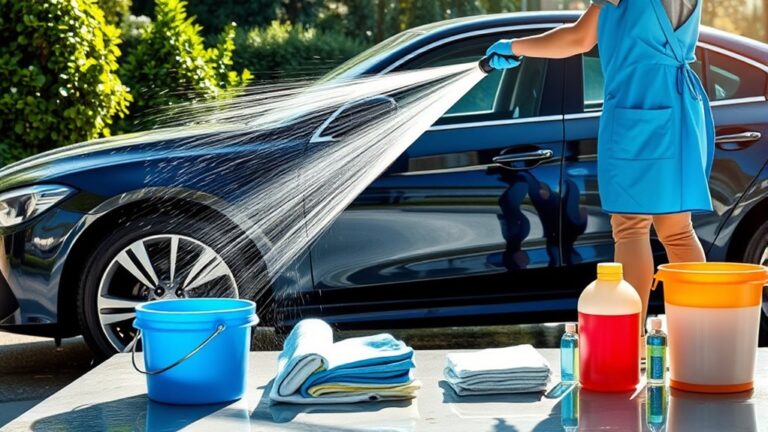
To wash your car at home, start by gathering your supplies like soap, sponges, a hose, and towels. Prepare your workspace by choosing a shaded, flat area free of obstacles.
Rinse your car thoroughly to loosen dirt. Then apply soap and gently scrub in sections from top to bottom. Rinse off the soap carefully, then dry your car with a microfiber towel or blower for a streak-free finish.
Keep your car cleaner longer by following simple tips—learn more for the best results!
Key Takeaways
- Gather all your supplies—soap, microfiber towels, and a hose—and set up in a clean, shaded area for easy washing.
- Rinse the car well to get rid of loose dirt and debris before you start applying soap.
- Wash the vehicle in sections from top to bottom using a soft sponge or wash mitt with gentle pressure.
- Rinse off the soap completely with flowing water, working from top to bottom to avoid streaks.
- Dry the car with a microfiber towel or chamois to get a shiny, streak-free finish.
How to Gather Supplies for Your DIY Car Wash
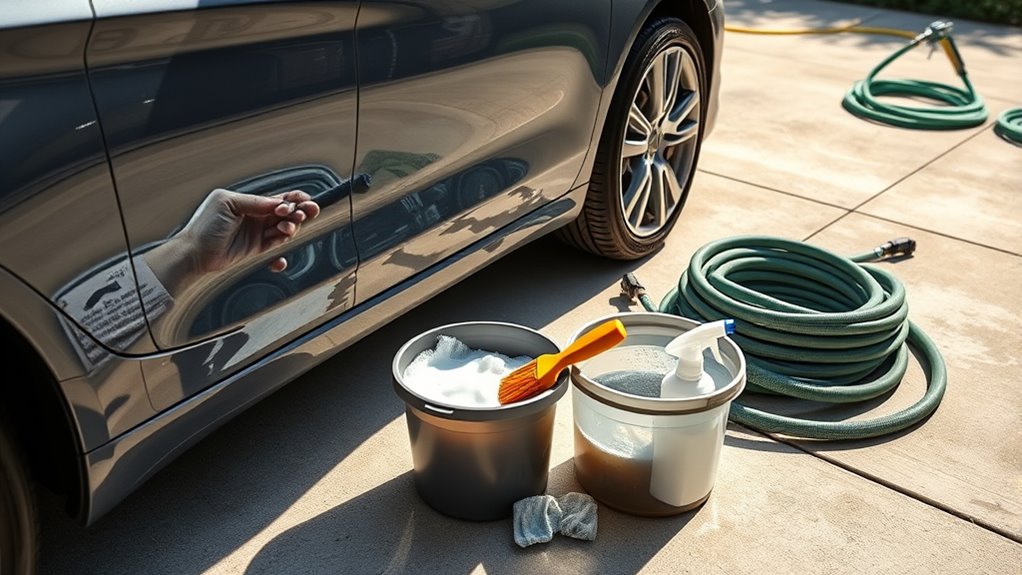
Before you start washing your car at home, it’s a good idea to gather all the supplies you’ll need. Making a checklist can help ensure you don’t forget anything important.
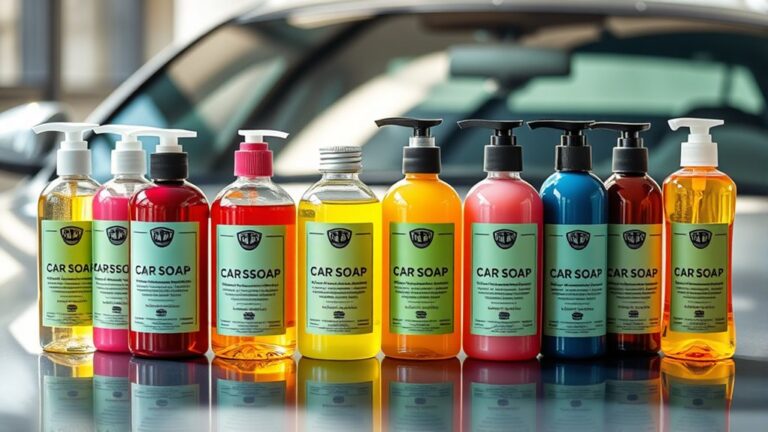
You’ll want a bucket, car-specific soap or eco-friendly options, and plenty of soft microfiber towels or sponges. Consider adding a hose with a spray nozzle for rinsing and a wheel brush for tires.
Don’t forget a drying cloth to prevent water spots. When choosing supplies, opt for eco-friendly options to reduce your environmental impact—biodegradable soaps and water-efficient tools make a difference.
If you’re environmentally conscious, look for biodegradable car wash solutions and reusable towels. Gathering everything beforehand makes the process smoother and keeps you focused.
Having all your supplies ready means fewer trips to grab more materials during the wash. This makes the whole experience easier and more enjoyable.
Preparing Your Car and Work Area for Safe Washing
Before you get started, it’s a good idea to gather all your supplies so you’re not scrambling around later. Also, choose a spot that’s easy to reach and won’t cause any inconvenience. Oh, and don’t forget to secure your parking area—this helps prevent your car from moving while you’re washing it. Taking these simple steps makes the whole process safer and a lot more efficient.
Gather Necessary Supplies
To ensure your car wash goes smoothly and safely, start by gathering all the supplies you’ll need beforehand. Essential items include a bucket, microfiber cloths, a soft sponge, and a gentle brush for tough spots.
Using eco-friendly products is also important. Opt for environmentally conscious soaps and cleaners that won’t harm the environment or damage your vehicle’s paint.
Make sure you have a hose with a spray nozzle for rinsing. Consider wearing gloves for added protection, especially if you have sensitive skin.
Gather any additional tools you might need, like a drying towel or wheel cleaner. Having everything ready saves time and keeps you organized during the process.
Preparing your supplies in advance helps ensure a more efficient, eco-friendly, and safe car washing experience.
Choose a Suitable Location
Choosing the right location is essential for a safe and effective car wash. Look for a spot with enough space to move around freely and avoid areas with sharp objects or debris.
Ideally, pick a place that offers good outdoor lighting so you can see dirt and soap streaks clearly. A shaded area helps prevent premature drying, which can cause water spots.
Consider this table for key factors:
| Car Wash Locations | Outdoor Lighting |
|---|---|
| Flat, level ground | Bright, natural daylight |
| Away from trees | No harsh shadows |
| Easy drainage | Adequate visibility |
| Spacious enough | Consistent illumination |
Choosing a suitable location guarantees safety, efficiency, and a spotless finish.
Secure Parking Area
Ensuring your parking area is secure and well-prepared is key for a safe, efficient car washing experience. Start by choosing a flat, stable surface to prevent slips or vehicle movement.
Make sure the space is free of obstacles, debris, or anything that could cause damage or get in your way. Lock your car doors and engage the parking brake to keep your car safe while you’re cleaning.
If possible, use wheel chocks for extra stability, especially on inclined surfaces. Clear the surrounding area so you have plenty of room to move around safely and avoid tripping hazards.
Properly preparing your parking area helps minimize risks and creates a safe environment. This way, you can focus on cleaning your car without worrying about accidents or damage.
Rinse Your Car Properly Before Washing
Before you start washing your car, give it a good rinse with gentle water. This helps loosen up all the dirt and grime without scratching the paint. It’s also a good idea to remove any loose debris first—like leaves or dirt—so they don’t cause scratches when you start scrubbing.
Getting the car properly rinsed off sets the stage for a clean, scratch-free finish. Plus, it makes the whole washing process way easier and more effective!
Use Gentle Water Flow
Have you ever wondered why rinsing your car properly is so important before washing? Using a gentle rinsing approach helps remove loose dirt without damaging the paint or scratching the surface. It also promotes water conservation by reducing runoff and waste.
To guarantee an effective rinse, consider these steps:
- Use a low-pressure spray to avoid applying excessive force.
- Keep the water flow steady and even across all surfaces.
- Focus on one section at a time, rinsing thoroughly before moving on.
This gentle water flow ensures dirt is rinsed away without harming your car’s finish, making your next wash more effective. Proper rinsing might seem simple, but it’s key to maintaining your vehicle’s look and saving water at the same time.
Remove Loose Dirt
Before you start washing, it’s really important to remove loose dirt from your car’s surface. If you don’t, it can scratch the paint when you wash, so a good rinse is essential.
Use a hose with gentle water flow to loosen and wash away dirt, dust, and debris. Begin at the top of your car and work your way down, making sure all surfaces are covered.
This step helps prevent dirt from settling into the paint during washing and reduces the risk of scratches. Don’t skip it — it prepares your car for a cleaner, safer wash.
Removing loose dirt first keeps your car’s finish shiny and new. It also makes the rest of the cleaning process much more effective.
Apply Soap and Wash Your Car Effectively
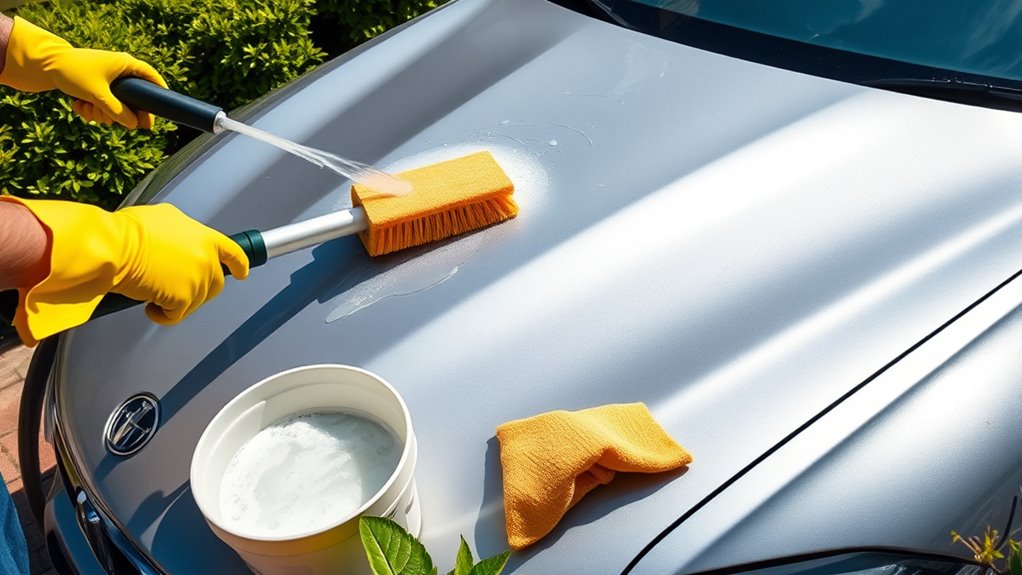
Applying soap properly is key to lifting dirt and grime without harming your car’s paint. When you focus on good soap application and washing technique, you’ll get a thorough clean without scratches. Start with a soft sponge or wash mitt dipped into your soapy water bucket.
Work in sections, applying gentle pressure to avoid damaging the paint. To improve your washing, keep these tips in mind:
- Use two buckets—one for soapy water, another for rinsing your sponge—to keep dirt out.
- Always wash from the top down so you don’t re-deposit dirt on cleaned areas.
- Rinse your sponge often to prevent dragging dirt across your car.
Following these steps will help you apply soap effectively, giving your car a deep clean without streaks or scratches.
Rinse Off Soap and Dirt Without Streaks
To rinse off soap and dirt effectively, use clean, flowing water and gentle pressure to avoid streaks. Start at the top of your car and work downward, making sure all soap residue is thoroughly rinsed away.
Use a hose with an adjustable nozzle so you can control the flow and avoid blasting dirt into the paint. Rinse with even, overlapping motions to prevent water spots and streaks.
Use an adjustable nozzle and rinse with smooth, overlapping motions to prevent streaks and water spots.
Pay special attention to areas with tight curves or creases to remove all soap and dirt thoroughly. After rinsing, don’t rush — quick rinses can leave streaks behind.
Proper drying methods are essential to keep that streak-free finish, and we’ll cover that in the next step. Following these tips will keep your car clean, shiny, and free of streaks or water spots.
Dry Your Car for a Spotless Shine
Drying your car properly is key to getting that spotless, streak-free shine. Good drying techniques help prevent water spots and give your car a pristine look.
Start with a clean microfiber towel or a chamois. These absorb moisture without scratching the surface. Gently pat or wipe the car, avoiding circular motions that can cause streaks.
Here are three drying tricks to make your process better:
- Blotting Method: Lightly press the towel against the surface and lift instead of dragging. This helps minimize streaks.
- Two-Towel Technique: Use one towel for big areas and a second for detailing edges. It ensures thorough drying everywhere.
- Air Drying with a Blower: Use a car blower or compressed air to blow water out of crevices and tricky spots.
Simple Tips to Keep Your Car Clean Longer After Washing
Keeping your car clean longer after washing is all about forming simple habits that stop dirt and grime from settling in quickly. Regularly applying protective coatings creates a barrier that helps resist dirt, water spots, and UV damage.
Routine interior cleaning is just as important. It keeps dust and debris from spreading outside, which means fewer washes needed. To get the most out of these tips, check out the suggestions below:
| Tip | Benefit |
|---|---|
| Apply protective coatings regularly | Keeps your car shiny and dirt-resistant |
| Clean interior surfaces often | Prevents dirt from spreading outside |
| Use a microfiber cloth for drying | Reduces streaks and leaves a smooth finish |
| Park in shaded areas | Limits sun damage and keeps your car cleaner longer |
| Avoid eating inside your car | Minimizes crumbs and stains |
Frequently Asked Questions
How Often Should I Wash My Car at Home?
You should wash your car at home about once every two weeks, but feel free to adjust based on your needs.
In winter or during rainy seasons, wash more often to remove salt and grime, which can cause rust.
During summer or dry periods, every three weeks might do the trick.
Seasonal changes really affect how often you should clean your car to keep it looking good and protected from damage.
Can I Use Household Items Instead of Car Wash Supplies?
You can absolutely use household items to wash your car, turning your kitchen into a car spa. Make homemade cleaners with gentle ingredients like dish soap, vinegar, or baking soda. These are eco-friendly options that scrub without harsh chemicals.
These substitutes act like a soothing rain, cleansing your vehicle while saving money and the environment. Just remember to rinse thoroughly and avoid anything too abrasive that might scratch your paint.
Is It Necessary to Use a Two-Bucket Method?
Using a two-bucket method isn’t strictly necessary, but it offers clear benefits that improve your wash. One bucket holds soapy water, and the other is for rinsing your sponge or cloth.
This setup helps prevent dirt from re-depositing on your car, which reduces scratches. It’s a simple step that makes your car wash safer and more effective.
If you want a spotless, scratch-free finish, using two buckets is definitely worth it.
What’s the Best Time of Day to Wash My Car?
Think of your car as a delicate flower that needs just the right sunlight to bloom. The best time to wash your car is in the early morning or late afternoon when the weather is calm and the temperature is just right—around 50-70°F.
Avoid washing during the scorching midday sun, which can cause water spots and streaks.
How Do I Prevent Water Spots After Washing?
To prevent water spots after washing, focus on effective water spot prevention and drying techniques. Use a high-quality chamois or microfiber towel to dry your car promptly and thoroughly.
Avoid air drying, as it can leave spots. Instead, dry your car as soon as possible after washing to prevent water from evaporating and leaving mineral deposits behind.
You might also consider using a quick detailer or a water-repellent spray. These products help repel water and reduce the chances of spots forming.
Proper drying and timely use of these products are key to keeping your car spotless and shiny.
Conclusion
Just like a painter’s diligent brushstrokes reveal a masterpiece, your regular care transforms your car into a shining reflection of pride. Following these simple steps guarantees your vehicle stays spotless and protected.
Tending to your car with patience and attention turns washing into a rewarding ritual. It’s not just about cleaning—it’s about caring for your ride and showing respect for it.
Remember, a well-maintained car isn’t just clean. It’s a true reflection of your effort and dedication. Keeping your car looking great is easy when you follow these simple wash steps at home.