Can You Power Wash Cars Correctly?
Many car owners want to keep their vehicles looking shiny and new, but figuring out how to power wash your car safely can be confusing. You’re not alone—lots of people struggle with avoiding damage while trying to clean effectively.
Luckily, with the right techniques, you can get a spotless car without harming the paint or delicate parts.
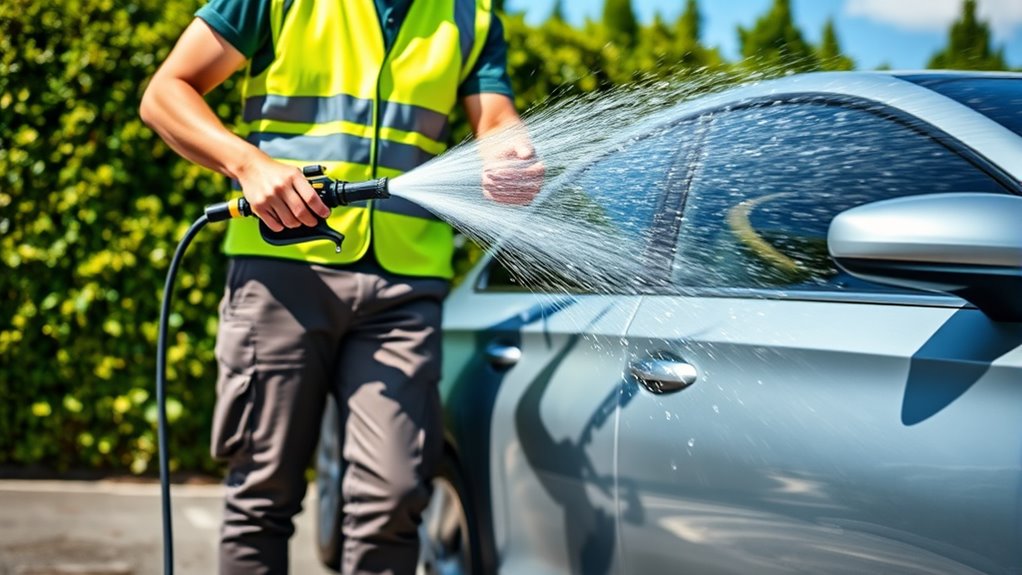
Yes, you can power wash your car correctly if you follow proper techniques. Use gentle cleaning products designed for cars, set your pressure washer to 1,200-1,500 PSI with a wide-angle nozzle, and keep the nozzle at least 12 inches from the surface.
Avoid spraying directly at windows, vents, or delicate trims, and maintain steady movement. Proper preparation and cautious application help prevent damage.
Keep exploring for detailed steps to guarantee safe, effective cleaning.
Key Takeaways
- Use a pressure washer with 1,200 to 1,500 PSI and wide-angle nozzles to prevent damage.
- Keep a safe distance of at least 12 inches from the car’s surface while washing.
- Avoid spraying directly at windows, seals, or vents to prevent damage.
- Use gentle, car-specific cleaning products and rinse thoroughly to remove grime.
- Wear safety goggles and gloves for protection while power washing.
Is Power Washing Safe for Your Car? Risks and Benefits Explained
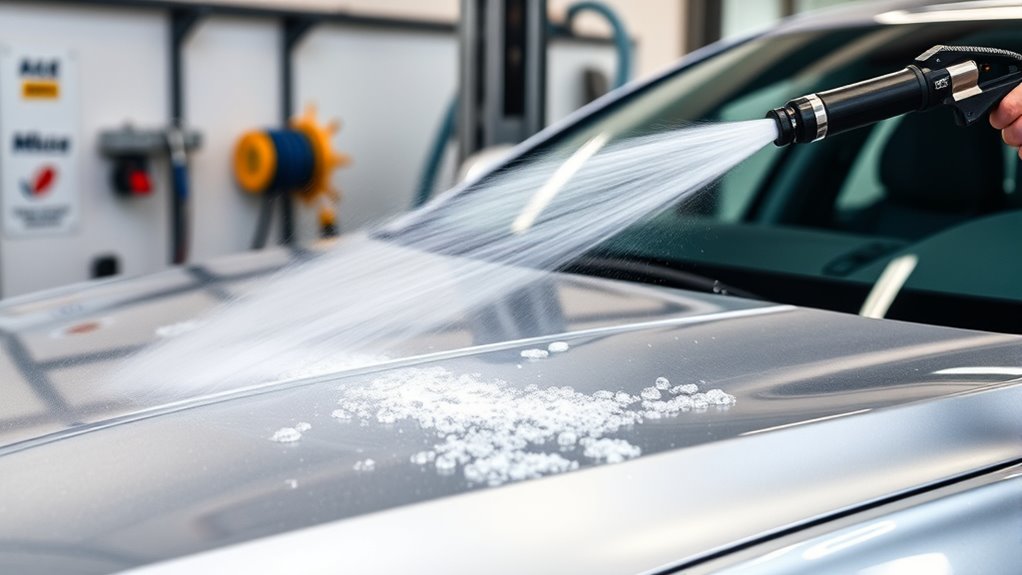
Is power washing your car safe? It can be, but you need to be cautious. Power washing is a quick way to remove dirt and grime, helping with car maintenance.
However, using the wrong cleaning products or too much pressure can damage your vehicle’s paint, trim, or seals. High-pressure water can strip away wax or push water into areas it shouldn’t reach, leading to rust or interior issues.
To keep it safe, choose a pressure setting suited for cars and use gentle cleaning products designed for automotive surfaces. Avoid harsh chemicals that could harm the paint or rubber parts.
When done correctly, power washing can improve your car’s appearance and protect its value. Always be mindful of sensitive areas like vents and seams.
How to Prepare Your Car Before Power Washing
Before you start power washing your car, it’s important to prepare it properly to avoid any damage.
Good car maintenance begins with removing loose dirt, debris, and any overhanging branches that could scratch the paint during cleaning.
Use gentle cleaning supplies like a soft brush or microfiber cloth to wipe off dirt from the surface.
Rinse the car thoroughly with water to loosen stubborn grime, paying special attention to wheels, wheel wells, and lower panels.
Make sure to close all windows, doors, and the sunroof to prevent water from seeping inside.
Ensure all windows, doors, and the sunroof are closed to keep water out during cleaning.
Check your car’s paint and clear coat for any chips or cracks, and consider applying a protective wax layer beforehand.
This helps prevent water spots and makes cleaning easier.
Proper preparation guarantees you won’t just clean your car effectively but also protect its finish from potential damage caused by high-pressure water or abrasive debris.
Choosing the Right Equipment and Settings for Car Power Washing
Choosing the right equipment and settings is key to cleaning your car effectively and safely. Start by picking the right tools, like a pressure washer with adjustable nozzles, so you can control the spray strength.
For cars, a machine with a pressure range of 1,200 to 1,500 PSI works best. It helps prevent damage to your paint or delicate surfaces. Use a wide-angle nozzle, like a 25 to 40-degree tip, to spread water evenly and reduce the risk of etching or chipping paint.
Avoid high-pressure settings that could strip off clear coats or cause dents. Instead, lower the pressure for sensitive spots like antennas or moldings. Always check that your equipment is in good shape—no leaks or blockages.
Choosing the right equipment and adjusting the pressure properly lets you clean your car effectively while minimizing the risk of damage. This makes your wash both efficient and safe.
How to Safely Power Wash Your Car: Step-by-Step Instructions
Want to power wash your car without risking any damage? The key is picking the right equipment and knowing how to use it properly. Make sure your pressure washer is set to the right level for your car’s surface—that way, you’ll clean effectively without causing any harm to the paint or finish.
Follow these simple steps to get your car sparkling clean safely. Just take it slow, and you’ll be surprised at how easy and effective it can be!
Proper Equipment Selection
Selecting the right equipment is essential to safely power wash your car without causing damage. Your choice of pressure washer types really matters, as some models are made specifically for vehicles and have adjustable pressure settings.
Proper nozzle selection is just as important. A wider spray pattern helps reduce the risk of scratching or denting your car’s surface. Here’s a quick visual:
| Pressure Washer Types | Nozzle Selection |
|---|---|
| Electric (light-duty) | 25° or 40° for gentle wash |
| Gas-powered (heavy-duty) | 15° for stubborn grime |
| Compact models | 40° for delicate areas |
| Professional-grade | Adjustable nozzles |
| Residential use | Wide-angle nozzles |
Choosing the right combo ensures a safe, effective clean that removes dirt without causing damage.
Safe Washing Techniques
Before you start power washing your car, it’s important to take some safety precautions to protect both your vehicle and yourself. First, set your water pressure to a moderate level. Too high can damage paint or trim.
Second, choose the right nozzle type. A wider spray nozzle reduces the risk of surface damage. Third, keep the nozzle at least 12 inches away from the car’s surface to prevent stripping paint.
Fourth, avoid directing the spray at windows, seals, or vents to prevent water intrusion. Always wear safety goggles and gloves for added protection. Using appropriate water pressure and nozzle types guarantees a safe, effective clean without harming your vehicle.
Proper technique keeps your car looking great and extends its lifespan.
Common Mistakes When Power Washing Your Car and How to Avoid Them
Many car owners make mistakes when power washing their vehicles, often because they underestimate the potential for damage or overlook proper techniques. One common mistake is holding the nozzle too close to the surface, which can strip paint or damage the clear coat. To avoid this, keep a safe distance and use smooth, sweeping motions.
Another mistake is using too much pressure, which can peel paint or dent panels. Start with a lower pressure setting and increase it gradually as needed. Be careful around delicate areas like trim or seals—never aim the spray directly at them.
Neglecting to rinse thoroughly can leave soap and dirt behind, leading to streaks or scratches. Don’t rush the process. Follow proper power washing techniques to make sure your car gets a safe, effective clean.
Being aware of common mistakes helps protect your car’s finish and gets you a professional-looking result every time.
Protecting Your Car’s Paint and Delicate Parts During Power Washing
To keep your car looking its best after avoiding common power washing mistakes, it’s important to focus on protecting the paint and delicate parts. Proper paint protection and safeguarding delicate components prevent damage and maintain your car’s value. Here are four essential tips:
Protect your car’s paint and delicate parts with proper power washing techniques to maintain its value and appearance.
- Use a wide-angle, low-pressure nozzle to avoid stripping paint or damaging delicate components.
- Keep the spray at least 12 inches away from the surface to prevent pitting or chipping.
- Avoid direct spraying on sensitive areas like vents, lights, and trim, which can be easily damaged.
- Use a gentle, specialized cleaner on fragile parts instead of harsh chemicals that can degrade paint protection.
Following these guidelines guarantees your power washing process cleans effectively without compromising your car’s paint or delicate components. Proper technique extends the lifespan of your paint protection and keeps your vehicle looking its best.
How Often Should You Power Wash Your Car? Best Practices
You probably want to give your car a good wash about once every two weeks to keep it looking fresh and shiny. That way, you can prevent all that dirt and grime from building up over time. When you’re washing, stick to gentle techniques—like using a soft brush and keeping a proper distance from the surface—to make sure you don’t accidentally cause any damage.
Of course, if your car’s out in harsh weather, like lots of rain, snow, or if it’s often exposed to dirt and debris, you might need to wash it more often. Just keep an eye on how dirty it gets and adjust your routine accordingly.
Recommended Washing Frequency
Washing your car regularly is key to keeping it looking good and protecting the paint. How often you should wash it depends on things like your environment and the season. Usually, washing every 1-2 weeks helps keep dirt and grime away.
In winter, when road salt is common, you might need to wash your car more often to prevent rust. In dry, dusty areas, washing weekly can help remove build-up. Keep these tips in mind:
- Wash more often if you see mud, bird droppings, or tree sap on your car.
- During winter, increase washing to get rid of salt and grime.
- Cut back on washing if your area isn’t very polluted or dusty.
- Think about your driving habits—more time on busy roads might mean more frequent washes.
Follow these tips to find the best washing schedule for your environment.
Optimal Cleaning Techniques
Power washing your car works best when you do it the right way, finding a good balance between how often and how carefully you clean. To get the most out of power washing, use smart techniques like keeping the right distance and adjusting the pressure based on your car’s surface.
Start with a wide spray pattern and work in overlapping strokes to avoid streaks and damage. Keep the nozzle moving steadily so you don’t concentrate pressure on one spot. Use a detergent made for cars, and rinse thoroughly to get rid of dirt and grime.
Be careful around sensitive areas like vents or trims, avoiding high pressure directly on them. Regularly cleaning your car with these tips will give you a thorough, safe wash that protects your paint and finish while making your car look great.
Alternatives to Power Washing for Cleaning Your Car
While power washing is great for deep cleaning, there are other ways to get your car spotless without using high-pressure equipment. These options are gentle but still effective, helping you keep your vehicle’s finish looking great.
Here are some popular alternatives:
- Hand washing with soft brushes and microfiber cloths, combined with quality detailing products, ensures a thorough clean without scratching the paint.
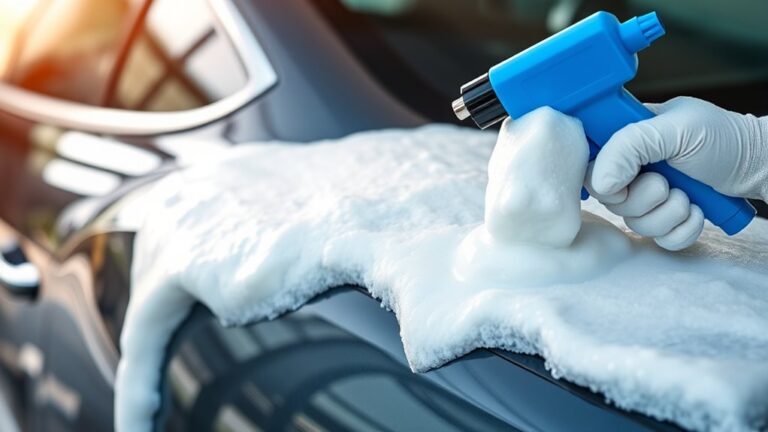
- Foam cannons and biodegradable cleaners can make washing easier and are more eco-friendly.
- Waterless solutions let you clean your car without using water, which is perfect for quick touch-ups and saving resources.
- Clay bars help remove embedded contaminants from the paint, leaving a smooth, clean surface before you apply wax or polish.
These methods are gentle, effective, and easy to do at home. They save you time and money while protecting your vehicle’s finish.
What to Do If Your Car Gets Damaged During Power Washing
Even when you’re careful, accidents can happen during power washing, leading to unexpected damage to your car’s paint or exterior. If you notice chips, scratches, or peeling paint afterward, start with a damage assessment. Carefully inspect the affected areas to understand how serious the harm is. Take photos to document the damage, which can help when discussing repair options.
For minor issues like small scratches or paint chips, you might consider DIY touch-up kits or talk to a professional for more significant repairs. If the damage is extensive, such as deep scratches or paint removal, visiting an auto body shop is your best bet. Don’t delay repairs because untreated damage can get worse over time.
Final Tips for Safe and Effective Car Power Washing
To guarantee your car gets cleaned safely and effectively, it’s important to follow a few final tips. First, always check your pressure settings; too high can damage paint, so keep it on a gentle, recommended level.
Check your pressure settings to avoid damaging your car’s paint and ensure a safe, effective wash.
Second, use a wider spray nozzle to distribute water evenly, reducing the risk of scratches. Third, maintain a consistent distance—about 2 feet—from your car to prevent concentrated force on any spot.
Fourth, focus on proper car maintenance by regularly inspecting your equipment and cleaning your wash area. Avoid aiming directly at sensitive areas like windows, lights, or seals.
Rinse the entire vehicle thoroughly before and after washing to remove dirt and debris. Following these tips guarantees you maximize cleaning effectiveness while protecting your vehicle’s finish.
Proper pressure settings and cautious techniques help prevent damage, making your power washing routine safe and efficient.
Frequently Asked Questions
Can Power Washing Remove Stubborn Stains Effectively From Cars?
Yes, power washing can remove stubborn stains effectively from cars if you use the right washing techniques.
For different stain types like mud, bird droppings, or grease, adjust your pressure and nozzle to avoid damage. Start from a safe distance and use a wide spray pattern.
Keep the wand moving and properly rinse to ensure the stains are cleaned off. Avoid high pressure directly on delicate areas to protect your vehicle’s paint.
Is There a Specific Type of Soap Best for Power Washing Cars?
Yes, there’s a specific soap type you should use. Look for a car-specific detergent designed for power washing; it’s formulated to break down dirt without harming the paint.
Using the right soap combined with proper washing techniques guarantees a thorough clean without damage. Don’t settle for generic cleaners—they might seem effective but can strip your car’s finish.
The right soap makes all the difference in achieving a spotless, streak-free shine.
How Long Should a Typical Car Power Wash Take?
A typical car power wash takes about 10 to 15 minutes, so you can get it done quickly without sacrificing quality. It’s a good balance between saving time and getting your car really clean.
To keep your vehicle looking sharp, wash it every two weeks or whenever it gets really dirty. Adjust how often you wash based on how dirty your car gets and how often you like to keep it shiny.
Be sure to set your pressure and nozzle at the right levels to avoid damaging your car’s paint. Focus on all surfaces so you get a thorough clean without wasting water or time.
Can Power Washing Damage Car Decals or Stickers?
Yes, power washing can damage car decals or stickers if you’re not careful. The high pressure can peel or tear them away, ruining your decal care and sticker durability.
To protect your stickers, use a gentle spray setting, keep the nozzle at a safe distance, and avoid aiming directly at decals. Think of it as a delicate dance—too much force and you’ll be saying goodbye to your favorite sticker!
What Signs Indicate That a Car Has Been Over-Pressurized During Washing?
If your car shows signs of pressure damage after washing, you might notice peeling or bubbling paint, cracked decals, or streaks on the surface.
Over-pressurizing during wash techniques can strip away protective coatings or cause paint damage.
To prevent this, use a suitable pressure setting and maintain proper distance from the car.
Always keep the nozzle moving and avoid focusing high pressure on delicate areas to protect your vehicle’s finish.
Conclusion
Now that you know how to power wash your car safely, you’re all set to keep it sparkling without risking damage. Just remember, patience is key—you don’t want to rush and end up with a scratched finish.
Follow the steps carefully, avoid common mistakes, and don’t be afraid to step back and assess your work. With a little effort, you’ll have your car shining like a diamond in the rough, ready to hit the road with pride.
And yes, you can power wash your car correctly—just take your time and do it right.