7 Simple Steps to Wash Car Seats Effectively
Many car owners struggle with keeping their car seats clean and looking fresh. Between daily commutes and weekend trips, dirt and stains can quickly take over.
But don’t worry—you’re not alone, and there are simple ways to tackle this!
To wash your car seats effectively, start by preparing your car and removing loose items.
Vacuum thoroughly using the right attachments to lift dirt and debris. Choose appropriate cleaning products for fabric or leather seats, avoiding harsh chemicals.
Identify and treat stains promptly with suitable solutions.
Deep clean the seats with gentle scrubbing, then wipe away dirt and allow them to dry.
Use odor neutralizers to keep your car fresh.
Keep your seats in top shape with these simple steps and helpful tips.
Key Takeaways
- Remove loose items and vacuum the seats thoroughly to get rid of dirt and debris before you start cleaning.
- Choose the right upholstery or leather cleaners based on what your seats are made of.
- If you notice any stains, treat them right away with the appropriate stain removal products and techniques.
- Spray the cleaner evenly over the seats, then gently scrub, and wipe with a damp cloth to lift the dirt.
- Let the seats air dry completely, and if needed, apply protective conditioners to keep them in good shape.
Prepare Your Car for a Deep Clean
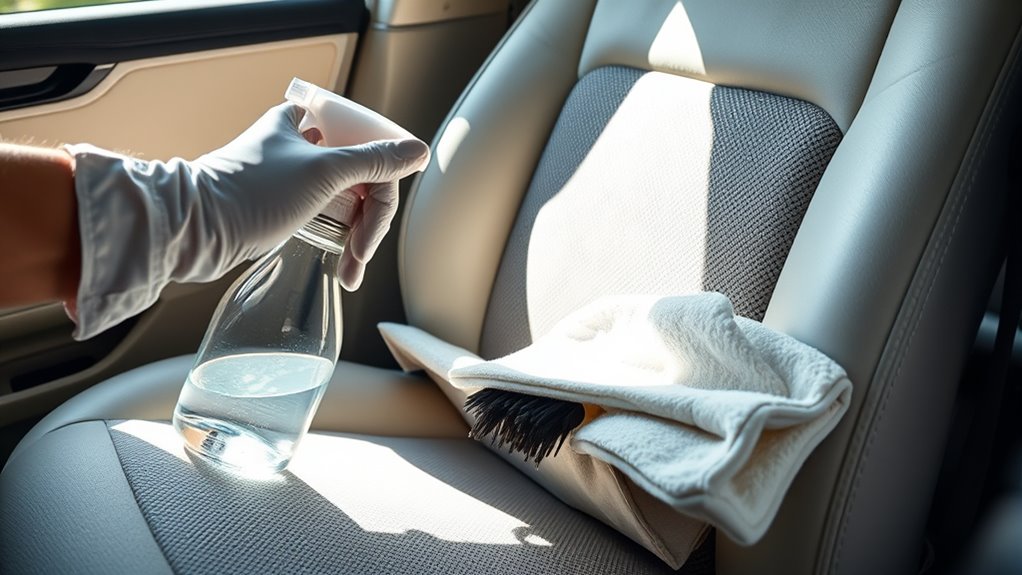
Before you start cleaning your car seats, it’s a good idea to prepare your vehicle for a deep clean. Set up a cleaning schedule to help you stay consistent and avoid dirt and stains building up.
Remove all loose items from your seats and the floor so you can access everything easily. Vacuum the seats and nearby areas to lift dirt, dust, and debris. This step also helps protect your seats’ fabric or leather from scratches during cleaning.
If you’re planning to use strong cleaning agents, consider using seat covers or plastic sheets to prevent damage. Also, check for any loose or fragile parts inside the car that need extra care.
Proper preparation makes sure you don’t miss spots and makes the whole cleaning process smoother and more effective. Getting your car ready sets a solid foundation for a deep clean that leaves your seats looking fresh and well-maintained.
Choose the Best Cleaning Products for Car Seats
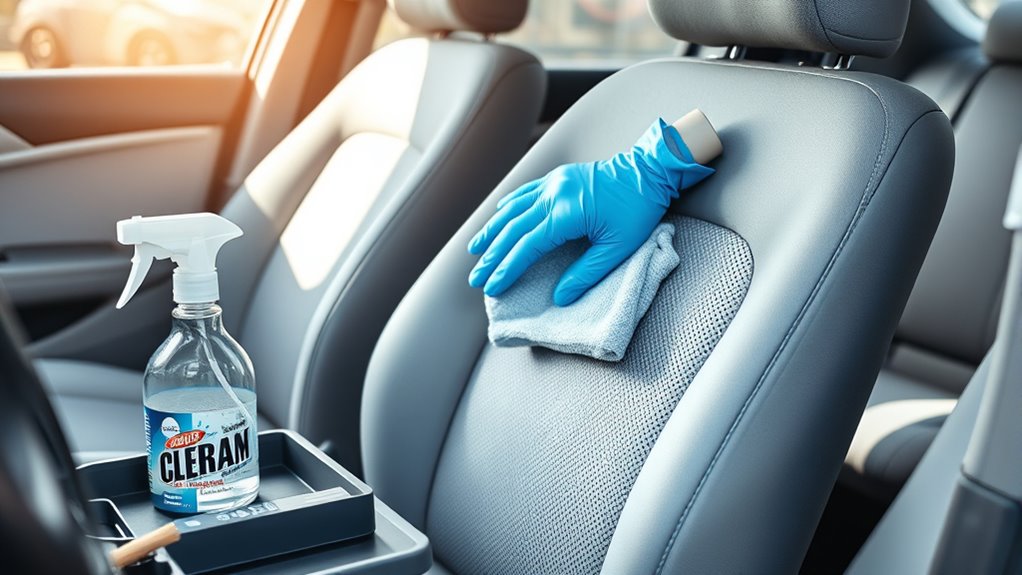
When you’re picking out cleaning products for your car seats, it’s best to go for ones that are made specifically for upholstery or fabric. That way, you’re more likely to get a good clean without risking any damage.
And try to steer clear of harsh chemicals—they can sometimes harm the material or leave behind weird smells. Instead, opt for gentle but effective cleaners that will keep your seats looking fresh and in great shape.
Suitable Cleaning Solutions
Choosing the right cleaning solutions is essential to effectively clean your car seats without causing damage. Start by considering your upholstery types—fabric, leather, or vinyl—as each needs specific products.
For eco-friendly options, look for biodegradable, non-toxic cleaners that are gentle yet effective. For fabric seats, use a mild upholstery cleaner that lifts dirt without soaking the material.
Leather seats benefit from specialized leather cleaners that preserve the material’s suppleness. Vinyl seats can be cleaned with simple soap and water or gentle solutions designed for plastic surfaces.
Always check labels to verify products are compatible with your upholstery. Using the right cleaning solutions prevents damage, maintains the seat’s appearance, and promotes a healthier interior environment.
Avoid Harsh Chemicals
Using harsh chemicals on your car seats can cause irreversible damage, so it’s crucial to choose cleaning products carefully. Opt for eco-friendly options and natural alternatives whenever possible. These products are gentler on your fabric or leather and safer for the environment.
Many commercial cleaners contain strong chemicals that can break down materials over time or cause fading. Instead, look for plant-based solutions or make your own using simple ingredients like vinegar, baking soda, or mild soap.
Always check labels to verify products are free from harsh solvents and dyes. By choosing natural alternatives, you’ll protect your seats from deterioration and avoid exposing yourself and your family to potentially harmful chemicals.
This careful approach helps maintain your car’s interior and promotes a healthier, safer cleaning routine.
Vacuum and Remove Loose Dirt
First, pick the right vacuum attachments to help you get rid of loose dirt and debris. It’s best to start with the visible stuff on the surface, so you can quickly clear away the larger bits. Then, move on to those tricky seat crevices where dust loves to hide—those tight spots can be a real challenge!
Make sure you pay special attention to these hard-to-reach areas. That way, you’ll make sure your car seats are completely clean and free of dust and dirt.
Use Appropriate Vacuum Attachments
Begin by selecting the right vacuum attachments to effectively remove loose dirt and debris from your car seat. Different vacuum types offer various attachment benefits, so choose one with adjustable nozzle sizes for thorough cleaning.
Upholstery brushes help lift dirt from fabric surfaces, while crevice tools target tight spaces and seams. Verify your vacuum has strong suction power to pick up pet hair and stubborn debris without needing multiple passes.
Consider the car seat materials—delicate fabrics may need softer brushes, while tougher surfaces can handle more aggressive tools. Regular vacuum maintenance keeps performance at its best and maintains cleaning efficiency.
Using appropriate attachments saves time and effort, giving your car seats a deep, effective clean and helping to prolong their lifespan.
Clear Visible Debris First
Before tackling deeper stains or grime, it’s important to clear visible debris from your car seats. Start by removing loose dirt, crumbs, and debris with a vacuum.
Use the right attachments to reach all areas and ensure thorough debris removal. This step helps stop dirt from spreading or settling further into the fabric during cleaning.
Organize clutter as you vacuum to make the process more efficient and avoid missing spots. Clearing visible debris also makes it easier to see where grime is concentrated.
Don’t forget to check under seat cushions and around the edges. Removing loose dirt first prepares your seats for a deeper clean and makes your efforts more effective.
Proper debris removal is a key first step toward a spotless, fresh-looking car interior.
Focus on Seat Crevices
After removing the loose debris from the surface, it’s time to focus on the seat crevices where dirt and crumbs tend to hide. Proper seat maintenance involves thoroughly cleaning these tight spots to prevent buildup.
Use crevice tools attached to your vacuum cleaner to reach into narrow gaps and corners. Move the tool back and forth, applying gentle pressure to loosen dirt without damaging the fabric.
Pay special attention to seams, around seat belts, and between cushions. Removing loose dirt from crevices not only improves the overall appearance but also helps prevent odors and mold growth.
Regularly cleaning these hidden areas guarantees your car seats stay fresh and well-maintained. It also makes the overall cleaning process more effective and your seats more comfortable.
Identify and Treat Common Stains
Knowing how to identify and treat common stains is key to keeping your car seat looking fresh and clean. Different stains like coffee, ink, or grease need specific methods to prevent permanent damage.
For example, protein stains such as blood or sweat respond well to cold water and gentle blotting. Oil-based stains like grease, on the other hand, require a solvent or degreaser.
Fresh stains are much easier to remove than old, set-in marks, so it’s best to act quickly. Always test any cleaning solution on a small, hidden area first to avoid discoloration.
Prompt quick action and test cleaning solutions first to protect your car seat’s appearance.
Water-based stains usually just need a mild soap solution, but stubborn ones might require specialized stain removers.
Deep Clean Fabric and Leather Car Seats
Once you’ve addressed surface stains, a thorough deep clean is the next step to restore your car seats’ appearance and freshness. For fabric seats, use a gentle upholstery cleaner or a mix of mild soap and water. Spray the solution evenly, then scrub with a soft-bristled brush, focusing on stained or heavily soiled areas.
Wipe away dirt with a clean, damp cloth and let the seats air dry. Leather seats require a different approach; use a leather-specific cleaner and a microfiber cloth to gently remove dirt and grime. After cleaning, apply a leather conditioner to keep the material supple and prevent cracking.
Deep cleaning isn’t just about looks—it’s also important for protecting your seats. It helps prevent dirt buildup that can damage upholstery over time. Regular care keeps your seats inviting and durable, helping them last longer and stay comfortable.
Eliminate Odors and Keep Your Car Fresh
To keep your car smelling fresh, it’s important to tackle odors directly and maintain good air quality inside. Start by finding the source of persistent smells, then use odor neutralizing methods like baking soda or special car sprays.
Sprinkling baking soda on fabric seats and carpets, letting it sit for a few hours, then vacuuming it up can absorb lingering odors. Fabric fresheners with natural scents are also great for giving your interior a quick refresh.
Sprinkle baking soda on seats, wait, then vacuum to remove odors; use natural fabric fresheners for a quick refresh.
Regularly airing out your car by opening windows helps improve air circulation and get rid of stale smells. For stubborn odors, consider using a portable air purifier or an odor eliminator spray.
Consistent cleaning combined with these odor neutralizing techniques will keep your vehicle smelling clean and inviting. This makes every drive more enjoyable and fresh.
Tips to Maintain Clean Car Seats Over Time
Keeping your car smelling fresh depends heavily on maintaining clean seats over time. To do this, follow simple seat maintenance tips like regularly vacuuming to remove dirt and debris.
Using protective covers can also help preserve the fabric or leather, making cleaning easier and reducing wear. If you notice spills or stains, address them promptly with appropriate cleaning solutions to prevent permanent damage.
Avoid eating or drinking in the car to reduce mess buildup. When possible, rotate or wash protective covers according to manufacturer instructions, especially after heavy use or exposure to dirt.
Regularly airing out your vehicle helps eliminate odors and keeps the interior smelling clean. By staying consistent with these tips, you prevent grime from accumulating and extend the life of your car seats.
Frequently Asked Questions
How Often Should I Deep Clean My Car Seats?
You should deep clean your car seats every 3 to 6 months, depending on how often you clean and what material your seats are made of.
If you notice stains, spills, or odors, it’s a good idea to give them a thorough cleaning. Cloth seats usually need more frequent attention, while leather or vinyl can be cleaned less often.
Regular cleaning keeps your seats fresh, helps them last longer, and keeps your car’s interior looking nice.
Can I Use Household Cleaning Products on Car Seats?
Did you know that using the wrong cleaning solutions can damage your car seats, leading to costly repairs?
You can’t just use household cleaning products on car seats, as many contain harsh chemicals that may cause fading or deterioration.
For effective stain removal and cleaning, stick to products specifically designed for automotive fabric or leather. Always test a small area first, and avoid abrasive cleaners for the best results.
What Precautions Should I Take to Avoid Damaging Leather Seats?
To protect leather seats, avoid harsh cleaners and opt for gentle leather protection products instead. Always test any cleaning tools on a small, hidden area first to prevent damage.
Use soft cloths or microfiber towels for cleaning, and steer clear of abrasive brushes or sponges that could scratch the surface. Regularly apply leather conditioner to keep the material moisturized and supple.
Be careful with water—using too much can lead to stains or warping of the leather. Keep these tips in mind to help your leather seats stay in great shape longer.
Are There Eco-Friendly Cleaning Options Available?
Yes, eco-friendly cleaning options are available. You can choose biodegradable cleaners and natural solutions that are gentle on your car seats and better for the environment.
These products avoid harsh chemicals and help reduce pollution. Look for labels that specify eco-friendliness or natural ingredients.
Using such options not only cleans effectively but also helps protect your vehicle’s interior and the planet at the same time.
How Do I Clean Car Seats With Pet Hair Effectively?
To clean pet hair from your car seats effectively, start with vacuum techniques. Use a powerful vacuum with a brush attachment to loosen and remove hair.
Next, use specialized pet hair tools like rubber gloves or lint rollers to pick up stubborn hairs.
For thorough cleaning, consider using a damp cloth or upholstery cleaner after vacuuming. This combo guarantees your seats are free of pet hair and look fresh.
Conclusion
Keeping your car seats clean isn’t just about looks; it’s also about health. Regular cleaning helps cut down on allergens and bacteria, making your driving environment safer.
Did you know a typical car can harbor over 700 different types of bacteria? That’s pretty surprising, right?
By following these simple steps consistently, you’ll not only protect your upholstery but also create a fresher, healthier space for every trip.
Stay committed to cleaning your car seats regularly, and they’ll stay spotless and inviting for years to come. Proper car seat cleaning is key to maintaining a healthy and clean driving environment.