10 Tips to Wash Your Car in Winter Weather
Many car owners find winter weather a real challenge, especially when it comes to keeping their vehicles clean and protected. You’re not alone—winter grime, salt, and ice can cause real damage if you don’t take the right steps.
Luckily, with a few simple tips, you can keep your car in great shape all season long.
To wash your car in winter weather, choose a warm day when temperatures are 40-50°F and avoid freezing conditions. Use the right winter soap, soft mitts, and microfiber towels, and rinse the vehicle with warm water to prevent ice formation.
Focus on the undercarriage, dry quickly, and protect locks and hinges with lubricant. Regular cleaning and proper techniques help prevent rust and damage.
Keep going to learn more tips for winter car care.
Key Takeaways
- Wash during mild weather, around 40°F-50°F, on sunny days. This helps prevent freezing and makes sure your cleaning is effective.
- Use winter-specific soap and soft microfiber tools to protect your paint and safely remove grime.
- Focus on rinsing and drying quickly, especially the undercarriage, to stop ice from forming and causing rust.
- After washing, apply a protective wax or sealant to keep your paint safe from road salts and chemicals.
- Clear snow and ice off your car before washing. Use high-pressure rinses on the underbody to fight rust buildup.
Why Washing Your Car in Winter Is Still Important
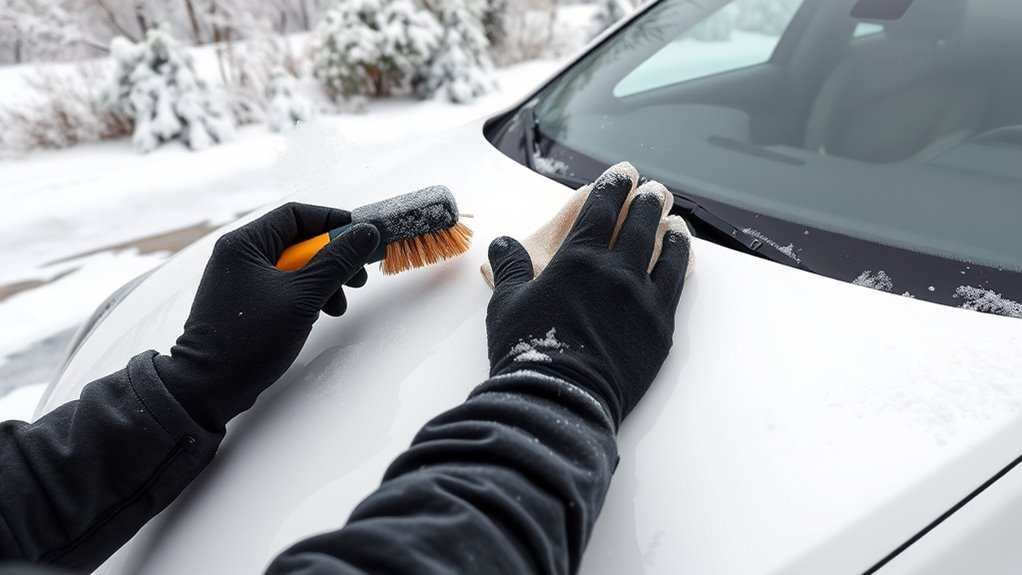
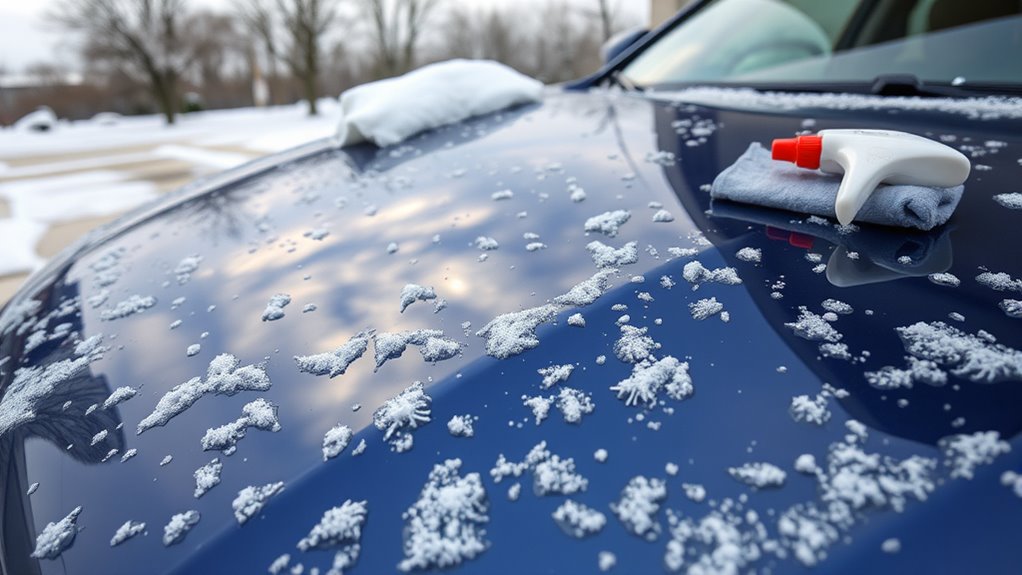
Even though it might seem unnecessary during cold months, washing your car in winter is still important. Cold weather brings unique challenges to car maintenance, and regular washes help protect your vehicle.
Salt, sand, and chemicals used on roads can quickly corrode your car’s metal parts, leading to rust and damage. Washing removes these harmful substances, preventing deterioration and extending your car’s lifespan.
Removing road salt and chemicals protects your car from rust and prolongs its lifespan.
Plus, winter grime can hide the paint, making your vehicle look dull and neglected. Regular cleaning helps keep its shine and overall appearance intact.
Washing your car also keeps important parts like the undercarriage clean. This reduces the risk of corrosion in hidden areas and helps maintain your car’s value.
This simple step is essential for keeping your vehicle reliable during winter. Regular washes protect your investment and help your car run smoothly in harsh conditions.
When Is the Best Time to Wash Your Car in Cold Weather
When is the ideal time to wash your car during cold weather? The best timing depends on weather conditions and temperature stability. You want to pick a day when temperatures are above freezing, ideally between 40°F and 50°F, to prevent water from freezing on your vehicle.
Here are four tips to help you find the best moment:
- Choose a day when the temperature has been stable for several hours, so there’s no rapid drop in temperature.
- Avoid days with snow, freezing rain, or high wind, which can make washing and drying difficult.
- Wash your car during daylight hours to take advantage of natural warmth and better visibility.
- Aim for a day when roads are clear of salt and debris to reduce recontamination after washing.
How to Choose the Right Products for Winter Car Washing
Choosing the right products for winter car washing is essential to protect your vehicle from harsh conditions. You want winter soap options that clean effectively without freezing or leaving residue. Look for formulas designed for cold weather that resist freezing and provide lubrication to prevent scratching.
Your car wash tools also matter. Use soft mitts and microfiber towels to avoid damaging the paint on icy days. Gentle tools help keep your car safe while you clean.
Here’s a quick comparison:
| Product Type | Best Use | Key Features |
|---|---|---|
| Winter Soap Options | Cold weather cleaning | Freezing-resistant, lubricating |
| Car Wash Tools | Gently removing grime | Soft, non-abrasive materials |
| Spray Products | Quick touch-ups and rinsing | Anti-freeze properties |
| Towels & Mitts | Safe wiping in low temperatures | Soft, absorbent, non-abrasive |
Choosing the right products guarantees your car stays protected and spotless, even in winter’s toughest conditions.
How to Safely Wash Your Car Without Freezing Water
Washing your car in winter can be tricky, but you can do it safely by using warm water. Just make sure it’s not too hot, because really hot water can actually hurt your paint. It’s all about finding that sweet spot with the temperature.
Once you’ve rinsed and washed your car, don’t forget to dry it off right away. This helps stop water from freezing on the surface and turning into ice. That quick step makes a big difference in keeping your car protected and looking good, even in the cold weather.
Use Warm Water Safely
Washing your car with warm water can effectively melt away grime and snow, but you need to do it carefully to prevent freezing. Using the right temperature is key to getting the benefits of warm water while staying safe.
To do this, check the water temperature, aiming for about 100°F (38°C). This helps you avoid rapid freezing that can cause problems. Use a thermometer or test the water on your wrist before spraying.
Keep the water temperature consistent and avoid sudden changes. Work in smaller sections and rinse thoroughly to prevent water from freezing on your vehicle.
Sticking to a safe temperature guarantees you enjoy the benefits of warm water without risking ice forming on your car or driveway. Proper control makes winter washing safe and effective.
Dry Immediately After Washing
After you finish washing your car, it’s important to dry it immediately to stop water from freezing on the surface. Use a microfiber towel or chamois to quickly soak up the excess water.
Focus on areas that are more likely to freeze, like door handles, mirrors, and seams. In winter, any water left sitting can turn to ice fast, which can damage the paint and seals.
Be thorough and make sure to remove all moisture from tricky spots and crevices. If you can, dry your car in a garage or sheltered spot to avoid cold air.
Using a blower or leaf blower can help reach those hard-to-get areas and speed up the drying process. Drying your car right away keeps it safe and free of ice buildup during cold winter weather.
The Best Way to Rinse and Dry Your Car in Cold Conditions
When you’re rinsing and drying your car in cold weather, it’s a good idea to use warm water, but be careful not to make it too hot, or it might freeze on contact. Just a gentle warm rinse can help loosen dirt without causing ice to form.
After rinsing, drying quickly is key to preventing ice from forming on the surface. Using the right drying materials, like a soft microfiber towel, can help you do this efficiently. It also helps avoid water spots and keeps your car protected from winter damage.
Use Warm Water Safely
When rinsing and drying your car in cold weather, using warm water can make a big difference. It helps remove dirt more easily and stops ice from forming on your vehicle.
To keep the water at a safe and comfortable temperature, remember these tips:
Always test the water first to avoid shocking your car with extreme heat.
Use a thermometer or your wrist to check the warmth—aim for about 100°F (38°C).
Never pour boiling water directly on your car, as it can damage the paint or cause cracks.
Adjust your water heater to a safe, steady temperature that’s warm but not too hot.
Following these steps keeps your car safe and ensures a thorough cleaning even in winter.
Dry Quickly, Prevent Freezing
Drying your car quickly is key in cold weather to stop ice from forming on its surface. Use effective drying tools like microfiber towels or chamois to soak up water efficiently.
Start by removing excess water with a blotting motion instead of dragging the towel. This helps avoid streaks and scratches on the paint.
When rinsing, use warm water to keep the temperature higher, which lowers the chance of freezing as the car dries.
Avoid air drying in freezing temps, since moisture can turn to ice fast. Instead, dry one section at a time to prevent water from freezing on the surface.
Use Proper Drying Materials
Choosing the right drying materials can make a big difference in cold weather. Using quality microfiber towels helps absorb water quickly and reduces the risk of freezing.
To optimize your drying process, follow these techniques:
- Use soft microfiber towels to gently blot the surface, avoiding scratches.
- Switch to a fresh towel often to prevent re-depositing water or dirt.
- Employ a patting motion rather than rubbing to minimize streaks and protect your paint.
- Dry from the top down, making sure all water is removed before temperatures drop further.
These tips help prevent ice formation and keep your car protected. Proper drying materials and techniques are essential for a streak-free finish and to avoid frozen water spots in cold conditions.
Protecting Your Car’s Paint and Underbody During Winter Washes
During winter washes, it’s important to protect your car’s paint and underbody from the tough conditions outside. Salt, slush, and moisture can lead to rust and damage if you don’t take the right steps.
Start by focusing on paint protection. Use a good quality wax or sealant after washing to create a barrier against ice-melting chemicals. This helps keep your paint looking fresh and safe.
For the underbody, think about applying an undercoating spray or rustproofing treatment. These protect vulnerable areas from corrosion caused by salt and debris.
Here’s a quick guide:
| Tip | Benefits |
|---|---|
| Use a pH-balanced wash | Prevents stripping protective coatings |
| Rinse thoroughly | Removes salt and debris effectively |
| Apply protective coatings | Boosts paint protection and underbody care |
Following these steps regularly helps keep your car looking good and structurally sound during winter. Regular inspections and treatments will ensure it can handle the season’s harshest conditions.
How to Prevent Freezing Locks and Doors After Washing
To prevent your locks from freezing after washing, it’s a good idea to spray a lubricant on the door locks and hinges. This helps keep everything moving smoothly and stops ice from forming inside.
Also, make sure to dry the locks thoroughly. Any leftover moisture can freeze overnight, making it harder to unlock in the morning.
Use Lubricant Spray
After washing your car in winter, applying a lubricant spray to your locks and doors can help stop them from freezing shut. This creates a barrier that resists moisture buildup, keeping your locks working smoothly in cold weather.
To get the best winter protection, follow these simple steps:
- Pick a high-quality lubricant spray made for cars.
- Spray it directly into the locks and around the door seals.
- Turn the key or handle to spread the lubricant inside.
- Wipe away any excess spray to prevent dirt from sticking.
Regularly applying lubricant before really cold weather hits keeps your locks from freezing and makes sure your doors open easily. This quick step can save you time and hassle during harsh winter days.
Dry Locks Thoroughly
Once you’ve finished washing your car, it’s crucial to dry the latches thoroughly to prevent moisture from lingering and freezing when temperatures drop. Proper latch maintenance involves removing all excess water to avoid moisture buildup inside the latch mechanism.
Use a clean cloth or compressed air to dry around the keyhole and door latches completely. Applying a latch de-icer or lubricant afterward can also help prevent freezing. If moisture remains, it can freeze and cause your latches to jam, making it difficult to open or access doors.
Taking these steps guarantees your latches stay functional during harsh winter conditions. Regularly dry and lubricate your latches to maintain their integrity and prevent costly freeze-related issues. Proper latch maintenance now saves frustration later.
Best Practices for Washing Your Car in Snow and Salt
Washing your car during snowy and salty conditions needs some extra care to avoid damage and rust. Salt can speed up corrosion and harm your vehicle’s paint if you’re not careful.
First, make sure to clear all snow and ice from your car before washing. This helps prevent scratching the paint and ensures you get rid of as much salt as possible.
Next, use a gentle, pH-balanced soap that’s designed for winter. It’ll help break down salt deposits without harming your paint or finish.
Pay special attention to the undercarriage, where salt tends to build up the most. Use a high-pressure hose to rinse away salt and grime from these hard-to-reach spots.
Finally, rinse your entire vehicle thoroughly, making sure there’s no salt residue left behind. Focus on crevices and wheel wells, where salt can hide and cause damage later.
How Often Should You Wash Your Car During Winter
Here’s a quick guide to help with your car care tips:
| Weather Condition | Recommended Frequency | Additional Tips |
|---|---|---|
| Snowy and salty roads | Weekly | Use a quality de-icer-safe wash |
| Mild winter days | Every 2-3 weeks | Focus on undercarriage cleaning |
| Freezing temperatures | Every 2 weeks | Avoid washing in freezing weather |
| Heavy snow or salt use | Weekly or after snowstorm | Rinse off salt promptly |
| Clear, dry days | Every 2-3 weeks | Maintain a consistent washing routine |
Sticking to these tips helps protect your vehicle and prolong its life during winter.
Common Winter Car Washing Problems and How to Fix Them
Winter car washing can bring up some common problems, like water freezing on your vehicle or leftover salt that can cause rust. Road salt and ice buildup are big issues that can harm your car if you don’t handle them right.
To fix these problems, wash your car with warm water when the temperature is above freezing. This helps prevent water from freezing on the surface.
Use a dedicated winter rinse or a spray with de-icer to remove salt and stop ice from building up in hidden spots.
Make sure to clean the wheel wells and undercarriage because salt tends to gather there and can cause rust.
Finally, dry your vehicle thoroughly after washing to avoid leftover water freezing later and causing damage.
Frequently Asked Questions
Can I Wash My Car Outdoors During Heavy Snowfall?
You can wash your car outdoors during heavy snowfall, but make sure to follow the right snow removal techniques and outdoor washing tips. First, clear snow and ice from your vehicle to prevent scratching.
Use warm water and gentle soap to avoid freezing, and be sure to dry your car thoroughly afterward to prevent ice from forming. It’s best to avoid washing during the heaviest snowfalls to keep things manageable and protect your vehicle.
Is It Necessary to Use a Special Wax in Winter?
Think of winter wax as your car’s shield in a snowstorm. Yes, it’s necessary.
Winter wax offers extra protection against salt, ice, and road grime. Use proper application techniques, like a thin, even layer and gentle buffing, to ensure full coverage.
This added layer helps prevent corrosion, keeps your paint looking fresh, and maintains your vehicle’s shine even in harsh weather.
How Can I Remove Ice From My Car Quickly?
To remove ice quickly, start with ice removal techniques like using a plastic scraper or a soft-bristled brush to gently lift ice without scratching your car.
For quick defrost methods, turn on your car’s defrost setting and increase the heater to warm the windshield from inside.
You can also spray a mixture of water and alcohol on icy areas to melt the ice faster. Always be cautious to avoid damaging your vehicle.
Should I Wash My Car Immediately After a Snowstorm?
Think of your car as a castle under siege, with snow and ice trying to weaken its defenses. You should wash your car immediately after a snowstorm to remove salt, grime, and road debris, which can cause rust.
Incorporate snow removal and winter maintenance into your routine to protect your vehicle’s paint and structure. Prompt cleaning helps preserve your car’s condition and keeps it in top shape for future battles against winter weather.
What Are the Best Storage Tips for Winter Car Wash Supplies?
You should store your winter car wash supplies in waterproof storage containers to protect them from moisture and cold. Keep cleaning tools like brushes and sponges in a dry, insulated area to prevent freezing.
Label your containers for easy access and avoid leaving supplies outside where snow and ice can damage them. Proper storage guarantees your tools stay in good condition, so you’re ready for your next winter wash.
Conclusion
Washing your car in winter keeps it clean, protected, and shiny. You help prevent rust, remove salt and grime, and extend your vehicle’s lifespan.
Choose the right products, wash at the right time, and dry thoroughly. These steps make a big difference in maintaining your car’s condition during the cold months.
Avoid freezing locks, prevent damage, and tackle winter’s challenges head-on. Following these tips ensures your car stays in top shape and looks great all season long.
By sticking to these winter car washing tips, you guarantee your vehicle stays reliable and performs well, no matter the weather.