
10 Easy Steps to Go Through a Car Wash Like a Pro
Many car owners want that perfect, shiny finish but often feel overwhelmed by the process. You’re not alone—getting your car looking its best can seem tricky, especially if you’re unsure where to start.
Luckily, with a few simple steps, you can wash your car like a pro and achieve professional results at home.
To wash your car like a pro, start by parking in the shade and removing loose debris. Choose the best wash method for your needs, then rinse and pre-wash to loosen dirt.
Use proper soap, gentle tools, and wash in sections to avoid scratches. Dry thoroughly and clean windows for clarity. Finish with wax and polishing for a shine.
For detailed tips on each step, keep going—you’ll master the process easily.
Key Takeaways
- Prepare your car by removing debris and making sure the windows are closed before you start washing.
- Pick the right wash method based on your vehicle’s needs and how comfortable you feel with each option.
- Use proper techniques like pre-rinsing, applying gentle soap, and using soft tools to avoid scratches on your car.
- Rinse thoroughly from top to bottom and dry right away with microfiber towels to prevent water spots.
- Finish up with glass cleaning, waxing, and a quick check for any missed spots to give your car that professional shine.
Prepare Your Car for an Effective Wash
Before you start washing your car, it’s important to prepare it properly. Good car maintenance begins with a clean vehicle, but knowing how often to wash helps prevent dirt buildup that can damage the paint.
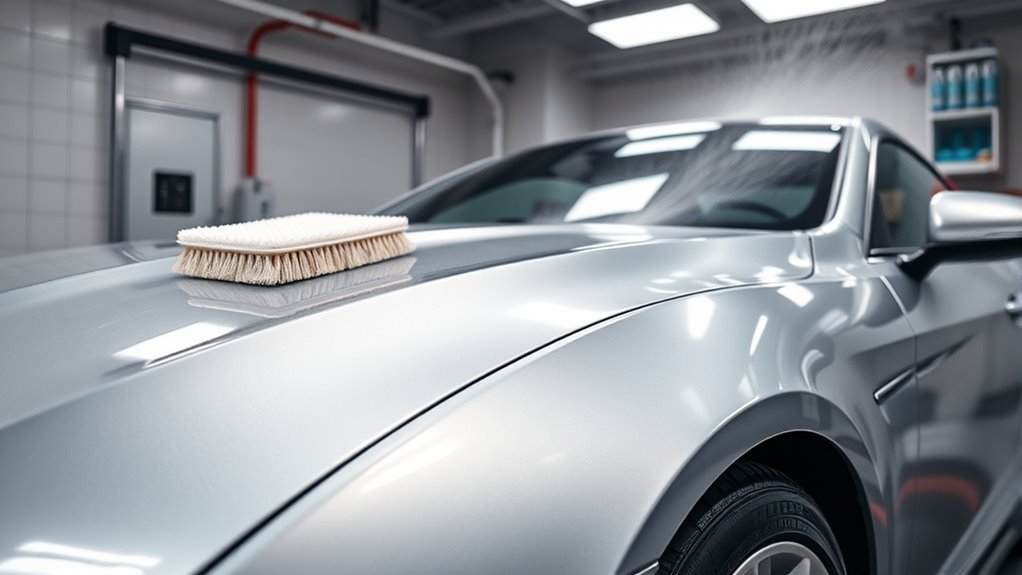
Start by parking your car in a shaded area to avoid water spots and sun damage. Remove any loose debris, like leaves or bugs, with a gentle brush or microfiber cloth.
Park in shade, remove loose debris with a gentle brush or microfiber cloth for a cleaner, damage-free wash.
Check the tires and wash them separately if needed, since they often collect more grime. Make sure all windows and mirrors are free of dirt to improve visibility during the wash.
Also, close all windows and sunroofs to prevent water from seeping inside. Preparing your car this way saves time and guarantees a more effective wash.
It protects your paint and prolongs its lifespan. Proper preparation also minimizes the risk of scratches and streaks, making your car look cleaner and more polished.
Choose the Best Car Wash Method for Your Vehicle
Selecting the right car wash method depends on your vehicle’s condition, your budget, and your time constraints. If your car has delicate paint or stubborn dirt, a hand wash is your best choice; it’s gentle and thorough. For convenience and speed, an automatic wash works well, especially if you’re in a hurry.
Consider this comparison:
| Method | Pros | Cons |
|---|---|---|
| Hand wash | Gentle, detailed cleaning | Time-consuming, more costly |
| Automatic wash | Quick, cost-effective | Potential for scratches |
| Touchless wash | No brush contact, safe for paint | Less effective on stubborn dirt |
| Self-serve bay | Control over cleaning process | Requires effort and time |
Choosing wisely guarantees your vehicle stays in top condition without unnecessary damage or expense.
Step-by-Step: Rinse and Pre-Wash Your Car
First, give your car a gentle rinse to wash away any loose dirt and debris. This way, you’re not scratching the paint when you start scrubbing later on.
Next, apply the pre-wash solution evenly over the entire surface, making sure every part is covered. Before you start scrubbing, let the solution sit for a bit—this helps loosen up stubborn dirt and makes the whole cleaning process easier. Taking this careful approach not only protects your car’s finish but also gets it ready for a more thorough wash.
Gentle Rinse Technique
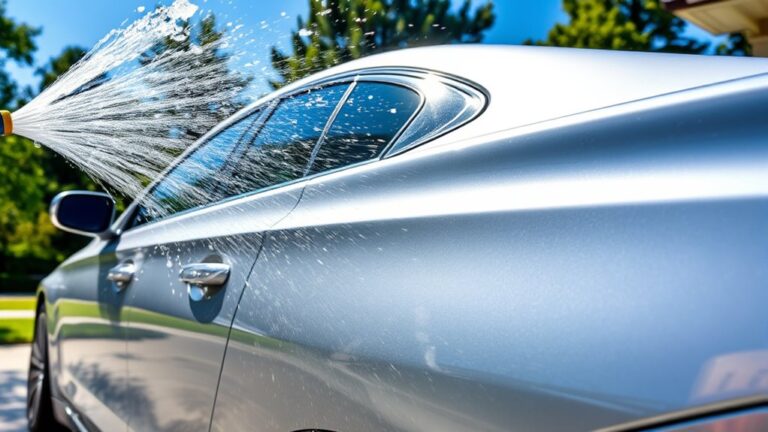
Starting your car wash with a gentle rinse guarantees you remove loose dirt and debris without scratching the paint. Use a hose or sprayer with adjustable water pressure to perform the gentle rinse.
Keep the water pressure low enough to avoid forcing dirt into the paint or causing scratches. Start from the top of the vehicle and work your way down, ensuring all surfaces are evenly rinsed.
Focus on areas with stubborn dirt, but avoid using high pressure on delicate parts. This initial rinse loosens debris, making subsequent washing safer and more effective.
Proper Pre-Wash Application
Before applying any cleaning products, it’s essential to properly rinse your car to remove loose dirt and debris. This step helps prevent scratching during the pre-wash. Use pre-wash tools like a soft hose nozzle or foam cannon for an even, gentle rinse.
Start rinsing from the top and work downward. This technique helps avoid re-contaminating areas you’ve already cleaned and ensures a thorough wash. Make sure to cover all surfaces, including wheels and undercarriage.
Keep the water pressure moderate to avoid damage. This initial rinse sets the stage for a proper pre-wash, helping to loosen stubborn dirt for easier removal. Use a high-quality pre-wash tool for gentle cleaning.
Apply Car Soap and Detailing Products Correctly
To get the best results, it’s all about using the right car soap and detailing products, and applying them with the proper technique. Honestly, using too much or too little can lead to streaks or even damage your paint, so it’s important to pay attention to the instructions on the labels.
And here’s a little tip—try to avoid applying products in direct sunlight or on a dirty surface. It might seem obvious, but it can really make a difference in how clean and shiny your car ends up looking. Taking these simple steps will help you get that professional, flawless finish every time.
Proper Soap Application Technique
Applying car soap and detailing products the right way is key to getting a spotless, scratch-free finish. First, pick the right foam types for your vehicle—making sure they lift dirt without scratching your paint.
Next, use soft, non-abrasive tools like wash mitts or foam guns to spread the soap evenly across your car’s surface. Start with plenty of soap to create a thick foam that sticks well.
Work in sections, gently scrubbing in circular motions to loosen dirt. Steer clear of harsh brushes or sponges that could cause scratches. Rinse thoroughly to remove all soap residue, leaving your car clean and ready for drying.
Following proper technique keeps your car safe from damage and ensures a professional shine every time.
Choosing the Right Products
Avoid household cleaners, which can harm your car’s paint. Look for products labeled pH-balanced—these clean well without stripping wax or the finish.
Use high-quality car soap designed to lift dirt without scratching the surface. When choosing detailing products, pick those made for your specific needs, like glass cleaners or tire shines.
Always read labels to make sure they’re compatible with your car’s surface. Using the right cleaning agents helps prevent damage and ensures a thorough, professional-looking result.
Investing in good products makes your car wash safer and more effective.
Avoiding Common Mistakes
Even if you’ve picked the right products, applying them improperly can still cause issues. Using the wrong water temperature can dull your paint or damage protective coatings.
Avoid aggressive washing techniques that cause scratches; instead, use gentle motions. Be careful with drying materials—cloths or microfiber towels should be clean to prevent streaks and scratches.
Over-washing or washing too often can harm your car’s finish and hurt the environment. Focus on cleaning frequency based on your environment.
When applying car soap and detailing products, make sure to cover everything evenly without overdoing it, and rinse thoroughly. Proper techniques help your car stay shiny and protect its surface longer.
Use the Right Techniques to Wash Your Car Without Scratches
To wash your car without scratching the paint, you need to use proper techniques that minimize friction and remove dirt safely. Start by using high-quality microfiber or soft wash mitts, which help prevent scratches and protect the clear coat.
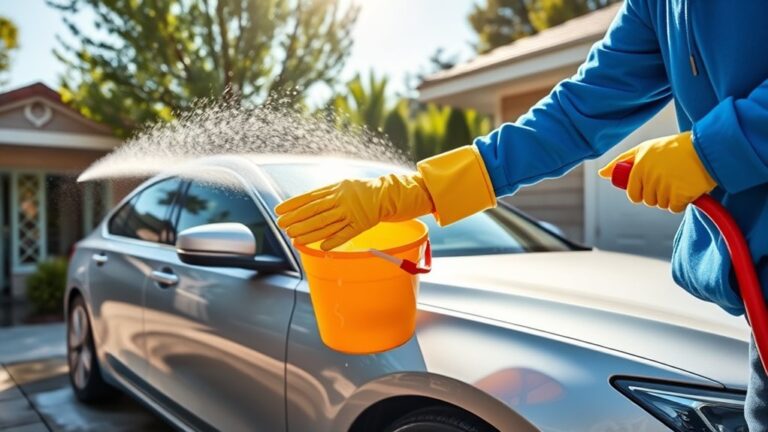
When washing, use a gentle, two-bucket method—one for soapy water and one for rinsing—so you don’t reapply dirt onto your car. Always wash from top to bottom, keeping your cloth or mitt clean as you go.
Avoid using circular motions; instead, use straight, overlapping strokes to reduce the risk of swirl marks. Incorporate scratch prevention strategies, such as avoiding dry rubbing and applying detailing techniques that reduce abrasive contact.
Rinse your sponge frequently, and never scrub harshly. By following these proper techniques, you’ll protect your vehicle’s paint and keep it looking flawless after every wash.
How to Rinse Off Soap and Prevent Water Spots
To rinse off soap properly, try using a gentle, overlapping pattern. This way, you can make sure all the soap residue gets washed away without leaving streaks behind. It’s a good idea to start from the top and work your way down—this helps prevent dirty water from dripping onto areas you’ve already cleaned.
Once you’ve rinsed everything off, make sure to dry your car thoroughly. This step is key to preventing water spots from forming and keeping your car looking shiny and new.
Use Proper Rinsing Technique
When rinsing your car, start from the top and work your way down to make sure all soap residue gets washed away. Using proper rinsing techniques and adjusting water pressure helps prevent water spots and streaks.
Keep the nozzle at a consistent distance to avoid damaging the paint and to get even coverage. Use a gentle, sweeping motion to rinse large sections smoothly, avoiding splashing or missed spots.
Maintain steady water pressure—too high can cause water spots, while too low might leave soap behind. Use a wide-angle nozzle for even coverage and rinse slowly so soap doesn’t dry too quickly.
Keep the nozzle moving to prevent streaks, and adjust the water pressure based on the surface of your car. Following these tips will help you get a clean, streak-free finish.
Dry Car Thoroughly
After rinsing your car, immediately dry it thoroughly to prevent water spots from forming. Using high-quality microfiber towels is essential—they absorb water quickly and gently, protecting your paint.
Employ proper drying techniques, such as patting instead of dragging, to avoid scratches. This step keeps your car shiny and spotless.
To evoke emotion, consider this:
| Water Spots | Microfiber Towels | Shine Restored |
|---|---|---|
| Dull finish | Soft and absorbent | Pride in your car |
| Permanent marks | Gentle on paint | Satisfaction |
| Time-consuming | Quick and effective | Confidence |
Mastering these drying methods makes you a pro, ensuring your car looks flawless after every wash.
Dry Your Car Properly to Avoid Streaks and Scratches
Drying your car properly is essential to prevent streaks and scratches that can mar its finish. Using the right drying techniques guarantees a flawless look and keeps your paint protected.
Start with clean, high-quality microfiber towels designed for car drying. Gently pat and wipe the surface, avoiding circular motions that can cause scratches. Always work from top to bottom to prevent dirt from spreading.
Don’t let water sit on the surface, as it can leave mineral deposits or streaks. When drying, switch to a fresh towel if one becomes damp to maintain effectiveness.
Pay attention to tricky spots like mirrors, door jambs, and grilles. Proper drying techniques help you achieve a shiny, streak-free finish while preserving your car’s paintwork.
Use clean microfiber towels for each section. Pat gently instead of rubbing aggressively. Work from top to bottom to prevent dirt spread. Switch towels when they become damp.
Clean Windows, Mirrors, and Glass Surfaces for a Clear View
A crystal-clear view starts with thoroughly cleaning your windows, mirrors, and glass surfaces. Begin with proper window cleaning to remove dirt, smudges, and streaks. Use a quality glass cleaner and a microfiber cloth to wipe in a circular motion, making sure no residue is left behind.
For mirrors and other glass surfaces, repeat the process, paying close attention to corners and edges. Once the surfaces are clean, do glass polishing to get a streak-free shine. This step removes any remaining smudges or fingerprints and gives your car a professional look.
Be careful not to use abrasive materials that could scratch the glass. Regular cleaning not only improves visibility but also helps maintain the longevity of your windows and mirrors. With these simple steps, you’ll enjoy a clear, unobstructed view every time you’re behind the wheel, making your drive safer and more enjoyable.
Final Touches for a Professional-Quality Shine
To achieve a professional-quality shine, focus on adding the final touches that improve your car’s appearance. After washing, take a moment to apply wax, which provides a sleek, protective finish and deepens the color.
For a professional shine, apply wax after washing to protect and enhance your car’s color and finish.
Use high-quality detailing tools, like a foam applicator or microfiber cloth, to guarantee an even, smooth layer. This step not only boosts shine but also guards against environmental damage.
Additionally, inspect your vehicle for any missed spots or streaks, and buff out imperfections for a flawless look. Pay attention to small details like door handles, trim, and mirrors, which can make a big difference in overall appearance.
- Use detailing tools for precise application and buffing
- Apply wax in small, circular motions for an even coat
- Buff lightly to remove excess wax and improve gloss
- Clean and polish trim and mirrors for a polished finish
Avoid These Common Car Washing Mistakes
Even if you’re experienced, it’s easy to make mistakes that can damage your car’s finish or reduce the effectiveness of your wash. One common myth is that washing your car daily keeps it spotless, but washing too often can strip away protective coatings and harm the paint.
Instead, focus on a suitable washing frequency based on your environment and how often you drive. Another mistake is using dirty or abrasive materials; always choose soft microfiber cloths and wash mitts to prevent scratches.
Rushing through the process can leave dirt and grime behind, so take your time to thoroughly clean all areas. Don’t skip the pre-rinse, as it removes loose dirt that could scratch your paint during washing.
Also, remember to dry your car properly because water spots can form and dull the finish. Being aware of these common mistakes helps keep your car shiny and protected for longer.
Frequently Asked Questions
How Often Should I Wash My Car to Maintain Its Value?
To keep your car’s value in good shape, wash it regularly—about every one to two weeks. How often you do it depends on your climate and driving conditions.
Frequent washes help remove dirt, grime, and road salt that can cause rust and damage your paint. Sticking to a routine helps your car look its best and keeps its resale value high.
Regular cleaning really is an investment in preserving your car’s condition and worth over time.
Can I Wash My Car in the Winter Without Damaging the Paint?
Yes, you can wash your car in winter without damaging the paint. Just be cautious and take some cold-weather precautions.
Use gentle, quality cleaners that are designed for winter washing. Avoid high-pressure hoses that could strip away your paint protection.
Regular winter washes help clear away road salt and grime, which can cause corrosion if left on the surface.
What Eco-Friendly Products Are Best for Car Washing?
You should choose biodegradable soaps for an eco-friendly car wash because they break down naturally and reduce environmental harm. Look for products with plant-based ingredients that are gentle on your car’s paint.
Combine this with water-saving techniques, like using a bucket instead of a hose and rinsing selectively. This helps minimize water waste.
These steps help you clean effectively while protecting the planet.
How Do I Remove Stubborn Dirt Without Scratching the Paint?
Think of your car’s paint as a canvas needing gentle care. To remove stubborn dirt without scratching, start with a clay bar to lift embedded grime smoothly.
Follow up with a detailing spray to loosen stubborn spots and add a glossy shine. Use the clay bar gently, working in small sections, and always keep the surface lubricated.
This method guarantees a thorough clean without damaging your paint’s finish.
Is It Better to Wash My Car Indoors or Outdoors?
You should wash your car indoors for the indoor advantages, like controlled temperature and protection from dirt or debris. Indoor washes prevent water spots caused by outdoor elements, and you can better see dirt and grime.
However, outdoor considerations include better ventilation and easier access to rinse water. If the weather permits, outdoor washing can be quicker, but indoor options give you a safer, more controlled environment for a thorough clean.
Conclusion
By following these simple steps, you’ll turn your car wash routine into a pro-level skill. Your vehicle will look like it just rolled off the showroom floor.
With careful prep, proper techniques, and attention to detail, you’ll avoid scratches and streaks. This ensures a flawless shine every time.
Think of your car as a mirror reflecting your dedication. Cleaning it to perfection can make your ride look brighter than a superstar’s spotlight, turning heads wherever you go.
Mastering a car wash like a pro is easier than you think. Just a little effort and these tips will keep your car looking its best.